


South Korea’s Ex-Defense Minister Is Formally Arrested over Martial Law Imposition

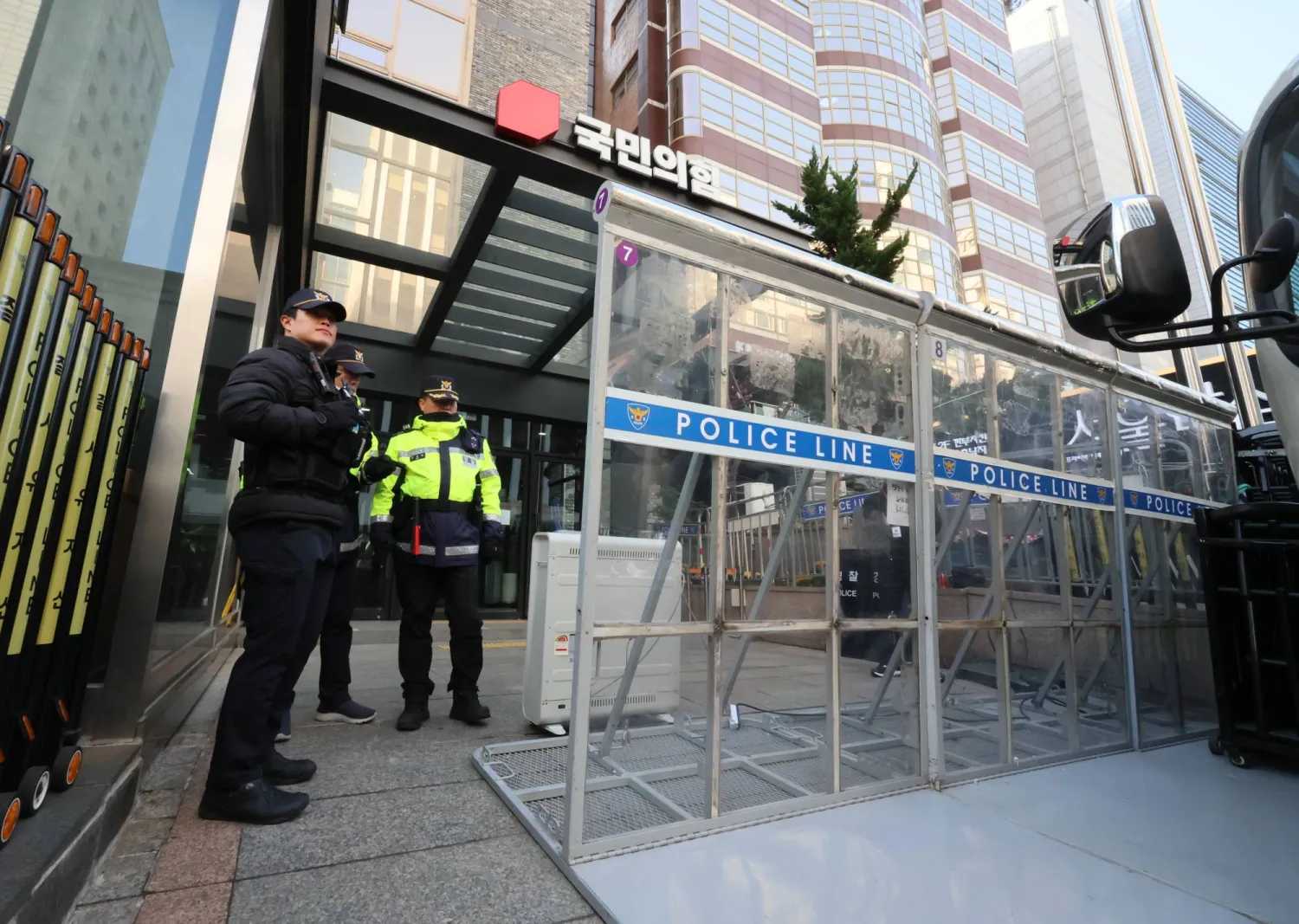
A glass barricade is installed in front of the ruling People Power Party's headquarters in Seoul, South Korea, 10 December 2024, amid public criticism of PPP lawmakers for boycotting a parliamentary vote on the impeachment of President Yoon Suk Yeol.  EPA/YONHAP
A glass barricade is installed in front of the ruling People Power Party's headquarters in Seoul, South Korea, 10 December 2024, amid public criticism of PPP lawmakers for boycotting a parliamentary vote on the impeachment of President Yoon Suk Yeol. EPA/YONHAP
TT

South Korea’s Ex-Defense Minister Is Formally Arrested over Martial Law Imposition

A glass barricade is installed in front of the ruling People Power Party's headquarters in Seoul, South Korea, 10 December 2024, amid public criticism of PPP lawmakers for boycotting a parliamentary vote on the impeachment of President Yoon Suk Yeol.  EPA/YONHAP
A glass barricade is installed in front of the ruling People Power Party's headquarters in Seoul, South Korea, 10 December 2024, amid public criticism of PPP lawmakers for boycotting a parliamentary vote on the impeachment of President Yoon Suk Yeol. EPA/YONHAP

A former South Korean defense minister was formally arrested Wednesday over his alleged collusion with President Yoon Suk Yeol and others in imposing martial law last week, as authorities investigate whether their acts amount to rebellion.

Martial law, the first in more than 40 years, lasted only about six hours but has triggered a domestic firestorm and large street protests. Yoon and his associates face criminal investigations and impeachment attempts. The Justice Ministry has banned Yoon and eight others from leaving the country as authorities see them as key suspects in the martial law case. It’s the first time that a sitting president in South Korea has received a travel ban.

The Seoul Central District Court said it approved an arrest warrant for former Defense Minister Kim Yong Hyun on charges of rebellion and abuse of power.

Kim has been detained since Sunday. Prosecutors have up to 20 days to determine whether to indict him. A conviction on the charge of rebellion carries a maximum death sentence.

Kim became the first person arrested over the case. He has been accused of recommending martial law to Yoon and sending troops to the National Assembly to block lawmakers from voting on it. Enough lawmakers eventually managed to enter a parliament chamber and unanimously rejected Yoon’s decree, forcing the Cabinet to lift it before daybreak on Dec. 4.

Kim said in a statement Tuesday that he “deeply apologizes for causing significant anxiety and inconvenience.” He said all responsibility for the imposition of martial law rests solely with him and pleaded for leniency for soldiers deployed to enforce it, saying they were only following his order.

Prosecutors reportedly accuse Kim of playing a key role in a rebellion and committing abuse of power by staging a riot to disrupt the constitution in collaboration with Yoon and other military and police officers. Prosecutors' offices in Seoul couldn't immediately confirm the reports.

The opposition-controlled parliament passed a bill Tuesday to appoint an independent special counsel to investigate Yoon and other top military officials over the martial law introduction. The main opposition Democratic Party had advocated for a special counsel investigation, arguing that public prosecutors cannot be trusted to conduct a thorough investigation of Yoon, a former prosecutor-general.

During a parliamentary hearing Tuesday, Kwak Jong-keun, commander of the Army Special Warfare Command whose troops were sent to parliament, testified that he received direct instructions from Kim Yong Hyun to obstruct lawmakers from entering the National Assembly’s main chamber. Kwak said the purpose of Kim’s instructions was to prevent the 300-member parliament from gathering the 150 votes necessary to overturn Yoon’s martial law order.

Kwak said Yoon later called him directly and asked for the troops to “quickly destroy the door and drag out the lawmakers who are inside.” Kwak said he discussed Yoon’s order with the commander at the scene and that they concluded there was nothing that could be done, ruling out the possibility of threatening the lawmakers by shooting blanks or cutting off electricity.

At the same hearing, senior officer Kim Dae-woo of the military’s counterintelligence agency said his commander, Yeo In-hyung, asked him if an army bunker in Seoul had space to detain politicians and other figures after martial law was imposed. Yeo is considered a close associate of Kim Yong Hyun. Last week, Hong Jang-won, a deputy director of the country's spy agency, said Yoon ordered him to help Yeo’s command to detain some of his political rivals but he ignored the president’s order.

Kwak and Yeo are among those who face opposition-raised rebellion charges along with Yoon and Kim, and the Defense Ministry suspended them last week.

Opposition parties and many experts say the martial law decree was unconstitutional. They say a president is by law allowed to declare martial law only during “wartime, war-like situations or other comparable national emergency states” and South Korea wasn’t in such a situation. They argue that deploying troops to seal the National Assembly to suspend its political activities amounted to rebellion because the South Korean Constitution doesn’t allow a president to use the military to suspend parliament in any situation.

In his martial law announcement, the conservative Yoon stressed a need to rebuild the country by eliminating “shameless North Korea followers and anti-state forces,” a reference to his liberal rivals who control parliament.

Yoon avoided impeachment on Saturday after most governing party lawmakers boycotted a floor vote in the National Assembly.

The Democratic Party said it would prepare for a new vote on Yoon's impeachment on Saturday. The party on Tuesday submitted motions to impeach Yoon’s police chief and justice minister as well. It pushed to impeach Kim Yong Hyun and the safety minister, but they resigned before parliament took a vote.

If Yoon is impeached, his presidential powers would be suspended until the Constitutional Court decides whether to restore his powers or remove him from office. If it voted for removal, a new presidential election would be required.



China Vows ‘Resolute Response’ to Any Reckless Acts After Japan Election

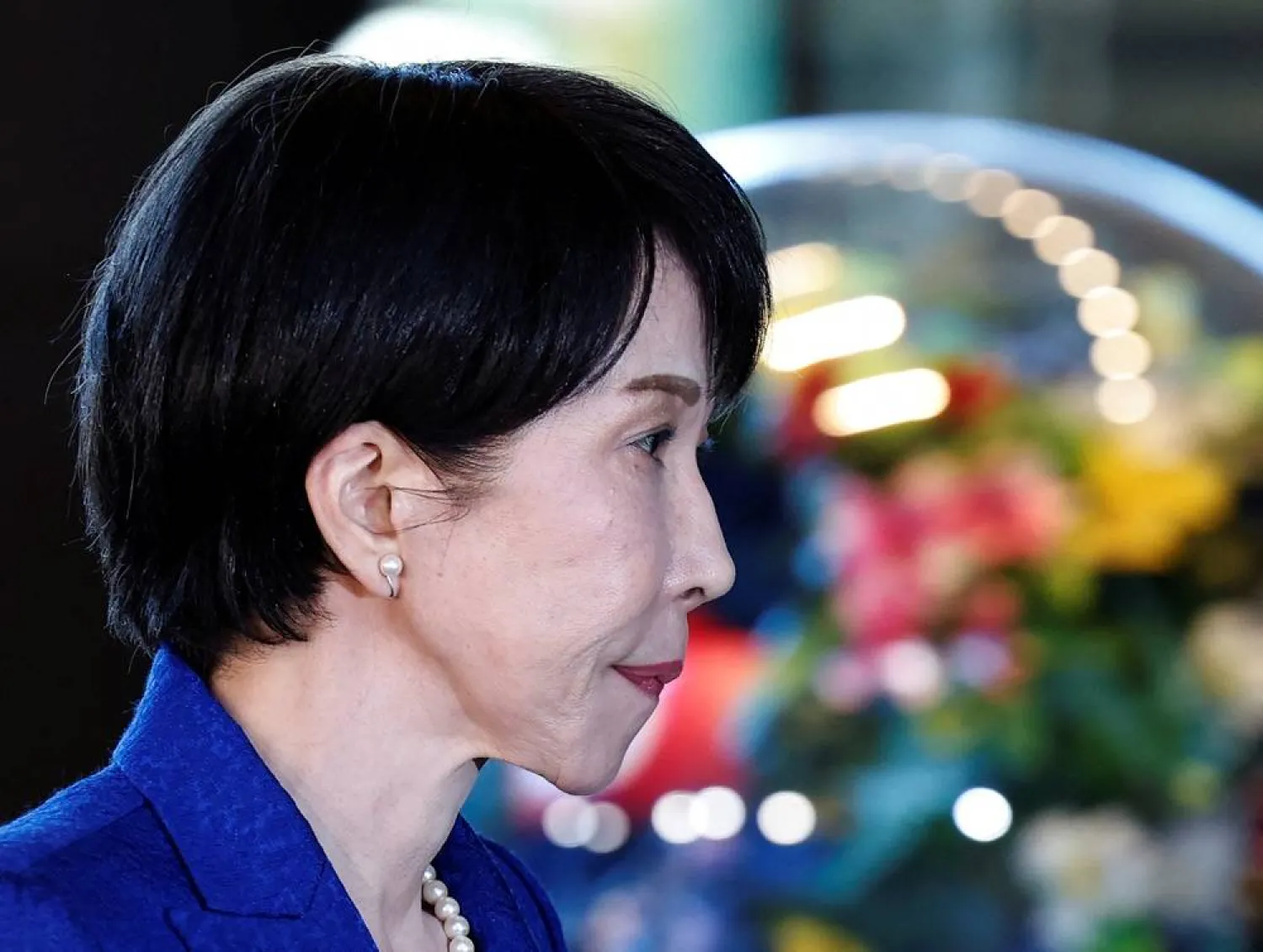
 Japan's Prime Minister Sanae Takaichi, leader of the ruling Liberal Democratic Party (LDP), arrives at the Prime Minister's office after her party's historic election win in Sunday's poll in Tokyo, Japan, February 9, 2026. (Reuters)
Japan's Prime Minister Sanae Takaichi, leader of the ruling Liberal Democratic Party (LDP), arrives at the Prime Minister's office after her party's historic election win in Sunday's poll in Tokyo, Japan, February 9, 2026. (Reuters)
TT

China Vows ‘Resolute Response’ to Any Reckless Acts After Japan Election

 Japan's Prime Minister Sanae Takaichi, leader of the ruling Liberal Democratic Party (LDP), arrives at the Prime Minister's office after her party's historic election win in Sunday's poll in Tokyo, Japan, February 9, 2026. (Reuters)
Japan's Prime Minister Sanae Takaichi, leader of the ruling Liberal Democratic Party (LDP), arrives at the Prime Minister's office after her party's historic election win in Sunday's poll in Tokyo, Japan, February 9, 2026. (Reuters)

Beijing warned Tokyo on Monday that reckless actions would be met with a "resolute response", a day after Japan's Prime Minister Sanae Takaichi, who is viewed as critical of China, won a landslide election.

China and Japan have been locked in a spat over comments by Takaichi in November that Tokyo could intervene militarily in any attack on self-ruled Taiwan.

China claims the democratic island as part of its territory and has not ruled out force to annex it.

A spokesman for China's foreign ministry on Monday urged Japan to retract the comments and warned of consequences for any rash actions.

"If the far-right forces in Japan misjudge the situation and act recklessly, they will inevitably face resistance from the Japanese people and a resolute response from the international community," spokesman Lin Jian told a regular news conference.

"We once again urge the Japanese side to retract the erroneous remarks made by Takaichi regarding Taiwan and demonstrate basic sincerity in safeguarding the political foundation of China-Japan relations, through concrete actions," he said.

In the wake of Takaichi's comments in November, China has discouraged its nationals from travelling to Japan, citing deteriorating public security and criminal acts against Chinese nationals in the country.

In the latest escalation of the row in December, Chinese military aircraft locked radar onto Japanese jets, prompting Tokyo to summon Beijing's ambassador.

Beijing also reportedly choked off exports to Japan of rare-earth products crucial for making everything from electric cars to missiles.

And last month, two popular pandas departed Tokyo for China, leaving Japan without any of the beloved bears for the first time in 50 years.


Russia's FSB Says Ukraine's SBU Was behind Assassination Attempt on Top General

In this image made from video and provided by the Russian Defense Ministry Press Service, on June 23, 2023, Lt. Gen. Vladimir Alexeyev speaks to servicemen in an undisclosed location. (Russian Defense Ministry Press Service via AP)
TT

Russia's FSB Says Ukraine's SBU Was behind Assassination Attempt on Top General

In this image made from video and provided by the Russian Defense Ministry Press Service, on June 23, 2023, Lt. Gen. Vladimir Alexeyev speaks to servicemen in an undisclosed location. (Russian Defense Ministry Press Service via AP)

Russia's Federal Security Service said on Monday that the men suspected of shooting one of the country's most senior military intelligence officer had confessed that they were carrying out orders from the Security Service of Ukraine (SBU).

Ukraine has denied any involvement in Friday's attempted assassination of Lieutenant General Vladimir Alexeyev, deputy head of Russia's ‌GRU military ‌intelligence service. Alexeyev has regained ‌consciousness ⁠after surgery, reported Reuters.

Russia ‌said that the suspected shooter, a Ukrainian-born Russian citizen named by Moscow as Lyubomir Korba, had been questioned after he was extradited from Dubai. A suspected accomplice, Viktor Vasin, has also been questioned.

The FSB said in ⁠a statement that both Korba and Vasin had "confessed their ‌guilt" and given details ‍of the shooting which ‍they said was "committed on behalf of ‍the Security Service of Ukraine."

The FSB did not provide any evidence that Reuters was able to immediately verify. It was not possible to contact the men while they were in detention in Russia. The SBU could ⁠not be reached for immediate comment on the FSB statement.

The FSB said Korba was recruited by the SBU in August 2025 in Ternopil, western Ukraine, underwent training in Kyiv and was paid monthly in crypto-currency. For killing Alexeyev, Korba was promised $30,000 by the SBU, the FSB said.

The FSB said Polish intelligence was involved in his recruitment. ‌Poland could not be reached for immediate comment.


Venezuela's Machado Says Ally 'Kidnapped' after His Release

Venezuelan political leader Juan Pablo Guanipa gestures after their release outside Zona 7 prison in Caracas on February 8, 2026.  (Photo by Juan BARRETO / AFP)
Venezuelan political leader Juan Pablo Guanipa gestures after their release outside Zona 7 prison in Caracas on February 8, 2026. (Photo by Juan BARRETO / AFP)
TT

Venezuela's Machado Says Ally 'Kidnapped' after His Release

Venezuelan political leader Juan Pablo Guanipa gestures after their release outside Zona 7 prison in Caracas on February 8, 2026.  (Photo by Juan BARRETO / AFP)
Venezuelan political leader Juan Pablo Guanipa gestures after their release outside Zona 7 prison in Caracas on February 8, 2026. (Photo by Juan BARRETO / AFP)

Venezuela's Nobel peace laureate Maria Corina Machado said on Monday that armed men "kidnapped" a close ally shortly after his release by authorities, following ex-leader Nicolas Maduro's capture.

The country's Public Prosecutor's Office confirmed later that same day that former National Assembly vice president Juan Pablo Guanipa, 61, was again taken into custody and to be put under house arrest, arguing that he violated the conditions of his release.

Guanipa would be placed under house arrest "in order to safeguard the criminal process," the office said in a statement on Monday. The conditions of Guanipa's release have yet to be made public.

Machado claimed that her close ally had been "kidnapped" in the capital Caracas by armed men "dressed in civilian clothes" who took him away by force.

"We demand his immediate release," she wrote on social media platform X.

The arrest came after his release from prison on Sunday along with two other opposition figures, and as lawmakers prepared to vote Tuesday on a historic amnesty law covering charges used to lock up dissidents in almost three decades of socialist rule, reported AFP.

Shortly after his release, Guanipa visited several detention centers in Caracas, where he met with relatives of political prisoners and spoke to the press.

Guanipa had appeared earlier Sunday in a video posted on his X account, showing what looked like his release papers.

"Here we are, being released," Guanipa said in the video, adding that he had spent "10 months in hiding, almost nine months detained here" in Caracas.

- 'Let's go to an electoral process' -

Speaking to AFP later on Sunday, he had called on the government to respect the 2024 presidential election, which opposition candidate Edmundo Gonzalez Urrutia was widely considered to have won. Maduro claimed victory and remained in power till January.

"Let's respect it. That's the basic thing, that's the logical thing. Oh, you don't want to respect it? Then let's go to an electoral process," Guanipa said.

The opposition ally of Machado was arrested in May 2025, in connection with an alleged conspiracy to undermine legislative and regional elections that were boycotted by the opposition.

He was charged with terrorism, money laundering and incitement to violence and hatred.

Guanipa had been in hiding prior to his arrest. He was last seen in public in January 2025, when he accompanied Machado to an anti-Maduro rally.

Following Maduro's capture by US special forces on January 3, authorities have started to slowly release political prisoners. Rights groups estimate that around 700 people are still waiting to be freed.

A former Machado legal advisor, Perkins Rocha, was also freed on Sunday. So was Freddy Superlano, who once won a gubernatorial election in Barinas, a city that is the home turf of the iconic late socialist leader Hugo Chavez.

"We hugged at home," Rocha's wife Maria Constanza Cipriani wrote on X, with a photo of them.

Machado, who was awarded the 2025 Nobel Peace Prize for her efforts to advance democracy in Venezuela, had initially celebrated Guanipa's release.

"My dear Juan Pablo, counting down the minutes until I can hug you! You are a hero, and history will ALWAYS recognize it. Freedom for ALL political prisoners!!" she wrote on X on Sunday.

NGO Foro Penal said it had confirmed the release of 35 prisoners on Sunday. It said that since January 8 nearly 400 people arrested for political reasons have been freed thus far.

Lawmakers gave their initial backing to a draft amnesty last week which covered the types of crimes used to lock up dissidents during 27 years of socialist rule.

But Venezuela's largest opposition coalition denounced "serious omissions" in the proposed amnesty measures on Friday.

Meanwhile, relatives of prisoners are growing increasingly impatient for their loved ones to be freed.

Acting president Delcy Rodriguez, who was Maduro's vice president, is pushing the amnesty bill as a milestone on the path to reconciliation.

Rodriguez took power in Venezuela with the blessing of US President Donald Trump, who is eyeing American access to what are the world's largest proven oil reserves.

As part of its reforms, Rodriguez's government has taken steps towards opening up the oil industry and restoring diplomatic ties with Washington, which were severed by Maduro in 2019.