


Sudanese FM to Asharq Al-Awsat: We Reject a ‘Libyan Model’ with Formation of Parallel Government

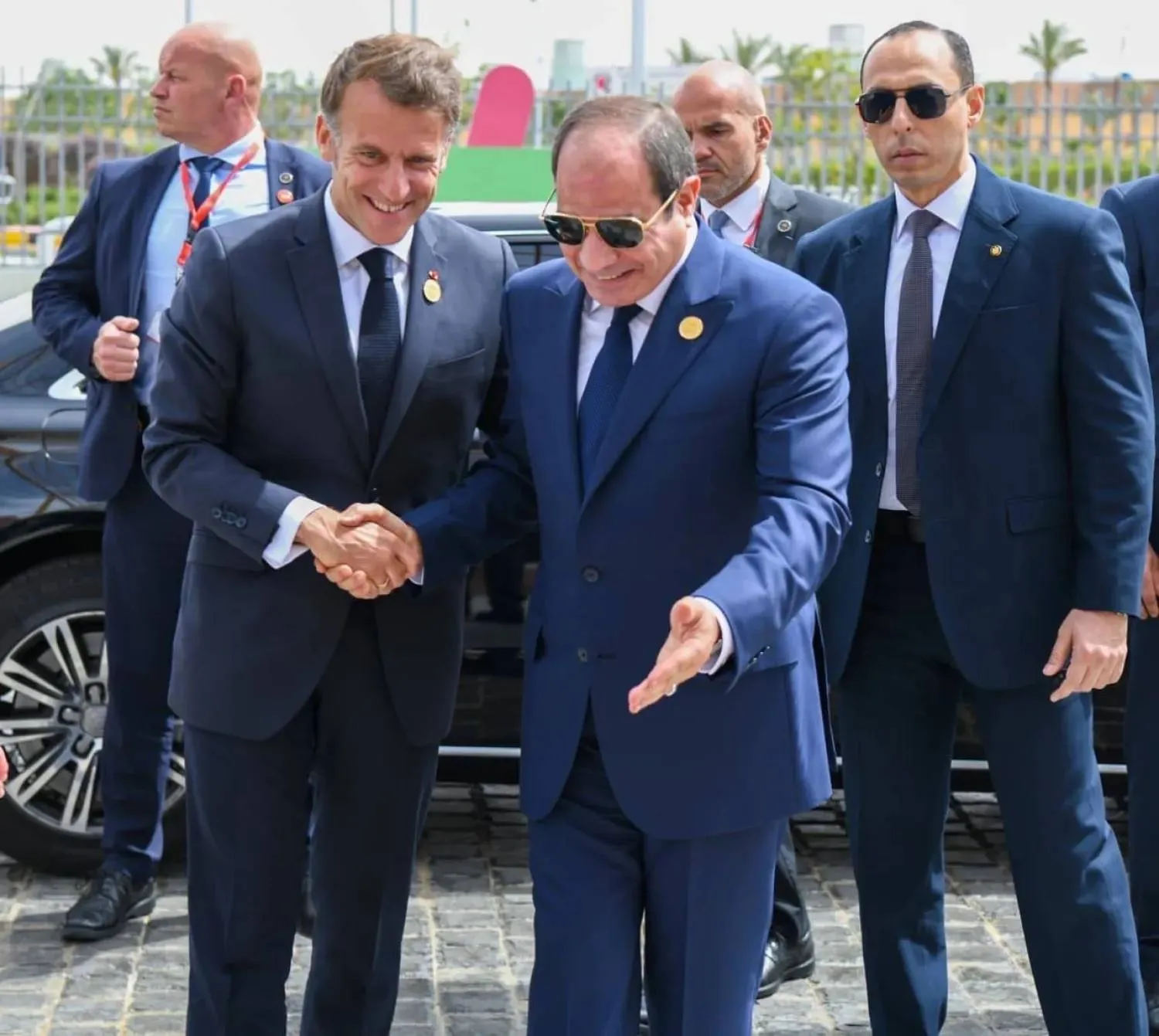
Egyptian Foreign Minister receiving his Sudanese counterpart in Cairo on Sunday (Egyptian Foreign Ministry)
TT

Sudanese FM to Asharq Al-Awsat: We Reject a ‘Libyan Model’ with Formation of Parallel Government

Egyptian Foreign Minister receiving his Sudanese counterpart in Cairo on Sunday (Egyptian Foreign Ministry)

Sudanese Foreign Minister Ali Youssef Al-Sharif expressed firm opposition to what he described as the “Libyan model” being replicated in Sudan, emphasizing that any moves aimed at forming a parallel government are unacceptable.

He warned that such efforts would “weaken Sudan and complicate efforts to resolve the current crisis.”

Since April 2023, Sudan has been engulfed in internal conflict between the Sudanese Armed Forces and the Rapid Support Forces (RSF), labeled a “rebel militia” by the government. The war has claimed thousands of civilian lives and displaced millions both internally and externally.

In exclusive remarks to Asharq Al-Awsat during his visit to Cairo, Al-Sharif cautioned against the dangers of consultations being held by some political and civil actors to form a “parallel government,” describing such efforts as targeting the division and fragmentation of Sudan.

In recent weeks, Sudanese political forces, including figures from the “Tansiqiyya Taqaddum” coalition, have held discussions in Nairobi, Kenya, to explore the formation of a “peace government,” a move welcomed by the RSF.

The foreign minister described these initiatives as “a new conspiracy against Sudan,” alleging the involvement of external actors motivated by the military’s advances against the RSF. He emphasized Sudan’s reliance on countries that support its unity and stability to thwart these moves and ensure they are not legitimized. Al-Sharif highlighted that Egypt is at the forefront of nations on which Sudan depends in countering these efforts, adding that his country maintains strong relations with key Arab states and international powers, including Russia and China.

During talks with his Egyptian counterpart, Badr Abdel Aty, the two ministers agreed that attempts to establish a parallel government would complicate Sudan’s internal situation. Al-Sharif praised Egypt’s support for Sudan’s unity, sovereignty, and national institutions.

On warnings of famine in Sudan, the official dismissed claims by some international forces about the country facing famine, accusing these actors of trying to pressure the UN Security Council to intervene. He clarified that Sudan is experiencing a “domestic food crisis” but not famine.

Russia recently vetoed a British-sponsored resolution in the Security Council calling for the implementation of the Jeddah humanitarian agreement signed in May 2023. The resolution also proposed creating a regional protection force in coordination with the African Union and international partners to safeguard civilians in Sudan.

The minister linked international focus on the famine narrative to calls for a parallel government, describing these as part of a “unified conspiracy targeting Sudan’s resources and capabilities.”

He criticized the international community’s “weak response” to crimes committed by the RSF against civilians, asserting that the documented violations are sufficient grounds for the International Criminal Court to prosecute RSF leaders.

Sudan has taken legal measures through international organizations such as the UN Security Council and the African Union to classify the RSF as a terrorist group. Al-Sharif also criticized the global community for ignoring Sudan’s crisis while focusing on the war in Gaza. He urged action to restrict the movement of RSF leaders and hold accountable the states providing them refuge.

Regarding the resolution of the ongoing war, Al-Sharif asserted that military resolution is the only viable option at present. He highlighted the army’s progress toward military victory, attributing delays to the RSF’s strategy of using civilians and civilian infrastructure as shields.

The foreign minister insisted that a political solution cannot be pursued while the war continues, arguing that political issues must be left to civilian forces to discuss after a ceasefire is achieved. He emphasized that any lasting resolution must involve a ceasefire followed by the complete disbandment of the RSF, as Sudan cannot tolerate the existence of armed forces parallel to the national military.

On Sudan’s potential reinstatement to the African Union, Al-Sharif stated that restoring the country’s membership requires the formation of a civilian government in line with a constitutional document. He did not rule out the possibility of such a government being formed in the near future. “It is possible,” he said.


Syria Says Kills Senior ISIS Leader, Arrests Operative Near Damascus

A photo of a Public Security operation in Aleppo against an ISIS cell (File – Facebook)
TT

Syria Says Kills Senior ISIS Leader, Arrests Operative Near Damascus

A photo of a Public Security operation in Aleppo against an ISIS cell (File – Facebook)

Syrian authorities on Thursday said forces killed a senior leader in the ISIS group and arrested another operative in fresh operations near capital Damascus in coordination with the US-led coalition.

Syrian security and intelligence forces, working in coordination with the international coalition, conducted what the interior ministry described as a "precise security operation" in the Damascus countryside, AFP reported.

"The operation resulted in neutralising the terrorist Mohammad Shahada, known as 'Abu Omar Shaddad', who is considered one of the prominent ISIS leaders in Syria," it added.

"This operation comes as confirmation of the effectiveness of joint coordination between the national security agencies and international partners."

Later Thursday, the interior ministry said security forces "in joint coordination with international coalition forces" arrested "the leader of a terrorist cell affiliated with the ISIS organization" elsewhere near Damascus, seizing weapons and ammunition.

Late Wednesday, authorities said they captured Taha al-Zoubi, also known as Abu Omar Tabiya, an ISIS leader in the Damascus region, along with several of his men, also in a joint operation with the US-led coalition.

The interior ministry also said on Thursday that security forces had arrested three members of an ISIS-affiliated cell in Aleppo province.

A December 13 attack killed two US soldiers and an American civilian. Washington blamed the attack on a lone ISIS gunman in Syria's Palmyra.

In retaliation, US forces conducted strikes targeting scores of ISIS targets in Syria.

The strikes killed five members of the militant group, according to the Syrian Observatory for Human Rights.

In November, during a visit by interim President Ahmed al-Sharaa to Washington, Syria officially joined the US-led coalition against ISIS.


Israeli Settler Attack Injures Palestinian Baby, Five Arrested

Israeli settlers attacked farmers and volunteers harvesting olives on a Palestinian farm in Burin, near Nablus, on November 8, 2025. © Observers
TT

Israeli Settler Attack Injures Palestinian Baby, Five Arrested

Israeli settlers attacked farmers and volunteers harvesting olives on a Palestinian farm in Burin, near Nablus, on November 8, 2025. © Observers

Israeli security forces announced on Thursday the arrest of five Israeli settlers over their alleged involvement in an attack on a Palestinian home that injured a baby girl in the occupied West Bank.

The eight-month-old infant suffered "moderate injuries to the face and head" in the late Wednesday attack, according to the official Palestinian news agency Wafa.

It blamed the attack on "a group of armed settlers", accusing them of "throwing stones at homes and property" in the town of Sair, north of Hebron, AFP reported.

A statement from the Israeli police said that five suspects had been arrested for their "alleged involvement in serious, violent incidents in the village of Sair".

Israeli security forces had received reports of "stones being thrown by Israeli civilians toward a Palestinian home", adding a Palestinian girl was injured.

"The preliminary investigation determined the involvement of several suspects who came from a nearby outpost," the statement said, referring to Israeli settlements not officially recognized by Israeli authorities.

All Israeli settlements in the West Bank are considered illegal by the international community.

Some are also illegal under Israeli law, though many of those are later given official recognition.

Almost none of the perpetrators of previous attacks by settlers have been held to account by the Israeli authorities.

A Telegram group linked to the "Hilltop Youth", a movement of hardline settlers who advocate direct action against Palestinians, posted a video showing property damage in Sair.

More than 500,000 Israelis currently live in settlements in the West Bank, occupied since 1967, as do around three million Palestinians.

Violence involving settlers has risen in recent years, according to the United Nations, and October was the worst month since it began recording such incidents in 2006, with 264 attacks that caused casualties or property damage.

The violence in the West Bank, a territory occupied by Israel since 1967, has surged since Hamas' October 7, 2023 attack, which triggered the Gaza war.

Since the start of the war, Israeli troops and settlers have killed more than 1,000 Palestinians in the West Bank, including many militants as well as dozens of civilians, according to an AFP tally based on figures from the Palestinian health ministry.

According to official Israeli figures, at least 44 Israelis, both soldiers and civilians, have been killed in Palestinian attacks or Israeli military operations in the same period.


Syria to Start Currency Swap on January 1st, Central Bank Governor Says

Syrian pounds are pictured inside an exchange currency shop in Azaz, Syria February 3, 2020. Picture taken February 3, 2020. REUTERS/Khalil Ashawi/File Photo
TT

Syria to Start Currency Swap on January 1st, Central Bank Governor Says

Syrian pounds are pictured inside an exchange currency shop in Azaz, Syria February 3, 2020. Picture taken February 3, 2020. REUTERS/Khalil Ashawi/File Photo

Syria will start swapping old banknotes for new ones under a ​plan to replace Assad-era notes starting from January 1, 2026, Central Bank Governor Abdelkader Husrieh said on Thursday.

Husrieh announced the introduction of the new Syrian currency, saying the decree "sets January ‌1, 2026, ‌as the start date ‌for ⁠the ​exchange ‌process". Sources familiar with the matter told Reuters in August that the country will issue new banknotes, removing two zeros from its currency in an attempt to restore ⁠public confidence in the severely devalued pound.

The ‌step is intended ‍to strengthen ‍the Syrian pound after its purchasing ‍power collapsed to record lows following a 14-year conflict that ended with President Bashar al-Assad's ouster in December.

Husrieh ​said the operation will take place through a smooth and orderly ⁠swap - a move bankers hope will ease fears that the new currency could fuel inflation and further erode the purchasing power of Syrians already reeling from high prices.

He added that a press conference will soon outline the exact regulations and mechanisms.