


Syria’s New Central Bank Chief Vows to Boost Bank Independence Post Assad

A bank teller counts Syrian pound banknotes at the Syrian Central Bank in Damascus, Syria, 09 January 2025. (EPA)
TT

Syria’s New Central Bank Chief Vows to Boost Bank Independence Post Assad

A bank teller counts Syrian pound banknotes at the Syrian Central Bank in Damascus, Syria, 09 January 2025. (EPA)

Syria's new central bank governor, Maysaa Sabreen, said she wants to boost the institution's independence over monetary policy decisions, in what would be a sea change from the heavy control exerted under the Assad regime.

Sabreen, previously the Central Bank of Syria's number two, took over in a caretaker role from former governor Mohammed Issam Hazime late last year.

She is a rare example of a former top state employee promoted after Syria's new rulers' lightning offensive led to President Bashar al-Assad's fall on Dec. 8.

"The bank is working on preparing draft amendments to the bank's law to enhance its independence, including allowing it more freedom to make decisions regarding monetary policy," she told Reuters in her first media interview since taking office.

The changes would need the approval of Syria’s new governing authority, though the process is at this stage unclear. Sabreen gave no indication of timing.

Economists view central bank independence as critical to achieve long-term macroeconomic and financial sector stability.

While the Central Bank of Syria has always been, on paper, an independent institution, under Assad's regime the bank's policy decisions were de facto determined by the government.

Syria's central bank, Sabreen added, was also looking at ways to expand Islamic banking further to bring in Syrians who avoided using traditional banking services.

"This may include giving banks that provide traditional services the option to open Islamic banking branches," Sabreen, who has served for 20 years at the bank, told Reuters from her office in bustling central Damascus.

Limited access to international and domestic financing meant the Assad government used the central bank to finance its deficit, stoking inflation.

Sabreen said she is keen for all that to change.

"The bank wants to avoid having to print Syrian pounds because this would have an impact on inflation rates," she said.

Asked about the size of Syria's current foreign exchange and gold reserves, Sabreen declined to provide details, saying a balance sheet review was still underway.

Four people familiar with the situation told Reuters in December that the central bank had nearly 26 tons of gold in its vaults, worth around $2.2 billion, some $200 million in foreign currency and a large quantity of Syrian pounds.

The Central Bank of Syria and several former governors are under US sanctions imposed after former Assad’s violent suppression of protests in 2011 that spiraled into a 13-year civil war.

Sabreen said the central bank has enough money in its coffers to pay salaries for civil servants even after a 400% raise promised by the new administration. She did not elaborate.

Reuters reported that Qatar would help finance the boost in public sector wages, a process made possible by a US sanctions waiver from Jan. 6 that allows transactions with Syrian governing institutions.

INFLATION CHALLENGE

Analysts say stabilizing the currency and tackling inflation will be Sabreen's key tasks - as well as putting the financial sector back on a sound footing.

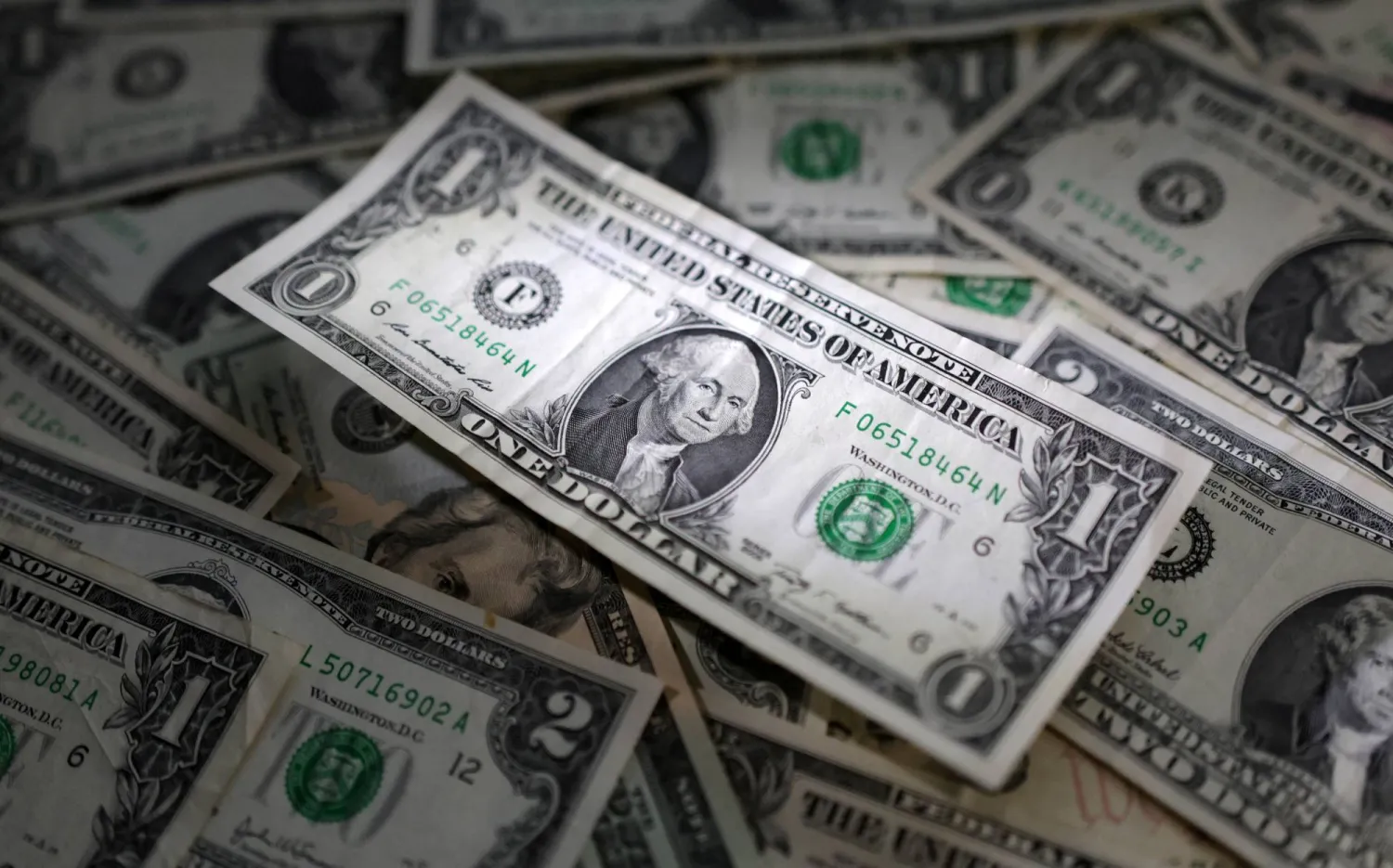
The Syrian currency's value has tumbled from around 50 pounds per US dollar in late 2011 to just over 13,000 pounds per dollar on Monday, according to LSEG and central bank data.

The World Bank in a report in spring 2024 estimated that annual inflation jumped nearly 100% year-on-year last year.

The central bank is also looking to restructure state-owned banks and to introduce regulations for money exchange and transfer shops that have become a key source of hard currency, said Sabreen, who most recently oversaw the banking sector.

Assad's government heavily restricted the use of foreign currency, with many Syrians scared of even uttering the word "dollar".

The new administration of de facto leader Ahmed al-Sharaa abolished such restrictions and now locals wave wads of banknotes on streets and hawk cash from the backs of cars, including one parked outside the central bank's entrance.

To help stabilize the country and improve basic services, the US last week allowed sanctions exemptions for humanitarian aid, the energy sector and sending remittances to Syria, although it reiterated the central bank itself remained subject to sanctions.

Sabreen said allowing personal transfers from Syrians abroad was a positive step and hoped sanctions would be fully lifted so banks could link back up to the global financial system.



Saudi Industrial Production Jumps 8.9% in October, Driven by Mining Sector

 A facility operated by the Saudi International Petrochemical Company (Sipchem) (Photo: the company’s website) 
 A facility operated by the Saudi International Petrochemical Company (Sipchem) (Photo: the company’s website) 
TT

Saudi Industrial Production Jumps 8.9% in October, Driven by Mining Sector

 A facility operated by the Saudi International Petrochemical Company (Sipchem) (Photo: the company’s website) 
 A facility operated by the Saudi International Petrochemical Company (Sipchem) (Photo: the company’s website) 

Saudi Arabia’s General Authority for Statistics (GASTAT) released preliminary data for the Industrial Production Index (IPI) for October 2025, reporting a strong 8.9 percent increase compared with the same month last year.

The rise was supported by robust performance across most major economic activities, led by mining and quarrying, manufacturing, and higher output in electricity, gas, water, and wastewater services.

On a monthly basis, the overall index inched up 0.3 percent from September 2025. Mining and quarrying, by far the heaviest-weighted component of the IPI, was the main engine of growth, posting an 11.5 percent annual rise in October. The increase was largely attributed to a sharp boost in Saudi oil production, which reached 10 million barrels per day, up from 8.9 million barrels per day in the same month of 2024.

Month-on-month, the sector continued to strengthen, with its sub-index rising 0.4 percent from September.

The manufacturing sub-index recorded a solid 5.5 percent annual expansion. This performance was driven by coke and refined petroleum products, up 8.0 percent year-on-year, and chemicals and chemical products, which posted 8.1 percent growth.

Monthly data also showed momentum: manufacturing rose 0.9 percent from September, supported by a 2.7 percent increase in chemicals and a 1.5 percent rise in refined petroleum products.

Within manufacturing, most detailed activities registered year-on-year growth. Manufacture of paper and paper products climbed 5.6 percent, while non-metallic mineral products rose 4.4 percent. However, some subsectors diverged: basic metals declined 6.3 percent year-on-year, and food products fell 4.9 percent month-on-month despite recording 1.9 percent annual growth.

In the utilities segment, the electricity, gas, steam, and air conditioning supply index grew 5.1 percent year-on-year. Water supply, wastewater, waste management, and remediation activities posted an even stronger rise of 8.5 percent.

Despite positive annual trends, electricity and gas supply fell 5.8 percent on a monthly basis, whereas water and wastewater services edged up 0.6 percent.

A breakdown by economic activity shows that October’s annual growth was heavily influenced by oil production. The petroleum activities index recorded a 10.8 percent year-on-year increase.

Non-oil industrial activities also expanded, rising 4.4 percent annually. On a monthly basis, petroleum activities grew 0.6 percent, while non-oil activities slipped 0.3 percent compared with September.


Oil Extends Gains after US Seizure of Tanker off Venezuela

FILE PHOTO: A worker walks past infrastructure on D Island, the main processing hub, at the Kashagan offshore oil field in the Caspian sea in western Kazakhstan August 21, 2013.  REUTERS/Stringer/File Photo
FILE PHOTO: A worker walks past infrastructure on D Island, the main processing hub, at the Kashagan offshore oil field in the Caspian sea in western Kazakhstan August 21, 2013. REUTERS/Stringer/File Photo
TT

Oil Extends Gains after US Seizure of Tanker off Venezuela

FILE PHOTO: A worker walks past infrastructure on D Island, the main processing hub, at the Kashagan offshore oil field in the Caspian sea in western Kazakhstan August 21, 2013.  REUTERS/Stringer/File Photo
FILE PHOTO: A worker walks past infrastructure on D Island, the main processing hub, at the Kashagan offshore oil field in the Caspian sea in western Kazakhstan August 21, 2013. REUTERS/Stringer/File Photo

Oil rose for a second straight session on Thursday after the US seized a sanctioned oil tanker off Venezuela’s coast, escalating tensions between the two countries and raising concern over further supply disruptions.
Brent crude futures rose 27 cents, or 0.4%, to $62.48 a barrel by 0101 GMT, and US West Texas Intermediate crude was at $58.79 a barrel, up 33 cents, or 0.6%.
WTI crude oil is trading higher after news that the US seized an oil tanker off Venezuela’s coast, IG market analyst Tony Sycamore said in a note, adding that reports of Ukraine striking a vessel from Russia’s shadow fleet also lent support, reported Reuters.
"These developments are likely to keep crude oil above our key $55 support level into year-end, barring an unexpected peace deal in Ukraine," Sycamore said.
US President Donald Trump said on Wednesday, "we've just seized a tanker on the coast of Venezuela, large tanker, very large, largest one ever, actually, and other things are happening."
Trump administration officials did not name the vessel. British maritime risk management group Vanguard said the tanker Skipper was believed to have been seized off Venezuela.
Traders and industry sources said Asian buyers are demanding steep discounts on Venezuelan crude, pressured by a surge of sanctioned oil from Russia and Iran and heightened loading risks in the South American country as the US boosts its military presence in the Caribbean.
Meanwhile, Ukrainian sea drones hit and disabled a tanker involved in trading Russian oil as it sailed through Ukraine's exclusive economic zone in the Black Sea.
Investors remain focused on developments in Ukraine peace talks. The leaders of Britain, France and Germany held a call with Trump to discuss Washington's latest peace efforts to end the war in Ukraine, in what they said was a "critical moment" in the process.
On the US policy front, a sharply divided Federal Reserve cut interest rates. Lower rates can reduce consumer borrowing costs and boost economic growth and oil demand.


Riyadh Air, IBM Build the World’s First Airline Founded on AI

A Riyadh Air aircraft (The company’s website)
TT

Riyadh Air, IBM Build the World’s First Airline Founded on AI

A Riyadh Air aircraft (The company’s website)

The Middle East’s aviation sector has undergone rapid transformation in recent years, driven by network expansion, advanced digital technologies, and growing reliance on smart analytics to enhance passenger experience and improve operational efficiency.

As competition intensifies among regional and international carriers, digital innovation has become central to differentiation and customer appeal.

Aligned with Saudi Arabia’s Vision 2030, which is focused on strengthening air connectivity, diversifying the economy, and leveraging modern technology, the Kingdom has paved the way for innovations such as service automation, workforce digitalization, and real-time data analytics for smarter operational decision-making.

In this context, Riyadh Air - one of the Public Investment Fund’s aviation companies -announced, in partnership with IBM Middle East and North Africa, the creation of the world’s first national airline built entirely on artificial intelligence from day one.

The initiative represents a new model for the airline of the future, going beyond traditional digital transformation to establish an operating and management structure free from legacy systems.

Through a collaboration involving more than 60 technology partners across 59 workstreams, Riyadh Air aims to set a global benchmark not only for AI-driven operational efficiency, using generative AI and the watsonx Orchestrate platform, but also for highly personalized experiences for passengers and employees.

The airline is preparing for the launch of its first commercial flights in early 2026, with a goal of connecting the Kingdom to more than 100 international destinations by 2030.

Riyadh Air Chief Financial Officer Adam Boukadida told Asharq Al-Awsat that the objective was to build a fully modern national airline.

“We started from scratch so Riyadh Air could become the first airline built on AI platforms that define the sector’s future, while preserving the human touch for both employees and guests,” he said.

He added that the biggest challenge was developing all systems anew and coordinating dozens of partners to ensure seamless integration while embedding AI across every operational layer.

The digital infrastructure provides employees with a unified workspace that simplifies tasks and strengthens data-driven decision-making. AI empowers crew to deliver customized, proactive services, from booking to arrival and beyond. This includes a virtual assistant offering tailored suggestions such as car rentals and reservations for events or restaurants.

Boukadida noted that real-time analysis of operational, financial, and commercial data will boost efficiency, profitability, and cost management, while elevating Saudi Arabia’s global air connectivity.

Mohamad Ali, Senior Vice President of IBM Consulting, said integrating AI into the airline’s core operations makes Riyadh Air “a model of adaptability, where technology and human hospitality converge on every journey.” IBM platforms provide unified, real-time data to enhance performance for both staff and travelers.

He highlighted watsonx Orchestrate as a key component enabling personalized digital workplaces, seamless access to HR tools, and instant insights for crew, such as alerts to offer fast-track services to late-arriving passengers.

For travelers, the platform will power an AI virtual assistant offering customized add-on services and curated experiences.

Riyadh Air plans to serve over 100 global destinations by 2030 with a fleet of long-range aircraft. Boukadida said Saudi talent has been integral to building the airline, reflecting the Kingdom’s commitment to developing digital expertise and creating high-value jobs in aviation.