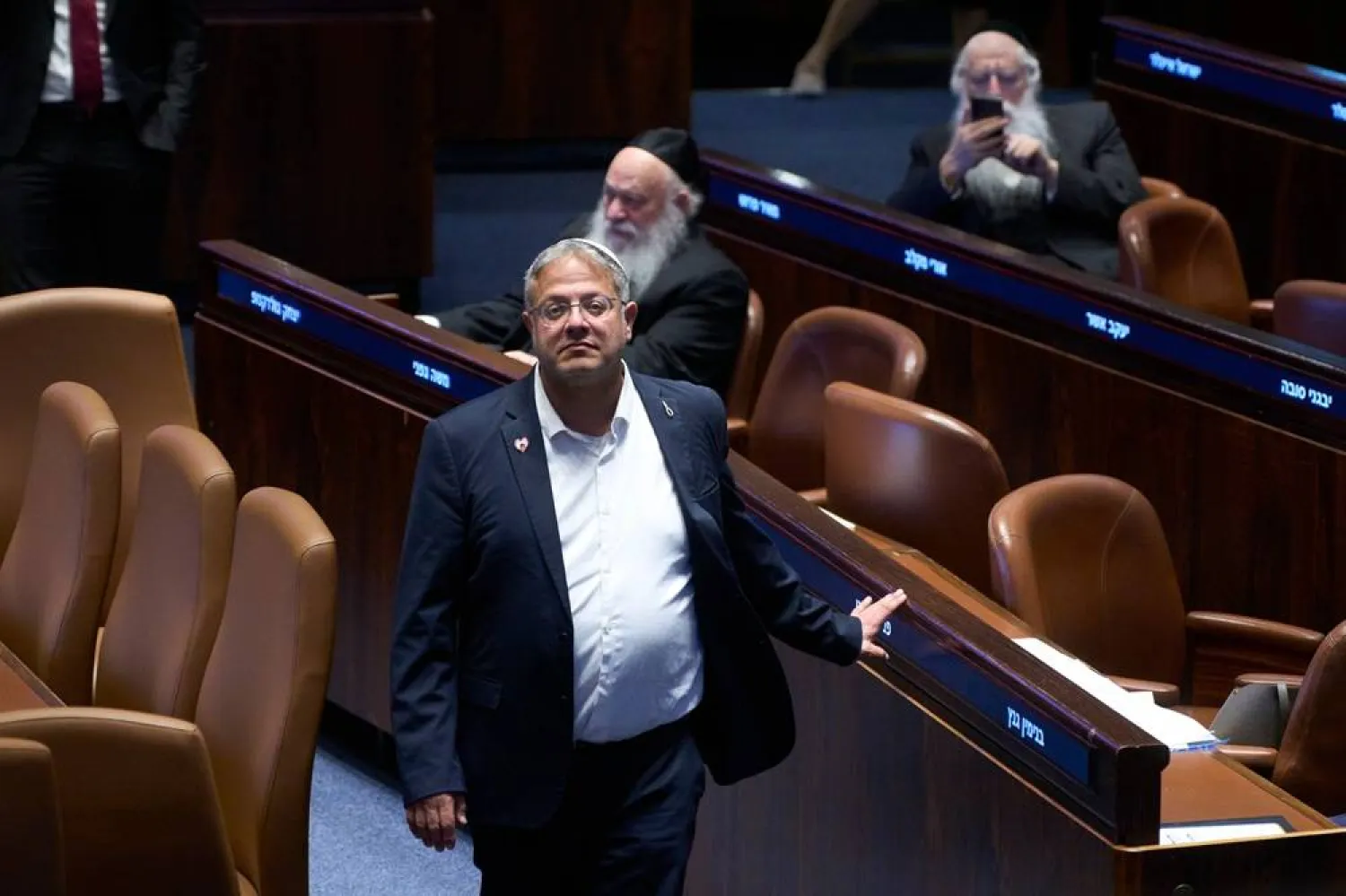
Türkiye on Wednesday slammed the Israeli government after its National Security Minister, Itamar Ben-Gvir, posted a video showing activists on an intercepted Gaza-bound flotilla kneeling and with their hands tied.
The foreign ministry in Ankara said far-right minister Ben-Gvir "has once again openly demonstrated to the world the violent and barbaric mentality of the Netanyahu government".
Nations condemned Ben-Gvir's treatment of the activists.
France said it had summoned the Israeli ambassador over Ben-Gvir's "unacceptable actions".
"I have requested that the Israeli ambassador to France be summoned to express our indignation and obtain an explanation," French Foreign Minister Jean-Noel Barrot on X.
The Netherlands will also summon Israel's ambassador to address the "unacceptable" treatment, Dutch Foreign Minister Tom Berendsen said on Wednesday.
"The images shared by extremist Minister Ben-Gvir of detained flotilla activists are shocking and unacceptable," Berendsen said in a post on X.
"This treatment of detainees violates basic human dignity. I raised this directly with my Israeli colleague Gideon Saar and will summon the Israeli ambassador."
The activists were aboard a flotilla that was intercepted by Israeli forces in international waters on Tuesday and later taken to an Israeli port.
Canada will summon the Israeli ambassador to protest the treatment of the activists, Foreign Minister Anita Anand said on Wednesday.
"What we've seen, including the video shared by Itamar Ben-Gvir, is deeply troubling and absolutely unacceptable," she told reporters on a conference call. "This is a matter we take very, very seriously. It's a matter of humane treatment of civilians, and I can assure you that we are acting with absolute urgency."
Irish foreign minister Helen McEntee said she was "appalled and shocked" by the video of the activists, who include 15 Irish citizens.
McEntee demanded the immediate release of the "illegally detained" activists. Among the detainees is the sister of Irish President Catherine Connolly.
Spain's top diplomat condemned Israel's "monstrous" treatment of the activists.
"That treatment is monstrous, disgraceful and inhumane," Spanish Foreign Minister Jose Manuel Albares said in Berlin in a recording shared with the media, adding that Israel's charge d'affaires in Madrid had been summoned in protest.
Italian Prime Minister Giorgia Meloni slammed Ben-Gvir's behavior as "unacceptable" and called for the immediate release of any detained Italian citizens and demanded an apology from Israel.
"It is intolerable that these protesters, among whom there are many Italian citizens, are subjected to this treatment, which violates human dignity," Meloni said in a statement.
"It is good to hear many Israeli voices -- including the foreign minister -- call out in all clarity Minister Ben Gvir's treatment of the detainees for what it is: wholly unacceptable and incompatible with the basic values of our countries," Germany's ambassador to Israel Steffen Seibert wrote on X.
"The conduct of the Israeli Minister of National Security, which targeted citizens participating in the "Global Sumud Flotilla," is unacceptable and absolutely condemnable," Greece's foreign ministry said in a statement.
The statement called on Israel to "immediately release" detained Greek citizens and said a formal protest had been lodged at the instruction of Foreign Minister Giorgos Gerapetritis.
British foreign minister Yvette Cooper said she was "truly appalled" by Ben-Gvir's video.
In a statement on X, Cooper said Britain was in contact with the families of several British nationals involved and was providing consular support.
"We have demanded an explanation from the Israeli authorities and made clear their obligations to protect the rights of our citizens and all those involved," Cooper said.
- 'Welcome to Israel' -
The video, shared on X by Ben-Gvir, was published after Israeli forces intercepted the flotilla's vessels at sea and began detaining hundreds of foreign activists at the southern port of Ashdod.
The video drew swift condemnation, while Ben-Gvir himself was criticized by Israel's own foreign minister and Prime Minister Benjamin Netanyahu.
Captioned "Welcome to Israel", the footage shows dozens of activists on the deck of a military boat kneeling with their hands tied and foreheads on the ground with the Israeli national anthem playing in the background.
The footage also shows Ben-Gvir heckling and waving an Israeli flag amongst the detained activists.
Ben-Gvir also drew the ire of PM Netanyahu, who said the minister's dealing with the activists was "not in line with Israel's values and norms."
"I have instructed the relevant authorities to deport the provocateurs (activists) as soon as possible," Netanyahu said in a statement.
FM Saar also criticized Ben-Gvir on X, saying he had "knowingly caused harm to our State in this disgraceful display -- and not for the first time."
- 'Abuse and humiliation' -
But Ben-Gvir hit back at Saar.
"I am proud to be the minister in charge of the organizations that operated today against those supporters of terror," he said in parliament.
"Yes, there will be all sorts of pictures that Gideon Saar does not like, but I think they are a great source of pride."
Around 50 vessels under the Global Sumud Flotilla set sail from Türkiye last week in the latest attempt by activists to breach Israel's blockade of Gaza, after Israeli forces intercepted a previous convoy last month.
The Israeli authorities had said 430 activists aboard the flotilla were en route to Israel, while the Adalah rights group said some had already arrived at Ashdod port and were being held there.
Hamas, which controls under half of Gaza and whose attack on Israel on October 7, 2023 sparked the war in the Palestinian territory, said the footage was evidence of Israeli leaders' "moral depravity and sadism".
Adalah also criticized Israeli authorities over the video.
"Israel is employing a criminal policy of abuse and humiliation against activists seeking to confront Israel's ongoing crimes against the Palestinian people," Adalah, whose lawyers went to the detention center to meet the detainees, said in a statement.
"Having set sail toward Gaza to deliver humanitarian aid and challenge the unlawful blockade, these civilian participants were forcefully abducted from international waters and taken into Israeli territory entirely against their will," Adalah said.
Israel's foreign ministry had dismissed the flotilla as a publicity stunt serving Hamas.
"Another PR flotilla has come to an end. All 430 activists have been transferred to Israeli vessels and are making their way to Israel, where they will be able to meet with their consular representatives," a spokesman from the foreign ministry said late on Tuesday.
"This flotilla has once again proved to be nothing more than a PR stunt at the service of Hamas," the spokesman added.
- 'Malicious scheme' -
Netanyahu had earlier denounced the flotilla as "a malicious scheme designed to break the blockade we have imposed on Hamas terrorists in Gaza".
Türkiye and Spain have condemned the interception, while Indonesia has called for the release of all vessels and crew.
Israel controls all entry points into Gaza, which has been under an Israeli blockade since 2007.
During the Gaza war, the territory has suffered severe shortages of food, medicine and other essential supplies, with Israel at times halting aid deliveries entirely.
A previous flotilla attempt was intercepted last month in international waters off Greece, with most activists expelled to Europe.
Two were brought to Israel, detained for several days and then deported.