


Saudi Interior Minister Discusses with Moroccan Officials Boosting Bilateral Cooperation

Saudi Minister of Interior Prince Abdulaziz bin Saud bin Naif bin Abdulaziz holds talks with Moroccan Prime Minister Aziz Akhannouch in Marrakesh on Tuesday. (SPA)
TT

Saudi Interior Minister Discusses with Moroccan Officials Boosting Bilateral Cooperation

Saudi Minister of Interior Prince Abdulaziz bin Saud bin Naif bin Abdulaziz holds talks with Moroccan Prime Minister Aziz Akhannouch in Marrakesh on Tuesday. (SPA)

Saudi Minister of Interior Prince Abdulaziz bin Saud bin Naif bin Abdulaziz held talks in Marrakesh on Tuesday with Moroccan Prime Minister Aziz Akhannouch.

They reviewed the ongoing security cooperation between their countries and discussed various issues of mutual interest.

They met on the sidelines of the Fourth Global Ministerial Conference on Road Safety

Prince Abdulaziz also held talks with his Moroccan counterpart Abdelouafi Laftit.

They discussed ways to boost bilateral security cooperation between their ministries, as well as several issues of common interest.

Prince Abdulaziz attended the road safety conference, saying Saudi Arabia places great importance on road safety as both a public health issue and a critical security and economic necessity.

Each year, more than 1.3 million people worldwide lose their lives in road accidents, and millions more suffer serious injuries that disrupt their ability to contribute to their personal and national development, he noted.

He stressed the need to establish a mechanism for accurately tracking the number of those injured in road accidents to help reduce such incidents in the future.

Prince Abdulaziz pointed out that the social, economic, and health costs of injuries resulting from traffic accidents are invaluable, reaffirming the Kingdom's commitment to addressing these challenges with determination and innovation within the framework of the Saudi Vision 2030 and in alignment with sustainable and safe environments.

This commitment aligns with global road safety goals and the UN Decade of Action for Road Safety 2021-2030.

Moreover, Prince Abdulaziz highlighted the Kingdom's efforts to bolster road safety by implementing several advanced measures under the direct guidance of the wise leadership.

Among these measures was the establishment of a ministerial-level committee tasked with improving traffic affairs, which has led to a drop of more than 50% in traffic accident fatalities over the past seven years.

Technology will play a pivotal role in road safety, remarked the minister, adding that Saudi Arabia will leverage AI-powered traffic management systems and Internet of Things (IoT) solutions to reduce road fatalities and injuries, improve urban mobility, and ensure safer roads across the Kingdom.



President of Yemeni Presidential Leadership Council Nullifies Joint Defense Agreement with UAE

Dr. Rashad Al-Alimi during his interview with Asharq Al-Awsat (Yemeni Presidency)
TT

President of Yemeni Presidential Leadership Council Nullifies Joint Defense Agreement with UAE

Dr. Rashad Al-Alimi during his interview with Asharq Al-Awsat (Yemeni Presidency)

President of the Presidential Leadership Council of the Republic of Yemen Dr. Rashad Mohammed Al-Alimi issued a presidential decree on Tuesday nullifying the joint defense agreement with the United Arab Emirates, based on the Constitution of the Republic of Yemen, the Gulf Cooperation Council Initiative and its implementation mechanism, the decision on the transfer of power, the formation of the Presidential Leadership Council, and the powers granted to it under the constitution, according to the Yemen News Agency (Saba).

Article Two of the decree mandates that all UAE forces and personnel withdraw from Yemeni territory within 24 hours, according to SPA.

Article Three instructs the Homeland Shield forces to assume control of all military camps in Hadramout and Al-Mahara governorates.


Yemeni Government Commends Saudi Historic Stance and Its Leadership of the Coalition to Restore Legitimacy

File photo of the Saudi flag/AAWSAT
TT

Yemeni Government Commends Saudi Historic Stance and Its Leadership of the Coalition to Restore Legitimacy

File photo of the Saudi flag/AAWSAT

The Yemeni government commended the Kingdom of Saudi Arabia's historic and steadfast stances, highlighting its crucial role in ensuring Yemen's security and stability.

The government acknowledged Saudi Arabia's leadership of the Coalition to Restore Legitimacy and its ongoing commitment to protecting civilians, de-escalating tensions, and preventing the eastern governorates from being drawn into conflicts that serve hostile agendas, SPA reported.

In an official statement, the government called on the Southern Transitional Council to withdraw immediately and unconditionally from the governorates of Hadramout and Al-Mahara. It urged the council to hand over all locations and camps to the Homeland Shield Forces and local authorities in these governorates, to adhere to the terms of reference of the transitional phase, and to cease all military or escalatory actions that threaten local security and undermine de-escalation efforts.

The statement, which was reported by the Yemen News Agency (Saba), expressed the government's full support for the decisions made by President of the Presidential Leadership Council of the Republic of Yemen Dr. Rashad Mohammed Al-Alimi, who is also Supreme Commander of the Armed Forces.

This includes declaring a state of emergency across Yemen and taking necessary sovereign measures to protect local security, preserve the unity and sovereignty of the state, and maintain its legal status in light of the dangerous developments in Yemen's eastern governorates.

The government stated: "The declaration of a state of emergency is grounded in the constitution and the references of the transitional phase, based on the recommendations of the National Defense Council.

It is a legitimate constitutional measure necessitated by our national duty to confront armed rebellion, protect civil peace, and prevent a descent into chaos that could undermine state institutions."


Custodian of the Two Holy Mosques Receives Written Message from Russian President

Russian Ambassador to the Kingdom Sergey Kozlov and Saudi Vice Minister of Foreign Affairs Waleed Elkhereiji meet in Riyadh on Tuesday. (SPA)
TT

Custodian of the Two Holy Mosques Receives Written Message from Russian President

Russian Ambassador to the Kingdom Sergey Kozlov and Saudi Vice Minister of Foreign Affairs Waleed Elkhereiji meet in Riyadh on Tuesday. (SPA)

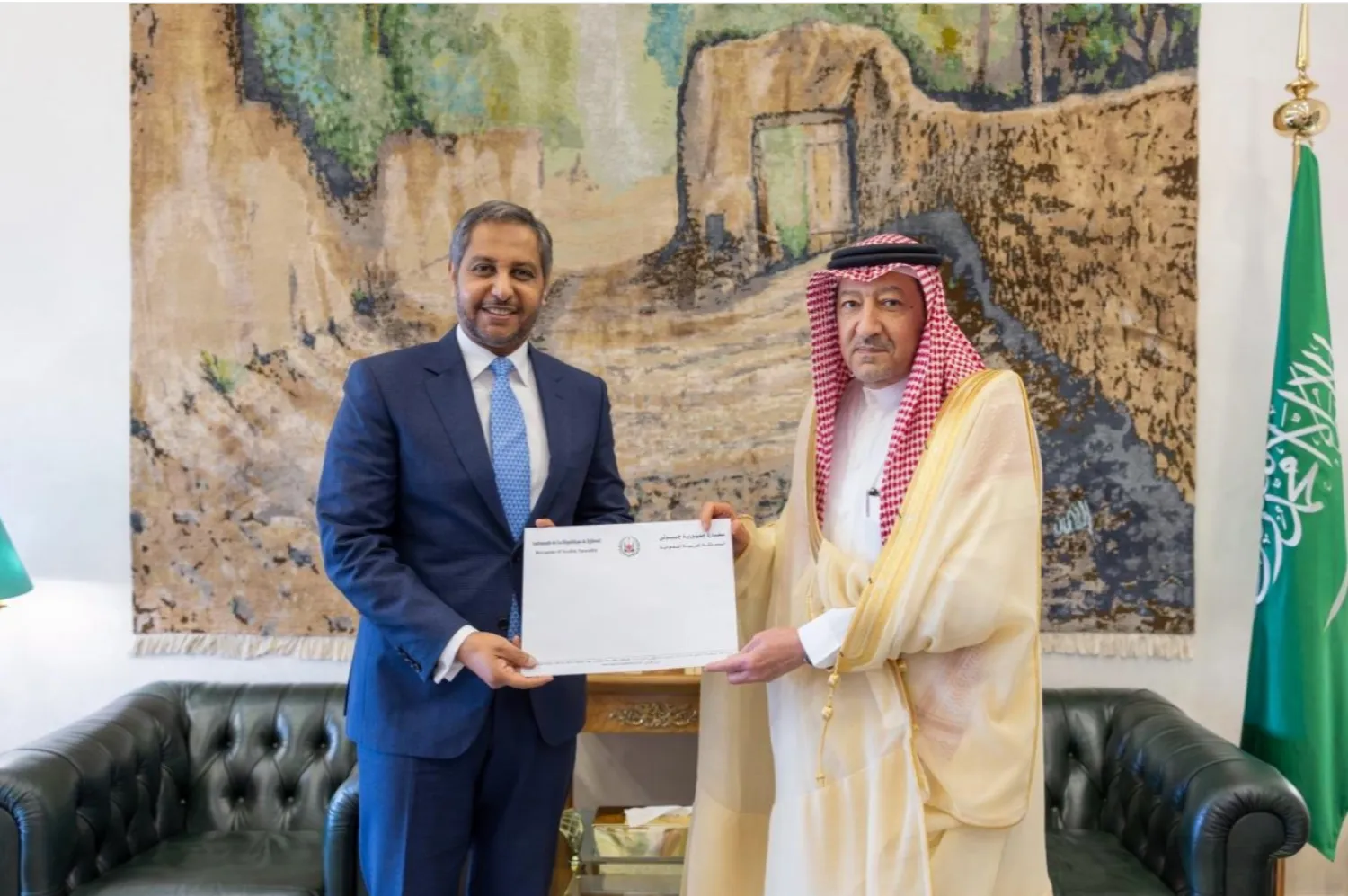
Custodian of the Two Holy Mosques King Salman bin Abdulaziz Al Saud received on Tuesday a written message from Russian President Vladimir Putin on bilateral ties between their countries.

Russian Ambassador to the Kingdom Sergey Kozlov delivered the message to Vice Minister of Foreign Affairs Waleed Elkhereiji at the ministry’s headquarters in Riyadh.

The officials reviewed the strong relations between Saudi Arabia and Russia and discussed the latest regional and international developments, as well as efforts exerted to address them.