



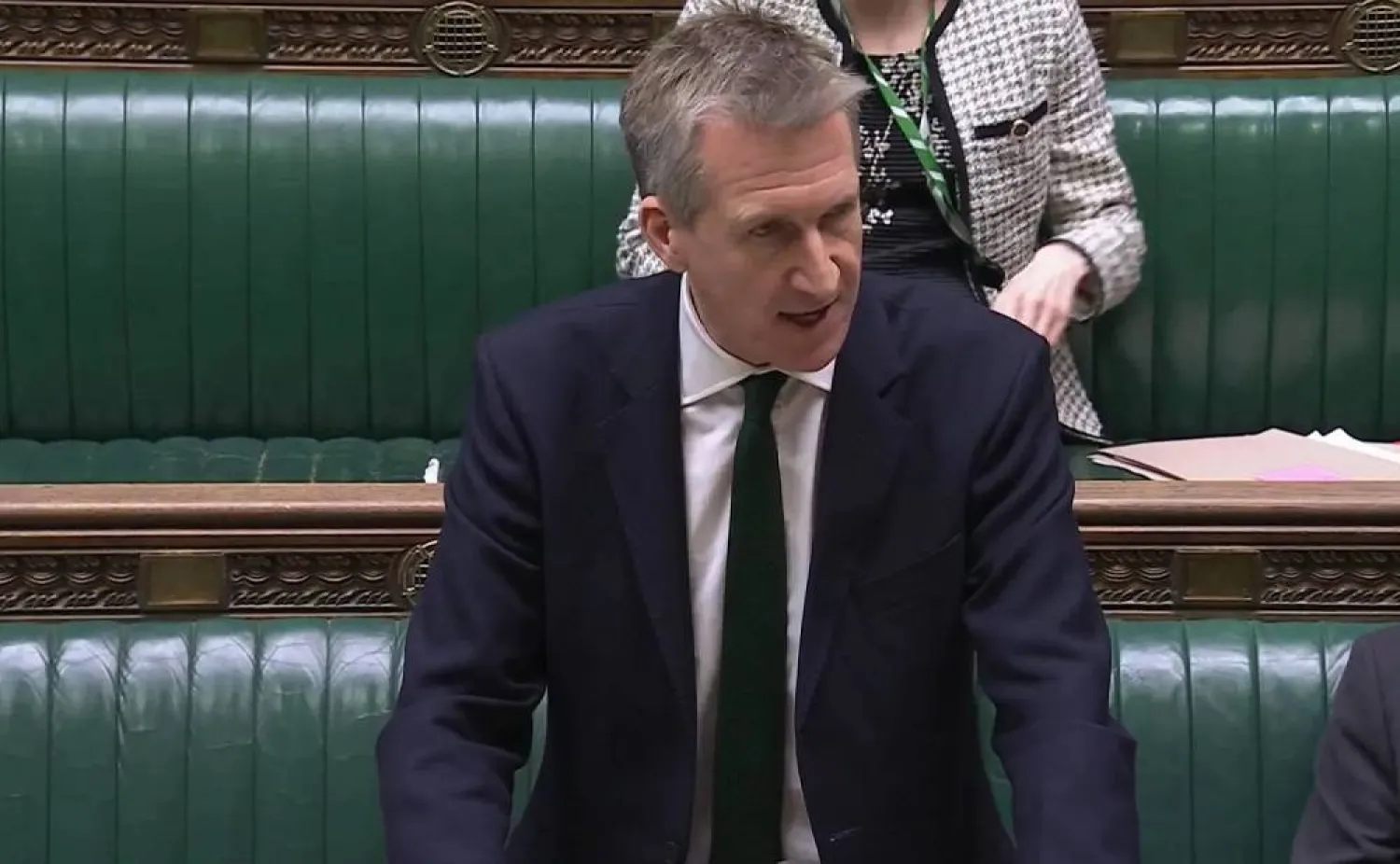

British Security Minister Dan Jarvis announced on Tuesday that the UK will place Iran, including its intelligence agencies and the Revolutionary Guard Corps, at the highest level in its new foreign influence registration system.
The UK describes this system as a two-tier framework designed to strengthen its political institutions against covert foreign influence while providing greater oversight of activities by certain foreign entities deemed a threat to national security.
Under the system, arrangements for conducting political influence activities in the UK under the direction of a foreign power must be registered. The enhanced tier allows a senior minister to require certain states to register a broader range of activities in order to safeguard British interests, according to Reuters.
Speaking in Parliament, Jarvis described the program as a crucial tool for countering foreign interference in the UK and confirmed that it will be implemented by summer.
According to Sky News, the measure means that anyone acting on behalf of the Iranian state or representing it while engaging in political influence activities must register their presence in the UK or face imprisonment.
Jarvis also announced that all 45 police forces across the UK will receive training and guidance from counterterrorism police on recognizing and responding to state-sponsored threats.
In October, the head of the UK’s domestic intelligence agency revealed that authorities had foiled 20 Iran-backed plots in the UK since early 2022.
Jarvis warned that Iran targets Jews and Israelis in the UK, as well as Persian-language media outlets based in the country that criticize the Iranian government. He accused Iran of attempting to suppress dissent through intimidation and fear, calling such threats unacceptable and stating that they must be countered at every turn.
He also noted that Iran’s threats are not only physical but also digital, as the UK’s National Cyber Security Center has detected malicious cyber activities linked to Iranian state actors targeting Britain.
Jarvis reminded Parliament that the National Security Act of 2023 granted new powers to law enforcement, including the ability to arrest individuals aiding foreign intelligence agencies, with a maximum sentence of 14 years in prison.
He further announced that Jonathan Hall, the independent reviewer of terrorism legislation, has been tasked with examining whether UK counterterrorism laws should be updated to address modern state threats, including those from Iran.
Hall told lawmakers he will assess whether a new banning mechanism should be introduced for hostile states and their affiliated entities, such as the Revolutionary Guard, to provide greater flexibility than existing legal measures, according to British media reports.
The UK has debated designating the Revolutionary Guard as a terrorist organization but has yet to reach a final decision.
In early February 2023, British media reported that the government had temporarily halted plans to blacklist the Revolutionary Guard after then-Foreign Secretary James Cleverly opposed the move, despite strong backing from the Home Office and Security Ministry.
In October that year, The Guardian reported that Cleverly’s opposition stemmed from concerns that such a designation could lead to the expulsion of the British ambassador from Tehran and diminish the UK’s remaining influence in Iran. Other reports suggested fears that the move could impact nuclear negotiations with Tehran.
In July, reports indicated that Foreign Secretary David Lammy was considering a legal amendment to impose stricter restrictions on the Revolutionary Guard rather than rushing to designate it as a terrorist organization.


