Siemens Energy Secures Power Plant Project in Saudi Arabiahttps://english.aawsat.com/business/5121390-siemens-energy-secures-power-plant-project-saudi-arabia
Siemens Energy Secures Power Plant Project in Saudi Arabia
Officials from Siemens Energy and Harbin Electric International during the signing of the agreements to provide technology for the two gas-fired power plants in Saudi Arabia. Photo: Siemens Energy
Siemens Energy Secures Power Plant Project in Saudi Arabia
Officials from Siemens Energy and Harbin Electric International during the signing of the agreements to provide technology for the two gas-fired power plants in Saudi Arabia. Photo: Siemens Energy
Siemens Energy has been awarded a $1.6-billion project to provide technology for two gas-fired power plants in Saudi Arabia, the German company said on Wednesday.
The project will allow Rumah 2 and Nairyah 2 in the country's western and central regions to add 3.6 gigawatts of power to the national grid, Siemens Energy said in a statement.
The project, with Harbin Electric International as a contractor, includes long-term maintenance agreements to support the plants' operational reliability over the next 25 years, it added.
Rumah 2 and Nairyah 2 will rank among the world's largest combined-cycle power plants. They will replace aging oil-fired stations, reducing carbon dioxide emissions by up to 60 percent compared to traditional oil-based power generation.
Additionally, the plants are being designed to be compatible with advanced carbon dioxide capture and storage technologies, supporting Saudi Arabia's long-term emissions reduction goals.
Saudi Arabia Bolsters Food Security with $798 Million for Strategic Commoditieshttps://english.aawsat.com/business/5326506-saudi-arabia-bolsters-food-security-798-million-strategic-commodities
Saudi Arabia Bolsters Food Security with $798 Million for Strategic Commodities
Agricultural land in Saudi Arabia (SPA)
Saudi Arabia’s Agricultural Development Fund (ADF) is playing a central role in national efforts to bolster food security, allocating SAR 3 billion ($798 million) to finance imports of strategic commodities through direct lending and partnerships with banks.
The funding is designed to cushion the impact of supply-chain disruptions and difficulties in getting goods into the Kingdom, with disbursements to beneficiaries continuing through the end of this year.
Saudi Arabia no longer views food security solely through the lens of increasing domestic production. Its approach has evolved into an integrated system encompassing stronger production, secure supply chains, strategic reserves, the localization of modern technologies and more efficient use of water and other resources.
By the end of the third quarter, the ADF had extended more than SAR 600 million ($159.6 million) in loans and credit facilities across several regions of the Kingdom. The financing covers projects in red meat, supply chains and processing industries, with the goal of increasing domestic production and sustaining food security.
Development loans
Since the beginning of the year, the fund has also extended more than SAR 150 million ($40 million) in development loans.
A total of 737 loans were issued, including 412 for rain-fed crops, around 236 for fruit production, processing and marketing, and about 56 for field crops and vegetables. Coffee production and processing accounted for around 14 loans, while four covered operating costs for date purchases.
Habib Al-Shammari, spokesman for the ADF, told Asharq Al-Awsat that development loans allow individuals to finance a range of agricultural activities, enabling them to contribute to economic and social development while helping strengthen food security.
They also allow farmers to capitalize on available opportunities and resources and the comparative advantages of different regions, while improving efficiency and promoting the optimal, sustainable use of agricultural and renewable water resources.
Among the programs backed by the fund is the Basic Commodities Import Initiative, carried out in coordination with the National Development Fund and the General Food Security Authority. It seeks to bolster strategic reserves of essential commodities and maintain stable food supply chains.
The ADF said the initiative reflects efforts by the Saudi leadership to address the repercussions of current conditions in the region by ensuring adequate supplies of essential food products, strengthening strategic stocks and maintaining the flow of goods to the domestic market.
The fund operates under an integrated strategy aligned with the National Agriculture Strategy, the Food Security Strategy and the National Development Fund Strategy, making it one of the key enablers of the Kingdom’s food security and environmental sustainability goals.
Al-Shammari said the ADF’s role extends beyond financing farmers and investors. Its range of financial products helps the agricultural sector adopt and localize modern technologies, increase productivity and become more sustainable, while taking water-security requirements into account.
Water at the heart of financing
The fund encourages agricultural projects to embrace technologies that reduce water and energy consumption while improving production efficiency.
Particular attention is given to projects that reuse treated water, alongside efforts to incorporate environmental, social and governance (ESG) standards throughout the financing process.
Backing also extends to innovative startups developing solutions in smart and vertical farming, water and energy technologies, agricultural production and food.
The approach reflects a broader shift in agricultural finance, from funding conventional production to investing in technologies capable of raising output while conserving natural resources, particularly water and energy, among the main challenges facing the sector’s long-term sustainability.
Research partnerships
In parallel, the ADF continues to forge strategic partnerships with government agencies, the private sector and research institutions to develop and apply modern agricultural practices and advance the technologies it finances.
Its partners include King Saud University, King Faisal University, King Abdullah University of Science and Technology (KAUST), and the National Center for Sustainable Agriculture Research and Development (Estidamah). The partnerships examine agricultural methods that can promote the adoption of modern technologies and improve efficiency across the sector.
Through this framework, the fund seeks to generate lasting economic and environmental benefits by increasing agricultural output, improving resource efficiency and reducing risks associated with water scarcity, in support of the Kingdom’s food-security and water-sustainability goals.
Against this backdrop, agricultural financing is expanding into investment across the entire food-security system, from meat and agricultural production to storage, refrigeration and processing, through to agricultural technologies, water and energy.
Ultimately, the approach is aimed at ensuring stable supplies and building strategic reserves capable of weathering changing conditions. Saudi food security is therefore based not simply on having food available in the market, but on the national system’s capacity to produce, store and transport it, secure its supply and efficiently manage the resources needed for production, ensuring its sustainability for future generations.
Digital Resilience: Saudi Arabia Readies Government Services for Continuityhttps://english.aawsat.com/business/5326500-digital-resilience-saudi-arabia-readies-government-services-continuity
Digital Resilience: Saudi Arabia Readies Government Services for Continuity
A citizen captures footage at a conference in Riyadh (SPA)
A student follows a lesson in a virtual classroom, a patient receives a medical consultation from home and a beneficiary accesses an official document on a mobile phone -snapshots of how digital government services have become part of everyday life in Saudi Arabia.
As access becomes easier, ensuring those services remain available is increasingly important. Education, healthcare and government transactions are daily needs that require readiness to maintain service availability and allow beneficiaries to rely on them when needed.
Amid current political conditions in the region and related security developments, such preparedness has taken on greater importance in supporting the continuity of daily life.
Digital resilience therefore goes beyond simply making services available electronically. It encompasses government entities’ ability to continue providing them and respond to changing needs through risk management and business continuity planning.
What has been achieved?
The Digital Government Authority (DGA) supports this effort through three interconnected services. Those include classifying platforms according to their importance and setting target recovery times for their services; recording digital service availability rates; and regulating outage reporting when required.
According to the DGA’s annual report, these tools help government entities maintain service continuity by establishing priorities, monitoring availability and defining reporting responsibilities.
Alongside these preparedness measures, Saudi Arabia’s Digital Experience Maturity Index reached 87.06% in 2026 following an assessment of 59 platforms. The quality of the digital experience measured by the index and the business continuity governed by regulations and services extend efforts from making platforms easier to use to supporting their ability to keep delivering services.
Risk at the heart of planning
The regulatory approach begins with the Controls of Risk Management and Business Continuity for Digital Government, designed to address risks proactively by establishing a risk management system and continuously improving it.
On business continuity, the controls cover establishing and activating the system, verifying its effectiveness and continuing to develop it.
The requirements embed risk management within the institutional workflow. The task does not end with drawing up a plan but extends to testing its effectiveness and improving it. Preparedness therefore becomes a continuous process tied to how services are managed rather than a measure invoked only in specific circumstances.
Linking risk management with business continuity allows entities to understand what could affect a service, organize preparations to address it, and direct resources and procedures toward priority operations.
Priority and recovery time
At the operational level, the Government Platforms and Applications Classification Service allows entities to classify their platforms and applications and set target recovery times for digital services according to their importance and the impact of any disruption.
This makes the nature and impact of a service the basis for determining priorities, rather than treating all platforms as having identical continuity requirements. A target recovery time is then assigned to define what continuity arrangements should achieve.
The approach shifts planning from a general discussion of preparedness toward requirements tied to specific services and their importance.
Monitoring availability
While classification establishes priorities, the Service Availability Rate allows government entities to record the availability rates of digital services provided to beneficiaries to monitor compliance.
When reporting is required, the Reporting Digital Government Services Disruption Service provides government entities with a defined process. It begins with the entity’s information technology chief appointing a crisis team responsible for submitting reports.
The three functions are therefore interconnected: classification establishes importance and target recovery times, availability records provide monitoring data, and outage reporting defines the communication channel and who is responsible for it. Together, they organize service continuity from planning and monitoring through to handling incidents requiring notification.
Guidance for implementation
These tools are supported by guidance documents, including the Guideline of Risk and Business Continuity Management for Digital Government and guidance on combating digital fraud.
The first supports government entities in applying relevant regulatory requirements and improving practices that underpin services to beneficiaries, providing a reference to help translate requirements into implementation.
Digital fraud guidance adds another dimension related to the security of transactions by supporting a risk-management methodology and national efforts to curb digital fraud.
Continuous access and reliable use are complementary needs. The first concerns keeping a service available, while the second concerns safeguarding transactions carried out through it.
Readiness centered on people
These measures give digital resilience a practical meaning: classification linking preparedness to the importance of a service, data for monitoring availability, clearly assigned reporting responsibilities, and controls and guidance supporting implementation.
Though regulatory and operational in nature, their impact is directly connected to people’s ability to manage their daily lives. For the student in a virtual classroom, the patient receiving a consultation and the beneficiary retrieving an official document, the objective is clear: ease of access must be matched by readiness to keep the service running.
Trust in digital government begins with the user experience but rests on the planning and monitoring behind it, keeping people’s needs at the heart of preparedness as daily life increasingly moves online.
World Bank to Asharq Al-Awsat: Easing of Hormuz Shock to Drive Saudi Growth to 7.9% in 2027https://english.aawsat.com/business/5326495-world-bank-asharq-al-awsat-easing-hormuz-shock-drive-saudi-growth-79-2027
World Bank to Asharq Al-Awsat: Easing of Hormuz Shock to Drive Saudi Growth to 7.9% in 2027
Ships are anchored off the coast of Khasab in Oman's Musandam Governorate, near the Strait of Hormuz, on October 2, 2026. (Photo by AFP)
Saudi Arabia's economy is expected to stage a strong rebound in 2027 as the effects of disruptions to energy and trade flows fade. The World Bank forecasts the Kingdom's GDP to grow by 7.9 percent next year, following a projected 2 percent contraction in 2026.
The crisis linked to the Strait of Hormuz closure has demonstrated that diversifying sources of economic growth is just as important as diversifying energy export routes and logistics infrastructure.
In an interview with Asharq Al-Awsat on the occasion of the release of the World Bank's latest regional economic update, Roberta Gatti, the World Bank's Chief Economist for the Middle East, North Africa, Afghanistan, and Pakistan, said that Saudi Arabia and the United Arab Emirates were able to weather the effects of the Strait of Hormuz closure more effectively than some neighboring energy-exporting countries, thanks to their possession of alternative export routes.
She explained that Saudi Arabia redirected a significant portion of its oil exports through the East-West Pipeline to Red Sea ports, while the UAE's ability to export hydrocarbons through Fujairah helped reduce its dependence on the strait.
According to Gatti, the crisis has reinforced rather than undermined the importance of economic diversification, while simultaneously highlighting another critical dimension of resilience: the diversification of export routes.
In her view, diversifying economic and financial activity across multiple income sources and sectors should be accompanied by diversification of trade routes, export infrastructure, and logistics networks.
This comes as the World Bank forecasts that the economies of the Middle East and North Africa, Afghanistan, and Pakistan region will contract by 2.1 percent in 2026, compared with growth of 3.3 percent in 2025.
At the same time, the economies of the Gulf Cooperation Council (GCC) countries are projected to contract by 4.3 percent, marking one of the most severe shocks to hit the region since the COVID-19 pandemic.
By contrast, the World Bank expects regional growth to rebound strongly to 7.8 percent in 2027, provided that conflict eases and trade and export flows gradually return to normal, driven primarily by the recovery of hydrocarbon production and exports.
Roberta Gatti, the World Bank's Chief Economist for the Middle East, North Africa, Afghanistan, and Pakistan (World Bank)
Saudi Arabia and Resilience
Gatti says the conflict highlighted several strengths that enhanced the Saudi economy's ability to absorb the shock, foremost among them the Kingdom's substantial financial reserves, its ongoing efforts toward economic diversification, and its capacity to redirect a significant share of oil exports through Red Sea ports.
These factors helped preserve a degree of resilience in the face of disruptions to trade and energy flows, compared with what the consequences might have been in the absence of such alternatives.
She explained that Saudi Arabia's ability to diversify its export routes was a key factor in mitigating the impact of disruptions in the Strait of Hormuz, while the economy's trajectory in the coming period underscores the importance of continuing to invest in this resilience.
According to the World Bank's latest forecasts, the Saudi economy is expected to contract by around 2 percent in 2026, before regaining strong momentum and expanding by approximately 7.9 percent in 2027 as trade and energy flows gradually return to normal.
Gatti stressed that the economy would have been affected far more severely had it not been for the availability of alternative export routes, particularly through the East-West Pipeline and Red Sea ports.
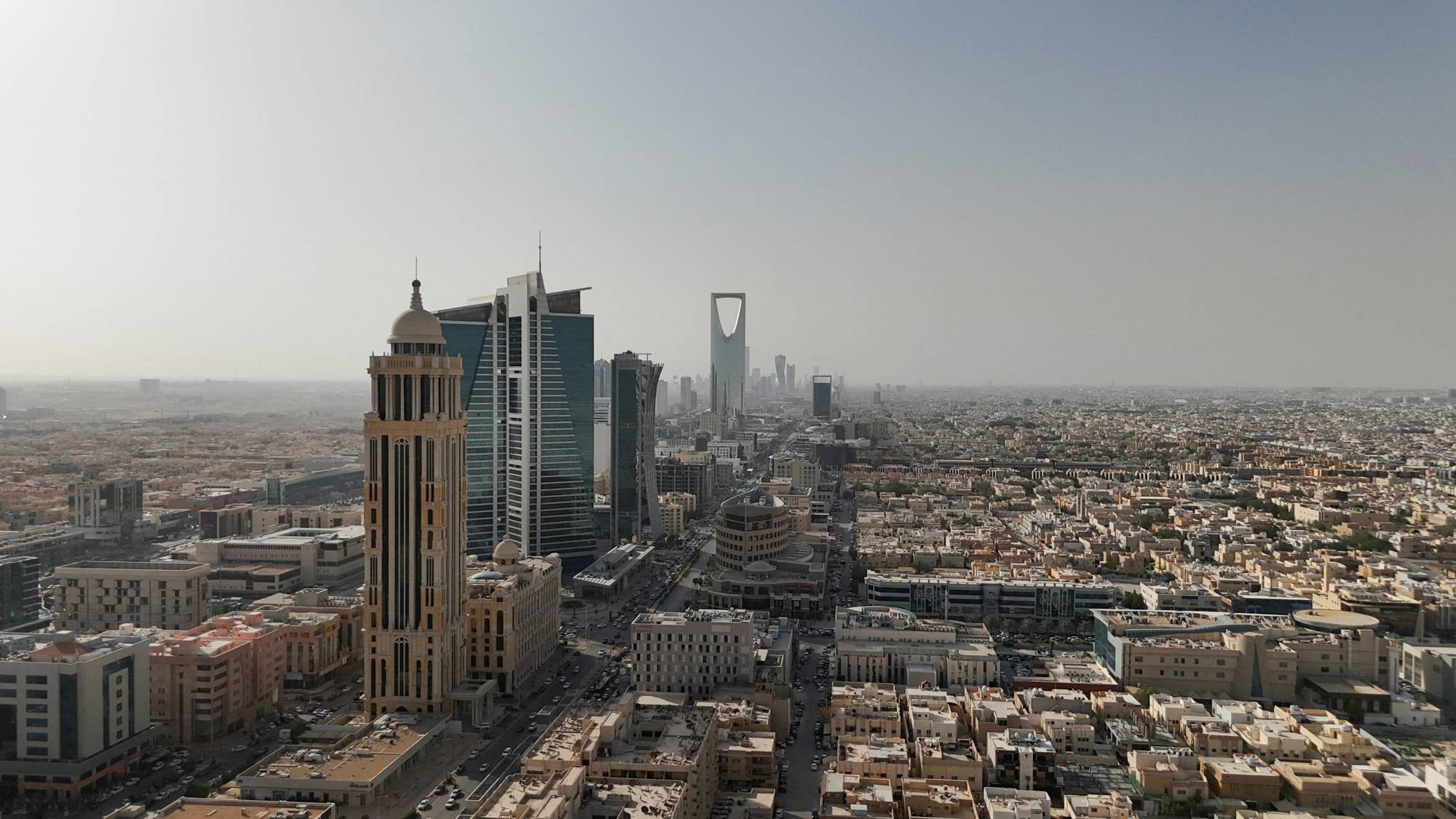
The Saudi capital, Riyadh (Reuters)
Hormuz Shock Hits Gulf Exports
Gatti says the disruption of the Strait of Hormuz had a profound impact on the World Bank's growth projections. Regional output is expected to contract by 2.1 percent in 2026, representing a decline of 5.7 percentage points from the growth forecasts issued before the conflict erupted in January.
This downturn is largely attributable to the severe disruptions suffered by Gulf oil and gas exporters. The World Bank expects all Gulf Cooperation Council (GCC) economies, with the exception of Oman, to contract during 2026.
The crisis led to a drop of more than 50 percent in oil tanker traffic through the Gulf, while regional oil production fell from approximately 26 million barrels per day to 16 million barrels per day in March.
Despite the magnitude of the shock, its global repercussions were more contained than might have been expected from a similar supply disruption. Several factors helped absorb part of the shortfall, including a pre-existing oil surplus in global markets, the rerouting of some shipments outside the strait, increased production in other regions, withdrawals from inventories, and weaker demand in East Asia.
However, the effects varied considerably among Gulf economies. Countries most dependent on the Strait of Hormuz experienced the steepest declines in output, while alternative export routes in Saudi Arabia and the United Arab Emirates helped mitigate the impact of the disruption.
The World Bank projects that Qatar's economy will contract by 20.9 percent in 2026, Kuwait's by 14.6 percent, Iraq's by 12.4 percent, and Bahrain's by 2.9 percent. At the same time, disruptions affecting tourism, aviation, and logistics services have imposed additional burdens on economic activity.
Strong Rebound in 2027
Gatti believes that the primary channel through which the shock was transmitted to Gulf economies was the decline in export volumes, compounded by damage to infrastructure. If trade routes return to normal and energy exports resume, a large share of the lost output could be recovered relatively quickly, explaining the World Bank's forecast of a strong rebound in 2027. For Saudi Arabia, the Bank expects economic growth to reach 7.9 percent next year.
However, Gatti stresses the need to distinguish between a rebound and a recovery. After a sharp decline in output, rapid growth often reflects the restoration of production from depressed levels rather than a corresponding improvement in underlying economic fundamentals or productivity.
Under the World Bank's baseline scenario, the conflict is assumed to continue until the end of 2026, followed by de-escalation and a gradual normalization of trade flows. Accordingly, regional growth, excluding Iran, is expected to rise to 7.8 percent in 2027 as export flows recover.
Nevertheless, repairing damaged infrastructure could take time, investments may remain on hold amid uncertainty, and fiscal reserves could be weaker than they were before the crisis.
Gatti warns that higher shipping costs, weaker investor confidence, lower tourism revenues, subdued global demand, and tighter financing conditions could prolong the economic impact of the conflict long after the immediate disruptions have ended.
She further notes that prolonged periods of uncertainty may delay investment decisions, weaken business confidence, and slow the accumulation of both physical and human capital, increasing the risk that a temporary shock could evolve into a prolonged slowdown in economic growth.
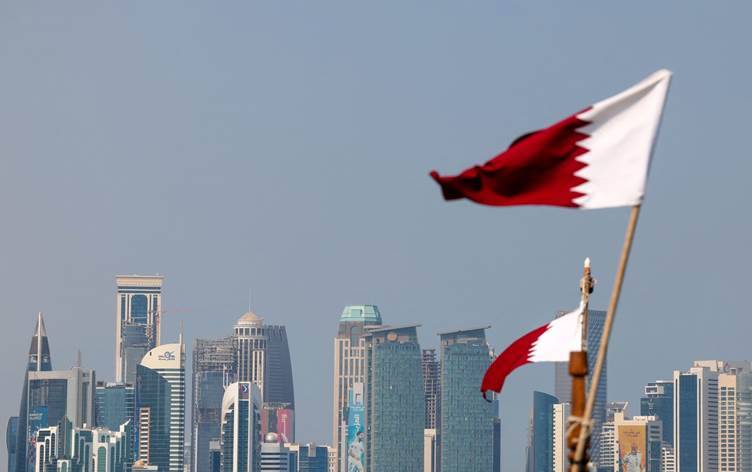
This photo shows a view of Doha, Qatar. (AFP)
The Gulf Retains a Cost Advantage
Despite the severity of the shock, Gatti believes that GCC economies still enjoy an important structural advantage, as they remain among the world's lowest-cost and most competitive producers of oil and gas.
As trade flows return to normal, these economies will, in her view, be well positioned to remain key suppliers to global markets. However, the policy challenge extends beyond restoring economic activity in the short term. It also involves continuing economic diversification, strengthening resilience, and protecting both human and productive capital during the crisis.
Gatti argues that such investments are essential to ensure that a temporary disruption does not become a permanent loss of growth potential.
Artificial Intelligence: The New Frontier of Productivity Diversification
Alongside the energy crisis, Gatti sees artificial intelligence (AI) as a potential new source of growth and productivity for the region. However, realizing its full potential will require addressing three major gaps: localization, adoption, and foundational capital, in addition to strengthening private-sector dynamism.
She explains that weak investment, limited training and innovation, as well as state dominance in some economies, corruption, and political instability, constrain companies' ability to adopt new technologies and translate them into broad productivity gains.
Gaps in the AI Ecosystem
The localization gap highlights the importance of local data and language capabilities. Although Arabic is spoken by more than 500 million people, it accounts for less than 1 percent of global website content, while local dialects remain a weakness in Arabic-language AI models.
The adoption and foundational-capital gaps are reflected in limited productive use of AI, shortages in digital skills, and disparities in infrastructure. The region scores below the OECD average in creative-thinking assessments, while mobile broadband subscription rates in eight economies, including Egypt, Iraq, and Pakistan, remain below levels expected for their income levels.
Saudi Arabia's Growing Regional Role
According to Gatti, Saudi Arabia stands out as one of the region's most advanced AI ecosystems. The Kingdom rose from 33rd place out of 36 economies in 2017 to 19th place in 2024 on Stanford University's Global AI Vibrancy Index.
She believes the real test lies in translating substantial investments in data centers and digital infrastructure into widespread adoption by businesses, workers, and public institutions, thereby boosting productivity and accelerating non-oil sector growth.
Saudi Arabia could play a leading role in building a regional AI ecosystem through its computing capacity, data centers, and AI model development capabilities, while developing economies across the region could contribute talent, sector-specific expertise, and local data.
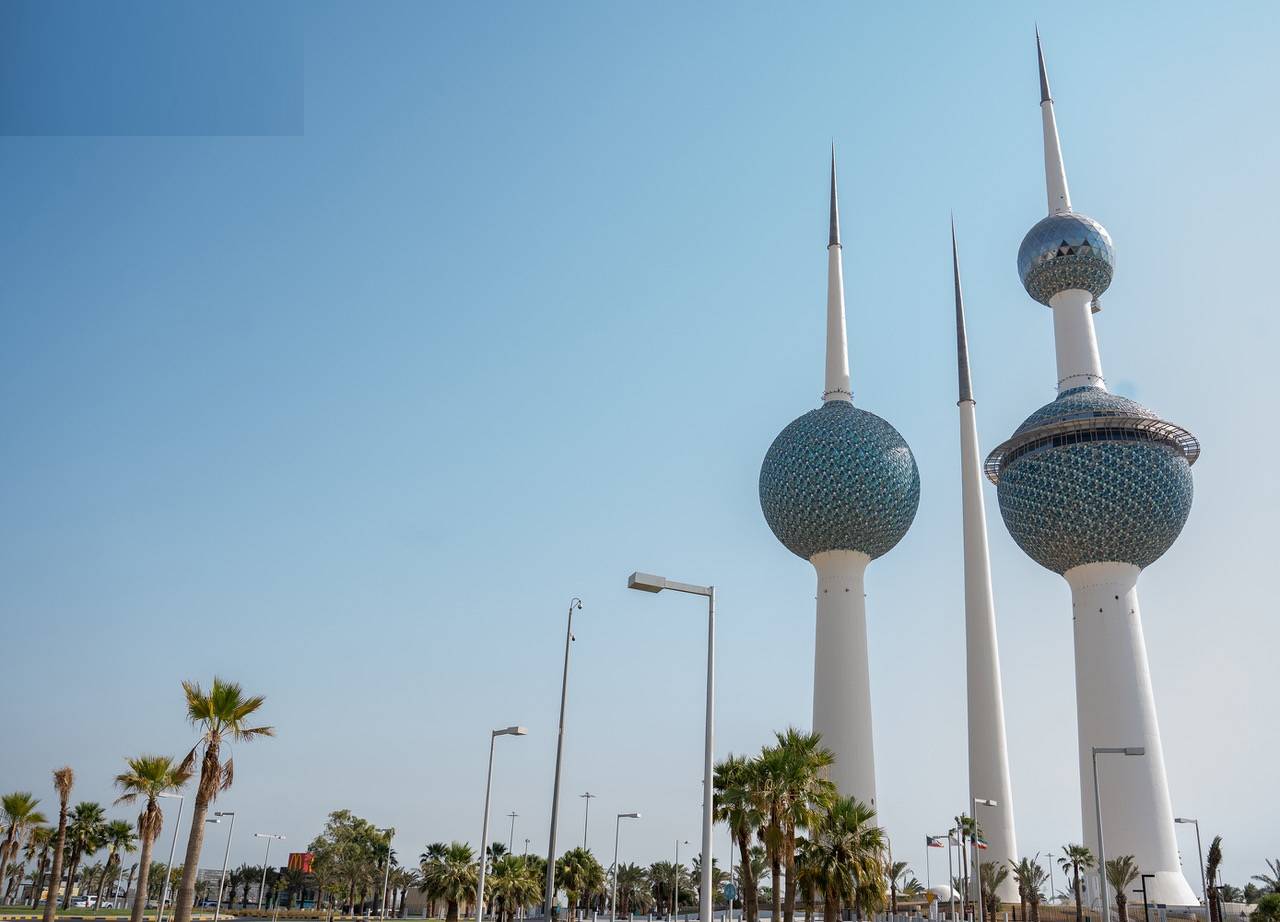
Kuwait Towers (KUNA)
Regional Cooperation: An Opportunity to Strengthen Resilience
Gatti believes that the greatest risk to the outlook for 2027 lies in the continued disruption of trade and energy flows, which could weigh on investment, logistics, tourism, and business confidence, thereby delaying the recovery.
At the same time, however, the crisis presents an opportunity to accelerate regional cooperation, particularly in the field of artificial intelligence. Gulf countries possess advanced infrastructure and computing capabilities, while other economies in the region offer talent, data, and innovation. This complementarity could create new sources of growth, boost productivity, and enhance economic resilience beyond the oil cycle.
For Saudi Arabia, Gatti argues that the Hormuz experience underscored the importance of combining economic diversification with the diversification of trade and export routes. With the Saudi economy projected to grow by 7.9 percent in 2027, the opportunity lies in transforming the post-shock rebound in output into more sustainable growth driven by productivity, investment, and non-oil sectors, while continuing to strengthen trade and export infrastructure capable of withstanding future disruptions.
لم تشترك بعد
انشئ حساباً خاصاً بك لتحصل على أخبار مخصصة لك ولتتمتع بخاصية حفظ المقالات وتتلقى نشراتنا البريدية المتنوعة