Sudanese men walk past a bullet-riddled building in Khartoum's twin-city Omdurman on March 20, 2025. (Photo by Ebrahim Hamid / AFP)
The war in Sudan appears to be reaching a critical juncture after nearly two years of fighting that has killed tens of thousands, driven millions from their homes and spread famine.
In recent months, the military has been making steady advances against its rival, the paramilitary Rapid Support Forces, and it says it has wrested back control of the capital, Khartoum. That includes the iconic Republican Palace. The RSF has not acknowledged the loss.
While the war is unlikely to end soon, here is a look at what the developments could mean, according to The Associated Press
What’s happening on the ground? The war erupted in April 2023 between the military and the RSF with battles in Khartoum and around the country. The leaders of the two forces had been allies who were meant to have overseen the democratic transition after a popular uprising in 2019, but instead worked together to thwart a return to civilian rule.
However, tensions exploded into a bloody fight for power.
Since then, at least 28,000 people have been killed, though the number is likely far higher. The war has driven more than 14 million people from their homes and pushed parts of the country into famine.
Will this end the war? The military victory in Khartoum likely just moves the war into a new chapter, creating a de facto partition of Sudan into military- and RSF-run zones.
Military chief Gen. Abdel-Fattah Burhan has shown no sign of engaging in serious peace talks. The RSF, headed by Gen. Mohamed Hamdan Dagalo, has seemed to be determined to keep fighting.
The RSF still holds much of western Sudan, particularly most of the Darfur region.
The advances in Khartoum may cause strains to break open in the military’s coalition. The military has been backed by a collection of armed factions — including former Darfur forces and armed brigades — that are historic rivals united only by the goal of fighting the RSF.
What is the significance of the RSF recently creating a ‘parallel government’? The RSF and its allies signed a charter in February in Kenya’s capital, Nairobi, establishing a parallel government.
Burhan also has spoken of setting up a transitional government, raising the potential for two rival administrations jockeying for support as their forces battle — entrenching Sudan’s effective partition.
The RSF’s 16-page charter calls for “a secular, democratic and decentralized state,” maintaining what it called Sudan’s “voluntary integrity of its territory and peoples” — a nod to Sudan’s many communities demanding autonomy from Khartoum.
The RSF grew out of the notorious Janjaweed militias, mobilized two decades ago by then-president Omar al-Bashir against populations that identify as Central or East African in Darfur. The Janjaweed were accused of mass killings, rapes and other atrocities.
In the current war, the RSF has been accused of numerous atrocities. The Biden administration slapped Dagalo with sanctions, saying the RSF and its proxies were committing genocide. The RSF has denied committing genocide.
The military has also been accused of abuses and denies that.
This photograph taken on March 26, 2026, shows a cat rescued from Beirut's southern suburbs by Lebanese NGO Animals Lebanon. (AFP)
TT
TT
Beirut Rescuers Risk Their Lives to Save Animals
This photograph taken on March 26, 2026, shows a cat rescued from Beirut's southern suburbs by Lebanese NGO Animals Lebanon. (AFP)
Armed with thick gloves and small plastic crates Kamal, Khalil and Reem jump on two mopeds and head into Beirut's southern suburbs, which see almost daily strikes by Israeli aircraft.
Hands scarred by a thousand bites and scratches, the small rescue team from Lebanese NGO Animals Lebanon uses two-wheelers to navigate streets made narrow by piles of rubble as they search for trapped animals.
In drizzling rain, the team is responding to two calls, passing from crammed central districts filled with people seeking safety into increasingly abandoned streets where Israeli airstrikes are concentrated.
The are seeking a pet cat they've been trying to trap for a week since it jumped through a bombed-out ground-floor window, and another showing signs of paralysis, they think from a recent Israeli bombing.
"We never lose hope that the cat we can't find is still around, because it will come back. This is its refuge," says volunteer Khalil Hamieh, 45.
Lebanon was pulled into the Middle East war on March 2 when Tehran-backed group Hezbollah fired rockets towards Israel to avenge the US-Israeli killing of Iran's supreme leader Ali Khamenei.
Israel has responded with large-scale strikes on Lebanon and a ground offensive in the country's south.
On the edge of Haret Hreik in Beirut's southern suburbs, where Hezbollah holds sway, Hamieh's colleague Issam Attar stops the jeep that will bring the rescued cats to hospital.
The mopeds can navigate onwards on two wheels, and escape quickly if an Israeli strike is announced.
- 'A living being' -
Between Israeli air raids and Hezbollah saying filming in the southern suburbs is "strictly prohibited", media access has become more complicated lately, and AFP journalists remained outside with Attar.
"It's a living being," Attar said of why he rescues animals. "It's not guilty of wars or anything else."
"Besides the fact that we feel for animals, there's also the owners who can't get their animals -- we can, and we want to help them."
Animals Lebanon told AFP its teams had rescued 241 animals from south Lebanon and Beirut's southern suburbs, areas under heavy bombardment since the start of the war.
In addition to killing over 1,100 people, the war has displaced over a million, according to Lebanese authorities.
In this city without air-raid sirens, gunshots into the air warn people of incoming Israeli airstrikes.
The shooting and the ensuing explosions terrify cats especially, Animals Lebanon Operation Manager Reem Sadek said, and many families can't find their pets as they rush to evacuate.
"Cats in particular, when there's a strike, they panic," she said.
"We're perhaps the only people with the experience to find... and capture them."
Some of the cats can't be immediately reunited with their owners, who have nowhere to keep them as they sleep rough on the streets or crowd into shelters, so the cats stay at the Animals Lebanon office.
- 'Risking our lives' -
The war has made everything more complicated for the rescuers, including the evacuation from Lebanon of a five-month-old lion cub, still small but growing bigger by the day inside their office.
They confiscated her from wildlife traffickers shortly before the war broke out, as they were searching for another trafficked lion cub that they later tracked to Lebanon's rural northeast.
The airlines capable of bringing the lions from Lebanon to South Africa are not flying due to the war, so they're trying to evacuate the cubs to Cyprus by boat.
For now, the Animals Lebanon team continues its rescue missions -- as well as missions to feed stray animals and distribute food and veterinary medicine in places where displaced people are staying.
"We know we're risking our lives, and not just because of the shelling," Hamieh says, showing the scarred backs of his hands after they successfully rescued both cats and brought them out of the danger area.
"We're afraid of a fight with a cat or a dog while trying to save it," he says, "because it doesn't understand what we're doing."
‘JD or Marco?’: Iran War Raises 2028 Stakes as Trump Weighs Vance vs. Rubiohttps://english.aawsat.com/features/5256569-%E2%80%98jd-or-marco%E2%80%99-iran-war-raises-2028-stakes-trump-weighs-vance-vs-rubio
US Secretary of State Marco Rubio listens to US President Donald Trump speaking to the media, as Trump departs the White House for Florida, in Washington, DC, US, March 20, 2026. (Reuters)
TT
TT
‘JD or Marco?’: Iran War Raises 2028 Stakes as Trump Weighs Vance vs. Rubio
US Secretary of State Marco Rubio listens to US President Donald Trump speaking to the media, as Trump departs the White House for Florida, in Washington, DC, US, March 20, 2026. (Reuters)
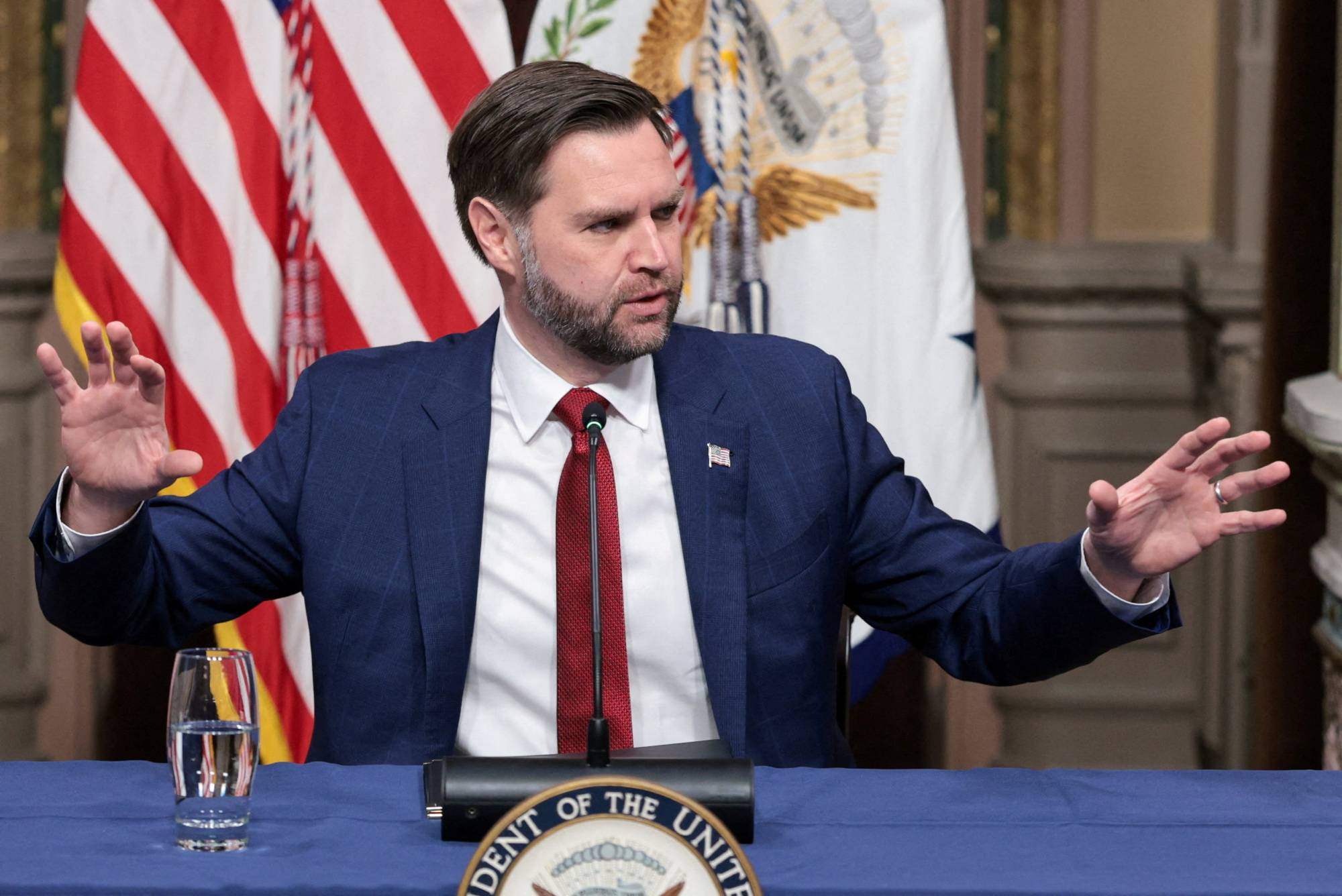
As the war in Iran threatens to imperil President Donald Trump's legacy, the political stakes also are rising for two of his top lieutenants: Vice President JD Vance and Secretary of State Marco Rubio.
The pair, widely viewed as potential successors to Trump, have been thrust into still-developing negotiations to end the war at a moment when the Republican Party is already weighing its post-Trump future.
Vance has taken a cautious approach, reflecting his skepticism toward prolonged US military involvement, while Rubio has aligned himself closely with Trump’s hawkish stance and emerged as one of the administration’s most vocal defenders of the campaign.
Trump has said both men were involved in efforts to force Iran to accept US demands to dismantle its nuclear and ballistic missile programs and allow oil traffic to pass freely through the Strait of Hormuz.
With the next presidential election due in 2028 and term limits barring Trump from running again, the president has been putting the succession question to allies and advisers in private, asking "JD or Marco?," two people familiar with his views said.
The outcome of the US military operation now in its fifth week could shape the two men's 2028 prospects, political analysts and Republican officials said.
A swift end to the war that favors the US might bolster Rubio, who also serves as Trump's national security adviser and could be seen as a steady hand during a crisis. A prolonged conflict could give Vance space to argue he reflected the anti-war instincts of Trump’s base without openly breaking with the president.
Trump's own standing is also at stake. His approval rating fell in recent days to 36%, its lowest point since he returned to the White House, hit by a surge in fuel prices and widespread disapproval of the Iran war, a four-day Reuters/Ipsos poll completed last week found.
Some Republicans say they are watching closely for which senior aide Trump appears to favor as the Iran conflict unfolds. Some see signs of Trump leaning toward Rubio but note he could change his mind quickly.
"Everyone is watching the body language that Trump makes on Rubio and not seeing the same on Vance," a Republican with close ties to the White House said.
The White House rejected the idea that Trump is signaling a preference.
"No amount of crazed media speculation about Vice President Vance and Secretary Rubio will deter this administration's mission of fighting for the American people," spokesman Steven Cheung said.
FROM TRUMP RIVALS TO LIKELY HEIRS
Vance, 41, a former Marine who served in Iraq, has long argued against US entanglements in foreign wars. His public comments on Iran have been limited and calibrated, and Trump has noted the two have "philosophical differences" on the conflict.
Once a self-described "never-Trumper," Vance wrote an opinion piece in the Wall Street Journal in 2023 saying Trump's best foreign policy was not starting any wars during his first four years in office between 2017 and 2021.
The White House has downplayed any rift between the president and vice president. Standing alongside Trump in the Oval Office earlier this month, Vance said he supported Trump's handling of the war and agreed with him that Iran should not obtain a nuclear weapon.
Vance could take on a more direct role in negotiations if Trump's special envoy Steve Witkoff and son-in-law Jared Kushner make sufficient progress, a person with knowledge of the matter said.
"Vice President Vance is proud to be a part of a highly effective team that, under President Trump’s bold leadership, has had incredible success in making America safer, more secure and more prosperous," a Vance spokeswoman said.
A senior White House official, who like others in this story was granted anonymity to speak freely about a sensitive topic, said Trump tolerates ideological differences as long as aides remain loyal, adding that Vance's skeptical views have helped inform Trump about where part of his voter base stands.
US Vice President JD Vance convenes the first meeting of US President Donald Trump's anti-fraud task force at the Eisenhower Executive Office Building on the White House campus in Washington, DC, US, March 27, 2026. (Reuters)
A person familiar with Vance's views told Reuters the vice president will wait until after the November midterm elections before deciding on whether to run in 2028.
Vance won the straw poll at the Conservative Political Action Conference's annual gathering, with about 53% of the more than 1,600 attendees who voted favoring him as the next Republican nominee.
The results released on Saturday also showed Rubio gaining ground, finishing second at 35%, up from just 3% last year.
Rubio, 54, has said he will not run for president if Vance does, and sources familiar with Rubio's views say he would be content as Vance's running mate.
But any perceived vulnerability for Vance could encourage Rubio and other Republicans eyeing bids.
"Trump has a long memory," said Republican strategist Ron Bonjean. "And he may call out Vance for his lack of allegiance. And if Trump remains popular with the MAGA base, that could hurt him by not getting the endorsement of the president."
Trump has floated the idea of Vance and Rubio running together, suggesting they would be hard to beat.
"Trump doesn’t want to anoint anyone," the senior White House official said.
A March Reuters/Ipsos poll found that 79% of Republicans have a favorable view of Vance, while 19% viewed him negatively. Some 71% had a positive view of Rubio, while 15% viewed him unfavorably.
In comparison, 79% of Republicans viewed Trump favorably and 20% unfavorably.
Rubio, whose 2016 presidential aspirations were snuffed out after a bitter confrontation with Trump, has long since set aside any frictions with the president.
State Department spokesman Tommy Pigott said Rubio "has a great relationship, both professionally and personally" with Trump's team.
Rubio and the White House were forced into damage control after he angered some of Trump's conservative backers when he suggested that Israel pushed the United States into the war. But in the weeks since, Trump has praised Rubio's efforts.
Asked whether Rubio was concerned that a protracted war might damage his political future, a senior State Department official said, "He has not spent a second thinking about this.”
DIFFERENCES ON DISPLAY
Matt Schlapp, a conservative leader who runs CPAC, said the Iran campaign will have big political consequences.
"If it is seen as successful at getting the job done...I think people will be politically rewarded for doing the right thing," Schlapp said. "If it goes on and on and on... I think the politics are tough."
Republicans remain broadly supportive of the US military strikes against Iran, with 75% approving compared to just 6% of Democrats and 24% of independents, Reuters/Ipsos polling showed.
At a televised Cabinet meeting on Thursday, the contrast between Rubio and Vance was on display.
Rubio gave a full-throated defense of Trump's attack on Iran. "He's not going to leave a danger like this in place," the secretary of state said.
Vance was more measured, focusing on options for depriving Iran of a nuclear weapon. He closed by wishing Christians and US troops in the Gulf a blessed Holy Week and Easter.
"We continue to stand behind you," he said to servicemembers, "and continue to support you every step of the way."
Victory and Defeat Scenarios for Iran’s Proxies in Lebanon and Iraqhttps://english.aawsat.com/features/5256453-victory-and-defeat-scenarios-iran%E2%80%99s-proxies-lebanon-and-iraq
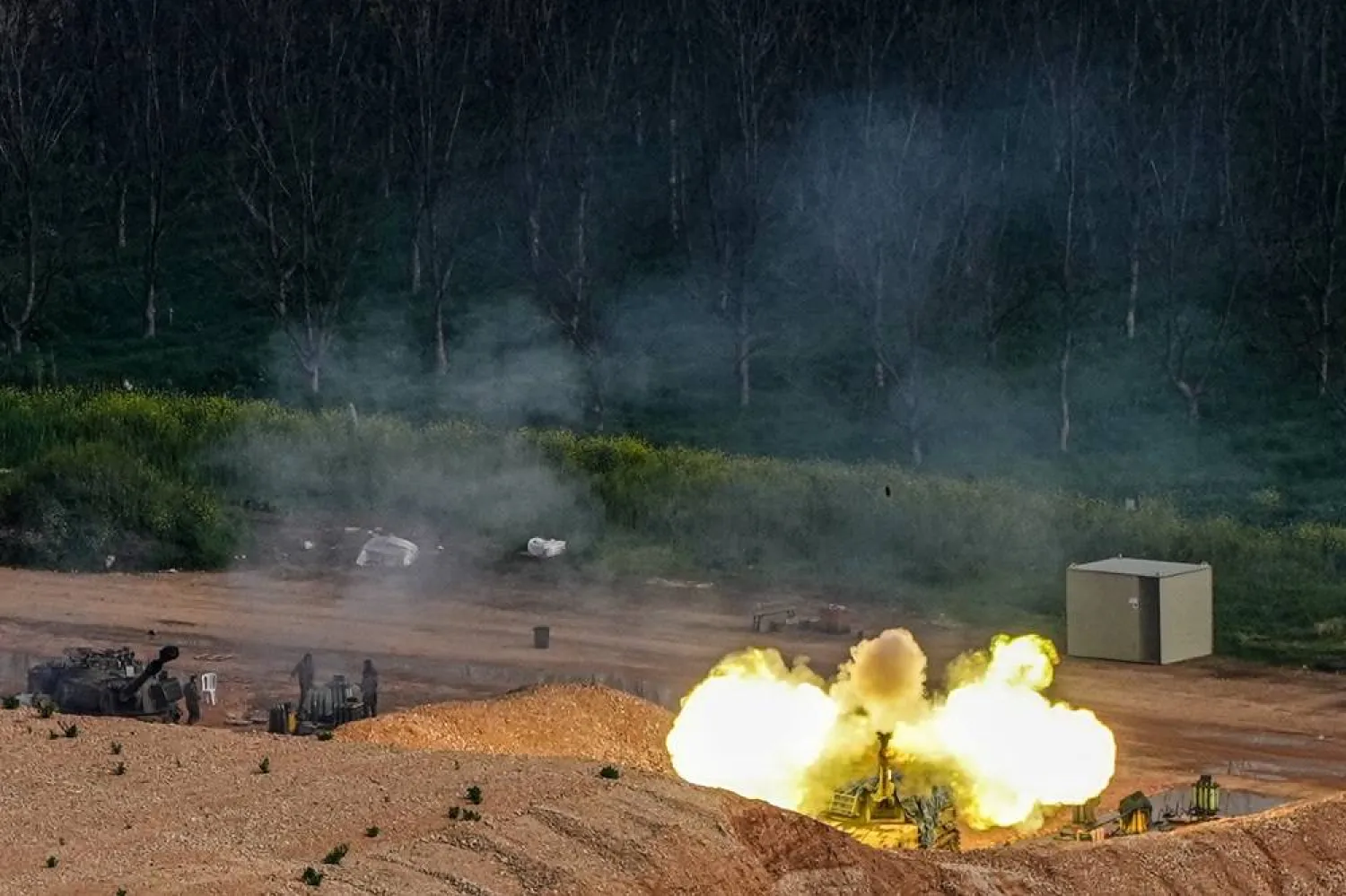
An Israeli artillery unit fires towards Lebanon, amid escalating hostilities between Israel and Hezbollah, as the US-Israeli conflict with Iran continues, in northern Israel, March 28, 2026. (Reuters)
Victory and Defeat Scenarios for Iran’s Proxies in Lebanon and Iraq
An Israeli artillery unit fires towards Lebanon, amid escalating hostilities between Israel and Hezbollah, as the US-Israeli conflict with Iran continues, in northern Israel, March 28, 2026. (Reuters)
The future of Iran’s regional allies, particularly Hezbollah in Lebanon and armed factions in Iraq, is increasingly uncertain as a widening conflict reshapes the Middle East and tests the limits of Tehran’s long-standing proxy strategy.
Lebanese politician Michel Chiha once outlined a vision of Lebanon as a country open to the world through its coastline, protected internally by its mountainous terrain. He advocated a liberal, service-based economy rather than heavy industry, while emphasizing that Israel represented the primary external threat.
His assessment was largely accurate, but incomplete. Chiha did not fully account for the broader geopolitical system that governs Lebanon, one influenced by global and regional powers.
Lebanon has historically been vulnerable to shifts between these two levels. When global and regional dynamics align, the country experiences relative stability. When they clash, Lebanon often pays a heavy price, including political paralysis, internal unrest, and even civil war. If such conflicts persist without resolution, international powers tend to intervene, often delegating regional actors to impose a settlement.
This pattern has repeated itself at key moments in Lebanon’s modern history: the 1958 crisis at the end of President Camille Chamoun’s term; the outbreak of civil war in 1975; Syria’s 1990 intervention that ended General Michel Aoun’s military government; the 2008 Doha Agreement following Hezbollah’s takeover of Beirut; and more recently, political shifts culminating in the election of President Joseph Aoun after the failure of Hezbollah’s “support war” to meaningfully assist Gaza.
Iran in the region
Iran’s confrontation with the US-led global order dates back to the 1979 revolution. However, the strategic environment changed dramatically after the September 11, 2001, attacks and the subsequent US invasion of Iraq in 2003.
The collapse of Saddam Hussein’s regime reshaped the regional balance of power. For the first time, US forces were positioned directly on Iran’s borders, in both Iraq and Afghanistan. Tehran responded by expanding its influence through a network of allied groups across the region.
This strategy centered on the development of proxies, linked geographically through what became known as the “Axis of Resistance” and the concept of “unity of arenas.” These networks extended across Iraq, Syria, Lebanon and Yemen, allowing Iran to project influence across land, sea and air.
The so-called “Arab Spring” represented both an opportunity and a setback for Iran. On one hand, it enabled Tehran to expand its presence by filling political and security vacuums. On the other, it exposed its intentions, particularly as it mobilized allied groups to support friendly regimes.
Hezbollah’s intervention in Syria marked a turning point. The group became deeply involved in a prolonged and complex conflict, exposing vulnerabilities at multiple levels — security, military and ideological. These weaknesses became evident during subsequent confrontations with Israel, particularly during the Gaza war, when Israel penetrated Hezbollah’s structure and targeted senior leaders.
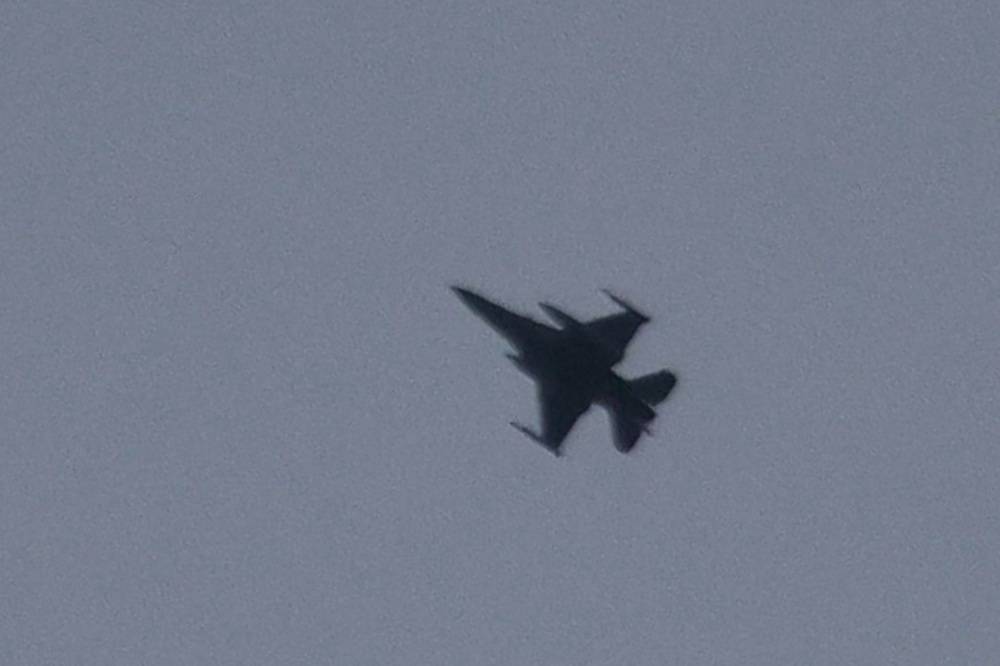
An Israeli Air Force F-16 fighter aircraft flies over Marjeyoun in southern Lebanon on March 28, 2026. (AFP)
Iraq enters the picture
Iraq occupies a central place in Iran’s geopolitical thinking. Historically, it has been viewed as a major source of threat to Iranian national security, from ancient times through to the modern era under Saddam Hussein during the Iran-Iraq War.
After 2001, Iran found itself effectively encircled by US forces. The emergence of the ISIS group in 2014, which seized large areas of Iraqi territory, further underscored Iraq’s strategic importance. For Tehran, maintaining influence in Iraq is essential to ensuring internal stability and national security. Control or strong influence over Iraq provides strategic depth and helps prevent potential threats from emerging on its western border.
Following the 2003 invasion, Iran’s regional strategy became more clearly defined: Iraq as the base, Syria as the corridor, and Lebanon — through Hezbollah — as the strategic endpoint or “crown jewel.”
October 7
The October 7, 2023 attack by Hamas on Israel is widely viewed as a “black swan” event, one that disrupts the foundations of the existing order without immediately creating a new equilibrium.
The attack triggered a chain reaction across the region. It exposed the limitations of Iran’s proxy-based strategy and highlighted what is known in political theory as the “principal-agent problem.” In this dynamic, the patron state - Iran - pursues broader strategic goals, while proxies focus on local or ideological objectives.
This misalignment creates inherent risks. When proxies succeed, both sides benefit. When they fail, the proxies bear the immediate consequences.
In the case of October 7, Iran was drawn into a conflict it neither fully anticipated nor sought to escalate. It encouraged Hezbollah to intervene under the banner of a “support war” for Gaza. The result was a cascading deterioration, with both Hamas and Hezbollah suffering significant losses.
The concept of “unity of arenas” began to unravel as the conflict expanded. By 2025, the situation escalated further when Israel and the United States launched a coordinated military campaign against Iran in June, lasting 12 days.
The campaign included strikes on Iranian nuclear facilities using advanced bunker-busting munitions carried by US B-2 bombers. It also reflected an unprecedented level of coordination between Washington and Tel Aviv, not only in execution but also in planning and target allocation.
Another defining feature of the conflict has been its reliance on remote warfare. Iran has used missiles and drones to strike Israel and regional targets, while Israel, backed by US capabilities, has relied on air power and technological superiority, including the use of artificial intelligence in target selection and strike coordination.
Lebanon and Iraq in the crossfire
The regional conflict has drawn in multiple actors, though with varying levels of involvement. Yemen’s Houthi militants have played a more limited and delayed role, likely reflecting logistical constraints and strategic calculations.
In contrast, Hezbollah in Lebanon and Iran-aligned factions within Iraq’s Popular Mobilization Forces have been more actively engaged.
In Lebanon, Iran has sought to rebuild Hezbollah following its setbacks in 2024. Reports suggest the group has been retrained in a decentralized form of warfare known as “mosaic warfare,” which emphasizes dispersion, flexibility and the avoidance of large-scale confrontations. This approach relies on a combination of rockets, anti-tank weapons and drones, effectively returning Hezbollah to tactics used prior to Israel’s withdrawal from southern Lebanon in 2000.
In Iraq, the situation differs. Armed factions have conducted attacks against US interests but have also targeted Iraqi state institutions, including intelligence facilities and radar systems. This dual targeting reflects internal divisions and raises concerns about the erosion of state authority.
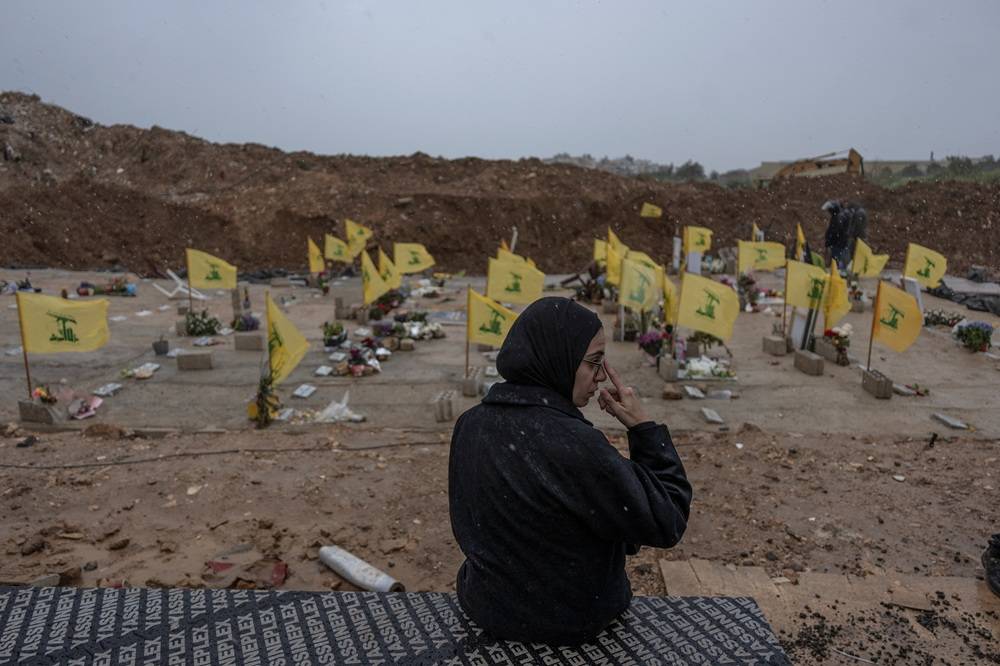
A woman sits in a cemetery before the funeral of Lebanese journalists, Al Manar reporter Ali Shaib, Al Mayadeen reporter Fatima Ftouni and cameraman Mohammed Ftouni, who were killed by a targeted Israeli strike, amid escalating hostilities between Israel and Hezbollah, as the US-Israeli conflict with Iran continues, in Choueifat, Lebanon, March 29, 2026. (Reuters)
Lebanon and Iraq’s challenges
Lebanon and Iraq share similarities as internationally recognized sovereign states, yet both face significant challenges in exercising full control over their territories.
In Iraq, militias within the PMF are formally integrated into the state’s security structure. However, some operate according to independent agendas that do not always align with national interests.
In Lebanon, Hezbollah operates as both a military force confronting Israel and a powerful domestic actor. It has often challenged state authority and pursued policies that diverge from official government positions.
The impact of the conflict has been more severe in Lebanon. The country has experienced displacement, particularly in the south and in parts of Beirut, as well as widespread destruction in Hezbollah strongholds. Israeli forces have also established a presence in southern territories they had not previously occupied.
In contrast, Iraq has not faced large-scale displacement or foreign occupation during this phase of the conflict. However, internal instability remains a concern, particularly as tensions between different political and ethnic groups persist.
Strategically, Iraq continues to serve as a cornerstone of Iran’s regional system. Lebanon, by contrast, has become more isolated, especially following the disruption of supply routes to Hezbollah through Syria.
War outcome
Several scenarios could shape the outcome of the conflict, each with significant implications for Iran’s proxies in Lebanon and Iraq.
Diplomatic solution:
At present, this scenario appears unlikely. The United States is demanding concessions that Iran had previously rejected, while Tehran is putting forward conditions that are seen as difficult to meet. Among these are demands related to control over key maritime routes and broader regional security arrangements.
Iran has also linked any potential ceasefire to developments on the Lebanese front, suggesting an effort to maintain influence there. A diplomatic resolution would raise critical questions about Hezbollah’s future, including the status of its weapons, its fighters and its role within Lebanon’s political system.
Current situation persists:
A prolonged war of attrition is seen as a scenario that could work in Iran’s favor. Time and economic resources, particularly oil revenues, could allow Tehran to sustain the conflict while gradually wearing down its adversaries.
However, this scenario carries significant risks. It could lead to deeper instability across the region, particularly in Gulf states, while exacerbating internal tensions in Iraq. In Lebanon, continued conflict could further weaken state institutions and increase the risk of internal unrest.
War scenario:
A broader military escalation remains a possibility. Reports indicate that the United States has considered expanded operations involving ground, naval and air forces.
Potential targets could include Iran’s strategic oil export facilities, such as Kharg Island, as well as key islands controlling access to the Strait of Hormuz. More complex operations, such as seizing enriched uranium, are considered less likely due to the challenges involved.
For Washington, any such operation would need to achieve a clear outcome. Failure could have significant consequences for the United States and its allies.
If a military campaign were to succeed, Lebanon would face major challenges, including addressing Hezbollah’s future and managing relations with Israel. Iraq, on the other hand, could see an opportunity to strengthen state authority and consolidate internal stability.
If it were to fail, the broader regional situation would likely remain unstable, with limited immediate impact on Iraq but continued uncertainty for Lebanon.
لم تشترك بعد
انشئ حساباً خاصاً بك لتحصل على أخبار مخصصة لك ولتتمتع بخاصية حفظ المقالات وتتلقى نشراتنا البريدية المتنوعة