


Mohammed bin Salman: Unprecedented Transformations, Reforms, and Global Achievements

Crown Prince Mohammed bin Salman bin Abdulaziz. (SPA)
TT

Mohammed bin Salman: Unprecedented Transformations, Reforms, and Global Achievements

Crown Prince Mohammed bin Salman bin Abdulaziz. (SPA)

For Saudis, every anniversary of the pledge of allegiance has become synonymous with new reforms and unprecedented transformations across various sectors. This ongoing progress is at the heart of Vision 2030, an ambitious plan designed to diversify the economy, drive sustainable development, unlock the potential of promising industries, and position Saudi Arabia as a leading economic force in the region and beyond.

Crown Prince Mohammed bin Salman bin Abdulaziz has placed the nation’s interests, the well-being of its citizens, and their quality of life at the forefront of his priorities. His leadership emphasizes empowering youth and women, while preserving Saudi Arabia’s authentic identity and values, which reflect the Kingdom's deep-rooted heritage and its bright image on the global stage.

Among the key sectors driving Saudi Arabia’s transformation, tourism has emerged as a major contributor to economic diversification. With mega-projects like NEOM, the Red Sea Project, and Qiddiya, alongside the introduction of the electronic tourist visa, the Kingdom has attracted massive investments and millions of visitors.

The technology sector has also undergone a significant transformation, making Saudi Arabia a regional hub for innovation, with heavy investments in artificial intelligence (AI) and the Internet of Things (IoT).

Crown Prince and Prime Minister Mohammed bin Salman bin Abdulaziz at a cabinet meeting. (SPA)

Meanwhile, the industrial sector has expanded and evolved with a focus on advanced manufacturing, renewable energy, and high-tech industries.

Logistics, leveraging the Kingdom’s strategic location as a global connectivity hub, has also seen substantial development through major upgrades to airports, ports, and transportation networks.

In a major step toward industrial advancement, Crown Prince Mohammed announced the launch of Alat, a subsidiary of the Public Investment Fund (PIF), which aims to establish Saudi Arabia as a global center for sustainable industries focused on advanced technologies and electronics. The company will develop and manufacture semiconductors, robotics, and drones, catering to local, regional, and international markets.

The creation of Alat reflects Saudi Arabia’s commitment to economic diversification and its ambition to become a leading industrial and technological powerhouse.

The Kingdom has also made significant strides in biotechnology and environmental sustainability. The National Biotechnology Strategy, launched last year, aims to position Saudi Arabia as a leader in the biotech sector while improving public health, protecting the environment, and ensuring food and water security.

In parallel, the National Red Sea Sustainability Strategy seeks to safeguard the Red Sea’s ecosystem, promote sustainable development, and advance the transition to a blue economy.

Facing economic challenges

Despite global economic challenges, Saudi Arabia has demonstrated remarkable resilience, achieving 1.3% economic growth in 2024. This success is the result of extensive efforts to diversify the economy, with the non-oil sector’s contribution to GDP exceeding 51%, a testament to the Kingdom’s strategic vision and sound economic policies.

Moreover, the country has effectively managed inflation, keeping it at just 1.7% by the end of last year, placing it among the top-performing economies in the G20 in this regard.

Attractive environment for investment

Under the leadership of the Crown Prince, Saudi Arabia has become one of the world’s most attractive investment destinations. Major reforms have transformed the investment landscape, enabling the execution of mega-projects aligned with Vision 2030.

Last year, the government introduced a new investment law aimed at attracting foreign investors and diversifying revenue sources. More than 600 multinational companies relocated their regional headquarters to the Kingdom, while over 14,454 new investment licenses were issued this year, bringing the total number of active licenses to over 40,000.

Foreign direct investment (FDI) has more than doubled since the launch of Vision 2030, reaching SAR 900 billion ($240 billion).

Artificial intelligence

Artificial intelligence has become a cornerstone of Vision 2030, serving as a key driver of economic diversification and digital transformation. The Kingdom has taken major steps to strengthen its digital infrastructure, establishing itself as a regional and global leader in AI development and applications.

These efforts have positioned Saudi Arabia 14th globally and 1st in the Arab world in the Global AI Index, while also securing the top global ranking for government AI strategy.

Within just two years, the Kingdom has attracted $28.3 billion in AI investments, reinforcing its leadership in this transformative sector.

Under the direction of the Crown Prince, the Saudi Authority for Data and Artificial Intelligence (SDAIA) has revolutionized digital services, making a significant impact across multiple industries.

One of its most notable initiatives is the “Ainai” (My Eyes) Project, which leverages AI for early detection of diabetic retinopathy and has successfully diagnosed over 846 patients in just one year.

In government services, the Unified National Access System has saved over SAR 2 billion in operational costs while reducing reliance on self-service devices and manual processing.

Meanwhile, the “Nafath” application has helped users save over 5 billion minutes by eliminating the need for multiple passwords and has contributed to environmental sustainability by reducing 260,000 daily car trips.

Within just two years, the Kingdom has attracted $28.3 billion in AI investments. (SPA)

Saudi Arabia has also harnessed AI and smart technologies to improve the Hajj and Umrah experience, overcoming major logistical challenges and ensuring seamless services for millions of pilgrims. Digital platforms like “Tawakkalna” have provided over 350 electronic services, benefiting 253 government agencies and enhancing the pilgrimage experience.

International forums and conferences

As Saudi Arabia continues its transformation, it has emerged as a global hub for international conferences and exhibitions. The Kingdom has successfully hosted major global events, reinforcing its growing influence on the world stage.

In April, Riyadh hosted the World Economic Forum (WEF) 2024, bringing together world leaders, experts, and decision-makers to address global challenges and foster collaborative solutions.

Automotive industry

Saudi Arabia is also making significant strides in the automotive industry. The establishment of the “King Salman Automotive Manufacturing Complex” in King Abdullah Economic City is set to become a major hub for car manufacturing. The complex will house Lucid Motors and Ceer (Saudi Arabia’s first EV brand), marking a major milestone in the Kingdom’s push toward electric vehicle production.

In addition, a $488 million joint venture with Hyundai will establish an advanced automated car manufacturing plant, set to begin production in 2026, making it Hyundai’s first facility in the Middle East.

The “King Salman Automotive Manufacturing Complex” in King Abdullah Economic City will house Lucid Motors and Ceer. (SPA)

Road networks

Infrastructure development remains a key priority, with Crown Prince Mohammed launching the Riyadh Circular Roads Development Program in August. The initiative includes the expansion and development of over 500 km of roads, with four major projects valued at over $3.46 billion.

Architectural heritage

To celebrate and preserve the Kingdom’s rich architectural heritage, the Crown Prince unveiled the Saudi Architecture Characters Map. This initiative, which identifies 19 distinct architectural styles inspired by Saudi Arabia’s geographic and cultural heritage, aims to enhance the nation’s architectural diversity, improve urban landscapes, and create 34,000 direct and indirect jobs in engineering, construction, and urban development.

Sustainable tourism has also become a key pillar of Vision 2030, balancing economic growth with environmental and cultural preservation. The 2025 Saudi Tourism Forum, held in Riyadh, highlighted the Kingdom’s diverse tourism potential, attracting investors and fostering collaboration between the public and private sectors. The event showcased Saudi Arabia’s efforts to promote cultural and environmental tourism, ensuring that economic benefits align with the preservation of historical and ecological treasures.

For example, Al-Ahsa, a UNESCO World Heritage site, is a prime example of cultural and natural tourism, with its vast palm groves, water springs, and rich traditions dating back thousands of years.

Additionally, Time Magazine has named Shebara Resort, owned and operated by Red Sea Global, among the “World’s Greatest Places of 2025.” This recognition highlights the resort’s status as a luxury destination that seamlessly combines elegance, sustainability, and breathtaking natural beauty.

With its commitment to innovation, sustainability, and economic diversification, Saudi Arabia is rapidly advancing toward a new era of global leadership and prosperity.


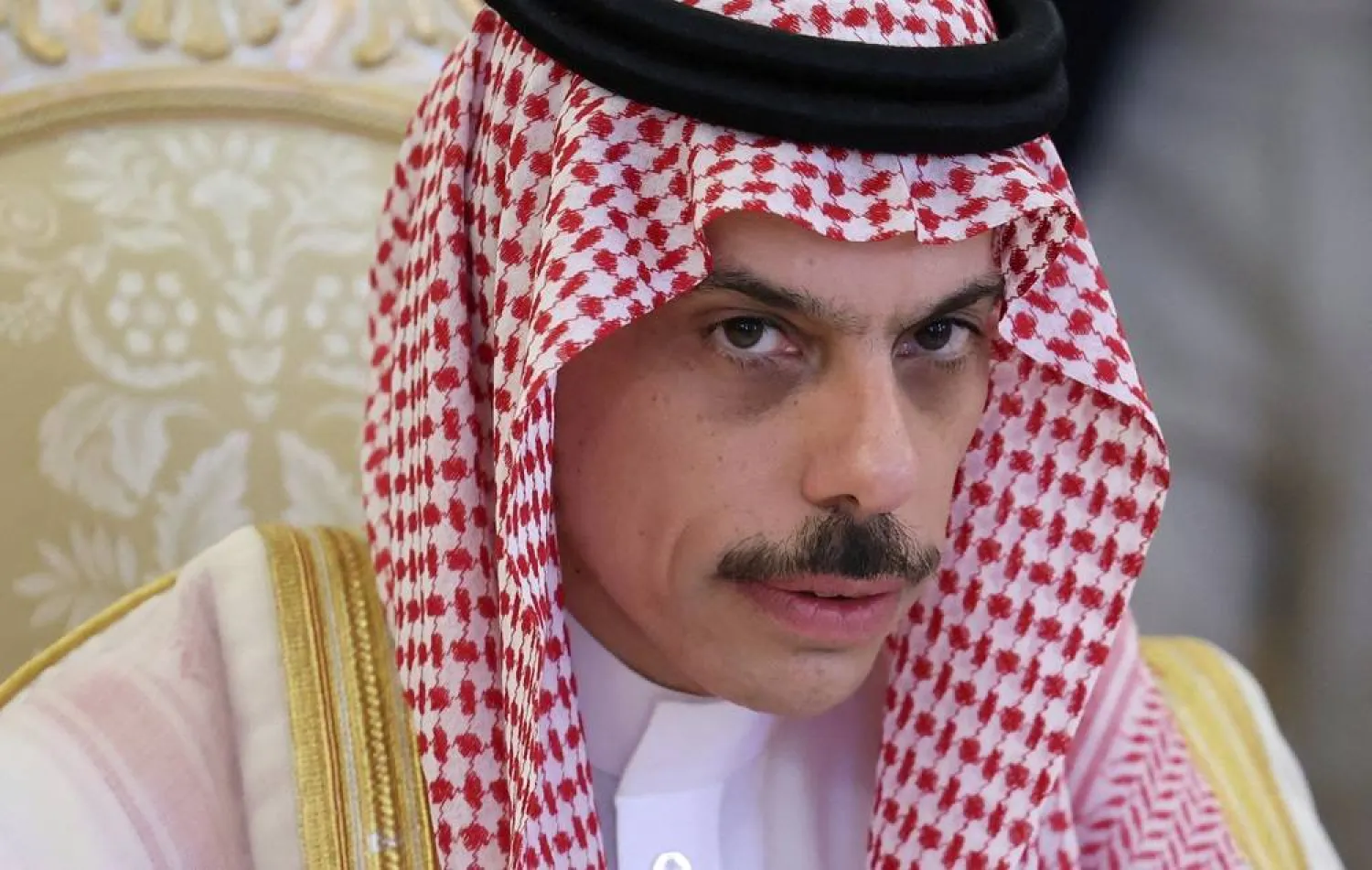

Saudi, Omani FMs Discuss Regional Developments

Saudi Minister of Foreign Affairs Prince Faisal bin Farhan bin Abdullah meets with his Omani counterpart Badr bin Hamad bin Hamood Albusaidi in Riyadh on Wednesday. (SPA)
TT

Saudi, Omani FMs Discuss Regional Developments

Saudi Minister of Foreign Affairs Prince Faisal bin Farhan bin Abdullah meets with his Omani counterpart Badr bin Hamad bin Hamood Albusaidi in Riyadh on Wednesday. (SPA)

Saudi Minister of Foreign Affairs Prince Faisal bin Farhan bin Abdullah received in Riyadh on Wednesday his Omani counterpart Badr bin Hamad bin Hamood Albusaidi.

They reviewed the strong bilateral relations between their countries and ways to boost them across various fields.

They also addressed the latest developments in the region and the importance of continuing efforts to achieve security and stability.


OIC Condemns Israeli Decision to Ban 37 Aid Groups from Operating in Gaza

 The sun sets over a tent camp sheltering Palestinians displaced by the Israeli offensive, on New Year’ Eve in Khan Younis, southern Gaza Strip, December 31, 2025. (Reuters)
The sun sets over a tent camp sheltering Palestinians displaced by the Israeli offensive, on New Year’ Eve in Khan Younis, southern Gaza Strip, December 31, 2025. (Reuters)
TT

OIC Condemns Israeli Decision to Ban 37 Aid Groups from Operating in Gaza

 The sun sets over a tent camp sheltering Palestinians displaced by the Israeli offensive, on New Year’ Eve in Khan Younis, southern Gaza Strip, December 31, 2025. (Reuters)
The sun sets over a tent camp sheltering Palestinians displaced by the Israeli offensive, on New Year’ Eve in Khan Younis, southern Gaza Strip, December 31, 2025. (Reuters)

The General Secretariat of the Organization of Islamic Cooperation (OIC) strongly condemned on Wednesday Israel’s decision to prevent 37 international non-governmental organizations operating in the humanitarian and health sectors from carrying out their activities in Gaza.

The Secretariat stressed that these organizations “play an indispensable role in alleviating humanitarian suffering in Gaza.”

The OIC General Secretariat “warned of the grave consequences of this arbitrary measure, which is likely to dangerously exacerbate the catastrophic humanitarian situation in the Gaza Strip due to Israeli restrictions that hinder the entry of sufficient humanitarian and medical aid.”

It deemed the Israeli decision as “illegal and a “blatant violation of the principles of international humanitarian law and the advisory opinion of the International Court of Justice, which obliges the Israel to facilitate the work of international and humanitarian organizations and to allow the adequate and unhindered delivery of humanitarian assistance to the Gaza Strip.”

The OIC General Secretariat called on the international community “to take the necessary measures and exert effective pressure on Israeli authorities to reverse this decision, ensure the protection of humanitarian workers, and guarantee the freedom of humanitarian organizations to operate without restriction throughout the occupied Palestinian territory.”


Gulf Countries, OIC Say Security of Saudi Arabia and GCC States Integral to Region

A general view of Kuwait City buildings, Kuwait, December 23, 2024. (Reuters)
TT

Gulf Countries, OIC Say Security of Saudi Arabia and GCC States Integral to Region

A general view of Kuwait City buildings, Kuwait, December 23, 2024. (Reuters)

Qatar announced that it is following with great interest the ongoing developments and events in Yemen, reiterating its full support for the legitimate Yemeni government and the importance of preserving Yemen’s unity and territorial integrity, safeguarding the interests of the brotherly Yemeni people, and achieving their aspirations for security, stability, and development.

In a statement, the Qatari Ministry of Foreign Affairs stressed that the security of Saudi Arabia and the Gulf Cooperation Council states is integral to the security of Qatar, stemming from the deep-rooted brotherly ties and shared destiny that unite the GCC countries.

The ministry commended the statements issued by Saudi Arabia and the United Arab Emirates, noting that they reflect a commitment to prioritizing the region’s interests, boosting the principles of good neighborliness, and adhering to the foundations and principles enshrined in the Charter of the Gulf Cooperation Council.

Qatar will remain at the forefront of countries supporting efforts to promote dialogue and diplomacy as the optimal path to achieving prosperity, security, and stability for the region and its peoples, stressed the ministry.

Kuwait's foreign ministry issued a similar statement, saying the security of Saudi Arabia and GCC states is a fundamental pillar of Gulf collective security, rooted in the bonds of brotherhood and shared destiny among them.

It expressed continued support for regional and international efforts aimed at promoting dialogue and peace, emphasizing diplomacy as the most effective path to achieving security, stability, and lasting peace in the region.

Bahrain, chair of the current session of the GCC, praised the “pivotal role played by Saudi Arabia and the United Arab Emirates in supporting the security and stability of Yemen, stemming from their brotherly responsibilities and shared commitment to the security and stability of the Gulf region within the GCC framework.” 

The Bahraini Ministry of Foreign Affairs stressed its “confidence in the wisdom of the leaderships of Saudi Arabia and the UAE, and in their ability to contain any differences within the framework of the GCC, in line with the principles of the GCC based on solidarity, mutual understanding, and unity, serving the shared aspirations to instill security, stability, peace, and prosperity for the benefit of the region and its peoples.” 

The ministry reiterated Bahrain’s “firm and supportive stance toward all regional and international initiatives and efforts aimed at reaching a comprehensive and lasting political solution in Yemen, in accordance with the GCC initiative and its executive mechanism, the outcomes of the Comprehensive National Dialogue Conference, and relevant UN Security Council resolutions.” 

Jordan also praised Saudi Arabia and the UAE's roles in supporting Yemen.

OIC

Secretary-General of the Organization of Islamic Cooperation (OIC) Hissein Brahim Taha underlined the organization’s firm stance in support of Yemen, its sovereignty, unity, and territorial integrity.  

He reiterated the OIC’s categorical rejection of any actions or attempts that would undermine Yemen’s unity or compromise its constitutional legitimacy and national institutions, in light of recent developments in the country. 

He renewed the OIC’s full support for the legitimate Yemeni government, represented by the President of the Presidential Leadership Council. He stressed the importance of preserving and strengthening state institutions in order to realize the Yemeni people’s aspirations for security, stability, and development. 

Taha condemned any actions or practices by the Southern Transitional Council that pose a direct threat to Yemen’s unity, undermine peace efforts, and prolong the conflict.  

“Any disruption to Yemen’s security and stability also threatens peace and security across the region,” he warned. 

He welcomed the announcement of the UAE’s withdrawal of forces from Yemen, describing it as a “constructive step that supports de-escalation efforts and spares the blood of the Yemeni people.” 

He further stressed that the security, sovereignty and territorial integrity of Saudi Arabia “constitute inviolable red lines.” 

“Any threat to the Kingdom’s security is a direct threat to the security of the entire region and the Islamic world,” Taha added, underscoring the OIC’s “full solidarity with Saudi Arabia in all measures taken to safeguard its national security.” 

He stressed “the need to continue supporting political and diplomatic efforts aimed at reaching a comprehensive and lasting solution to the Yemeni crisis.” 

He called on all Yemeni parties “to uphold legitimacy, renounce violence, and prioritize dialogue and the higher interests of Yemen and its people, in order to achieve security, stability, and development while preserving the country’s unity, sovereignty, and territorial integrity.”