


Saudi Arabia Downs 60 Drones, Two Killed in Oman

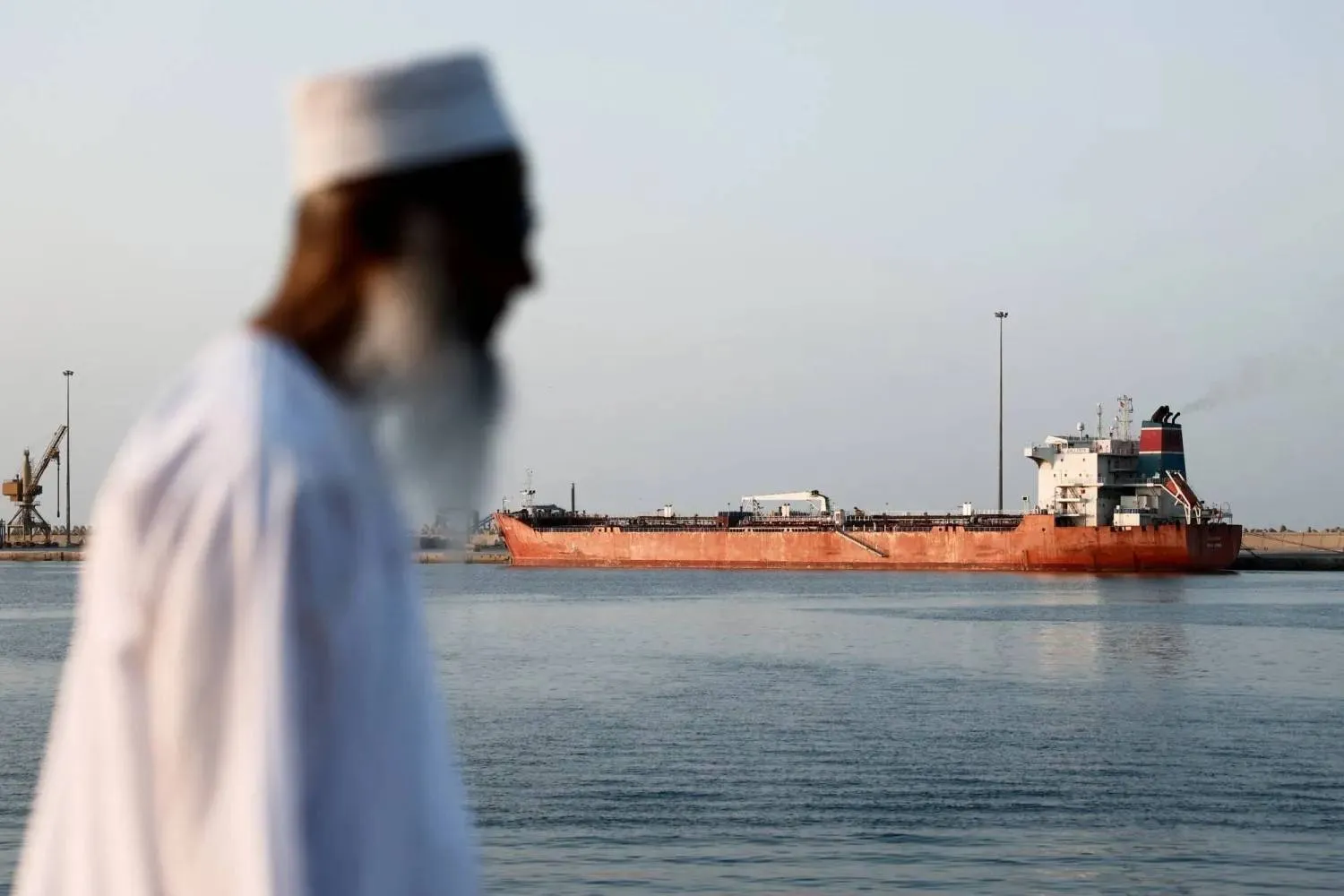
The Callisto tanker sits anchored in Port Sultan Qaboos as the traffic is down in the Strait of Hormuz, amid the US-Israeli conflict with Iran, in Muscat, Oman, March 12, 2026. REUTERS/Benoit Tessier
TT

Saudi Arabia Downs 60 Drones, Two Killed in Oman

The Callisto tanker sits anchored in Port Sultan Qaboos as the traffic is down in the Strait of Hormuz, amid the US-Israeli conflict with Iran, in Muscat, Oman, March 12, 2026. REUTERS/Benoit Tessier

Gulf air defenses continued on Friday to intercept Iranian missiles and drones in attacks that have persisted for two weeks, striking residential areas, civilian facilities and critical infrastructure and causing casualties and material damage.

Gulf states said they remain fully prepared to confront any threats and will respond firmly to attempts to undermine their security, stressing their determination to safeguard sovereignty, stability and national interests.

Jasem Albudaiwi, Secretary-General of the Gulf Cooperation Council (GCC), warned the Iranian attacks could have negative repercussions for the global economy and the stability of international markets. He said the danger extends beyond Gulf security and threatens international navigation in the Strait of Hormuz.

In a statement issued Friday after separate ministerial meetings held by video conference with Jordan, Egypt, Morocco and Britain, Albudaiwi said targeting commercial vessels and key maritime routes poses a direct threat to freedom of navigation and exposes global trade and energy security to serious risks.

Saudi Arabia

Saudi Defense Ministry Spokesperson Maj. Gen. Turki Al-Maliki said air defenses intercepted and destroyed 62 drones from early Friday until 8:00 p.m. local time.

Twenty-eight drones were shot down after entering Saudi airspace, 20 in the Eastern Province, seven across the Eastern and Central regions, three in Al-Kharj governorate, three in Al-Kharj and the Empty Quarter, and one while attempting to approach the Diplomatic Quarter in Riyadh.

Oman

An Omani security source said two drones crashed in the Wilayat of Sohar. One fell in the Al-Awahi industrial area, killing two expatriates and injuring others, while the second landed in an open area without causing casualties.

The source, cited by the Oman News Agency, praised the cooperation of citizens and residents in avoiding the spread of images and rumors and relying on official sources, adding that all efforts are being mobilized to protect the Sultanate and those living in it.

United Arab Emirates

The UAE said its air defenses intercepted seven ballistic missiles and 27 drones launched from Iran on Friday, bringing the total since the start of the attacks to 285 ballistic missiles, 15 cruise missiles and 1,567 drones.

The Defense Ministry said the attacks have left six people dead — including Emirati, Pakistani, Nepali and Bangladeshi nationals — and 141 injured with minor to moderate wounds among people of multiple nationalities.

The ministry later said air defenses were continuing to intercept incoming missiles and drones from Iran, adding that sounds heard in parts of the country were caused by ballistic missile defense systems and fighter jets engaging drones and cruise missiles.

It said it remains fully prepared to confront any threats and will act firmly against any attempt to undermine the country’s security.

Dubai’s government media office said authorities dealt early Friday with a minor incident caused by debris from an intercepted aerial object that struck the facade of a building in central Dubai, with no injuries reported.

The UAE Civil Aviation Authority said flight operations were gradually resuming, urging travelers to check with airlines before heading to the airport.

It said 1.4 million passengers passed through the country’s airports between March 1 and March 12, with 7,839 flight movements recorded. National carriers have restored 44.6% of their previous operating levels.

Bahrain

Bahrain’s Defense Force said air defense systems continued to confront successive waves of Iranian attacks, adding that 115 missiles and 191 drones targeting the country have been intercepted and destroyed since the start of the assault.

The command described the use of ballistic missiles and drones against civilian sites and private property as a flagrant violation of international humanitarian law and the United Nations Charter, warning the attacks pose a direct threat to regional peace and security.

Authorities urged the public to remain indoors unless absolutely necessary, avoid damaged areas and suspicious objects, refrain from photographing military operations or debris sites and rely only on official information.

Kuwait

Kuwait’s Defense Ministry Spokesperson, Colonel Saud Al-Atwan, said one hostile ballistic missile was detected over the past 24 hours outside the threat zone, posing no danger and causing no damage.

He said monitoring of potential aerial threats continues as part of defensive measures to protect the country’s airspace.

Interior Ministry Spokesperson Brigadier Nasser Bousleib said authorities detected individuals using drones for aerial filming in violation of previously announced instructions, warning that such actions hinder security and military efforts and that violators will face legal action.

Bomb disposal teams handled 16 reports in the past 24 hours linked to debris from intercepted projectiles, bringing the total number of reports since the start of the Iranian attacks to 372.

Health Ministry Spokesperson Dr. Abdullah Al-Sanad said the country’s health situation remains stable, with hospitals and health centers operating at full capacity and medical teams ready to respond to any emergency.

He said two people were injured on Thursday when a residential building was struck and were transferred to Al-Adan Hospital. Authorities also launched a psychological support hotline (151) for citizens and residents.

The Commerce Ministry said the first Kuwait Airways flights carrying fresh food supplies had arrived in the country, in coordination with the private sector, to accelerate deliveries and support market supplies. The shipments included fresh meat, fruits, vegetables and other food items.

Qatar

Qatar’s Interior Ministry said the situation in the country remains stable and that services continue to operate normally across sectors, while authorities monitor developments.

The ministry said the national warning system is activated only when urgent preventive measures are required to protect public safety. It urged the public to follow official alerts, remain indoors away from windows and exposed areas, and avoid going out until the threat has passed.

It also warned against filming or publishing footage from incident sites or response operations and against sharing unverified material on social media.

Environmental monitoring indicators show air quality in the country at 100%, the ministry said, adding that no pollution has been detected in the air or marine environment as part of ongoing environmental monitoring.

Separately, Qatar Tourism said the temporary extension of hotel stays for visitors affected by travel disruptions will remain in effect until March 14.

The measure gives affected guests additional time to arrange their travel.

Visitors whose flights have been canceled or disrupted since Feb. 28 have been offered free hotel stays with three daily meals, coordinated with the hospitality sector.



Saudi Arabia Holds 9 Rounds of Regional Political Cosultations in 48 Hours

Saudi regional consultations focus on developments in the region. (SPA)
TT

Saudi Arabia Holds 9 Rounds of Regional Political Cosultations in 48 Hours

Saudi regional consultations focus on developments in the region. (SPA)

Over the past 48 hours, Saudi Arabia has intensified diplomatic activity, holding a series of consultations aimed at easing regional tensions and coordinating positions.

Saudi Foreign Minister Prince Faisal bin Farhan bin Abdullah conducted a round of intensive political consultations following the talks between the United States and Iran in Islamabad. According to the Saudi Foreign Ministry, nine rounds have been publicly disclosed so far.

The effort began with a phone call the minister received early on Monday from his Pakistani counterpart, Ishaq Dar, who attended the US-Iran talks.

The FMs reviewed the latest developments and stressed the need to sustain diplomatic efforts to restore regional stability. It was their third call in four days, underscoring a rise in coordination between the two countries amid fast-moving developments.

Backing the Pakistani mediation

In a statement, the Saudi Foreign Ministry voiced support for Pakistan’s mediation efforts to reach a lasting agreement that ensures security and stability and addresses the issues that have destabilized the region for decades.

Saudi Arabia had also held consultations in the days and hours leading up to the talks.

Earlier, Prince Faisal met Kang Hoon-sik, chief of staff to the South Korean president and special envoy, to discuss regional developments and their impact on regional security and the global economy, the Saudi Press Agency reported.

The Saudi minister also received a second call within 96 hours from Iranian Foreign Minister Abbas Araqchi. They discussed post-talk developments and exchanged views.

Saudi-Arab coordination intensifies

Prince Faisal also held five calls with Gulf and Arab counterparts, including those of Jordan, Egypt, Kuwait, Qatar, and the United Arab Emirates.

The discussions focused on the fallout from regional developments, ongoing efforts to address them, and ways to strengthen regional and international security and stability while reducing tensions.

The consultations included a Monday call with Kyrgyz Foreign Minister Jeenbek Kulubayev. The officials reviewed bilateral relations and discussed the latest developments in the region and the efforts being made in response.

Amid these developments, the Saudi Foreign Ministry summoned Iraq’s ambassador to the Kingdom, Safia Taleb al-Suhail, over what it described as “continued blatant attacks and threats” targeting Saudi Arabia and Gulf states through drones launched from Iraqi territory.

A Saudi deputy foreign minister, while delivering a protest note, condemned the attacks and stressed the need for Iraq to act responsibly in addressing such threats.

He reiterated the Kingdom’s firm rejection of violations of sovereignty and attempts to undermine regional security and stability, and said Saudi Arabia would take all necessary measures to defend its security and protect its territory.

The ministry also received Djibouti’s ambassador to the Kingdom, Dya-Eddine Bamakhrama, dean of the diplomatic corps in Saudi Arabia, where both sides reviewed issues of mutual interest.


Gulf Talks Focus on Containing Escalation, Boosting Regional, Global Security

Bahrain’s King Hamad bin Isa Al Khalifa and UAE President Sheikh Mohamed bin Zayed Al Nahyan meet in Manama on Monday. (BNA)
TT

Gulf Talks Focus on Containing Escalation, Boosting Regional, Global Security

Bahrain’s King Hamad bin Isa Al Khalifa and UAE President Sheikh Mohamed bin Zayed Al Nahyan meet in Manama on Monday. (BNA)

Recent hours have seen a flurry of bilateral contacts across the Gulf addressing Iran-US peace negotiations and wider Middle East developments, with officials emphasizing efforts to strengthen regional and international security and stability.

In Manama, Bahrain said its forces intercepted and destroyed seven hostile drones, stressing readiness to confront any threats.

Peace negotiations

Saudi Foreign Minister Prince Faisal bin Farhan bin Abdullah held a phone call on Monday with his Iranian counterpart Abbas Araghchi, reviewing developments following Iran-US peace talks and exchanging views.

Prince Faisal later spoke with Egyptian Foreign Minister Badr Abdelatty, discussing the regional situation and ways to boost stability.

He also received a call from Kyrgyz Foreign Minister Jeenbek Kulubaev, covering bilateral ties and regional developments.

In separate calls, Prince Faisal discussed the situation with Kuwaiti Foreign Minister Sheikh Jarrah Al-Sabah, Qatari Prime Minister and Foreign Minister Sheikh Mohammed bin Abdulrahman Al-Thani, and Emirati Foreign Minister Sheikh Abdullah bin Zayed Al Nahyan.

Qatar, for its part, warned against using freedom of maritime navigation as “a tool of pressure or bargaining,” during a call between Sheikh Mohammed and Araghchi.

Sheikh Mohammed stressed the need to keep sea lanes open and ensure freedom of navigation, warning of negative consequences for regional countries, global energy and food supplies, and international peace.

He urged Washington and Tehran to respond to ongoing mediation efforts, paving the way for a sustainable agreement that addresses the roots of the crisis and prevents renewed escalation.

The two ministers also discussed ceasefire developments and the need to consolidate it to support regional stability.

Bahrain’s King Hamad bin Isa Al Khalifa and UAE President Sheikh Mohamed bin Zayed Al Nahyan met in Manama on Monday to review regional developments and their impact on international navigation, energy supplies and the global economy.

King Hamad later received Admiral Brad Cooper, Commander of the US Central Command (CENTCOM), praising longstanding strategic ties and growing defense cooperation between their countries.

Talks covered regional and international developments, with the Bahraini monarch highlighting the United States’ role, alongside allies, in supporting global stability.

Crown Prince Salman bin Hamad Al Khalifa, Bahrain’s prime minister and deputy supreme commander, also met Cooper, reviewing regional developments and issues of mutual concern.

Separately, Bahrain’s foreign ministry summoned Iraq’s chargé d’affaires in Manama Ahmed Ismail Al-Karawi to protest continued drone attacks launched from Iraqi territory toward Bahrain and other Gulf Cooperation Council states.

The ministry urged Iraq to address the threats urgently in line with international law, reaffirming Bahrain’s right to take necessary measures to protect its security.

Bahrain’s defense forces later said air defenses had intercepted seven drones, bringing the total destroyed since the start of Iranian attacks to 523 drones and 194 missiles. It said all units remain at high readiness.

Security reassurances

In Kuwait, Foreign Minister Sheikh Jarrah Jaber Al-Ahmad Al-Sabah spoke by phone with Indian External Affairs Minister Subrahmanyam Jaishankar about regional developments.

Kuwait’s interior ministry said security and military agencies are closely monitoring the regional situation in coordination with relevant authorities to ensure safety.

South Korean support for Qatar

Qatar’s Emir Sheikh Tamim bin Hamad Al-Thani received a written message from South Korean President Lee Jae-myung expressing support and solidarity following Iranian attacks on Qatar and other regional states, and voicing hope for an agreement to end the crisis.

The message was delivered to Sheikh Tamim by presidential envoy Kang Hoon-sik during a meeting in Doha, where the sides reviewed bilateral cooperation, particularly in energy and economic sectors, as well as regional developments.

Meanwhile, Oman’s Sultan Haitham bin Tariq discussed regional developments in a phone call with British Prime Minister Keir Starmer following the conclusion of US-Iran talks in Pakistan without agreement.

The two sides stressed intensifying international efforts to prevent further escalation and exchanged views on containing tensions and addressing root causes to safeguard regional interests.

They also underlined the importance of continued coordination and support for de-escalation and diplomatic solutions based on international law.


Saudi Foreign Minister, Gulf Counterparts Discuss Regional Developments

Saudi Minister of Foreign Affairs Prince Faisal bin Farhan bin Abdullah
TT

Saudi Foreign Minister, Gulf Counterparts Discuss Regional Developments

Saudi Minister of Foreign Affairs Prince Faisal bin Farhan bin Abdullah

Saudi Minister of Foreign Affairs Prince Faisal bin Farhan bin Abdullah spoke by phone with UAE Deputy Prime Minister and Minister of Foreign Affairs Sheikh Abdullah bin Zayed Al Nahyan, during which they discussed developments in the region.

Prince Faisal also spoke by phone on Monday with Qatari PM and Foreign Minister Sheikh Mohammed bin Abdulrahman Al Thani to discuss regional developments.

Also Monday, Prince Faisal received a phone call from Kuwaiti FM Sheikh Jarrah Jaber Al-Ahmad Al-Sabah. They discussed developments in the region and exchanged views on them.