


Historic Domes of Hagia Sophia Are Renovated to Protect the Landmark from Quakes

Scaffolds are installed in Byzantine-era Hagia Sophia mosque for restoration work, in Istanbul, Türkiye, Sunday, April 13, 2025. (AP Photo/Emrah Gurel)
TT

Historic Domes of Hagia Sophia Are Renovated to Protect the Landmark from Quakes

Scaffolds are installed in Byzantine-era Hagia Sophia mosque for restoration work, in Istanbul, Türkiye, Sunday, April 13, 2025. (AP Photo/Emrah Gurel)

Türkiye has begun a new phase in sweeping restorations of the nearly 1,500-year-old Hagia Sophia in Istanbul, focusing on preserving the monument's historic domes from the threat of earthquakes.

Officials say the project will include reinforcing Hagia Sophia’s main dome and half domes, replacing the worn lead coverings and upgrading the steel framework while worship continues uninterrupted in the mosque.

A newly installed tower crane on the eastern façade is expected to facilitate the efforts by transporting materials, expediting the renovations, The Associated Press reported.

“We have been carrying out intensive restoration efforts on Hagia Sophia and its surrounding structures for three years,” said Dr. Mehmet Selim Okten, a construction engineer, lecturer at Mimar Sinan University and a member of the scientific council overseeing the renovations. “At the end of these three years, we have focused on the seismic safety of Hagia Sophia, the minarets, the main dome and the main arches, especially due to the expected Istanbul earthquake.”

In 2023, a 7.8 magnitude earthquake struck southern Türkiye, destroying or damaging hundreds of thousands of buildings and leaving more than 53,000 people dead. While Istanbul was not impacted, the devastation in southern Türkiye heightened fears of a similar quake with experts citing the city's proximity to fault lines.

Okten said a “new phase” of work is about to begin, one that he describes as the most significant intervention in over 150 years and in the totality of the structure's long history.

“A tower crane will be installed on the eastern facade, and then we will cover the top of this unique structure with a protective frame system,” he said. “That way, we can work more safely and examine the building’s layers academically, including damage it suffered from fires and earthquakes in the 10th and 14th centuries.”

Built by the Byzantine Emperor Justinian in 537, Hagia Sophia was turned into a mosque with the 1453 Ottoman conquest of Istanbul. Mustafa Kemal Ataturk, the founding leader of the Turkish republic, converted it into a museum in 1934.

Although an annex to Hagia Sophia, the sultan’s pavilion, has been open to prayers since the 1990s, religious and nationalist groups in Türkiye had long yearned for the nearly 1,500-year-old edifice they regard as the legacy of Ottoman Sultan Mehmet the Conqueror to be reverted into a mosque.
Türkiye’s highest administrative court overturned the 1934 decree in 2020, allowing it to reopen as a mosque.

“We have completed our work on the four minarets and the main structure,” Okten said. “But for this unique cultural heritage (of the domes), we plan to use modern, lightweight materials and keep the building open to the public."
Visitors to the site expressed approval of the plan.

“Hagia Sophia is amazing, it’s one of the world’s most important monuments,” said Cambridge University lecturer Rupert Wegerif. “It seems really important that they are going to strengthen it in case of earthquakes and preserve it.”
Okten said that while it wasn't clear when the renovations will be finished, the process would be open to the public to be “monitored transparently.”
Prince Mohammed bin Salman Project Restores 1,400-Year-Old Jarir Al-Bajali Mosque in Taif

The mosque is historically linked to the companion Jarir ibn Abdullah Al-Bajali, who embraced Islam in 10 AH - SPA
TT

Prince Mohammed bin Salman Project Restores 1,400-Year-Old Jarir Al-Bajali Mosque in Taif

The mosque is historically linked to the companion Jarir ibn Abdullah Al-Bajali, who embraced Islam in 10 AH - SPA

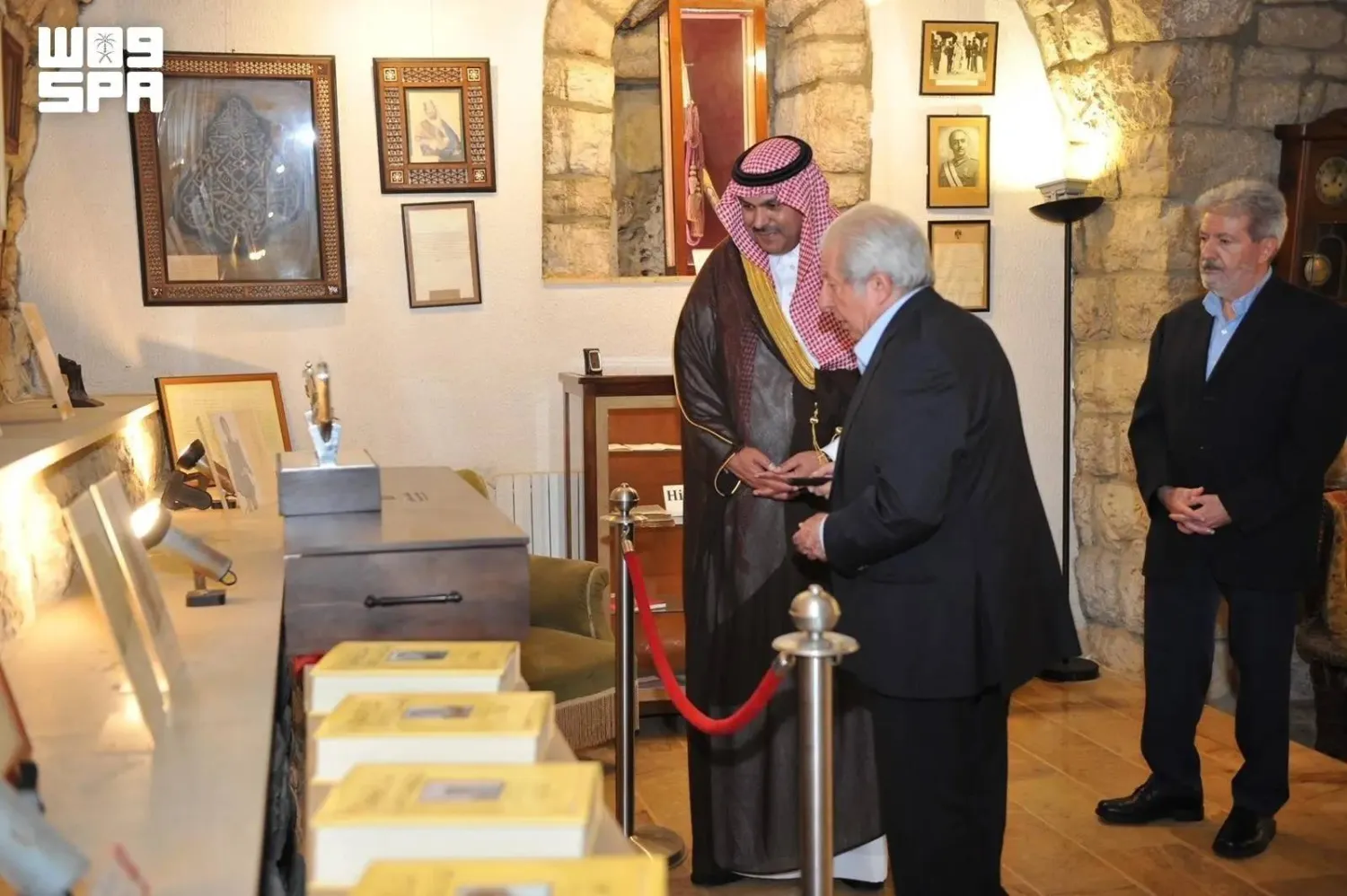
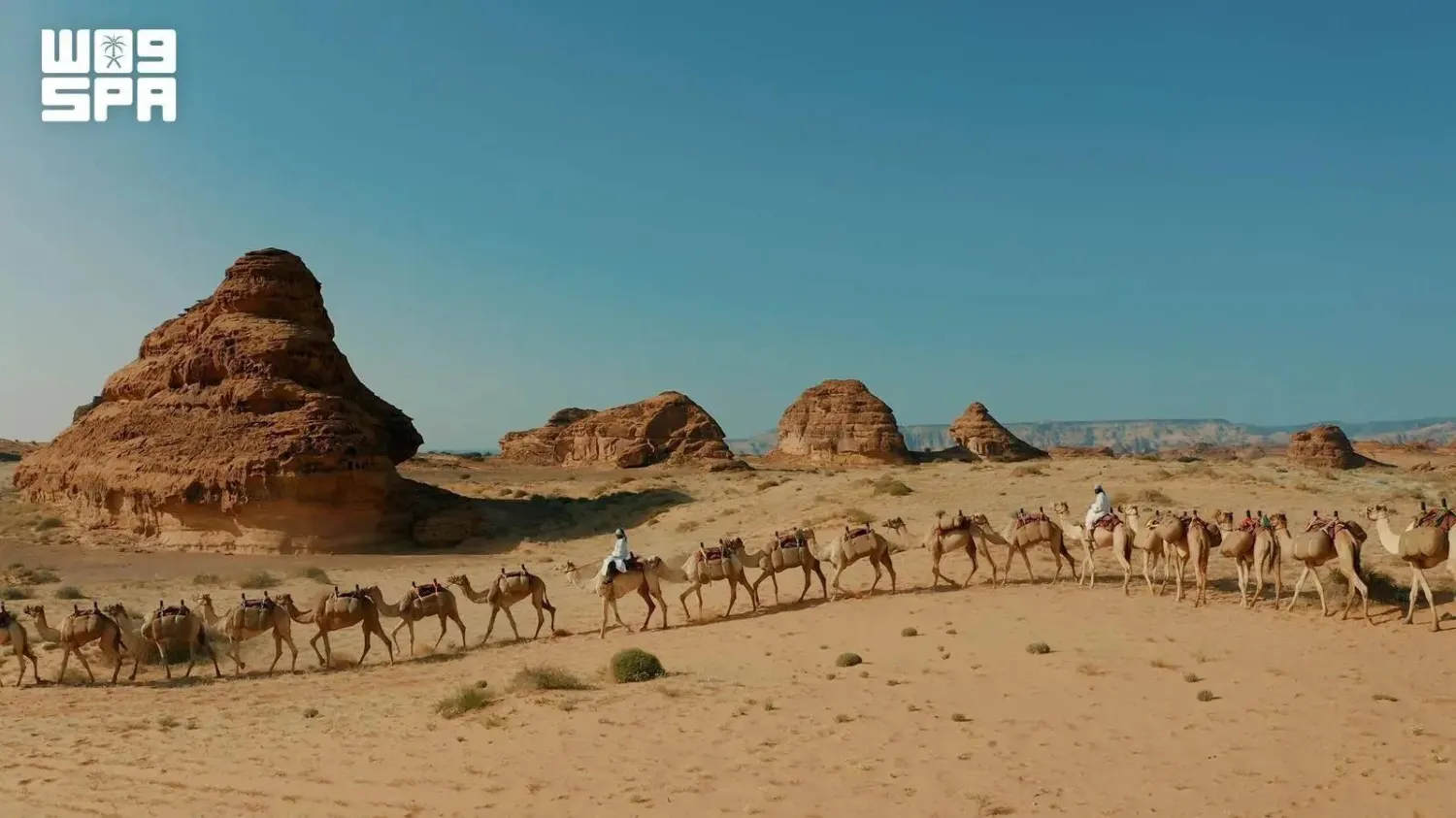
The Prince Mohammed bin Salman Project for the Development of Historical Mosques has completed the restoration of Jarir Al-Bajali Mosque in Taif, preserving a heritage site that dates back more than 1,400 years.

The mosque is historically linked to the companion Jarir ibn Abdullah Al-Bajali, who embraced Islam in 10 AH. The restoration preserved the mosque’s Sarawat architectural style, known for its irregular stone construction and juniper wood roofing. Its capacity has also been expanded to accommodate 135 worshippers, SPA reported.

Covering 350 square meters, the mosque features a unique combination of square stone and modern cylindrical minarets. The project was implemented under the supervision of Saudi engineers and heritage specialists, integrating modern sustainability standards with traditional building techniques.

The initiative aligns with the objectives of Saudi Vision 2030 to preserve the Kingdom’s architectural identity and highlight its deep Islamic heritage for future generations.


Italy Buys Rare Caravaggio Portrait for 30 Million Euros

The portrait of Monsignor Maffeo Barberini was painted by Italian master Caravaggio when the nobleman born in 1568 was in his 30s © Alberto PIZZOLI / AFP/File
TT

Italy Buys Rare Caravaggio Portrait for 30 Million Euros

The portrait of Monsignor Maffeo Barberini was painted by Italian master Caravaggio when the nobleman born in 1568 was in his 30s © Alberto PIZZOLI / AFP/File

Italy has paid 30 million euros for a Caravaggio painting of the future pope Urban VIII, the culture ministry said Tuesday, a work that will enter the Barberini museum collection in Rome.

The portrait of Monsignor Maffeo Barberini was painted by Italian master Caravaggio when the nobleman born in 1568 was in his 30s, years before he became pope.

"This is a work of exceptional importance," Culture Minister Alessandro Giuli said in a statement, adding that it was "one of the most significant investments" ever made by the state for an artwork.

Maffeo Barberini was elected to the papacy in 1623 and his pontificate lasted until his death in 1644.

The painting was authenticated in 1963 by the art critic Roberto Longhi, a great specialist in the work of the 16th-century artist, whose full name was Michelangelo Merisi da Caravaggio.

"This acquisition, together with the recent purchase of the Ecce Homo by Antonello da Messina, is part of a broader project to strengthen the national cultural heritage," he said.

The previous owners of the work, who were not specified, had allowed the portrait to be exhibited to the public for an exhibit on Caravaggio at Palazzo Barberini -- the noble family's historic home in central Rome -- which ended in February 2025.

The museum's director, Thomas Clement Salomon, told AFP at the exhibition's opening in November 2024 that the fact it was being displayed was "exceptional."

"It has never been lent to an exhibition, it has never been seen in a museum, so it is an absolute preview," he said.

In the painting, a seated Barberini is clutching a letter in his left hand, with his right pointing forward, towards the viewer.

Around 65 paintings in the world have been "securely attributed" to Caravaggio, according to the ministry statement, while portraits are very rare, with only three "known and firmly accepted."


Reindeer Racing Thrills Spectators in Finland’s Frigid North Near the Russian Border

 A reindeer breaks away from the pack during the Salla Porocup reindeer sprint racing event on the frozen Lake Keselmajarvi in Salla, Finland, March 7, 2026. (AP)
A reindeer breaks away from the pack during the Salla Porocup reindeer sprint racing event on the frozen Lake Keselmajarvi in Salla, Finland, March 7, 2026. (AP)
TT

Reindeer Racing Thrills Spectators in Finland’s Frigid North Near the Russian Border

 A reindeer breaks away from the pack during the Salla Porocup reindeer sprint racing event on the frozen Lake Keselmajarvi in Salla, Finland, March 7, 2026. (AP)
A reindeer breaks away from the pack during the Salla Porocup reindeer sprint racing event on the frozen Lake Keselmajarvi in Salla, Finland, March 7, 2026. (AP)

Traditional reindeer racing that's been delighting spectators for decades in Finland brought hundreds of fans to the Salla Reindeer Cup in the frigid town of Salla this past weekend.

Around 1,000 people attended the competition, despite frigid subfreezing temperatures and the remote location near the Russian border, roughly 264 kilometers (164 miles) northeast of the city of Oulu.

They watched and cheered as the reindeer galloped across the snow-covered track, pulling their handlers behind them on skis. Whoever is fastest wins the race.

Spectators came not only from Finland but also Italy, Norway, Germany and France, among other countries.

Reindeer husbandry has been an important part of Scandinavian culture for many decades, especially for the Sami Indigenous people in the far north of the country.

"Salla has a long history in reindeer racing — it’s been going on here since the 1950s," said Lasse Aatsinki, the head of Salla Reindeer Cup. "Back then, men spent winters in the forest, there were no snowmobiles. In late winter, the reindeer were in great shape, so they started racing them."

These days, reindeer racing is an organized and regulated competition with trained male reindeer.

The premiere event was the so-called hot series, in which reindeer qualify if they race the kilometer-long (just over a half-mile) track in 1 minute, 19 seconds, or less. Only the fastest reindeer get to compete in this race.

"It’s a science. A lot depends on the reindeer’s character — it has to tolerate a lot: the audience, other reindeer, noise, movement," Aatsinki said. "Everyone has their tricks — and they’re usually kept under the fur hat. Every owner has their own way."

During the race, crowds cheered their favorites on with calls of "hyvä, hyvä" and "mene, mene" — which is Finnish for "good, good" and "go, go" — as the reindeer sprinted down the final stretch.

In between races, people kept warm with reindeer soup and kampanisu, a traditional local pastry specialty from Salla.

The competition culminated Sunday with the final rounds and it was reindeer named Pompom which won the final race.

"Pompom is exceptionally fast and smart, and you rarely find one like that," said Hannu Krupula, the winning animal's owner.

"If there’s any weakness, it’s that it’s not very good-looking — which can be misleading," he added.

"When you look at that reindeer, you might quickly think it’s poorly fed or something. But it eats well. It’s a rare individual."

And thus after the race, Pompom and all the other reindeer got their own reward — lichen, their favorite treat.
