


EU Official Hold Talks in Algeria on ‘New Pact for Mediterranean’

European Commission Director-General for the Middle East, North Africa and the Gulf Stefano Sannino. (EU)
TT

EU Official Hold Talks in Algeria on ‘New Pact for Mediterranean’

European Commission Director-General for the Middle East, North Africa and the Gulf Stefano Sannino. (EU)

The European Commission’s Director-General for the Middle East, North Africa and the Gulf, Stefano Sannino, made an official visit to Algiers on Tuesday to discuss with senior Algerian officials the reviving of their “Partnership Agreement” and a plan to engage the partner countries of the Southern Neighborhood in the New Pact for the Mediterranean.

In a statement, the European Commission said Sannino will stay in Algeria until April 24.

“This mission is firmly in line with the consultations conducted on the New Pact for the Mediterranean, which the European Commission will adopt in the coming months, with a view to promoting a more integrated and supportive approach to regional cooperation,” the statement said.

During this visit, Sannino will hold talks with representatives of several Algerian ministerial departments, including Foreign Affairs, Energy, Finance, and Culture.

He will also take part, on Wednesday, in the opening of a conference on “New Investment Dynamics and Prospects for Cooperation” between the European Union in Algeria, jointly organized by the Delegation of the European Union in Algeria and the Algerian Investment Promotion Agency (AAPI), in the presence of representatives of the Algerian Economic Renewal Council (CREA) and the business community in Algeria.

The visit will provide a valuable opportunity to reaffirm the EU’s commitment to revitalizing bilateral cooperation with Algeria, within the broader and strategically articulated framework of the New Pact for the Mediterranean, the Commission said.

It added that the EU “aspires to a partnership that goes beyond the very strong existing relations, particularly in the energy sector, to build other strategic complementarities for sustainable and inclusive growth, in a changing geopolitical context and facing shared challenges such as reindustrialization, economic competitiveness, and the green transition.”

The visit comes as Algeria’s Foreign and Commerce ministries hold talks with the North Africa Unit at the Directorate-General for Neighborhood and Enlargement Negotiations of the European Commission, aimed at reviving their “Partnership Agreement” signed in 2002.

The new Agenda for the Mediterranean was launched by the European Union in 2021 to strengthen the strategic partnership with its Southern Neighborhood partners in trade and renewable energies, upgrading facilities and infrastructure, and managing migration and counter-terrorism issues.



At Least 21 Drown in Nile Boat Sinking in Sudan

At least 21 people drowned when a boat sank in the Nile River in northern Sudan, according to the local state government and eyewitnesses interviewed by AFP. (REUTERS)
TT

At Least 21 Drown in Nile Boat Sinking in Sudan

At least 21 people drowned when a boat sank in the Nile River in northern Sudan, according to the local state government and eyewitnesses interviewed by AFP. (REUTERS)

At least 21 people drowned when a boat sank in the Nile River in northern Sudan, according to the local state government and eyewitnesses interviewed by AFP.

River Nile State said Thursday that 21 bodies had been recovered after the accident, listed their names and warned that some passengers were still missing.

The boat was crossing the river between the villages of Tayba al-Khawad and Deim al-Qarai, according to the local government's statement.

The statement did not explain the cause of the accident.

Eyewitnesses told AFP the boat was carrying 30 people.

The Sudanese Doctors Network said in a statement that six of the boat's passengers survived.

The group said the incident exposes "the fragility of river transport and the absence of basic safety requirements, as well as the complete absence of local authorities and civil defense rescue teams in the early hours of the incident".

Many Sudanese rely on river transport via single-engine boats captained by solo operators.

The country's infrastructure has been collapsing due to a war that has been ongoing for nearly three years.

The war has divided the country between the army and their enemy, the paramilitary Rapid Support Forces, with road closures and a severe deterioration in public services and medical and educational infrastructure.


Syria Affirms Deep Ties with Saudi Arabia

Saudi Ambassador to Damascus Dr. Faisal Al-Mujfel visits the Kingdom’s pavilion, guest of honor at the Damascus International Book Fair (Saudi Embassy account). 
TT

Syria Affirms Deep Ties with Saudi Arabia

Saudi Ambassador to Damascus Dr. Faisal Al-Mujfel visits the Kingdom’s pavilion, guest of honor at the Damascus International Book Fair (Saudi Embassy account). 

Syria has reaffirmed the strength of its relations with Saudi Arabia during a visit by the Saudi ambassador to Damascus, Dr. Faisal Al-Mujfel, to the Saudi pavilion, guest of honor at the 2026 Damascus International Book Fair.

Saudi Arabia’s participation in the fair, held from Feb. 6-16, is led by the Literature, Publishing and Translation Commission.

At the start of the visit, Al-Mujfel met Syria’s Minister of Culture, Mohammad Yassin Saleh, who welcomed the Kingdom’s designation as guest of honor as a clear affirmation of the depth of Saudi-Syrian cultural relations, based on partnership and mutual respect.

Saleh praised Saudi Arabia’s cultural efforts and commended the pavilion for showcasing activities that reflect the richness and diversity of Saudi cultural heritage.

He noted that the Saudi program highlights the Kingdom’s commitment to supporting culture and literature at both the Arab and international levels. The pavilion features a wide range of events, including seminars and poetry evenings, with the participation of leading Saudi writers and intellectuals.

During a guided tour, the Saudi ambassador was briefed on the creative diversity presented at the pavilion. Exhibits include a collection of manuscripts, a section dedicated to traditional Saudi attire, displays of archaeological replicas, and a selection of publications issued by the Literature, Publishing and Translation Commission.

Among the featured works are titles from the “Translate” initiative, the “Saudi Literature Comics” series, and short story collections from Saudi authors, offering visitors insight into the Kingdom’s contemporary literary scene.

The commission is overseeing Saudi Arabia’s participation as guest of honor at the 2026 book fair, presenting what it described as a vibrant cultural experience that celebrates Saudi creativity and promotes dialogue through books.

The program aligns with the Kingdom’s National Culture Strategy under Vision 2030, which emphasizes cultural exchange, knowledge sharing, and constructive dialogue among nations, while reinforcing Saudi Arabia’s role in the Arab and global cultural landscape.

The visit was attended by several Arab diplomats accompanying the Saudi ambassador, including the ambassadors of Bahrain, Oman and Lebanon, as well as the chargé d’affaires of the United Arab Emirates embassy in Damascus.


Al-Zindani to Asharq Al-Awsat: Govt to Move to Aden Soon, Foreign Ministry Retained to Complete Reforms

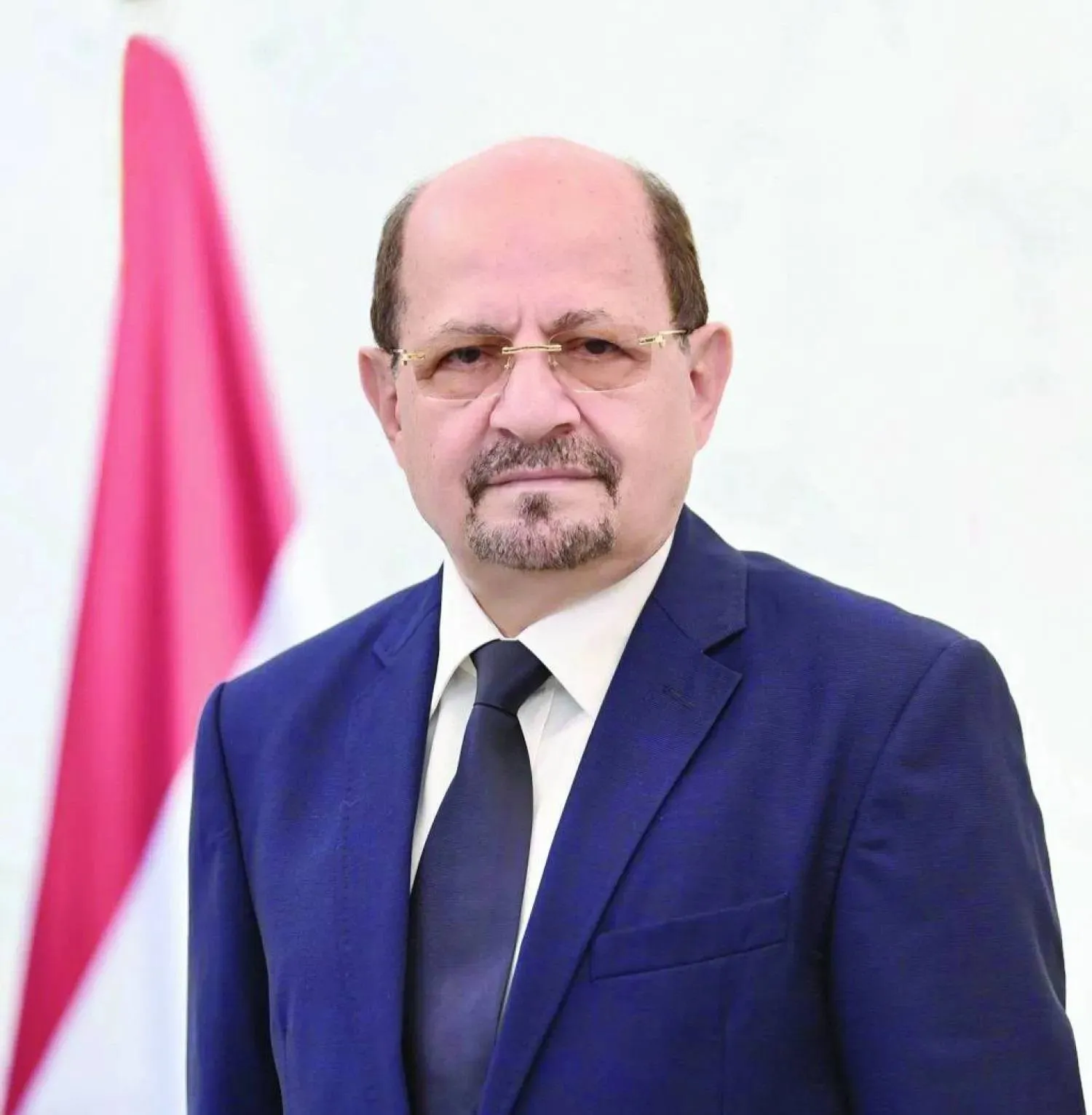
Yemen’s Prime Minister and Foreign Minister, Dr. Shaya Al-Zindani 
TT

Al-Zindani to Asharq Al-Awsat: Govt to Move to Aden Soon, Foreign Ministry Retained to Complete Reforms

Yemen’s Prime Minister and Foreign Minister, Dr. Shaya Al-Zindani 

Yemen’s Prime Minister and Foreign Minister, Dr. Shaya Al-Zindani, has signaled the first concrete move by his newly sworn-in government, announcing that it will relocate to Aden in the near future, just 24 hours after taking the constitutional oath.

In remarks to Asharq Al-Awsat, Al-Zindani said his decision to retain the foreign affairs portfolio was driven by the need “to complete the work already begun,” stressing that a return to Yemen is essential to restoring effective governance.

He noted that the move inside the country is a necessary step to activate performance, adding that a presence in Aden must be linked to a genuine ability to manage state files and restore regular institutional functioning.

The comments came during a special episode of the Asharq Al-Awsat Podcast, recorded at Asharq TV studios at the Saudi Research and Media Group headquarters in Riyadh’s King Abdullah Financial District.

Al-Zindani spoke at a time of acute economic pressure and heightened political expectations. He said the current phase does not allow for expansive rhetoric, but rather requires gradual, practical work to rebuild confidence, noting that stabilizing institutional rhythm must precede any expansion of objectives.

Addressing questions on the composition of his cabinet, Al-Zindani highlighted that ministers were selected on purely professional criteria, based on competence, specialization, and experience, away from partisan dictates. He emphasized that weak institutional foundations had been a central cause of past failures, underscoring the need to rebuild state structures and strengthen oversight.

He pointed to relative improvements in some public services, particularly electricity, with Saudi support, while noting that the real challenge lies in sustaining economic reforms and managing resources effectively. On accountability, he argued that unifying political decision-making has opened the door to enforcing the rule of law. When authority is unified, reward and punishment become possible, he underlined.

On economic policy, Al-Zindani avoided quick promises, instead focusing on resource management and reprioritization. Recovery, he said, cannot be achieved through piecemeal decisions but requires restructuring public finance, enhancing transparency, and activating oversight mechanisms. He stressed that financial stability is the foundation for any tangible improvement in citizens’ lives and for restoring domestic and international confidence.

He continued that working from within Yemen will enable the government to better understand societal priorities and reassert the state’s presence in public life, an influence eroded by years of conflict. He described taking the oath in Riyadh as a constitutional and security necessity dictated by circumstances, arguing that attention should focus on the substance of government action rather than symbolism.

On security, Al-Zindani adopted a cautious, realistic tone, acknowledging that years of accumulated challenges cannot be erased quickly. Still, he said coordination among security agencies and unified political leadership have led to relative improvements. While recognizing protests as part of transitional phases, he stressed the need for adherence to legal frameworks to preserve stability and avoid derailment of recovery efforts.

According to the Yemeni official, reorganizing the armed forces requires unified command and redeploying units outside cities to consolidate state authority and reduce overlap between military and security roles. He noted that multiple loyalties in previous phases weakened institutions and must be overcome to restore stability.

Internationally, he said unified political representation strengthens Yemen’s legal and diplomatic standing. He justified retaining the foreign ministry to complete reforms already underway, including restructuring the ministry and overseas missions, describing diplomatic normalization as integral to rebuilding the state.

He further described relations with Saudi Arabia as having evolved from traditional support into a multi-dimensional partnership impacting vital sectors, with scope to expand cooperation in development and economic stability.

On the Houthis, Al-Zindani said the government showed flexibility in peace efforts but faced repeated noncompliance, adding that recent military and economic developments have weakened the group’s position. Any future negotiations, he stressed, must rest on clear references, with unified anti-Houthi forces giving the government a stronger negotiating hand amid rapid regional and international shifts.