


Saudi Arabia Accelerates Toward Vision 2030: Record Achievements and Promising Indicators

The King Abdullah Financial District in Riyadh. (Asharq Al-Awsat)
TT

Saudi Arabia Accelerates Toward Vision 2030: Record Achievements and Promising Indicators

The King Abdullah Financial District in Riyadh. (Asharq Al-Awsat)

Driven by the ambitious Saudi Vision 2030, Saudi Arabia is making rapid strides toward a vibrant society, a thriving economy, and an ambitious nation, guided by Custodian of the Two Holy Mosques King Salman bin Abdulaziz Al Saud and Prince Mohammed bin Salman bin Abdulaziz Al Saud, Crown Prince and Prime Minister. This transformative journey, built upon the Kingdom's inherent strengths, realizes the Crown Prince's assertion that "all success stories start with a vision, and successful visions are based on strong pillars."

Crown Prince Mohammed underscored the Kingdom’s progress by saying: "Nine years into Vision 2030, we stand proud of what our people have accomplished. They have turned ambition into action and goals into milestones. We have not only met key targets – we have surpassed many. Looking ahead, our resolve is stronger than ever. We will accelerate delivery, embrace every opportunity, and further elevate the Kingdom’s position as a global leader."

Saudi Arabia is witnessing a significant transformation across all sectors, fueled by the remarkable progress in realizing Saudi Vision 2030's goals through its vision realization programs and integrated national strategies. This progress is underpinned by the Kingdom's rich human and natural resources, robust investment capabilities, economic strength, prominent Arab, Islamic, and international standing, and strategic geographic location.

Saudi Vision 2030 is charting a course that integrates culture and innovation, adapting to rapid global changes and creating broader opportunities for citizens, residents, and visitors.

Implemented in three five-year phases, each building on the successes of the last, the vision's initial phase focused on foundational structural, economic, financial, and social reforms. The second phase accelerated progress and maximized the benefits of key sectors. The upcoming third phase aims to enhance the sustainability of this transformation and capitalize on emerging growth opportunities.

Marking the ninth year since the launch of this ambitious vision, the Vision 2030 Annual Report 2024 offers a comprehensive overview of the vision's journey, encompassing past phases, achievements, preparations for the future, and its associated programs and national strategies.

The second section of the report details the vision's performance through first and second-level indicators, showcasing overall progress in its programs and initiatives. It highlights achievements across the three pillars: a vibrant society, a thriving economy, and an ambitious nation. The third section provides an in-depth look at key accomplishments in 2024 across four axes: a fast-growing economy, an empowered society, a leading destination, and a sustainable vision.

At the beginning of the report, King Salman expressed God almighty for the achievements accomplished by the Kingdom in just under a decade. The transformation has made it into a model for transformation in the world and across all sectors, he remarked.

He expressed his pride in Saudi citizens who made this transformation and drive towards progress and prosperity possible. “We will continue to forge ahead towards achieving more sustainable development for the coming generations,” he vowed.

According to the report, 85% of the 1,502 active initiatives are either completed or on track (674 completed and 596 on track). Impressively, 93% of national program and strategy indicators have met, exceeded, or are close to meeting their 2024 interim targets, with 257 exceeding annual goals and eight vision targets achieved six years ahead of schedule.

Several 2030 targets have already been met, including exceeding 100 million tourists, registering eight Saudi sites on UNESCO World Heritage List, and reaching 1.2 million volunteers (surpassing the one million goal). Women's labor force participation reached 33.5%, exceeding the 2030 target of 30%.

The Kingdom also achieved its 7% unemployment target. The country’s e-participation ranking soared 32 places since 2016 to seventh globally, surpassing its top ten target. Similarly, its UN E-Government Development Index ranking climbed 30 places to sixth globally, nearing its top five ambition. Furthermore, the number of international companies establishing regional headquarters in the Kingdom has already exceeded the 2030 target, reaching over 571.

Regarding key indicators related to "vibrant society," the Kingdom achieved remarkable milestones. A historic high of 16.92 million foreign Umrah pilgrims was recorded, significantly exceeding the 2024 target of 11.3 million. Home ownership among Saudi households reached 65.4%, a substantial increase from 47% in 2016 and already surpassing the 2025 target.

Healthcare coverage expanded to 96.4% of population centers, putting the Kingdom within reach of its 2030 goal of 99.5%. Furthermore, the percentage of adults engaging in the recommended 150 minutes of weekly physical activity rose to 58.5%, exceeding the 2024 target, alongside 18.7% of children and adolescents meeting the daily 60-minute recommendation. This progress contributes to an increased average life expectancy of 78.8 years, moving closer to the 2030 target of 80 years.

Advanced indicators for "thriving economy" reveal that the Public Investment Fund's assets under management have more than tripled since Vision 2030's launch, reaching SAR3.53 trillion and exceeding the 2024 target. The private sector's contribution to GDP reached 47%, surpassing the 2024 target. The localization of military industries has also seen substantial growth, reaching 19.35%, a notable increase from 7.7% in 2021.

In its ninth year, the Kingdom's Vision 2030 continues its strong momentum, achieving significant milestones. Employment in small and medium-sized enterprises reached 7.86 million, surpassing the 2024 target. Four Saudi universities now rank among the world's top 500, with King Saud University achieving a global rank of 90th – a first for a Saudi institution in the top 100.

The "ambitious nation" goal also demonstrates progress, with 71.67% of large companies offering CSR programs, exceeding the 2024 target. The non-profit sector's contribution to GDP reached 0.99%, moving towards the 2030 goal of 5%, while employment in this sector increased to 0.64%.

Under the report’s "fast-growing economy" section, the Kingdom rose to 16th place in the global competitiveness index, maintaining its leading position in venture capital across the Middle East and North Africa with a 40% share.

Exceptional achievements within "empowered society" include the Seha Virtual Hospital's entry into the Guinness World Records as the largest virtual hospital globally. Furthermore, seven Saudi hospitals are now among the top 250 worldwide, with King Faisal Specialist Hospital recognized as the global leader in medical technology utilization.

The accreditation of 16 Saudi cities as healthy cities positions the Kingdom as the highest-ranking nation in the region for globally accredited healthy cities. The readiness of health areas to confront health risks has also increased significantly to 92%.

By the end of 2024, over 850,000 Saudi families achieved homeownership. The digital transformation of the judicial system saw 98% of litigation sessions conducted electronically, totaling over 2.3 million sessions. Additionally, more than 5.3 million electronic powers of attorney were issued, benefiting over six million individuals.

Saudi students excelled internationally, securing 114 medals and grand prizes at the prestigious ISEF 2024 and ITEX 2024 science, engineering, and invention competitions.

Efforts to empower national talent continue to yield results, with over 437,000 Saudi citizens joining the private sector workforce in 2024 through Human Resources Development Fund programs. By the end of 2024, around 2.4 million Saudi men and women were employed in the private sector.

The Kingdom has made significant strides in empowering women, with the percentage of Saudi women in middle and senior management positions reaching 43.8%. Their participation in the labor market has also seen remarkable growth, increasing to 36% by the end of 2024, a substantial rise from 17% in 2017.

Safety and Security have also seen notable improvements. The traffic accident death rate per 100,000 people decreased from 17.6 in 2018 to 12.3 in 2024. Furthermore, the confidence index in the Kingdom's security services reached an impressive 99.85%.

In digital leadership, the Kingdom has secured advanced global positions, ranking first in the internet users index, second globally in both the digital transformation index for companies and the technology development and application index.

The sports sector has witnessed considerable growth, with the number of sports clubs covering diverse activities increasing to 128 and the number of sports federations rising to 97 – a growth rate exceeding 200%. The percentage of Saudi women engaging in weekly sports activities has reached 46%.

Under the "leading destination" section, the Kingdom advanced to 16th place globally in the IMD World Competitiveness Yearbook. It won the bid to host the largest edition of the FIFA World Cup in 2034, becoming the first nation to host this expanded event independently. The Kingdom also established the Esports World Cup and hosted its inaugural edition.

Continuing its efforts to boost the international competitiveness of Saudi cities, Madinah was listed among the top 100 global tourist destinations for 2024, and AlUla became the first Middle Eastern destination accredited by Destinations International. The electronic visa program was expanded to include 66 countries.

Development continues on major tourism projects, with Qiddiya's Aquarabia reaching an 81% completion rate and Six Flags at 87%. International tourism revenues saw a significant increase of 148% compared to 2019, and entertainment events attracted 76.9 million visitors. The Kingdom also led the G20 in international tourist arrivals.

Cultural enrichment saw 16 cultural elements inscribed on UNESCO's Representative List of Intangible Cultural Heritage. The first specialized college of arts was launched at King Saud University, and the ALLaM model was integrated into IBM watsonx platform as a leading generative AI model in Arabic, bolstering Arabic content on international platforms.

In line with the report’s "sustainable vision" section, significant environmental initiatives have been undertaken, including the planting of over 115 million trees and the rehabilitation of more than 118,000 hectares of degraded land. The agricultural sector's contribution to GDP reached SAR114 billion, and over 7,800 endangered animals were resettled.

The launch of the first hydrogen-powered bus and taxi marked a step towards sustainable transportation, and four additional renewable energy projects were commissioned, driving the cost of renewable electricity production to some of the lowest global levels. The world's first solar-powered desalination plant was also established.

Reflecting on these achievements in its ninth year, the Kingdom's Vision 2030 has demonstrably matured ahead of schedule, delivering results that have surpassed expectations. This success is attributed to effective planning, dedicated effort, and the ambition of the Saudi people.


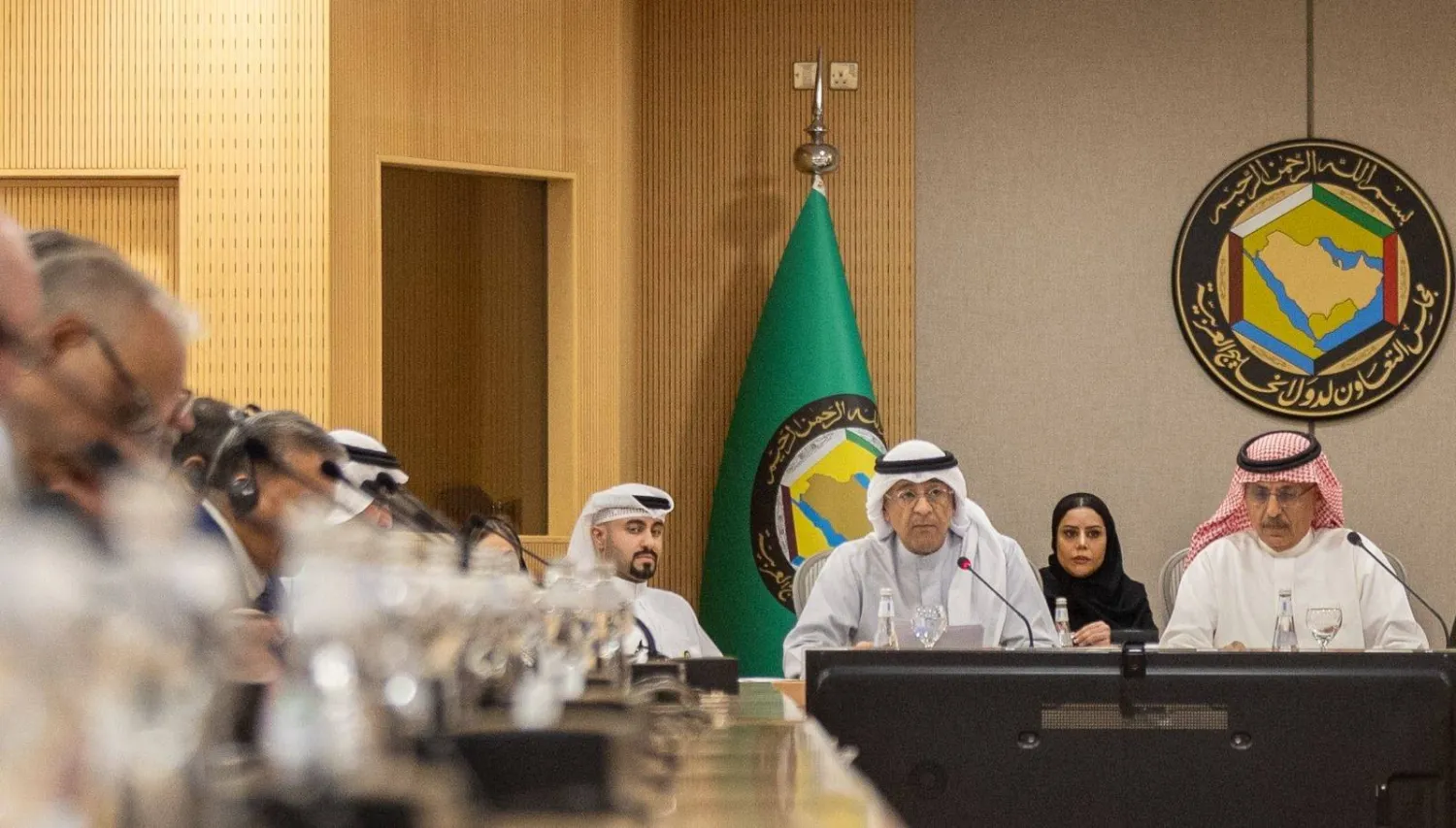

SDRPY Hosts Yemen Partners Group with UN and International Participation

Officials are seen at the SDRPY-hosted meeting in Riyadh. (SPA)
TT

SDRPY Hosts Yemen Partners Group with UN and International Participation

Officials are seen at the SDRPY-hosted meeting in Riyadh. (SPA)

The Saudi Program for the Development and Reconstruction of Yemen (SDRPY) hosted in Riyadh on Wednesday a meeting of the Yemen Partners Group (YPG), co-chaired by the Yemeni government, United Kingdom, and World Bank, with the participation of the United Nations and international organizations.

Yemeni Prime Minister and Minister of Foreign Affairs and Expatriates Dr. Shaya Mohsin Zindani; UN Secretary-General’s Special Envoy for Yemen Hans Grundberg; UN Resident Coordinator and Humanitarian Coordinator in Yemen Julien Harneis and Saudi Ambassador to Yemen and SDRPY Supervisor General Mohammed bin Saeed Al Jaber, as well as a number of ambassadors, representatives of international organizations, and donor entities attended the meeting.

Zindani expressed confidence in the new government and its clearly defined priorities that it will work to implement, which will help achieve stability and economic recovery.

He stressed the government’s aim to maximize benefit from the vital projects and initiatives provided by Saudi Arabia through the SDRPY, which offers important support for basic sectors and for boosting development efforts across Yemen.

Zindani expressed his appreciation to Saudi Arabia for its continued support to Yemen, commending the level of cooperation with the SDRPY and its efforts in supporting and empowering national institutions.

For his part, Grundberg emphasized the importance of the development projects provided by the Kingdom, particularly at this stage, noting positive indicators in Yemen, especially improvements in energy-sector stability.

Governor of the Central Bank Ahmed Ghaleb reviewed the bank’s priorities, stressing its commitment to transparency, the need to combat inflation, and the importance of international coordination and support to address challenges.

Al Jaber underscored the importance of continuing joint efforts to overcome obstacles facing peace and development in Yemen under the leadership of the Yemeni government.

The meeting is an important opportunity to learn about the priorities of the government and Central Bank, strengthening coordination to ensure that development and financial support is directed efficiently and effectively, and to assist donor entities and international organizations in aligning their interventions with the government’s priorities, he added.

The meeting reviewed a package of Saudi development projects worth SAR1.9 billion provided to Yemen in January, which helped boost energy-sector stability through the fuel derivatives grant, ensuring the continued operation of hospitals and vital service facilities.

It reviewed other development projects and initiatives scheduled for delivery during the coming period.


Saudi Foreign Minister Receives Letter on Bilateral Ties from Russian Counterpart

Vice Minister of Foreign Affairs Waleed Elkhereiji and Russian Ambassador to the Kingdom Sergey Kozlov meet in Riyadh on Wednesday. (SPA)
TT

Saudi Foreign Minister Receives Letter on Bilateral Ties from Russian Counterpart

Vice Minister of Foreign Affairs Waleed Elkhereiji and Russian Ambassador to the Kingdom Sergey Kozlov meet in Riyadh on Wednesday. (SPA)

Saudi Minister of Foreign Affairs Prince Faisal bin Farhan bin Abdullah received on Wednesday a letter from Russian Foreign Minister Sergei Lavrov on bilateral relations and ways to support and boost them across various fields.

The message was received on behalf of the Foreign Minister by Vice Minister of Foreign Affairs Waleed Elkhereiji during a meeting in Riyadh with Russian Ambassador to the Kingdom Sergey Kozlov.

They reviewed bilateral relations and discussed issues of mutual interest.


NAUDI Chairman to Asharq Al-Awsat: Ukraine Aims to Resume, Expand Defense Cooperation with Saudi Arabia

Chairman of the National Association of Ukrainian Defense Industries (NAUDI) Serhii Pashynskyi. (Asharq Al-Awsat)
TT

NAUDI Chairman to Asharq Al-Awsat: Ukraine Aims to Resume, Expand Defense Cooperation with Saudi Arabia

Chairman of the National Association of Ukrainian Defense Industries (NAUDI) Serhii Pashynskyi. (Asharq Al-Awsat)

Chairman of the National Association of Ukrainian Defense Industries (NAUDI) Serhii Pashynskyi revealed that Kyiv was counting on Saudi Arabia to achieve peace and stability in Ukraine given its role as a “significant and authoritative regional leader”.

In an interview to Asharq Al-Awsat, he said: “We aim in the near future to define concrete plans for the renewal and further expansion of Ukrainian-Saudi defense cooperation.”

He made his remarks as NAUDI took part in the World Defense Show 2026 in Riyadh.

“We are open to considering opportunities for establishing joint ventures, developing specific technologies, and localizing production on the territory of Saudi Arabia. We are ready to deepen cooperation that has been actively developing since 2014,” Pashynskyi said.

“Our participation in World Defense Show 2026 has a clear objective: to demonstrate the technological capability of Ukraine’s defense sector, which has undergone real testing in wartime conditions. At the joint NAUDI stand, we present our latest developments with confirmed combat experience, share practical insights into their operational use, and discuss tactics of employment,” he explained.

“Today, member companies of the Association already maintain dozens of international contracts in the format of industrial cooperation, and the geography of our partnerships continues to expand. This is precisely the message we seek to convey to our international and regional partners,” he stated.

Saudi-Ukrainian military cooperation

Commenting on military cooperation between Saudi Arabia and Ukraine, he said: “Prior to the full-scale invasion, there was active and effective cooperation between Ukraine’s defense-industrial complex and the Kingdom’s defense institutions and companies.”

“We are interested in restoring these contacts. In line with the position of Ukrainian President Volodymyr Zelenskyy, regarding controlled exports, we aim in the near future to define concrete plans for the renewal and further expansion of Ukrainian-Saudi defense cooperation,” he went on to say.

Moreover, Pashynskyi revealed that an official intergovernmental agreement between the Ukrainian and Saudi governments on cooperation in the field of defense was signed in Kyiv on February 5, 2020, and duly approved by the respective governments.

“The agreement establishes a comprehensive legal framework for bilateral defense interaction. It covers cooperation between the defense industries of both countries, military education and personnel training, exchange of information in the field of defense technologies, transfer of specific military technologies and equipment, including electronic, radar, and telecommunications systems, as well as issues related to defense medical support,” he explained.

“Ukraine highly values the principled and consistent position of Saudi Arabia, which is based on unwavering respect for the provisions of the UN Charter and the fundamental principles of international law, particularly with regard to ensuring territorial integrity and protecting state sovereignty,” he added.

“An important moral and humanitarian component of Ukrainian-Saudi relations is the Kingdom’s sincere solidarity with the Ukrainian people, which is reflected in the humanitarian assistance provided, particularly to support internally displaced persons,” he told Asharq Al-Awsat.

Ukrainian products at the World Defense Show

Elaborating on the Ukrainian products displayed at the World Defense Show, Pashynskyi said: “NAUDI member companies produce a full spectrum of defense products, from 7-inch FPV drones to the Bohdana self-propelled artillery system, which is physically displayed at the exhibition.”

“Ukraine has become a global pioneer in the mass combat use of FPV drones, as well as in the development and deployment of maritime unmanned platforms. We possess unique and extremely valuable experience in operating these systems under real combat conditions,” he stressed. “The private sector accounts for more than 70% of Ukraine’s total defense-industrial production.”

Among the key exhibits are the Bohdana self-propelled howitzer, manufactured in significant quantities by the company Ukrainian Armor and actively employed in combat operations; the Varta armored vehicle; the Protector unmanned ground system; the MAC maritime drone; reconnaissance UAVs Shark, PD-2, mini Shark, and Furia; the Krechet air defense command-and-control system; heavy drones Kazhan and Shmavik; UAV munitions produced by UBM; FPV drones manufactured by General Cherry; and electronic warfare systems developed by Piranya Tech.

Preserving lives

Pashynskyi revealed that more than 50% of the needs of Ukraine’s Defense Forces are currently met by the domestic defense-industrial complex, from FPV drones to cruise missiles, 155-mm artillery systems, ammunition, electronic warfare (EW) and electronic intelligence (ELINT) systems.

“According to last year’s results, NAUDI member companies supplied the Defense Forces with products worth approximately EUR 4 billion,” he said. “Since 2022, the industry has undergone large-scale relocation and deployment of new production facilities. Today, Ukraine is without exaggeration one of the world’s leaders in the pace of weapons and ammunition production.”

“Our primary priority is preserving the lives of service members. That is why special emphasis is placed on unmanned systems that enhance soldier effectiveness without replacing the soldier,” he continued.

“A key advantage is the direct connection with frontline units. This allows manufacturers to receive real-time feedback and rapidly modernize their solutions. While R&D processes in other countries may take years, for Ukrainian companies the path from concept to serial production often takes just 3 to 6 months.”

“Some companies have increased FPV drone production from several thousand units in 2023 to over 500,000 units in 2025 and these are not isolated cases,” Pashynskyi revealed.