


Fake Audio Sparks Deadly Sectarian Clashes Near Damascus

Syrian security forces secure the area following armed clashes in Jaramana town, near Damascus, Syria, 29 April 2025.  EPA/MOHAMMED AL RIFAI
Syrian security forces secure the area following armed clashes in Jaramana town, near Damascus, Syria, 29 April 2025. EPA/MOHAMMED AL RIFAI
TT

Fake Audio Sparks Deadly Sectarian Clashes Near Damascus

Syrian security forces secure the area following armed clashes in Jaramana town, near Damascus, Syria, 29 April 2025.  EPA/MOHAMMED AL RIFAI
Syrian security forces secure the area following armed clashes in Jaramana town, near Damascus, Syria, 29 April 2025. EPA/MOHAMMED AL RIFAI

Twelve people were killed in clashes that erupted early Tuesday near the town of Jaramana, a Druze-majority area on the southern outskirts of Damascus, amid rising sectarian tensions, residents and local sources said.

In a statement, residents of Jaramana condemned what they described as prior “sectarian incitement” that preceded the violence. They warned against “falling into the trap of sedition, which serves only the enemies of Syria and its unity.”

The statement, which denounced the sectarian rhetoric, called on authorities to launch an “immediate and transparent investigation” and to hold accountable “all those who took part in, incited, or orchestrated this crime.”

The deadly clashes followed a wave of unrest triggered by a voice recording that circulated late Sunday into Monday, purportedly featuring Sheikh Marwan Kiwan from Sweida making derogatory remarks about Islamic holy figures.

The recording sparked anger and sporadic unrest in university dormitories in both Damascus and Homs, raising fears of wider sectarian strife.

Sheikh Kiwan later appeared in a video denying the voice was his and said the recording was fabricated to fuel sectarian division.

His denial was backed by an investigation from the Syrian Ministry of Interior, which called on the public to “respect public order and avoid any individual or collective actions that could endanger lives, property, or public security.”

Violent clashes in the southern outskirts of Damascus left at least five people dead and several others wounded.

Fighting broke out near the town of Jaramana after a hardline armed group launched a mortar attack from the direction of Maliha, targeting the al-Naseem checkpoint, residents said. Armed local groups in Jaramana responded, sparking several hours of clashes.

According to preliminary reports, five young men from Jaramana were killed and eight others injured.

Similar clashes erupted in the town of Ashrafiyat Sahnaya, another Druze-majority area, where local sources reported injuries among residents.

In response to the violence, authorities imposed a curfew in Jaramana, Sahnaya, and Ashrafiyat Sahnaya, amid heightened security deployments and growing fears of further unrest.

The Syrian authorities could take meaningful steps toward transitional justice even before a dedicated commission is formed, including arresting and prosecuting individuals involved in human rights violations, the head of the Syrian Network for Human Rights said.

Speaking to Asharq Al-Awsat, Fadel Abdul Ghany said the government has the ability to “pursue and detain those implicated in rights abuses as a preparatory step toward accountability.”

He cautioned against misconceptions about launching transitional justice efforts without adequate planning, saying, “One of the key mistakes made recently was the demand to begin the transitional justice process immediately, without first identifying the necessary procedural steps to ensure the process is independent from the executive branch and inclusive of all segments of society.”

To guarantee such independence, Abdul Ghany said the Transitional Justice Commission must be established by a legislative body, with clearly defined standards for appointing competent and impartial members.

He added that the commission must operate under the judicial system, which itself must be independent. “This requires time,” he said, “because it involves setting clear criteria for forming a Supreme Judicial Council and a Constitutional Court that are completely independent from the executive authority.”


Palestinian Health Ministry: Israeli Fire Kills One in West Bank

A resident inspects a car that, according to the Palestine Red Crescent, was torched by Israeli settlers in the West Bank village of Tayasir, near Tubas, Tuesday, March 31, 2026. (AP Photo/Majdi Mohammed)
TT

Palestinian Health Ministry: Israeli Fire Kills One in West Bank

A resident inspects a car that, according to the Palestine Red Crescent, was torched by Israeli settlers in the West Bank village of Tayasir, near Tubas, Tuesday, March 31, 2026. (AP Photo/Majdi Mohammed)

The Palestinian health ministry said on Thursday that Israeli forces fatally shot a Palestinian man in the occupied West Bank a day earlier, while the Israeli military said an off-duty soldier fired at a stone-thrower.

The Ramallah-based Palestinian health ministry said 28-year-old Alaa Khaled Mohammed Sbeih "was shot and killed" by Israeli forces on Wednesday night near the village of Tayasir in the northern West Bank.

The military said troops were dispatched to the area on Wednesday "following a report of an incident between Palestinians and Israeli civilians, which included hurling rocks," adding that an Israeli and a Palestinian civilian were injured in the incident and taken to hospital.

"From initial inquiry, it emerged that an off-duty soldier fired toward a Palestinian after he threw stones at the Israeli civilians," the statement said, adding that the incident was under review.

The military often uses the term off-duty soldier to refer to Israeli settlers in the West Bank, who also serve in the army and sometimes carry their weapons with them when off duty.

Violence in the West Bank, a Palestinian territory occupied by Israel since 1967, has surged since the October 7, 2023 attack on Israel by Hamas which triggered the war in Gaza.

It has continued despite a ceasefire in Gaza in effect since October.

According to an AFP tally based on figures from the Palestinian health ministry, at least 1,057 Palestinians -- including many militants as well as civilians -- have been killed by Israeli soldiers or settlers in the West Bank since the start of the Gaza war.

At least 46 Israelis, both civilians and soldiers, have been killed in the same territory in Palestinian attacks or during Israeli military operations, according to official Israeli data.


China Says Lebanon Sovereignty 'Should Not Be Violated' after Israel Strikes

In this image taken from video, China's Foreign Ministry spokesperson Mao Ning speaks during a regular briefing held in Beijing, Friday, May 23, 2025. (AP Photo/Liu Zheng)
TT

China Says Lebanon Sovereignty 'Should Not Be Violated' after Israel Strikes

In this image taken from video, China's Foreign Ministry spokesperson Mao Ning speaks during a regular briefing held in Beijing, Friday, May 23, 2025. (AP Photo/Liu Zheng)

Beijing said on Thursday that Lebanon's sovereignty "should not be violated" after Israel carried out strikes on the country, threatening a fragile truce.

"Lebanon's sovereignty and security should not be violated. The safety of civilian lives and property must be guaranteed," Chinese foreign ministry spokeswoman Mao Ning told a regular press conference, adding Beijing urged restraint and "a cooling down of the regional situation".


US-Iran Truce Shows Cracks as War Flares in Lebanon

Rescuers stand at the site of an Israeli strike carried out on Wednesday, in Al-Mazraa in Beirut, Lebanon, April 9, 2026. REUTERS/Raghed Waked
TT

US-Iran Truce Shows Cracks as War Flares in Lebanon

Rescuers stand at the site of an Israeli strike carried out on Wednesday, in Al-Mazraa in Beirut, Lebanon, April 9, 2026. REUTERS/Raghed Waked

Lebanon declared a national day of mourning on Thursday after Israeli strikes pummeled the country, shaking a fragile truce less than 48 hours after it came into force.

Washington and Tehran both claimed victory after agreeing to a two-week ceasefire and negotiations aimed at ending a war that has killed thousands across the Middle East and sparked global economic upheaval, reported AFP.

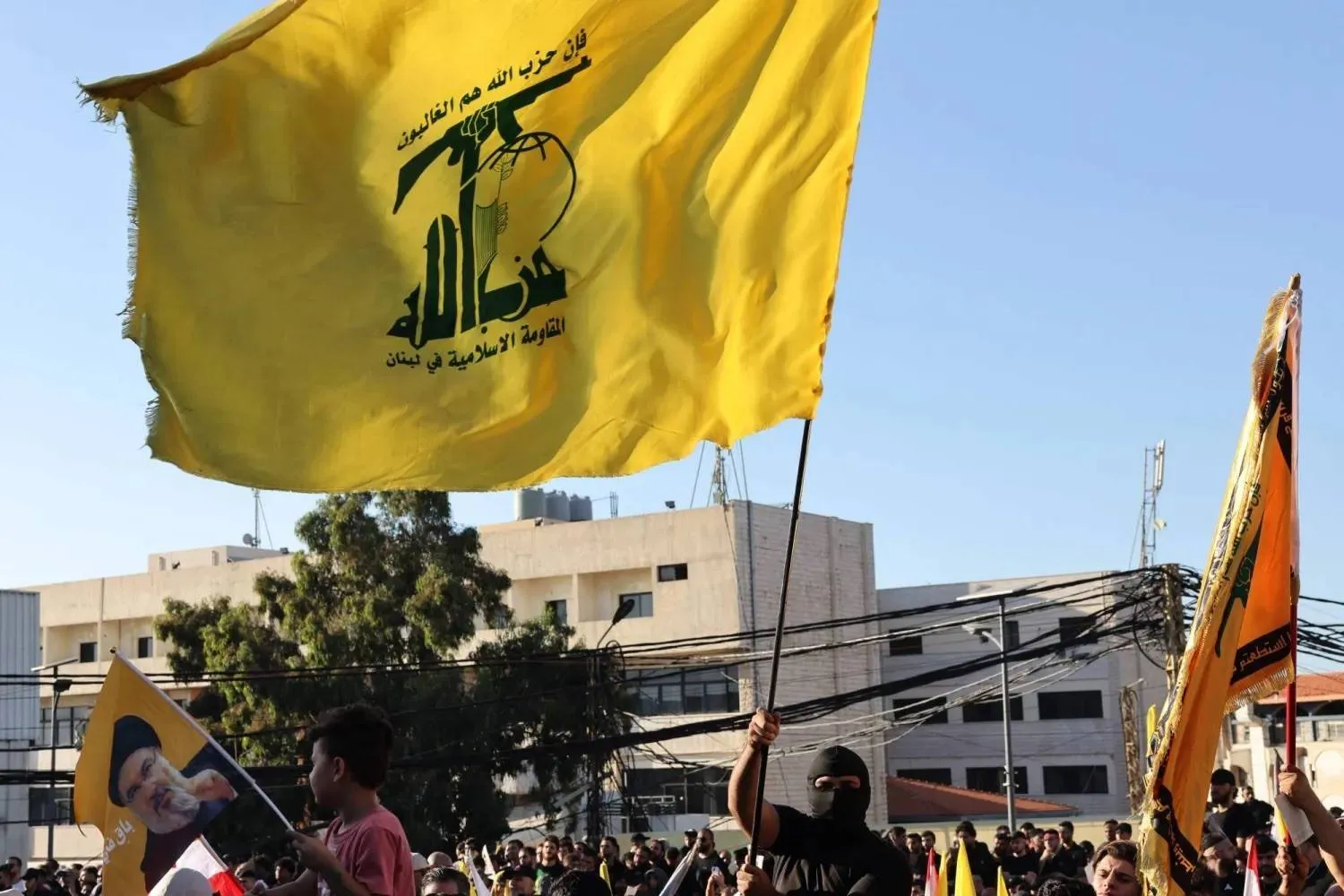
But the deal's fractures emerged quickly on Wednesday as Israel carried out its heaviest strikes on neighboring Lebanon -- including in densely packed central Beirut -- since the Iran-backed militant group Hezbollah joined the war in early March.

At least 182 people were killed and nearly 900 wounded on Wednesday, the Lebanese health ministry said.

The Lebanese prime minister's office said Thursday will be "a national day of mourning for the martyrs and wounded of the Israeli attacks that targeted hundreds of innocent, defenseless civilians", ordering the closure of public administrations and the lowering of flags.

Hours later, Hezbollah said it had fired rockets towards Israel in response to its "violation" of the US-Iran truce, which was agreed to late Tuesday.

Israel has said its battle against the Lebanese group was not part of the ceasefire, an argument echoed by US Vice President JD Vance, days before he is due to lead talks with Tehran in Pakistan.

"If Iran wants to let this negotiation fall apart... over Lebanon, which has nothing to do with them, and which the United States never once said was part of the ceasefire, that's ultimately their choice," he said.

But Iran's parliament speaker Mohammad Bagher Ghalibaf appeared to threaten the ceasefire, posting on X that the "workable basis on which to negotiate" had already been violated, making further talks "unreasonable".

Ghalibaf listed three alleged US violations of the truce plan: the continued attacks in Lebanon, a drone entering Iranian airspace and a denial of the country's right to enrichment.

Adding to the fragility of the truce -- agreed hours before a deadline set by US President Donald Trump -- a senior US official said Iran's 10-point plan was not the same set of conditions the White House had agreed to in order to pause the war.

In Lebanon, where UN rights chief Volker Turk called the scale of killing "horrific", strikes across the capital Beirut without warning triggered scenes of horror and panic.

"People started running left and right, and smoke was billowing," said Ali Younes, who was waiting for his wife near Corniche al-Mazraa, one of the areas targeted.

More than 1,700 people have been killed in Lebanon since Israel launched airstrikes and a ground invasion last month, local officials said.

Iran's Revolutionary Guards warned they would "fulfil our duty and deliver a response" if Israel did not cease its strikes, while Hezbollah said it had a "right" to respond.

Israeli Prime Minister Benjamin Netanyahu said the country remained prepared to confront Iran if necessary, as it still had "objectives to complete", with the military saying it continued to pursue the goal of "disarming" Hezbollah in Lebanon.

Pentagon chief Pete Hegseth also vowed that American forces remained at the ready if the conflict flared up again.

- High-stakes talks -

The belligerent rhetoric came ahead of high-stakes talks in Pakistan expected on Friday or Saturday, after Iran temporarily agreed to reopen the Strait of Hormuz under threat of annihilation by Trump, with a small number of ships passing through the strategic waterway on Wednesday.

Iran announced alternative routes on Thursday for ships travelling through the strait -- a narrow waterway through which one-fifth of the world's oil passes -- citing the risk of sea mines in its main navigational zone.

But it was unclear if Tehran was allowing vessels to pass through the strait, following reports on Wednesday suggesting it was shut -- something the White House called "completely unacceptable".

Pakistani Prime Minister Shehbaz Sharif, whose country mediated the ceasefire, urged on X for all parties to "exercise restraint and respect the ceasefire for two weeks" to allow diplomacy to take hold.

Further casting doubt on the truce's durability, Iranian state media announced fresh missile and drone attacks against US-allied Gulf states in retaliation for airstrikes on its oil facilities, with Kuwait, the UAE, Saudi Arabia and Bahrain all reporting strikes since the ceasefire took effect.

There have been no reports of fresh attacks on other countries across the region in the past hours.

In Tehran, streets were quieter than usual on Wednesday, with many shops closed after a long and anxious night for residents fearing a massive US attack.

"Everyone is at ease now," said Sakineh Mohammadi, a 50-year-old housewife, adding she was "proud" of her country.

"We are more relaxed."

On Wednesday, the leaders of several European nations, Canada and the United Kingdom said "a swift and lasting end to the war" must be negotiated, as Pope Leo hailed a moment of "real hope".

But Tehran's demands over uranium enrichment, economic sanctions and future control of the Strait of Hormuz remain deeply at odds with those of the United States.