


New Reports Reveal Details of Hassan Nasrallah’s Assassination

People gather at a site damaged by Israeli airstrike that killed Lebanon's Hezbollah leader Sayyed Hassan Nasrallah during a commemoration ceremony in Beirut southern suburbs, Lebanon November 30, 2024. Reuters/Thaier Al-Sudani/File Photo 
TT

New Reports Reveal Details of Hassan Nasrallah’s Assassination

People gather at a site damaged by Israeli airstrike that killed Lebanon's Hezbollah leader Sayyed Hassan Nasrallah during a commemoration ceremony in Beirut southern suburbs, Lebanon November 30, 2024. Reuters/Thaier Al-Sudani/File Photo 

Several Israeli reports revealed last week new information about the assassination of former Hezbollah Secretary-General Hassan Nasrallah, saying the Joe Biden administration was reportedly furious about the operation.

The US did not try to stop the strike, but said the Israeli operation made them “look like fools,” a report by Israel’s Channel 13 said.

It showed that Israeli Prime Minister Benjamin Netanyahu hesitated for a long time before he gave the order to execute the operation. Nasrallah was killed shortly after the Israeli PM gave a speech at the United Nations General Assembly.

On Sunday night, former Israeli Ambassador to the US, Mike Herzog, told Channel 13 that he attempted to provide advance warning of the strike.

Herzog said that it was agreed that Israel would update the Americans before the strike on Nasrallah’s compound, at the level of [then-National Security Advisor] Jake Sullivan.

In the interview, the former ambassador said, “We tried setting up a phone call with Jake Sullivan and he didn’t get back to us. He was angry because he thought we had deceived them, and we let them make public the initiative for a ceasefire and make them look foolish, while we are planning to eliminate Nasrallah.”

The US official who was informed about the Israeli operation is then-Secretary of Defense Lloyd Austin, who had received a phone call from then-Defense Minister Yoav Gallant.

Asked how Austin responded during the call, when Gallant informed him that the strike was about to occur, former US Ambassador to Israel Dan Shapiro made a diplomatic statement, saying, “I’ll allow others to characterize that call.”

During his interview with Channel 13, Gallant said, “I updated Austin 15 minutes before the operation. I told him, ‘We’re about to eliminate Nasrallah’. He asked me, ‘When?’ I told him, ‘15 minutes’. He really did not like this. He told me, ‘This could lead to a regional war’. I told him, ‘With all due respect, this man murdered thousands of Israelis and hundreds of Americans. I suggest you carefully consider your response.”

Gallant continued, “So he (Austin) asks me, ‘Are you convinced he’s there?’ I told him, ‘There is a very high probability.’”

At the end of September 2024, Israel was informed about Nasrallah’s plans to attend a high-level meeting in Beirut’s southern suburbs.

The French newspaper Le Parisien, citing a Lebanese security source, revealed that an Iranian spy provided Israel with information regarding the arrival of Nasrallah in Beirut's southern suburbs.

The report noted that Nasrallah arrived in the exact vehicle as Abbas Nilforoushan, the Deputy Commander of Iran's Quds Force in Lebanon.

According to Le Parisien, the informant alerted Israel about Nasrallah’s planned arrival at the headquarters on Friday afternoon, just four hours before the strike.

But Israel’s Kan 11 channel said Israel received the information days before the strike.

Nasrallah, who had led Iran-backed Hezbollah for 32 years, was killed on September 27, 2024 when a series of Israeli airstrikes flattened several buildings in Beirut’s southern suburbs.



Gaza Administration Committee Meets in Cairo Amid Cautious Optimism

Palestinians salvage belongings from a home after an Israeli military attack west of Deir al Balah in central Gaza (AFP)
TT

Gaza Administration Committee Meets in Cairo Amid Cautious Optimism

Palestinians salvage belongings from a home after an Israeli military attack west of Deir al Balah in central Gaza (AFP)

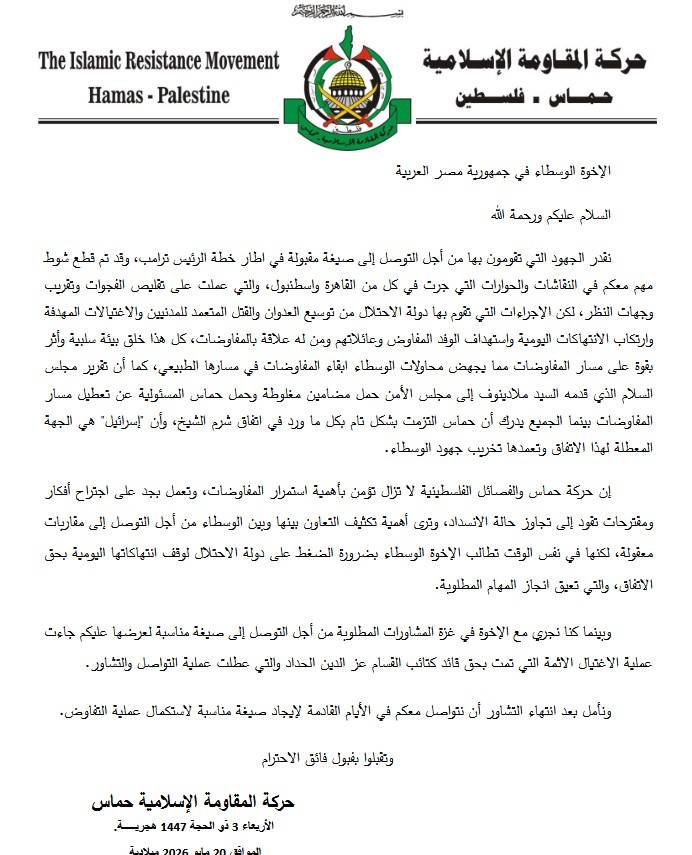
The Gaza ceasefire agreement entered a new phase on Friday with the first meeting in Cairo of a technocrat committee tasked with administering the enclave, following its formation by Palestinian consensus, a welcome from Washington, and the absence of an official Israeli objection after earlier reservations.

The inaugural meeting came hours after Israel killed eight Palestinians, prompting Hamas to accuse it of “sabotaging the agreement,” leaving analysts expressing cautious optimism about the ceasefire’s trajectory in light of these developments and the continued Israeli strikes.

They stressed the need for a decisive US position to complete the requirements of the second phase, which began with the formation of the Gaza administration committee and faces major obstacles, including the entry of aid, an Israeli withdrawal, and the disarmament of Hamas.

Egyptian satellite channel Al-Qahera News reported on Friday that the first meeting of the Palestinian National Committee for the Administration of Gaza had begun in the Egyptian capital, with Palestinian Ali Shaath in the chair.

In his first media appearance, Shaath said the committee had officially started its work from Cairo and consists of 15 professional Palestinian national figures. He said the committee had received financial support and had been allocated a two-year budget, which is the duration of its mandate.

He called for the establishment of a World Bank fund for the reconstruction and relief of Gaza, noting that influential countries in the region had promised substantial, tangible financial support.

Shaath said the relief plan is based on the Egyptian plan approved by the Arab League in March 2025, which spans five years and is estimated to cost about $53 billion, and has been welcomed by the European Union.

He added that the first step adopted by the Gaza administration committee was to supply 200,000 prefabricated housing units to the territory.

Hamas said on Friday it was ready to hand over control of Gaza to a technocratic administration.

In a statement, it warned that “massacres” committed by the Israeli army in Gaza, including the killing of nine Palestinians, among them a woman and a child, in air strikes and gunfire targeting displaced people’s tents, underscored Israel’s continued policy of undermining the ceasefire agreement and obstructing declared efforts to entrench calm in the enclave.

Hamas described the attacks as a “dangerous escalation” that coincided with mediators announcing the formation of a technocratic government and the entry into the second phase of the agreement, as stated on Wednesday, as well as US President Donald Trump’s announcement on Thursday of the establishment of a Board of Peace.

It called on mediators and guarantor countries to shoulder their responsibilities by pressuring Israel to halt its violations and comply with what was agreed.

On Thursday, Trump announced the creation of a Gaza-focused Board of Peace, saying the parties had officially entered the second phase of the Gaza ceasefire agreement.

The Gaza government media office said in a statement the same day that Israel had committed 1,244 violations of the ceasefire during its first phase, resulting in the killing, injury, or arrest of 1,760 Palestinians since the deal took effect.

Rakha Ahmed Hassan, a member of the Egyptian Council for Foreign Affairs and a former assistant foreign minister, said the launch of the committee’s work was extremely important and effectively removed one of Israel’s pretexts regarding the presence of Hamas, particularly since the committee is technocratic and enjoys consensus.

He said that while this undermines those pretexts and marks the end of Hamas’s political authority, developments must be handled cautiously and completed with the deployment of stabilization forces and a Palestinian police presence, provided no new Israeli obstacles emerge.

Palestinian political analyst Ayman al-Raqab also voiced cautious optimism, telling Asharq Al-Awsat that the committee faces major challenges, notably administering a territory that has been completely devastated, as well as Israeli complications related to the weapons of the resistance and opposition to full reconstruction and withdrawal.

Mediator efforts are continuing. Egyptian Foreign Minister Badr Abdelatty received a phone call from US Middle East envoy Steve Witkoff regarding next steps and procedures following the transition to the second phase of Trump’s plan.

According to an Egyptian foreign ministry statement on Friday, the call emphasized the need to move forward with implementing the second phase’s obligations, including the start of work by the Palestinian technocrats committee following its formation, the deployment of an international stabilization force to monitor the ceasefire, the achievement of an Israeli withdrawal from the Strip and the launch of early recovery and reconstruction.

Hassan said Egypt’s role remains crucial and focused on completing the agreement without Israeli obstruction, particularly as the Rafah crossing was not opened during the first phase, and delays persist in deploying stabilization forces to oversee border crossings.

He stressed that Washington would seek to complete the agreement to preserve its credibility.

Al-Raqab said that any progress in the second phase and avoiding a repeat of the first phase’s stagnation hinges on US support for fully implementing the deal, particularly securing an Israeli withdrawal rather than just addressing disarmament.


Israeli Soldiers Kill Palestinian Teen in West Bank

Israeli Soldiers Kill Palestinian Teen in West Bank
TT

Israeli Soldiers Kill Palestinian Teen in West Bank

Israeli Soldiers Kill Palestinian Teen in West Bank

Israeli soldiers shot dead a Palestinian hurling a rock at them in the occupied West Bank, the military said on Friday, and the Palestinian health ministry said the person killed was a 14-year-old boy.

There was no further comment from Palestinian officials about the fatal incident in the village of ⁠Al-Mughayyir. Official Palestinian news agency WAFA said the teen was killed during an Israeli military raid that led to confrontations, Reuters reported.

The Israeli military said its forces were called to the area after ⁠receiving reports that Palestinians were throwing stones at Israelis and blocking a road with burning tires.

The soldiers fired warning shots in an attempt to repel a person who was running at them with a rock, the military said, and then shot and killed him to eliminate the ⁠danger.

Violence has surged over the past year in the West Bank. Attacks by Israeli settlers on Palestinians have risen sharply, while the military has tightened movement restrictions and carried out sweeping raids in several cities.

Palestinians have also carried out attacks on Israeli soldiers and civilians, some of them deadly.


Israeli Strikes in South Lebanon Kill Two

Smoke rises from the site of an Israeli airstrike that targeted the village of Sohmor, in southern Lebanon on January 15, 2026. (Photo by Rabih DAHER / AFP)
TT

Israeli Strikes in South Lebanon Kill Two

Smoke rises from the site of an Israeli airstrike that targeted the village of Sohmor, in southern Lebanon on January 15, 2026. (Photo by Rabih DAHER / AFP)

An Israeli strike on south Lebanon killed one person on Friday, the health ministry in Beirut said a day after raids that Israel said had targeted Hezbollah.

Israel has kept up regular strikes in Lebanon despite a November 2024 ceasefire that sought to end more than a year of hostilities with Hezbollah, usually saying it is targeting members of the group or its infrastructure.

In a statement, the health ministry said an "Israeli enemy strike" on a vehicle in Mansuri in south Lebanon killed one person.

According to AFP, it also said that a strike on Mayfadun in south Lebanon the previous night killed one person.

Israel said Thursday's attack killed a Hezbollah member it alleged "took part in attempts to reestablish Hezbollah's infrastructure in the Zawtar al-Sharqiyah area.”

The attacks come a week after Lebanon's military said it had completed disarming Hezbollah south of the Litani River, the first phase of a nationwide plan, although Israel has called those efforts insufficient.

On Thursday, Israel carried out several strikes against eastern Lebanon's Bekaa region, north of the Litani, after issuing warnings to evacuate.

United Nations peacekeepers, deployed in the south to separate Lebanon from Israel, said on Friday that an Israeli drone "dropped a grenade" on its troops.

On Monday, the peacekeeping force said an Israeli tank fired near its troops, and warned that such incidents were becoming "disturbingly common".
