Gold Falls as Positive US-China Talks Hamper Safe-haven Appeal

Gold jewelry are displayed for sale at V&P Jewelry in the St. Vincent Jewelry Center in the Jewelry District of Los Angeles in Los Angeles, Wednesday, April 30, 2025. (AP Photo/Jae C. Hong)
TT

Gold Falls as Positive US-China Talks Hamper Safe-haven Appeal

Gold jewelry are displayed for sale at V&P Jewelry in the St. Vincent Jewelry Center in the Jewelry District of Los Angeles in Los Angeles, Wednesday, April 30, 2025. (AP Photo/Jae C. Hong)

Gold slipped on Monday as positive US-China trade talks alleviated market fears, leading investors to shift from safe-haven assets towards riskier investments.

Spot gold fell 1.4% to $3,277.34 an ounce, as of 0432 GMT. US gold futures lost 1.9% to $3,281.70, Reuters reported.

"The dollar index has advanced as the Trump administration touted progress in trade negotiations, with China following negotiations over the weekend in Switzerland which weighed on gold prices," said Jigar Trivedi, senior commodity analyst at Reliance Securities.

The US and China ended high-stakes trade talks on a positive note on Sunday, with US officials touting a "deal" to reduce the US trade deficit, while Chinese officials said they had reached "important consensus".

Chinese Vice Premier He Lifeng said a joint statement would be released in Geneva on Monday.

The US and China imposed tit-for-tat tariffs on each other last month, triggering a trade war that fueled fears of global recession.

The US will be left with higher tariffs once the dust settles from President Donald Trump's trade negotiations, a majority of the current and former Trump advisers Reuters spoke to said.

Gold, traditionally seen as a hedge against economic and political uncertainties, thrives in a low-interest rate environment.

On Friday, Cleveland Fed President Beth Hammack said the Fed needs more time to see how the economy responds to Trump's tariffs and other policies before figuring out the right response.

Traders are also eyeing release of US Consumer Price Index on Tuesday for fresh signals on the Fed's monetary policy trajectory.

"In the near term, gold possibly continue to decline as the dollar could appreciate and amid reducing geopolitical risk the haven demand too may drop hence, the yellow metal may decline to $3,200/oz in the near term," Trivedi added.

Spot silver gained 0.4% to $32.84 an ounce, platinum rose 0.7% to $1,001.90 and palladium firmed 0.6% to $981.20.


Regional Turmoil Drives Growth at Egyptian Ports While Cutting Suez Canal Revenues

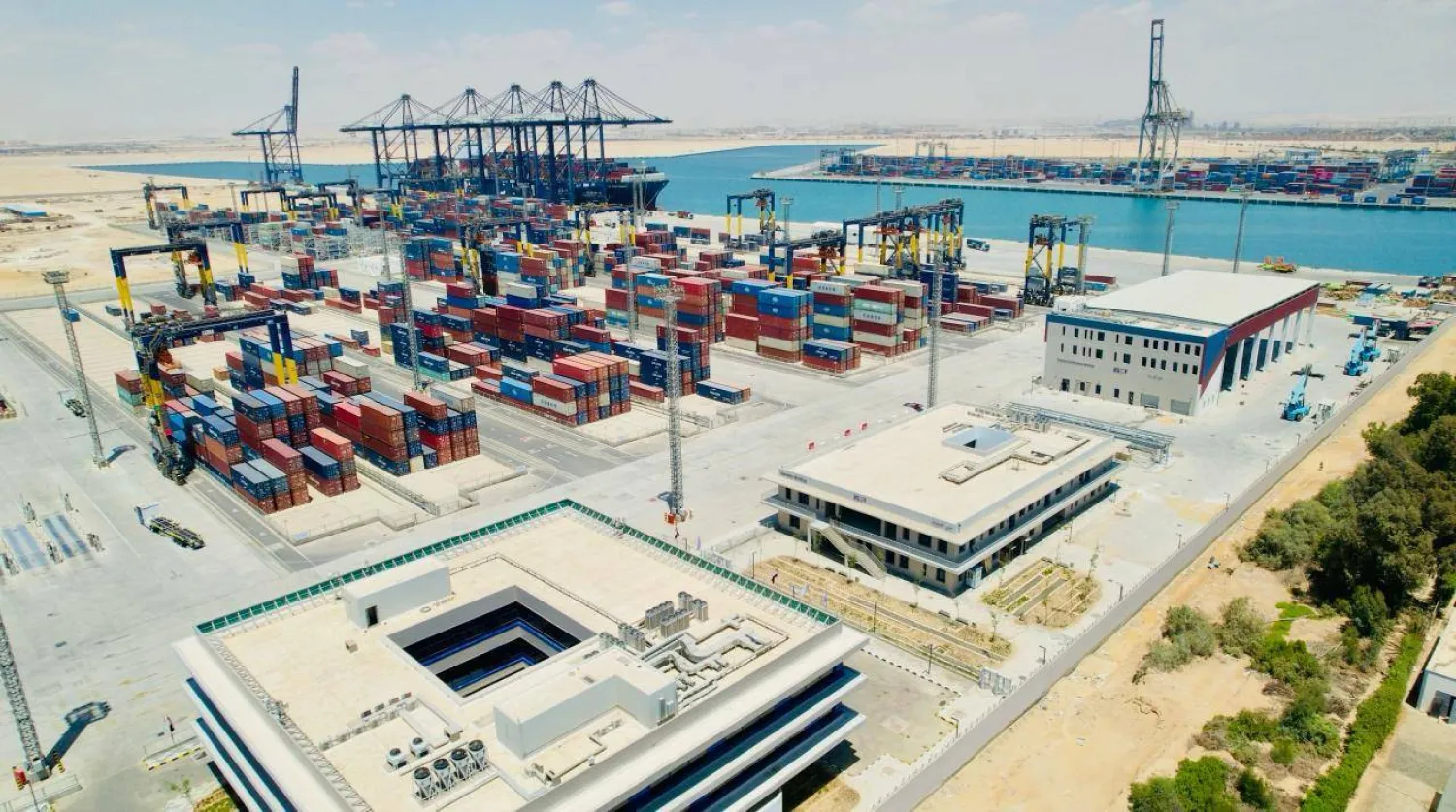
Egypt has an extensive network of seaports along both the Red Sea and the Mediterranean. (Egyptian Ministry of Transport)
TT

Regional Turmoil Drives Growth at Egyptian Ports While Cutting Suez Canal Revenues

Egypt has an extensive network of seaports along both the Red Sea and the Mediterranean. (Egyptian Ministry of Transport)

The Suez Canal may have incurred heavy losses due to regional tensions and instability in recent years — from the war in Gaza to the conflict involving Iran — those same disruptions have contributed to a significant surge in activity at Egyptian ports and in transit trade.

However, Egyptian economists said the strong increase in container traffic at the country’s ports is not enough to compensate for the canal’s losses.

They stressed that government initiatives, including efforts to expand transit trade, may only help reduce part of the revenue shortfall.

At the end of April, Egyptian President Abdel Fattah al-Sisi said Egypt had lost nearly $10 billion in Suez Canal revenues because of attacks on ships in the Bab el-Mandeb Strait.

Egyptian ports have experienced increased activity in recent months amid supply-chain disruptions linked to the Iran conflict. Maritime connections with regional countries have expanded, including the launch of the NEOM–Safaga multimodal logistics corridor linking Gulf Cooperation Council countries with Europe.

The Egyptian government has also reinforced trade links between the Gulf and Europe through the “Ro-Ro” shipping line connecting Damietta Port with Italy’s Port of Trieste to increase trade volumes.

In the energy sector, oil flows through Egypt’s SUMED pipeline rose following disruptions in global energy supply chains caused by the closure of the Strait of Hormuz.

Amr El-Samadouni, secretary-general of the International Transport and Logistics Division at the Cairo Chamber of Commerce, said the recent tensions in the Strait of Hormuz have “strengthened Egypt’s position as a regional hub for logistics services and supply-chain management.”

In a statement, El-Samadouni said the developments provide Egypt with “an important opportunity to offset part of the decline in Suez Canal revenues by attracting a share of urgent shipments that cannot tolerate long delays, especially in sectors linked to fast-moving trade and time-sensitive supply chains.”

According to a statement by Egypt’s Ministry of Transport on Thursday, the country’s port sector recorded a major increase in cargo and container handling. Egyptian ports handled 11.1 million twenty-foot equivalent units (TEUs) in 2025, compared with 8.9 million in 2024, representing growth of 24.3 percent.

Transit container traffic also increased sharply, reaching 6.7 million containers in 2025, a rise of 36 percent. The number of ships calling at Egyptian ports climbed to 17,288 voyages in 2025, up 6.6 percent, according to the ministry.

Egypt has an extensive network of seaports along both the Red Sea and the Mediterranean and is investing heavily in upgrades to strengthen its role in regional and international trade.

The Ministry of Transport said the modernization program aims to transform Egypt into a regional hub for transport, logistics, and transit trade while boosting the ports’ ability to attract investment and handle growing trade volumes.

Despite the improvements in port activity, “they cannot compensate for the losses of the Suez Canal,” said Walid Gaballah, a member of the Egyptian Association for Political Economy, Statistics and Legislation.

He noted that revenues from trade and container handling “may reduce the losses but cannot fully replace them,” adding that shipping traffic through the canal has yet to return to pre-Gaza war levels.

Gaballah told Asharq Al-Awsat that continued regional instability makes recovery in Suez Canal traffic increasingly difficult.

Egyptian economist Mostafa Badra also said there can be no direct comparison between canal revenues and port trade income. “There is no substitute for the canal as a major source of foreign currency,” he told Asharq Al-Awsat, noting that revenues generated by port trade remain far below the canal’s earnings under normal conditions.

Badra added that the government’s port-development strategy is intended to strengthen Egypt’s logistics capabilities and reinforce the Suez Canal’s role as a global trade corridor while primarily supporting domestic trade. By contrast, he said, the canal itself remains a vital artery in global supply chains.

Egypt recently rose three places in the UNCTAD Liner Shipping Connectivity Index, ranking 19th globally, first in Africa, and second in the Arab world, according to the Ministry of Transport.



US, Mexico Finish First Round of Trade Agreement Talks

Mexican Economy Minister, Marcelo Ebrard, gestures as he speaks during a press conference in Mexico City on May 27, 2026. (AFP)
TT

US, Mexico Finish First Round of Trade Agreement Talks

Mexican Economy Minister, Marcelo Ebrard, gestures as he speaks during a press conference in Mexico City on May 27, 2026. (AFP)

The United States and Mexico completed a first round of bilateral trade talks Friday, focused on revising the North American Free Trade Agreement in light of pressure from President Donald Trump's tariff policies.

The US-Mexico-Canada Agreement (USMCA) is due for its first review since coming into force in 2020, with talks starting Wednesday led by Mexico's Economy Secretary Marcelo Ebrard and US Deputy Trade Representative Jeff Goettman joining Thursday.

"We talked about rules of origination, the automotive sector, how we compete with countries in Asia and other parts of the world, and how we can integrate more," Ebrard said in a statement.

The Mexican delegation in a statement described the talks as being held "in a constructive environment and with frank dialogue" that ended with a "net positive."

The US Trade Representative Office said in a statement the US approached the talks with the goals of reducing Washington's trade deficit with Mexico and strengthening US supply chains.

"During this first round, negotiators discussed priority issues related to automotive rules of origin, steel and aluminum, and economic security," the statement said.

"The United States and Mexico recognize the importance of advancing cooperation to enhance regulatory compatibility to strengthen sectors, including medical devices, pharmaceuticals, cosmetic products, and others."

Trump has threatened to pull out from the USMCA, arguing it doesn't benefit the US economy, casting a shadow over the talks.

The USMCA is critical for Mexico, as the United States accounts for more than 80 percent of its exports.

With the first round complete, future rounds of negotiations will take place in Washington in June, then Mexico City in July.


EU's Six Biggest Economies Agree on Capital Markets Supervision

German Finance Minister Lars Klingbeil (L), Dutch Finance Minister Eelco Heinen (R) and Spanish Economy Minister Carlos Cuerpo attend a meeting with finance ministers from Germany, Italy, Spain, Poland, France and the Netherlands at the Deutsche Bundesbank recreation center in Berlin, Germany, 28 May 2026. (EPA)
TT

EU's Six Biggest Economies Agree on Capital Markets Supervision

German Finance Minister Lars Klingbeil (L), Dutch Finance Minister Eelco Heinen (R) and Spanish Economy Minister Carlos Cuerpo attend a meeting with finance ministers from Germany, Italy, Spain, Poland, France and the Netherlands at the Deutsche Bundesbank recreation center in Berlin, Germany, 28 May 2026. (EPA)

Finance ministers from the EU's six biggest economies (E6) agreed among themselves on Friday to support more centralized capital markets supervision, in a breakthrough crucial for deeper integration of Europe's fragmented capital markets.

The push for financial market players to be supervised at a European Union rather than national level is part of the EU's plan to redirect trillions of its citizens' savings, now idling in bank deposits, into more productive investment in Europe.

Access to such a large ‌amount of capital ‌for investment would boost the bloc's chances of competing against ‌the ⁠United States and China.

Supervision ⁠of significant market infrastructure would be gradually transferred to the European Securities and Markets Authority in Paris, the finance ministers of Germany, France, Italy, Poland, Spain and the Netherlands agreed after they met in Berlin on Thursday to discuss the issue.

The issue of handing over local powers to supervise trading platforms, central counterparties and central securities depositories to the EU has been difficult because of vested national interests and opposition from Ireland and Luxembourg and ⁠initially Germany.

But the issue will be decided by qualified ‌majority, meaning it needs the support of 15 ‌out of the EU's 27 countries representing 65% of the bloc's population.

With the backing of the ‌E6, which represent 70% of the EU's population, centralized supervision is now much ‌more likely to happen.

"The fact that the EU's six largest economies are prepared to leave national self-interest behind and move forward together is an important signal for the entire European Union," German Finance Minister Lars Klingbeil said in a statement.

ACCOUNTABILITY MUST BE ENFORCED

The European Commission presented its ‌plan to better integrate EU capital markets in December, and Germany's finance minister has said he expects the package to ⁠be adopted by ⁠the end of this year.

"In an uncertain international context, Europe needs deeper and more integrated capital markets," Spanish Finance Minister Carlos Cuerpo said. "This joint positioning is a decisive step towards a true savings and investment union."

ESMA's governance structure must be set up efficiently: expertise, supervisory and market experience, and geographical balance should play a decisive role, the ministers agreed in a paper seen by Reuters on Friday.

In addition, costs must be kept under control and accountability must be enforced, the joint paper said about the ESMA.

However, the paper said that in their current form and size, German trading venues would currently not be subject to mandatory European supervision authorities over trading in crypto-assets, and to reduce barriers to cross-border funds to help company financing, according to the paper.