

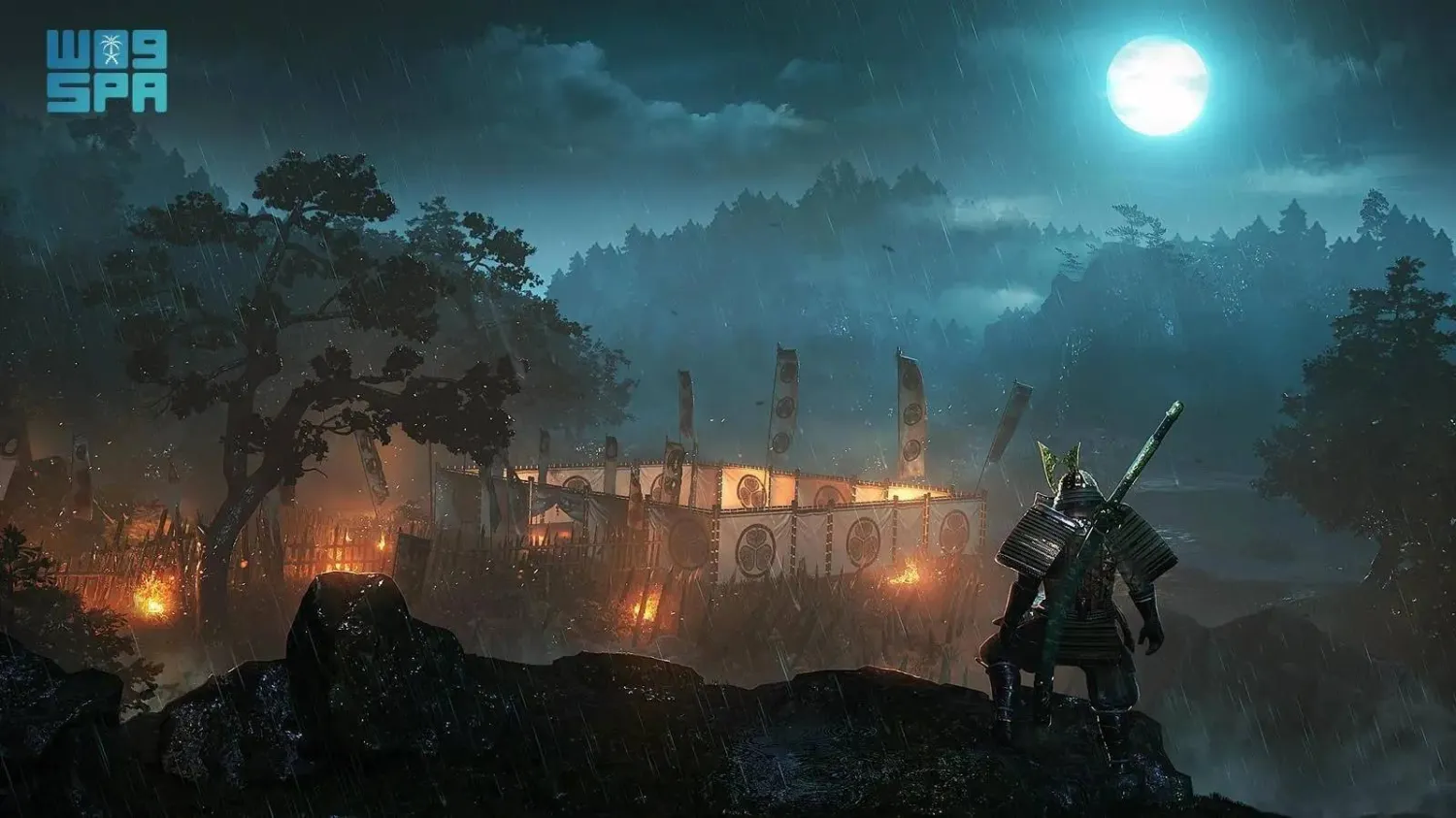

Manga Productions to Publish 'Nioh 3' in MENA with Arabic Localization

“Nioh 3” marks the latest chapter in the acclaimed dark samurai action RPG series. (SPA)
TT

Manga Productions to Publish 'Nioh 3' in MENA with Arabic Localization

“Nioh 3” marks the latest chapter in the acclaimed dark samurai action RPG series. (SPA)

Manga Productions, a subsidiary of Mohammed bin Salman Foundation (Misk), announced on Tuesday its partnership with KOEI TECMO GAMES as the official publisher of the highly anticipated action title “Nioh 3” in the Middle East and North Africa region. The game is scheduled for a worldwide simultaneous launch in early 2026 on PlayStation 5 and Steam.

In a statement, Manga Production said “Nioh 3” marks the latest chapter in the acclaimed dark samurai action RPG series, celebrated for its unique blend of Japanese mythology and intense combat. With over eight million units sold worldwide, the Nioh series has established itself as a global favorite.

This new installment adopts an open field environment and a new battle system that allows players to switch between the two fighting styles "Samurai" and "Ninja" in real time during combat.

As part of the collaboration, Manga Productions will lead the Arabic localization, marketing, and regional publishing efforts. In line with the company's mission to empower local talent, Manga Productions will involve Saudi creatives in the localization process, ensuring a culturally resonant and high-quality experience for Arabic-speaking players.

Manga Productions CEO Dr. Essam Bukhary said the launch of “Nioh 3” with Arabic support for gamers in the region is another step toward delivering world-class experiences while empowering Saudi talent throughout every stage of development.

“The trust we've earned from our global partners reflects Manga Productions' strong capabilities in publishing, distribution, and marketing, as well as our continued success in delivering high-quality, culturally relevant content to audiences across the region,” he stated.

Manga Productions and KOEI TECMO GAMES remain committed to delivering high-quality entertainment that reflects the growing passion and potential of the gaming community across the Middle East.

KOEI TECMO GAMES President and COO Hisashi Koinuma stressed: “After the positive reception of DYNASTY WARRIORS: ORIGINS, we're excited to deepen our partnership with Manga Productions to bring Nioh 3 to Arabic-speaking audiences, fully localized and tailored to their expectations.”

Manga Productions Business Development and Content Licensing Director Eng. Abdulaziz Alnaghmoosh said: “Following our collaboration on DYNASTY WARRIORS: ORIGINS, which was praised for delivering an Arabic experience that felt original rather than translated, Nioh 3 is our next step in raising that standard.”

“We're committed to offering players a seamless, fully localized journey that feels like it was made for them from day one of the worldwide simultaneous launch,” he remarked.


US Scientist John Jumper to Leave Google DeepMind for Anthropic

FILE PHOTO: The Google logo is pictured at the entrance to the Google offices in London, Britain January 18, 2019. REUTERS/Hannah McKay/File Photo/File Photo
TT

US Scientist John Jumper to Leave Google DeepMind for Anthropic

FILE PHOTO: The Google logo is pictured at the entrance to the Google offices in London, Britain January 18, 2019. REUTERS/Hannah McKay/File Photo/File Photo

Senior research scientist John Jumper said on Friday he would leave Google DeepMind to join AI startup Anthropic, the latest high-profile departure at the Big Tech giant's AI lab.

Jumper, who won a Nobel prize alongside Google's Demis Hassabis in 2024, is best known as the co-creator of AlphaFold, a breakthrough AI that has predicted over 200 million protein structures, cutting years off biological and medical research.

"After nearly nine years, I have decided to leave Google DeepMind and join Anthropic," Reuters quoted Jumper as saying in a post on X.

Technology giants including Meta and Alphabet , along with AI upstarts such as Anthropic and ⁠OpenAI are locked in ⁠a fierce talent war, competing for elite researchers as they race to build next-generation AI systems.

"There is so much demand for limited AI research talent that the frontier AI research labs are willing to do whatever it takes to add them. This puts OpenAI and Anthropic at an advantage over large companies like Google because they ⁠can promise less bureaucracy and a more focused effort on pursuing Superintelligence," said D.A. Davidson analyst Gil Luria.

Jumper's surprise departure comes just days after Noam Shazeer, a vice president of engineering at Google and co-lead of its Gemini AI models, said he would leave the company to join IPO-bound OpenAI.

"What we achieved with AlphaFold changed the world, and showed the field what was possible with AI for science and medicine, lighting the way for how AI can benefit humanity," Hassabis said in a reply to Jumper's post.

Jumper serves as VP, Engineering ⁠Fellow, at ⁠Google DeepMind, according to his LinkedIn page. He is moving to Anthropic at a time when the startup is embroiled in a high-stakes legal and regulatory battle with the US government.

Anthropic is hosting a science event on June 30. The startup did not immediately respond to a Reuters request for comment regarding Jumper's new role.

In the X post, Jumper described Google DeepMind as a "special place" and indicated his continued interest in its future discoveries.

"We are grateful for John’s significant contributions to Google DeepMind’s work in advancing science and AI. We wish him well in his next chapter," a Google DeepMind spokesperson told Reuters in an emailed response.


Norway Imposes Near Ban on AI in Elementary School

Norway's Prime Minister Jonas Gahr Store of the Labour Party speaks during the semi-annual summary press conference at the government's representative facilities in Parkveien, Oslo, Norway, 19 June 2026. (EPA)
TT

Norway Imposes Near Ban on AI in Elementary School

Norway's Prime Minister Jonas Gahr Store of the Labour Party speaks during the semi-annual summary press conference at the government's representative facilities in Parkveien, Oslo, Norway, 19 June 2026. (EPA)

Norway is imposing ‌a near ban on the use of generative AI tools by elementary school pupils while also restricting their use in the education of older children to prevent a negative impact on learning, the country's prime minister said on Friday.

Facing a broad decline in education test scores, the government in 2024 banned smartphones from schools and has given teachers back more powers to enforce discipline in the classroom.

Using AI increases the ‌risk that young ‌children skip important steps in their ‌education, ⁠Prime Minister Jonas ⁠Gahr Stoere told a press conference on Friday.

"The most important thing in school is that our children learn to read, write and do mathematics," Stoere said, adding that the new standards will be imposed from the new school year beginning in late August.

Pupils ⁠from first through seventh grade, aged 6 ‌to 13, should as a ‌general rule not be using AI, while those in ‌lower secondary school, aged 14 to 16, can ‌cautiously adopt tools under teachers' supervision, the government said.

In upper secondary education, from ages 17 to 19, students should learn to use AI appropriately so that they are ‌prepared for further education and work, it added.

Norway began adopting computers in classrooms in ⁠the ⁠1990s and tablets after the introduction of the iPad from 2010 onwards, reducing the reliance on books and handwriting.

But in a related statement on Friday, the government also said it will propose legislation to fund the use of more books in classrooms, reversing the trend towards computer tablets.

The Norwegian government in April also announced plans to ban children from using social media until they turn 16, following a trend pioneered by Australia and some other nations to reduce young people's use of electronic devices.


European Robotics Start-ups Go Up Against Chinese Heavyweights

The humanoid robot Alter-Ego, designed by the Italian Institute of Technology, assists patient Daniel Senna through remote interaction at the IRCSS Maugeri hospital in Milan on June 12, 2026. (Photo by MARCO BERTORELLO / AFP)
TT

European Robotics Start-ups Go Up Against Chinese Heavyweights

The humanoid robot Alter-Ego, designed by the Italian Institute of Technology, assists patient Daniel Senna through remote interaction at the IRCSS Maugeri hospital in Milan on June 12, 2026. (Photo by MARCO BERTORELLO / AFP)

Humanoid robots able to perform tasks from grape harvesting to welcoming visitors were front and center at France's Vivatech trade fair this week, with European firms looking to fill niches beyond what dominant Chinese giants can offer.

French company Enchanted Tools was showing off its Mirokai, a "social" robot with long orange ears and wide blue eyes, AFP reported.

Able to communicate in over 50 languages, prototypes of the Paris-based firm's machine are already out in the wild welcoming people to hospitals and airports, marketing chief Richard Malterre said on a Vivatech stage.

The start-up hopes its first mass-produced models will arrive by the end of this year.

"At least 60 percent of the robot is manufactured in Europe, and we're fighting to keep it that way," Malterre told AFP.

But some of the AI robotics know-how is "not necessarily available" in Europe, he said, such as the graphics processors from American chip giant Nvidia that power Mirokai's brain as well as the broader generative AI boom.

When it comes to sheer robotics production capacity, China is unrivalled thanks to companies including Unitree and Agibot.

Their androids' tightly choreographed displays wowed visitors to Vivatech, the latest fair to show them off in recent months.

Around 87 percent of the 13,000 humanoid robots deployed worldwide in 2025 rolled off a Chinese production line, according to the UK-based consultancy Omdia.

"China is definitely on the forefront" as its companies increasingly show off "dark factories" where robots work largely without human supervision, said Joern Buss, a robotics expert at the consultancy Arthur D. Little.

Nevertheless, Europe is "catching up" behind Japan and Korea, he added, boasting "some good robotics players" including longstanding firms.

New players on the European scene include Germany's Neura, which builds humanoid industrial and household robots as well as a platform for training them to carry out human tasks.

The company recently announced it had raised $1.4 billion.

"We get requests for everything, even dentists, everyone is calling us and asking if they can have a robot as a supporter, because they can't find people," chief executive David Reger told AFP.

Like other advanced economies around the world, Europe faces an aging population that could squeeze the labor supply in both manufacturing and services.

Reger called robots like Neura's the continent's "last chance", saying "Europe does require this economic pillar to sustain" itself.

He cited familiar challenges for European tech firms including tight regulation and a tougher search for financing than competitors in the United States.

But Reger has no plans to uproot Neura's business, which is collaborating with German car component suppliers Bosch and Schaeffler on factory automation.

He vaunts Neura's order book of over $1 billion.

"If all robot production goes to Japan or China, that could be a big problem when it comes to sovereignty," said Francesco Ferro, chief executive of Spain's PAL Robotics.

His company was at Vivatech showing off its latest models bolted together in Barcelona.

One is a black biped that has been dubbed Kangaroo, while the Tiago machine is fitted with jointed arms that have been put to use in logistics as well as picking grape harvests.

Robotics developers use vast quantities of data to train their machines' movements, and they collect still more information as they carry out their tasks.

The continent should aim to create "a totally European supply chain, without thinking only about price", as that could lead prospective clients to buy Chinese robots, Ferro said.

That would risk seeing valuable or sensitive data "falling into the wrong hands", he warned.

French-American start-up Genesis AI plans to re-shore production of its Eno multifunctional robot next year after making it in China.

Prospective customers include "the big industrial base in France, Italy and Germany," co-founder Theophile Gervet told AFP.

Enchanted Tools' Malterre also believes the demand exists, and "I'm confident in our ability and creativity to endure".

"We need to be ready for a fight, not throw in the towel."