


These are 5 Things the UN Does that You May Not Have Known

The United Nations logo is seen on a window in an empty hallway at United Nations headquarters during the 75th annual UN General Assembly high-level debate in New York, US, September 21, 2020. REUTERS/Mike Segar
TT

These are 5 Things the UN Does that You May Not Have Known

The United Nations logo is seen on a window in an empty hallway at United Nations headquarters during the 75th annual UN General Assembly high-level debate in New York, US, September 21, 2020. REUTERS/Mike Segar

The United Nations' vast system has tackled everything from delivering life-saving humanitarian aid to providing crucial peacekeeping operations in conflict zones since it was established in the wake of World War II.

As the international body closes in on 80 years, questions about its relevancy and efficiency have sharpened from supporters and critics alike. Recent US cuts to foreign assistance and the reevaluation of humanitarian contributions by other countries have forced a reckoning for the UN, said The Associated Press.

The organization has long sought to highlight its unique role as the meeting place of global leaders, with an ambitious mandate to prevent another world war.

Staffers, however, say the UN does more than respond to civilians’ needs in war zones and debate resolutions in the Security Council.

“The things that are not on the radar of anyone, that nobody sees every day, that’s what we do everywhere, in more than 150 countries,” said Diene Keita, executive director for programs at the UN's population agency.

Here are five things the UN does that you may not have known:

Providing training to women and girls who have faced gender-based violence.

UN agencies facilitate programs worldwide focused on women, tied to education, financial literacy, employment opportunities and more. Among the most sensitive services provided are those for victims of gender-based violence.

In Chad, the UN Population Fund operates several rehabilitation programs for women and girls recovering from that trauma. One of them, Halima Yakoy Adam, was taken at age 15 to a Boko Haram training camp in Nigeria, where she and several other girls were forced to become suicide bombers. Adam managed to escape with severe injuries, while the others died in blasts.

Through UN programs on the islands of Lake Chad, Adam received health and reproductive services as well as vocational training. She is now working as a paralegal in her community to assist other women and girls.

“We are not created to stay,” Keita said of UN agencies' long-term presence. “So this is embedded in what we do every single day. We have that humility in knowing that we make a difference, so that people do not need us the next day.”

Resettling refugees in Mexico

Images of refugees at US and European borders show the migration crisis around the world. Often overlooked are the refugees who are resettled in communities outside American and European cities, ones that resemble their home countries and cultural upbringings.

Since 2016, the UN's refugee agency has supported the integration of more than 50,000 refugees and asylum-seekers in Mexico. They arrived in southern Mexico and were relocated to industrial cities after being screened and granted asylum by the government.

The UN High Commissioner for Refugees provides transportation, orientation and access to health, education and other social services. More than 650 companies have agreed to train and employ these people, whose labor has generated a $15 million annual contribution to the Mexican economy, according to the UN.

According to UN estimates, 94% of these working-age refugees have secured formal employment within their first month in the country and nearly 90% of school-age children have enrolled in school. The UN program also provides what staffers describe as clear pathways to Mexican citizenship.

“Mexico has become a country where people forced to flee can find the stability they need to restart their lives with dignity,” Giovanni Lepri, the top UN refugee agency official in Mexico, said in March. “A strong asylum system and legal framework allows an effective integration of asylum-seekers and refugees.”

Eliminating exploding remnants of war

UN agencies are present throughout various phases of war, from delivering food, water and medical supplies in an active military zone to the iconic “Blue Helmets” — the military personnel deployed to help countries transition out of conflict.

Less attention is paid to efforts made after the dust has settled.

One of those initiatives, the United Nations Mine Action Service, was established in 1997 to facilitate projects aimed at mitigating the threat posed by unexploded munitions in countries years — and sometimes decades — after war.

The UN estimates that on average, one person is killed or injured by land mines and other explosive ordnance every hour.

In January, a 21-year-old man was harvesting olives in a Syrian orchard with two friends when they noticed a visible mine on the ground. Panicked, they tried to leave, but one of them stepped on a land mine and it exploded, amputating one of his legs above the knee.

A month later, in Cambodia, a rocket-propelled grenade believed to be more than 25 years old killed two toddlers when it blew up near their homes.

The UN program aims to work with communities in Syria, Afghanistan and Nigeria to safely locate and remove these remnants of war while providing education and threat assessments.

Since its inception, the UN says more than 55 million land mines have been destroyed and over 30 countries have become mine-free.

Teaching refugee girls self-defense in Kenya

In a refugee camp in northwest Kenya, dozens of girls 12 to 18 have gathered every Saturday at a women's empowerment center to learn self-defense through a Taekwondo class.

The program, launched by the UN's Population Fund last year, has focused on providing an outlet for girls who have either been victims of gender-based violence or are at risk of it after fleeing conflict zones in countries like South Sudan, Ethiopia and Congo.

The coaches are locals who understand the cultural and political dynamics their students face while living in a camp that is home to nearly 300,000 refugees.

The goal is to use sports activities to create safe spaces for women and girls to discuss various issues like period poverty, abuse and domestic conflict. The program, which the UN has replicated in Egypt and elsewhere, is funded by the Olympic Refuge Foundation.

Sex education by monks in Bhutan

Topics surrounding sex and reproductive issues were considered taboo for centuries in Buddhist communities. UN staffers have spent the past decade working with religious leaders in Bhutan and other countries in Asia to “desensitize” the topics they believe are crucial to a healthy society.

The campaign has led more than 1,500 nuns from 26 nunneries to hold discussions with community members around sexual and reproductive health and the prevention of gender-based violence.

Now, at least 50 monks are trained to provide counseling services on these topics to students across Bhutan's 20 districts.

The UN says these partnerships, which began in 2014, have contributed to a decrease in maternal mortality, an increase in contraception use, and better reproductive care for pregnant women.



Netanyahu, Israel’s Arch-Survivor, Set to Face Voter Fury Over Iran Deal

Israeli Prime Minister Benjamin Netanyahu holds a news conference in Jerusalem, 15 June 2026, following the announcement of a US-Iran mediated preliminary framework to end regional military hostilities. (EPA)
TT

Netanyahu, Israel’s Arch-Survivor, Set to Face Voter Fury Over Iran Deal

Israeli Prime Minister Benjamin Netanyahu holds a news conference in Jerusalem, 15 June 2026, following the announcement of a US-Iran mediated preliminary framework to end regional military hostilities. (EPA)

Israeli Prime Minister Benjamin Netanyahu's hopes of clinging to power in an election this autumn have long been shaky, but the interim US deal with Iran has added yet another complication.

US President Donald Trump has opted to end the wars in Iran and Lebanon long before Israel's goals were accomplished, and Netanyahu's boast in March that "we are changing the face of the Middle East" looks increasingly empty.

Already facing corruption allegations, domestic political controversies and criticism over security failings in the October 7, 2023 Hamas attack on Israel, he will now face voters' judgement of his handling of the wars and Israel's relationship with the United States, its most important ally.

Netanyahu, 76, confirmed this week he intends to stand again in an election that must be called by October.

Opinion polls put his right-wing coalition on course to lose but, in a parliamentary system he has dominated for long stretches since the 1990s, few Israelis would entirely discount him weaving together a new government.

NO LASTING VICTORIES

However the election unfolds, Israel's longest-serving prime minister, whom supporters once called "King Bibi", is already the most consequential leader of recent Israeli history and the object ‌of boundless fury to ‌critics.

Netanyahu's Likud party portrays him as the security hawk who staved off demands for a Palestinian state ‌while ⁠urging attacks on Israel's ⁠enemy, Iran, and its regional proxies.

"There will be no Palestinian state to the west of the Jordan River," Netanyahu said in 2025, adding "for years I have prevented the creation of that terror state, against tremendous pressure".

His hawkish image was dented by security failings before the Hamas attack, for which he has not taken responsibility, and by wars that brought military successes but no lasting victories.

Tens of thousands of people have been killed in Israeli strikes in Gaza and Lebanon, and Israel's military death toll is at its highest in decades.

Domestic critics say Netanyahu focused security away from the Gaza border and disregarded Hamas as a real threat.

Although Israelis mostly backed the war in Gaza, many turned against Netanyahu's handling of it. Some prominent generals and families of hostages were among critics who said he lacked ⁠a clear strategic plan.

The killings of Hezbollah leader Hassan Nasrallah and Iran's supreme leader, Ali Khamenei, were ‌celebrated in Israel. But Hamas still controls much of Gaza, revolutionary theocrats still rule Iran and Hezbollah ‌has survived in Lebanon.

"Netanyahu lost the war. Netanyahu did not deliver - at the moment of truth he collapsed," opposition leader Yair Lapid said after Trump imposed a new ‌Israel-Hezbollah truce as part of his deal with Iran.

Netanyahu decries such criticism as part of a campaign to diminish Israel's accomplishments.

Warning of a ‌potential nuclear threat from Iran, he said: "If we had not acted in time and with overwhelming force – we would not be here today."

DENYING ACCUSATIONS OF WAR CRIMES

The devastation in Gaza drew accusations abroad of genocide that Israel rejects and an International Criminal Court arrest warrant for Netanyahu on war crimes charges, which he called absurd.

While he has assiduously courted Western support for Israel, he has also antagonized US presidents and other world leaders. A biographer quoted former US President Joe Biden as in private calling him ‌a "son of a bitch" and "a bad [expletive] guy."

The expansion of Israeli settlements in the occupied West Bank and attacks on Palestinians there have meanwhile fueled international calls to revive the peace process.

Anger has gone both ⁠ways - many Israelis think Western criticism of ⁠their Gaza campaign after the Hamas attack was unfair.

Rival politicians accuse Netanyahu of caving to US pressure. But in the US, his close ties to the Republican party and attacks on Democrats have helped upset decades of bipartisan support among politicians. Backing for Israel is falling among voters of both parties.

Trump, the US president he has been closest to, called him "[expletive] crazy" during a June phone call.

LONGEST-SERVING PRIME MINISTER

Born to a prominent historian, Netanyahu went to school in the US before joining the same elite commando unit as his elder brother, Yoni, who was killed leading the rescue of hijacked air passengers at Entebbe, Uganda, in 1976. Netanyahu said that event "changed my life".

He proved at ease in the tough world of Israeli politics, appealing to the gut instincts of his core voter base in gritty towns and settlements.

He became Israel's youngest prime minister in 1996, forging a coalition of settlers, security hawks, the ultra-Orthodox and pro-business voters, and has seen off many opponents, building a string of coalitions and ruthlessly abandoning former allies.

Dogged by a corruption trial, Netanyahu won an unprecedented sixth term in 2022, bringing into government nationalist parties with an openly expansionist agenda.

Their efforts to curb the Supreme Court prompted the biggest protests in Israel's history in 2023.

Netanyahu had sought a legacy through the Abraham Accords - 2020 agreements meant to normalize or expand ties with four Arab countries. He hoped to achieve peace with the Arab world without having to accept Palestinian self-determination.

But the 2023 Hamas attack and Gaza war made that impossible and with Israel's standing in the West badly dented, his legacy will now be much more bitterly contested.


Interim US-Iran Deal Leaves the Thorniest Issue Still to Be Negotiated: Tehran’s Nuclear Program

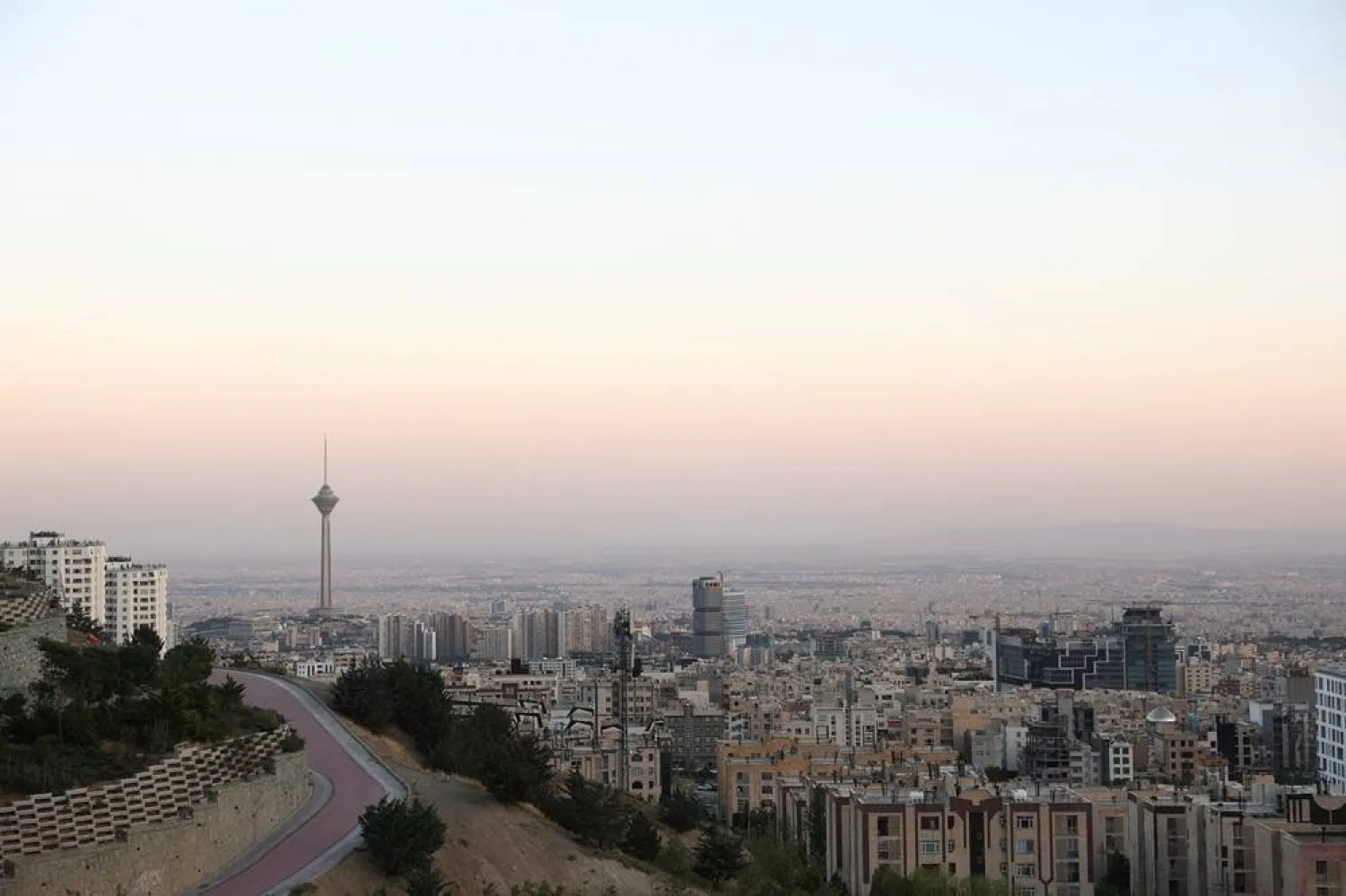
A view of Milad Tower, in Tehran, Iran, June 15, 2026. Majid Asgaripour/WANA (West Asia News Agency) via Reuters
TT

Interim US-Iran Deal Leaves the Thorniest Issue Still to Be Negotiated: Tehran’s Nuclear Program

A view of Milad Tower, in Tehran, Iran, June 15, 2026. Majid Asgaripour/WANA (West Asia News Agency) via Reuters

The interim deal between the US and Iran is supposed to usher in a two-month period that would address the most divisive issue between the longtime adversaries — Tehran's nuclear program.

Preventing Iran from attaining a nuclear bomb is a key reason that President Donald Trump said he launched the war alongside Israel in February, but the tentative agreement he has trumpeted leaves little runway to negotiate the long-running sticking point. The previous nuclear pact between Iran and world powers, which Trump pulled the US from in his first term, took many months to negotiate.

Few details have been publicly released about the initial deal, set to be officially signed Friday in Switzerland, but it generally calls for reopening the Strait of Hormuz to global oil shipments, financial incentives for Iran if it meets certain benchmarks, and a 60-day period for talks on ending the country's nuclear program.

There is deep skepticism among both Republican and Democratic lawmakers, pro-Israel advocates and Israel itself that the deal is realistic, workable or would have any effect on nuclear talks.

“My skepticism is Iran itself. What would a good deal look like? No enrichment. And we’ll see if we can get there,” Republican Sen. Lindsey Graham of South Carolina, a close Trump ally and longtime Iran hawk, said Tuesday. “But whether or not we can get phase two, I don’t know.”

A nuclear deal takes commitment to the details

David Schenker, director of the Arab Politics Program at the Washington Institute for Near East Policy, said that “this administration has proven that it has a hard time keeping its attention on these issues.”

Schenker, who served as assistant secretary of state for Near Eastern Affairs in the first Trump administration, questioned whether the current administration would have the wherewithal to reach a nuclear deal even if the agreement is signed Friday.

“This is the kind of thing that requires dogged attention, attention to detail and numerous technical experts involved,” he said. “Trump loses his attention, moves on, and so does the administration. It’s like they don’t understand Iran’s strategy. They didn’t get it the first time, or the second.”

The Trump administration has maintained its confidence. Vice President JD Vance said much of the technical detail must be negotiated but that the US must see action for Iran to receive incentives like sanctions relief.

“Our plan under this deal is, again, the Iranians are getting a lot of benefits so long as they dismantle that nuclear weapons program,” Vance told Megyn Kelly on her podcast Tuesday.

“People always ask me, ‘Why do you believe it this time?’ I don’t believe them,” he added. “I don’t trust anything that anybody says. I trust what people do. And the way this deal is structured is that as they do more, they receive more. As they do less, they receive less.”

Iran has long maintained its nuclear program is peaceful.

It took over a year and a half to get the previous nuclear deal

The 2015 Joint Comprehensive Plan of Action, or JCPOA, took more than 18 months to negotiate, starting with secret talks between US and Iranian officials in Oman at the end of then-President Barack Obama’s first term.

They required dozens of direct high-level interventions from Secretary of State John Kerry and Energy Secretary Ernest Moniz, not to mention a team of dozens of technical experts traveling to Europe and elsewhere before the conclusion of the negotiations in Vienna, Austria.

Trump withdrew from the JCPOA in 2018 before most of its more contentious concessions had come into effect, and there is no indication now that Iran is willing to offer much more.

The JCPOA relied on very technical language and understandings, including limits on uranium enrichment, advanced centrifuges and heavy water production. In exchange, Iran was granted significant sanctions relief, amounting to billions of dollars.

As unhappy as critics were about the JCPOA — Trump called it the “worst deal ever negotiated,” while all Republicans and a number of prominent Democrats voted against it — all sides acknowledge it took more than 18 months to get to an even imperfect agreement.

Republicans say Congress must approve any deal

Republicans say any nuclear deal with Iran should be brought to Congress, as required by law. GOP Sen. Ted Cruz of Texas said he “would certainly anticipate that” the Senate will get the final say.

GOP Sen. John Kennedy of Louisiana said he had little confidence Iran would abide by any agreement.

But Sen. Roger Marshall, R-Kan., one of a handful of senators who has spoken to Vance about the agreement, said the shortened timeline could be an advantage.

“Iran’s modus operandi is to negotiate for the purpose of delaying, so they can rearm themselves,” Marshall said. “I think the president has to give them some type of a finite amount of time, or there’s going to be consequences. So I think it can be done.”

Sen. Tim Kaine, D-Va., noted that what could help Trump’s negotiators to hammer out a nuclear agreement in such a truncated timeline is that there is “a base" to work from following the Obama-era talks.

Still, the JCPOA "took years to put together. You had allies and even adversaries — China and Russia — around the table, you had the IAEA at the table, the Obama chief negotiator had a Nobel Prize in physics, Ernie Moniz,” Kaine said. “I don’t know that either Jared Kushner or Steve Witkoff have a Nobel Prize. So it’s going to be hard.”

Trump envoys Witkoff and Kushner, neither of whom had any prior experience in nuclear negotiations, made numerous but ultimately unsuccessful attempts to reach an agreement under Omani mediation during the first months of Trump’s second term.

Those tapered off after the US-Israel attacks on Iranian nuclear sites in June 2025 after which Pakistan emerged as the main facilitator.

There also is uncertainty about other issues besides nuclear that have been of concern to Arab countries, Israel, Europe and the United States.

It is not clear that any of those issues, including Iran’s ballistic missile program, its support for armed proxies in the region or repression of its own people, will be addressed by either the interim or potential longer-term agreements.

Without significant capitulations by Trump up-front, it is hard to imagine that nuclear negotiations with Iran will take only several months.

“A deal is better than more fighting, but the war America and Israel prosecuted against Iran has fallen short of achieving its stated objectives,” said Brian Katulis, a senior fellow at the Middle East Institute. “This agreement is mostly about cleaning up an unnecessary mess and putting the best face on it.”


Trump Goes After Netanyahu as He Pursues Deal with Iran, Putting Their Friendship to the Test

President Donald Trump shakes hands with Israel's Prime Minister Benjamin Netanyahu at the end of a news conference at Mar-a-Lago, Dec. 29, 2025, in Palm Beach, Fla. (AP)
TT

Trump Goes After Netanyahu as He Pursues Deal with Iran, Putting Their Friendship to the Test

President Donald Trump shakes hands with Israel's Prime Minister Benjamin Netanyahu at the end of a news conference at Mar-a-Lago, Dec. 29, 2025, in Palm Beach, Fla. (AP)

Israeli Prime Minister Benjamin Netanyahu told President Donald Trump last year that he was the “greatest friend Israel ever had in the White House."

Now, as Trump tries to finalize a deal to end the war with Iran, he's unloading on Netanyahu with rhetoric that no other American leader has dared to use publicly.

He claimed credit for Israel's existence — “without me, there would be no Israel” — and cursed his judgment in interviews. He even described him as “crazy.”

Netanyahu’s tenure as prime minister spans four US presidents, and he's frustrated all of them at one point or another. But none has voiced that as openly as Trump, who started the conflict in tandem with Netanyahu.

The tension comes as Trump criticizes recent Israeli attacks in Lebanon, which threatened to jeopardize negotiations between Washington and Tehran. Trump has been pushing for a deal as he faces political blowback at home, where the war is unpopular and has driven up gasoline prices.

“If Netanyahu gets in between something Trump really wants, and that’s out of this war, he’s prepared to use the leverage that he has,” said Aaron David Miller, who served as an adviser on Middle East issues to Democratic and Republican administrations over two decades.

An agreement is scheduled to be signed on Friday in the Burgenstock resort near the city of Luzern. Speaking on Tuesday at the annual G7 summit in France, Trump said he told Netanyahu that he's been unhappy with his recent moves.

“Without the US, there would be no Israel. Without me, there would be no Israel because no other president was willing to do what I did,” Trump said. “I have had a great relationship with Bibi. Now Bibi has to be more responsible with respect to Lebanon.”

There has long been a bipartisan consensus around supporting Israel in Washington, but that has frayed in recent years. Liberals have been increasingly outraged by Israel's treatment of Palestinians, especially during the war in Gaza, and conservatives have questioned the importance of longstanding American support for Israel. There are concerns about antisemitism on the left and the right.

Trump’s latest comments drew swift criticism from left-leaning groups.

“He is framing Israel’s mere existence as contingent on him,” said Halie Soifer, who leads the Jewish Democratic Council of America. “It’s deeply offensive to the vast majority of Jews who care about Israel’s future.”

President Joe Biden and Vice President Kamala Harris often disagreed with Netanyahu during the war in Gaza, and sometimes they criticized him publicly. But they were more circumspect to avoid facing accusations of being anti-Israel.

Conservative, pro-Israel groups were divided on the seriousness of Trump’s public condemnation of Netanyahu.

Republican Jewish Coalition President Matt Brooks described Trump’s criticism as little more than the inevitable disagreement among family members.

Brooks dismissed that any muted criticism of Trump’s comments from his party represented a political mixed message because Trump has been reliably supportive of Israel as president.

“If Biden or Harris said something critical, it came from the position of someone who was hostile toward or didn’t have the same level of support for Israel that President Trump has,” Brooks said.

He noted the first Trump administration’s role in moving the US embassy in Israel from Tel Aviv to Jerusalem and the return of Israeli hostages from Gaza during the president’s second term, among other acts.

Biden had criticized Netanyahu’s handling of the war in Gaza, though Trump’s criticism of Netanyahu comes with a “tremendous reservoir of goodwill on this issue that neither Biden nor Harris ever had.”

Pro-Israel advocate Mort Klein said Trump should have kept the comments private, especially in light of his public praise over the years of authoritarian leaders in North Korea and China.

Klein, president of the conservative Zionist Organization of America, said he worried that Trump was making the comments in public to appeal to Israel critics “because he sees that Americans have become more hostile toward Israel than they’ve ever been.”

“That worries me,” Klein said.