Syrian Security Forces Detain Cousin of Toppled Leader Assad

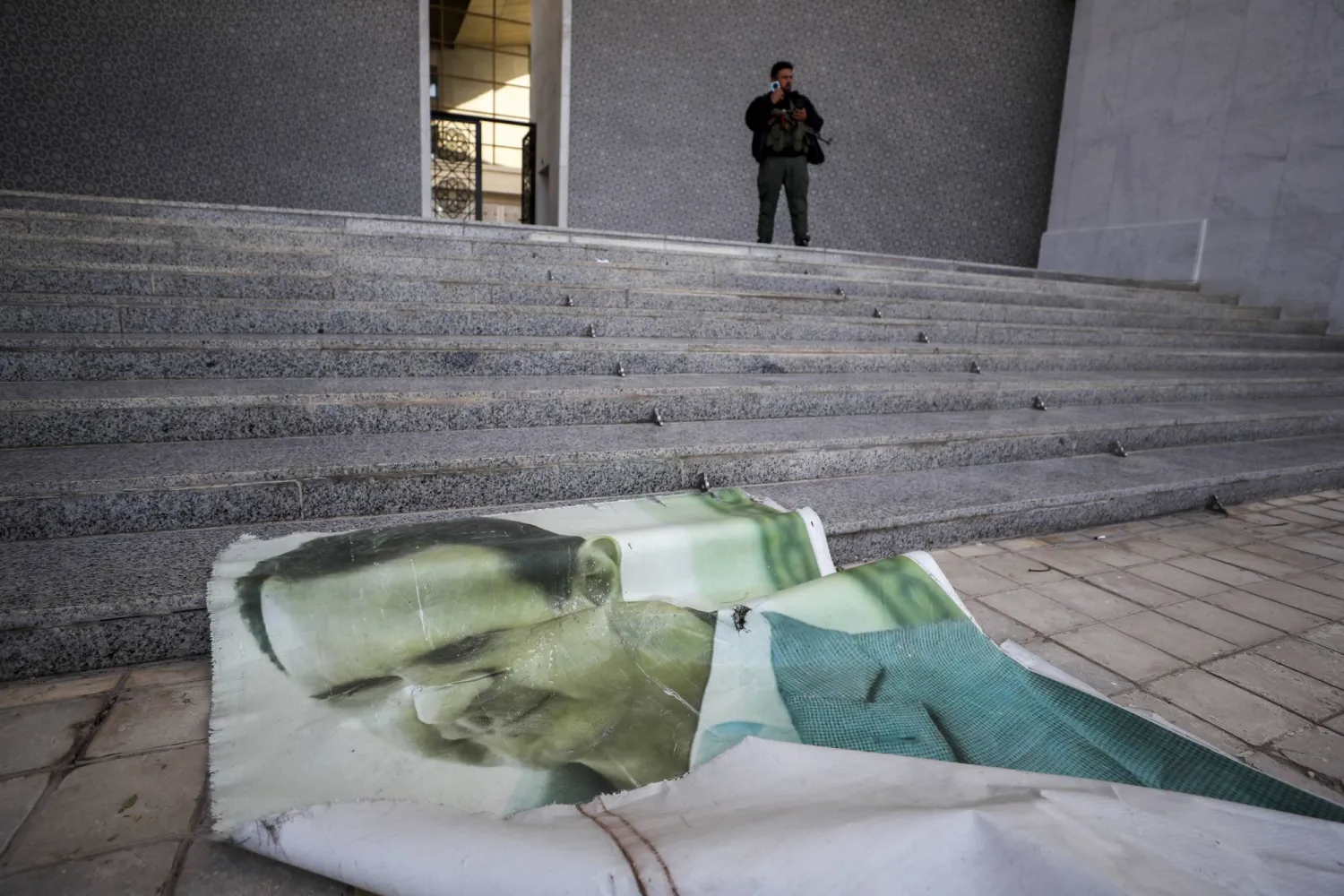
A giant picture of Syrian President Bashar Assad lies on the ground as a Syrian opposition fighter stands nearby, inside the Presidential Palace in Damascus, Syria, Sunday, Dec. 8, 2024. (AP Photo/Omar Sanadiki)
TT

Syrian Security Forces Detain Cousin of Toppled Leader Assad

A giant picture of Syrian President Bashar Assad lies on the ground as a Syrian opposition fighter stands nearby, inside the Presidential Palace in Damascus, Syria, Sunday, Dec. 8, 2024. (AP Photo/Omar Sanadiki)

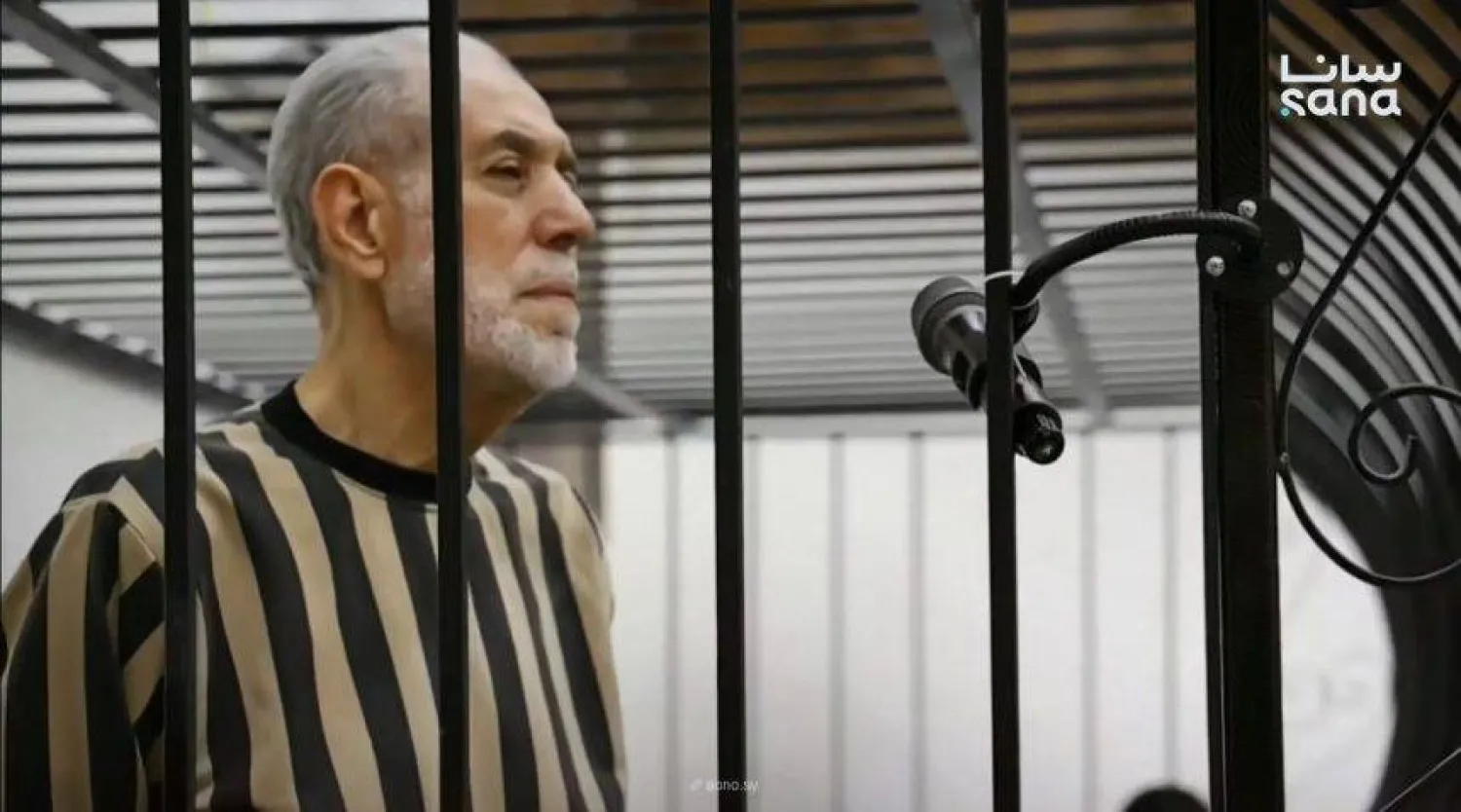
Syria's security forces have detained Wassim al-Assad, a cousin of toppled leader Bashar al-Assad, state news agency SANA said on Saturday.

Wassim al-Assad was sanctioned by the United States in 2023 for leading a paramilitary force backing Assad's army and for trafficking drugs including the amphetamine-like drug captagon, Reuters said.

Bashar al-Assad was toppled by the opposition factions in December and fled to Moscow. Most of his family members and inner circle either fled Syria or went underground.

Syria’s new security forces have been pursuing members of the former administration - mainly those involved in the feared security branches accused of rights abuses.

Rights groups have called for a fully-fledged transitional justice process to hold them to account.


Israel: Missile Fired from Yemen

A Houthi member mans a machine gun on a pickup truck while on patrol during a rally in solidarity with Iran in Sanaa, Yemen, 27 March 2026. EPA/YAHYA ARHAB
TT

Israel: Missile Fired from Yemen

A Houthi member mans a machine gun on a pickup truck while on patrol during a rally in solidarity with Iran in Sanaa, Yemen, 27 March 2026. EPA/YAHYA ARHAB

Israel’s military said early Saturday that it had detected a missile fired from Yemen, the first since the Iran war began.

Yemen’s Houthis so far had stayed out of the war.

Hours earlier, the Houthis said they were prepared to act if what the group called an escalation against Iran and the "axis of resistance" continued, but did not say what form any intervention would take.

“We affirm that our fingers are on the trigger for direct military intervention,” Houthi spokesman Brig. Gen. Yahya Saree said Friday during a video statement in a first appearance since the Iran war began.

Houthi involvement in the war would risk broadening the conflict.


Arab Parliament Speaker Condemns Continued Iranian Attacks on Arab States

Arab Parliament Speaker Condemns Continued Iranian Attacks on Arab States
TT

Arab Parliament Speaker Condemns Continued Iranian Attacks on Arab States

Arab Parliament Speaker Condemns Continued Iranian Attacks on Arab States

Arab Parliament Speaker Mohammed Al-Yamahi condemned the continued systematic Iranian terrorist attacks against several Arab states, describing them as a flagrant violation of international law and the principles of the United Nations Charter, as well as a direct threat to regional security and stability, SPA reported.

He said in a statement that the attacks carried out by Iran since the outbreak of the war, using missiles and drones, reflect a recurring hostile approach that disregards state sovereignty and the safety of civilians.

He stressed that the targeting of infrastructure facilities and the resulting casualties reveal a clear disregard for international humanitarian law and reflect a determination to undermine security and stability in the region.

The Arab Parliament speaker held the Iranian regime fully responsible for these acts and their repercussions, calling on the international community to assume its responsibilities and take a firm and immediate stance to halt these violations and end the aggressive policies threatening regional and international peace and security.

Al-Yamahi also renewed the Arab Parliament’s full support for the measures taken by the targeted Arab states to preserve their security and stability, safeguard their sovereignty, and act in accordance with international law and their legitimate right to self-defense.


Iraq Pushes to Centralize War Powers Under State Control

Relatives of a soldier killed in an airstrike on Habbaniyah base carry the Iraqi flag during his funeral (AFP)
TT

Iraq Pushes to Centralize War Powers Under State Control

Relatives of a soldier killed in an airstrike on Habbaniyah base carry the Iraqi flag during his funeral (AFP)

Iraqi security sources reported a breakthrough in investigations into rocket and drone attacks on diplomatic and security sites, as political and legal pressure intensifies to confine decisions of war and peace to the state.

A security source familiar with the probe told Asharq Al-Awsat that authorities have begun identifying those behind the launches. The information was obtained after the arrest of three members of an armed faction, who were already subject to arrest warrants.

Security forces also detained another group suspected of involvement in attacks targeting the US embassy in Baghdad, the source said.

More arrest warrants are expected as investigators pursue others suspected of carrying out rocket and drone attacks in violation of the law.

Judicial warnings

The government has not named those responsible, but armed factions have repeatedly claimed similar operations through statements and online platforms, complicating the security landscape and weakening state control over weapons.

The developments follow a warning from Supreme Judicial Council President Faiq Zidan of “serious repercussions” from unilateral military decisions by factions and non-official entities. He said such actions violate the constitution and risk exposing Iraq to international isolation and sanctions.

Zidan said declaring a state of war requires a constitutional process, including approval by two-thirds of parliament based on a joint request from the president and prime minister.

The escalation underscores growing tension between the state and armed factions, as authorities seek to reassert institutional control amid rising domestic and international criticism over fragmented security decision-making and continued attacks on diplomatic missions.

Regional war dynamics

Officials describe the situation as indirect involvement in the region’s “geography of war,” with repeated attacks on sites linked to the US presence in Baghdad and Erbil, alongside airstrikes on military positions inside Iraq.

Since the start of the Middle East war, Iraqi factions have claimed attacks on US interests.

Iran has struck Iranian Kurdish opposition groups in northern Iraq, while sites linked to the Popular Mobilization Forces and Iran-aligned factions have been hit by airstrikes attributed to the United States and Israel.

War powers debate

Calls are growing within Iraq to reaffirm that decisions of war and peace rest solely with constitutional institutions.

Prime Minister Mohammed Shia al-Sudani said the government is “the sole authority” empowered to take such decisions, despite operating in a caretaker capacity following recent parliamentary changes.

The Foreign Ministry reiterated Baghdad’s firm rejection of any attacks targeting Gulf states, stressing solidarity with sister countries and commitment to their security and stability. It said Gulf security is inseparable from Iraq’s national security and that regional stability serves all.

Saudi Arabia, the United Arab Emirates, Kuwait, Bahrain, Qatar and Jordan have condemned attacks by Iran-aligned Iraqi factions on regional countries and infrastructure, calling them violations of international law.

Energy risks

President Abdul Latif Rashid reiterated Iraq’s rejection of war, voicing deep concern over the widening conflict and calling for an immediate halt to military operations and a return to dialogue.

In a phone call with Iranian President Masoud Pezeshkian, Rashid said continued war serves no country in the region and threatens Middle East stability.

He added that Iraq, both its people and government, calls for peace and expresses solidarity with the Iranian people, praising their resilience in the face of “attacks.”

In Geneva, Iraq’s mission to the United Nations warned that expanding the conflict would deepen crises and undermine stability. Jaafar Mohammed, second secretary at Iraq’s mission, cautioned that disruptions to energy supply chains through the Strait of Hormuz could have global economic repercussions.