The US and Iran Have Had Bitter Relations for Decades. After the Bombs, a New Chapter Begins

Iran's and US' flags are seen printed on paper in this illustration taken January 27, 2022. REUTERS/Dado Ruvic/Illustration/File Photo
TT

The US and Iran Have Had Bitter Relations for Decades. After the Bombs, a New Chapter Begins

Iran's and US' flags are seen printed on paper in this illustration taken January 27, 2022. REUTERS/Dado Ruvic/Illustration/File Photo

Now comes a new chapter in US-Iran relations, whether for the better or the even worse.

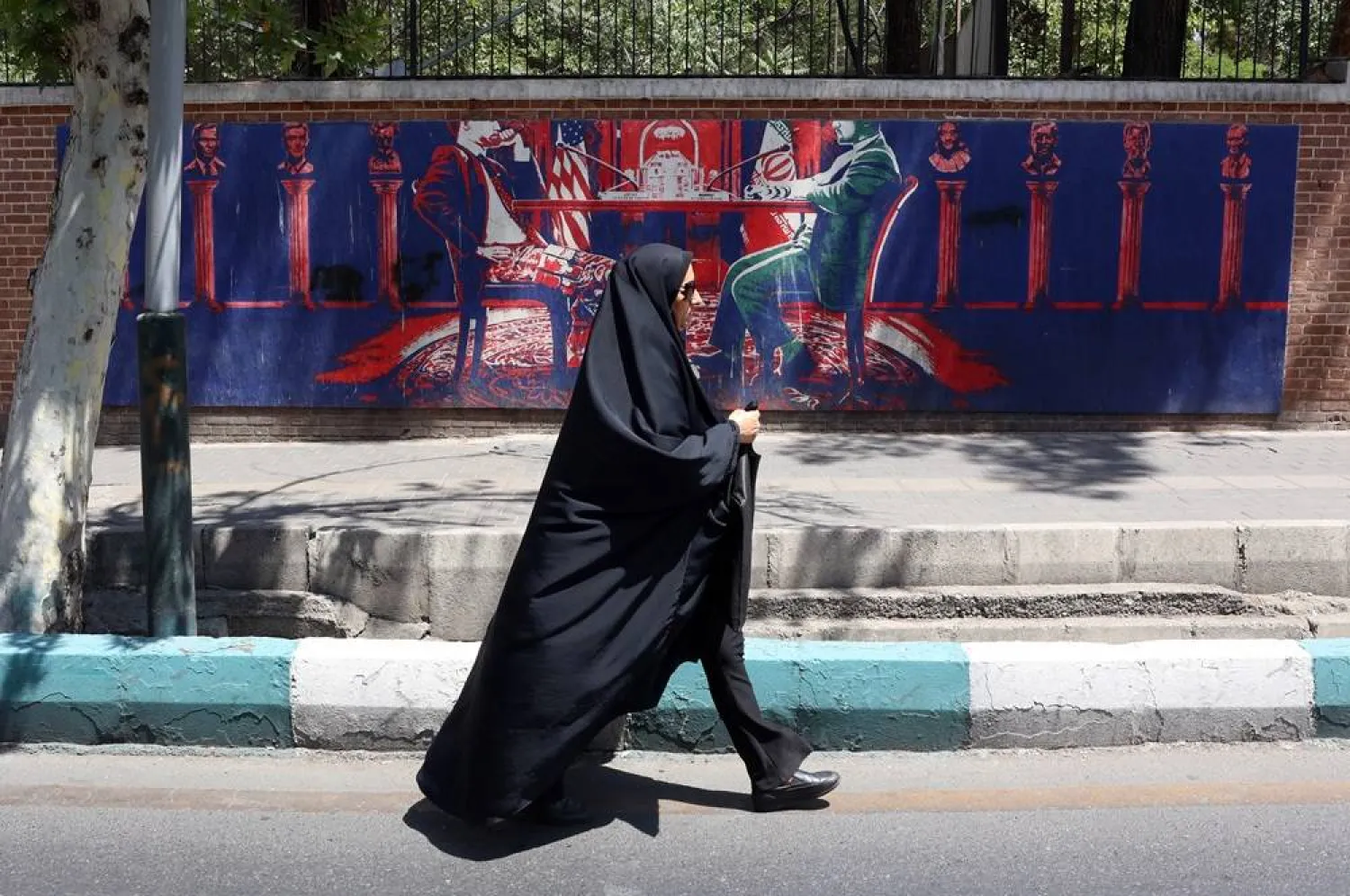
For nearly a half century, the world has witnessed an enmity for the ages — the threats, the plotting, the poisonous rhetoric between the “Great Satan” of Iranian lore and the “Axis of Evil” troublemaker of the Middle East, in America's eyes, The Associated Press reported.

Now we have a US president saying, of all things, “God bless Iran.”

This change of tone, however fleeting, came after the intense US bombing of Iranian nuclear-development sites this week, Iran's retaliatory yet restrained attack on a US military base in Qatar and the tentative ceasefire brokered by President Donald Trump in the Israel-Iran war.

The US attack on three targets inflicted serious damage but did not destroy them, a US intelligence report found, contradicting Trump's assertion that the attack “obliterated” Iran's nuclear program.

Here are some questions and answers about the long history of bad blood between the two countries:

Why did Trump offer blessings all around? In the first blush of a ceasefire agreement, even before Israel and Iran appeared to be fully on board, Trump exulted in the achievement. “God bless Israel,” he posted on social media. “God bless Iran.” He wished blessings on the Middle East, America and the world, too.

When it became clear that all hostilities had not immediately ceased after all, he took to swearing instead.

“We basically have two countries that have been fighting so long and so hard that they don’t know what the f— they’re doing,” he said on camera.

In that moment, Trump was especially critical of Israel, the steadfast US ally, for seeming less attached to the pause in fighting than the country that has been shouting “Death to America” for generations and is accused of trying to assassinate him.

Why did US-Iran relations sour in the first place? In two words, Operation Ajax.

That was the 1953 coup orchestrated by the CIA, with British support, that overthrew Iran's democratically elected government and handed power to the shah, Mohammad Reza Pahlavi. The Western powers had feared the rise of Soviet influence and the nationalization of Iran's oil industry.

The shah was a strategic US ally who repaired official relations with Washington. But grievances simmered among Iranians over his autocratic rule and his bowing to America's interests.

All of that boiled over in 1979 when the shah fled the country and the theocratic revolutionaries took control, imposing their own hard line.

How did the Iranian revolution deepen tensions? Profoundly.

On Nov. 4, 1979, with anti-American sentiment at a fever pitch, Iranian students took 66 American diplomats and citizens hostage and held more than 50 of them in captivity for 444 days.

It was a humiliating spectacle for the United States and President Jimmy Carter, who ordered a secret rescue mission months into the Iran hostage crisis. In Operation Eagle Claw, eight Navy helicopters and six Air Force transport planes were sent to rendezvous in the Iranian desert. A sand storm aborted the mission and eight service members died when a helicopter crashed into a C-120 refueling plane.

Diplomatic ties were severed in 1980 and remain broken.

Iran released the hostages minutes after Ronald Reagan's presidential inauguration on Jan. 20, 1981. That was just long enough to ensure that Carter, bogged in the crisis for over a year, would not see them freed in his term.

Was this week's US attack the first against Iran? No. But the last big one was at sea.

On April 18, 1988, the US Navy sank two Iranian ships, damaged another and destroyed two surveillance platforms in its largest surface engagement since World War II. Operation Praying Mantis was in retaliation against the mining of the USS Samuel B. Roberts in the Persian Gulf four days earlier. Ten sailors were injured and the explosion left a gaping hole in the hull.

Did the US take sides in the Iran-Iraq war? Not officially, but essentially.

The US provided economic aid, intelligence sharing and military-adjacent technology to Iraq, concerned that an Iranian victory would spread instability through the region and strain oil supplies. Iran and Iraq emerged from the 1980-1988 war with no clear victor and the loss of hundreds of thousands of lives, while US-Iraq relations fractured spectacularly in the years after.

What was the Iran-Contra affair? An example of US-Iran cooperation of sorts — an illegal, and secret, one until it wasn't.

Not long after the US designated Iran a state sponsor of terrorism in 1984 — a status that remains — it emerged that America was illicitly selling arms to Iran. One purpose was to win the release of hostages in Lebanon under the control of Iran-backed Hezbollah. The other was to raise secret money for the Contra rebels in Nicaragua in defiance of a US ban on supporting them.

President Ronald Reagan fumbled his way through the scandal but emerged unscathed — legally if not reputationally.

How many nations does the US designate as state sponsors of terrorism? Only four: Iran, North Korea, Cuba and Syria.

The designation makes those countries the target of broad sanctions. Syria's designation is being reviewed in light of the fall of Bashar Assad’s government.

Where did the term ‘Axis of Evil’ come from? From President George W. Bush in his 2002 State of the Union address. He spoke five months after the Sept. 11, 2001, terrorist attacks and the year before he launched the invasion of Iraq on the wrong premise that Saddam Hussein possessed weapons of mass destruction.

He singled out Iran, North Korea and Saddam's Iraq and said: “States like these, and their terrorist allies, constitute an axis of evil, arming to threaten the peace of the world.”

In response, Iran and some of its anti-American proxies and allies in the region took to calling their informal coalition an Axis of Resistance at times.

What about those proxies and allies? Some, like Hezbollah and Hamas, are degraded due to Israel's fierce and sustained assault on them. In Syria, Assad fled to safety in Moscow after losing power to opposition factions once tied to al-Qaida but now cautiously welcomed by Trump.

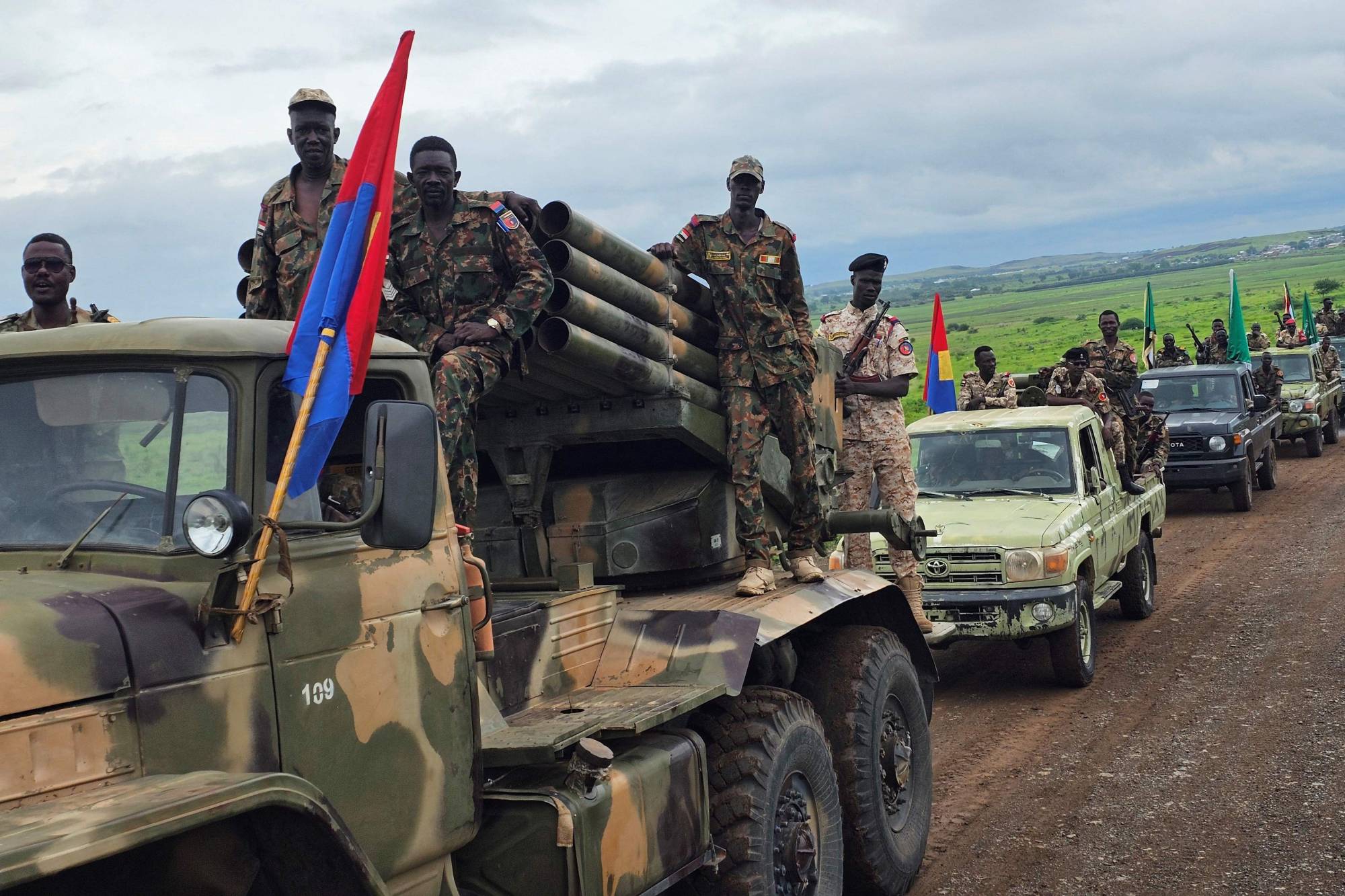
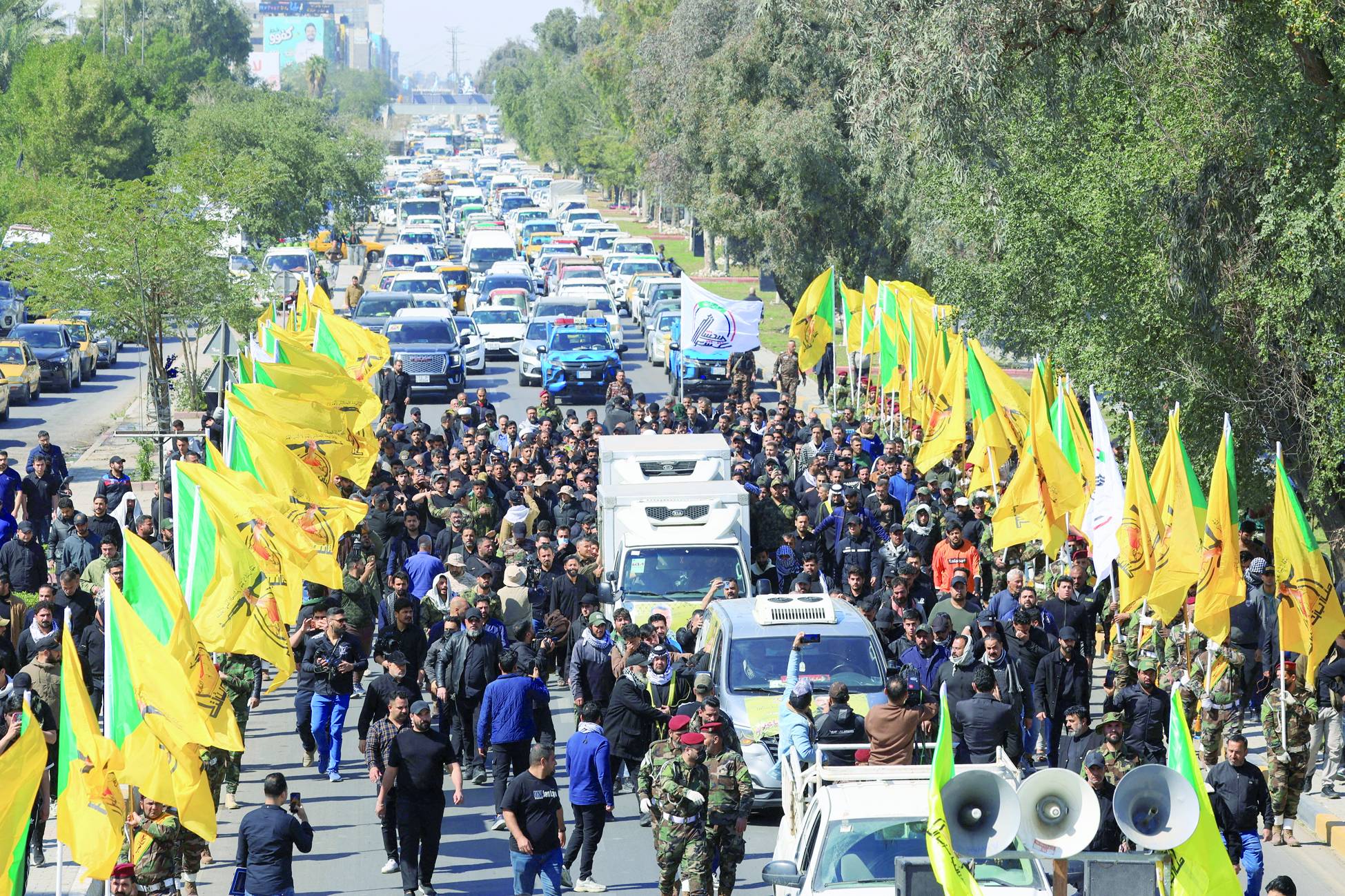
In Yemen, Houthi militants who have attacked commercial ships in the Red Sea and pledged common cause with Palestinians have been bombed by the US and Britain. In Iraq, armed Shia factions controlled or supported by Iran still operate and attract periodic attacks from the United States.

What about Iran's nuclear program? In 2015, President Barack Obama and other powers struck a deal with Iran to limit its nuclear development in return for the easing of sanctions. Iran agreed to get rid of an enriched uranium stockpile, dismantle most centrifuges and give international inspectors more access to see what it was doing.

Trump assailed the deal in his 2016 campaign and scrapped it two years later as president, imposing a "maximum pressure" campaign of sanctions. He argued the deal only delayed the development of nuclear weapons and did nothing to restrain Iran's aggression in the region. Iran's nuclear program resumed over time and, according to inspectors, accelerated in recent months.

Trump's exit from the nuclear deal brought a warning from Hassan Rouhani, then Iran's president, in 2018: “America must understand well that peace with Iran is the mother of all peace. And war with Iran is the mother of all wars.”

How did Trump respond to Iran's provocations? In January 2020, Trump ordered the drone strike that killed Qassem Soleimani, Iran's top commander, when he was in Iraq.

Then Iran came after him, according to President Joe Biden's attorney general, Merrick Garland. Days after Trump won last year's election, the Justice Department filed charges against an Iranian man believed to still be in his country and two alleged associates in New York.

“The Justice Department has charged an asset of the Iranian regime who was tasked by the regime to direct a network of criminal associates to further Iran’s assassination plots against its targets, including President-elect Donald Trump," Garland said.

Now, Trump is seeking peace at the table after ordering bombs dropped on Iran, and offering blessings.

It is potentially the mother of all turnarounds.


Mohammad Baqer Zolghadr: A Man with Strong Connections at the Heart of Iran’s Revolutionary Guards

Zolghadr speaks in an interview with the Tasnim News Agency, December 2020.
TT

Mohammad Baqer Zolghadr: A Man with Strong Connections at the Heart of Iran’s Revolutionary Guards

Zolghadr speaks in an interview with the Tasnim News Agency, December 2020.

Mohammad Baqer Zolghadr was not an unfamiliar figure when he was appointed on Tuesday as secretary of Iran’s Supreme National Security Council. One week after the killing of Ali Larijani, and amid a war that has thinned the ranks of Iran’s top leadership, authorities turned to a man shaped within one of the deepest layers of the “Islamic Republic’s” power structure.

Mehdi Tabatabaei, the Iranian president’s deputy communications director, said on Tuesday that General Zolghadr had been appointed to replace Larijani. He wrote on X that Iran’s new Supreme Leader Mojtaba Khamenei had approved the decision.

The Supreme National Security Council, formally headed by President Masoud Pezeshkian, coordinates security and foreign policy. It includes senior military, intelligence and government officials, as well as representatives of the Supreme Leader, who has final authority in state affairs.

Zolghadr’s appointment appears to reflect state priorities in a time of crisis. A further decree is expected to name him as the Supreme Leader’s representative on the council, allowing him to vote under the constitution.

Unlike politicians who rise through elections or public platforms, Zolghadr belongs to a different category: a figure who boasts internal networks that predate the state and later embedded themselves within it. He accumulated power within the agencies instead of confronting them. His career resembles less a sequence of administrative posts and more a continuous thread linking some of the most entrenched centers of power in Iran.

His elevation to one of the country’s top security posts is significant not only for the positions he has held, but for the role he has played within the system. A veteran of the Iran-Iraq war, he developed expertise in organization and network-based operations, consolidating his position within the Iranian Revolutionary Guard Corps (IRGC) and later extending his influence through the interior ministry, judiciary and Expediency Council.

The appointment signals a broader logic within Iran’s ruling establishment: in moments of heightened pressure, figures rooted in institutional networks tend to take precedence over those with a public political profile.

Early career

Zolghadr’s career is closely tied to the political environment from which he emerged. He belongs to a generation associated with the “Mansouroun” network, an early group that later produced influential figures within the IRGC, including Mohsen Rezaei, Ali Shamkhani, Gholam Ali Rashid, and Mohammad and Ahmad Forouzandeh.

The significance of this affiliation lies not only in early organizational ties, but in the nature of the group itself: an ideologically driven pre-revolutionary network that repositioned itself within the state through the IRGC.

Zolghadr’s rise was not an individual climb through institutional ranks, but growth within a web of relationships and loyalties embedded at the core of the system. He emerged not simply as a professional military officer, but as part of a generation that viewed security and politics as intertwined domains in safeguarding the regime. This gave him the rare ability to “reposition” himself and retain power as successive government ruled Iran.

War and the ‘Ramadan’ headquarters

After the fall of the Shah, Zolghadr, like other members of Mansouroun, initially operated through revolutionary committees before joining the IRGC. His most defining wartime role was leading the “Ramadan Headquarters,” a key unit during the Iran-Iraq war.

This post was central to his political and security development. The Ramadan Headquarters served as a nucleus for external operations, coordinating cross-border activities with Iraqi Kurdish and Shiite groups opposed to Saddam Hussein and managing operations inside Iraq. It later evolved into what became the Quds Force, the IRGC’s current foreign arm.

There, Zolghadr developed a hallmark approach: operating at the intersection of military, intelligence and political spheres. The role involved not only managing battlefield operations, but also building networks, cultivating allies and leveraging conflict to generate long-term influence.

This model — combining military structure, indirect operations and proxy management — became a defining feature of Iran’s regional strategy. Within this environment, Zolghadr gained a reputation as a manager and strategist rather than a public-facing commander.

Rise within the IRGC

Following the end of the war in the late 1980s, Zolghadr spent 16 years at the top of the IRGC hierarchy: eight years as chief of the joint staff and eight years as deputy commander-in-chief.

These roles emphasized administration, coordination and institutional discipline rather than field command. His influence was rooted not in public charisma but in his position within the IRGC’s internal machinery.

Over time, he became firmly aligned with Iran’s conservative camp. His political role became more visible during the reformist presidency of Mohammad Khatami, when tensions between reformists and hardline institutions intensified.

Reform era

During the late 1990s, Zolghadr was among military figures associated with the conservative bloc within the IRGC. His name was linked to a letter sent by IRGC commanders to President Khatami, widely seen as a signal of military intervention in political affairs at a time of unrest. He was also associated with hardline opposition to the reform movement and the student protests of that period.

This phase highlighted a structural aspect of his career: his political role did not begin after leaving the military, but was embedded within the IRGC itself as it became increasingly politicized during its confrontation with reformists.

Interior Ministry under Ahmadinejad

When Mahmoud Ahmadinejad became president in 2005, Zolghadr was appointed deputy interior minister for security affairs. The position placed him at the heart of internal security, overseeing provincial governors and managing crises, protests and local tensions. It marked a transition from military service to the executive branch, while maintaining a focus on security.

His move illustrated a broader pattern: shifting from protecting the system through force to safeguarding it through security bureaucracy, expanding his network within the state apparatus.

Basij

Zolghadr left the interior ministry in 2007 amid reports of differences with Ahmadinejad, but his departure did not signal a loss of influence. In December of that year, Supreme Leader Ali Khamenei appointed him deputy chief of staff of the armed forces for Basij affairs, a newly created role.

The Basij, a paramilitary force, plays a key role in ideological mobilization and maintaining the IRGC’s presence in Iranian society. The decree emphasized strengthening and expanding the Basij’s reach, underlining the importance of Zolghadr’s assignment.

Judiciary and expanding influence

In 2010, Zolghadr moved to the judiciary, serving first as deputy for social prevention and crime reduction, and later as strategic deputy to the head of the judiciary until 2020.

The shift did not represent a departure from security work, as Iran’s judiciary operates closely under the authority of the Supreme Leader. Instead, it broadened his influence across another pillar of the state.

In September 2021, he was appointed secretary of the Expediency Council, succeeding Mohsen Rezaei. The role involves overseeing the council’s committees and acting as a link to the highest levels of decision-making.

Zolghadr also has family ties that extend his influence. He is the father-in-law of Kazem Gharibabadi, Iran’s deputy foreign minister for legal and international affairs and a prominent figure in nuclear negotiations.

Gharibabadi previously served as Iran’s ambassador to international organizations in Vienna, including the International Atomic Energy Agency.

From Larijani to Zolghadr

Larijani’s death deprived Iran of a political figure skilled in navigating between power centers. The choice of Zolghadr suggests a shift in priorities.

While Larijani represented balance and negotiation, Zolghadr embodies institutional discipline and internal cohesion. His selection follows speculation over other candidates, including former defense minister Hossein Dehghan, who was ultimately not appointed.

The decision reflects the system’s preference, in wartime conditions, for figures trusted by security networks over those known for political flexibility.

He may not be a prominent public figure, but he represents a type of official often relied upon in times of crisis: a man with internal networks, brought back to the forefront as Iran faces one of its most challenging periods.


Expulsion of Iran Ambassador Tests Diplomacy between Beirut and Tehran

Iranian Ambassador to Syria Mohammad Reza Sheibani, shows his ink-stained finger as he votes in the first round of the Iranian presidential election on June 14, 2013 at the Iranian embassy in the Syrian capital, Damascus. (AFP)
TT

Expulsion of Iran Ambassador Tests Diplomacy between Beirut and Tehran

Iranian Ambassador to Syria Mohammad Reza Sheibani, shows his ink-stained finger as he votes in the first round of the Iranian presidential election on June 14, 2013 at the Iranian embassy in the Syrian capital, Damascus. (AFP)

Diplomatic relations between Lebanon and Iran have entered a new phase with Beirut’s unprecedented withdrawal on Tuesday of its approval of the accreditation of Tehran’s new ambassador Mohammad Reza Sheibani.

The Foreign Ministry said in a statement that it had summoned the Iranian charge d'affaires in Lebanon and informed him of “the Lebanese state's decision to withdraw approval of the accreditation of the appointed Iranian ambassador, Mohammad Reza Sheibani, and declare him persona non grata, demanding that he leave Lebanese territory no later than next Sunday.”

The ministry said it had also summoned Lebanon's ambassador to Iran “in light of what the Lebanese state described as Tehran's violation of diplomatic norms and established practices between the two countries”, after Beirut accused Iran's Revolutionary Guards of commanding Hezbollah's operations in its war against Israel.

The government has accused Hezbollah of dragging Lebanon to war after it fired rockets at Israel on March 2 in wake of the killing of Iran's supreme leader Ali Khamenei at the beginning of the conflict.

Crisis

After three decades of calm, relations between Lebanon and Iran started to grow strained after the 2024 war between Hezbollah and Israel.

Iranian parliament Speaker Mohammad Bagher Ghalibaf declared at the time that Tehran was ready to negotiate with Paris about the implementation of United Nations Security Council resolution 1701 in Lebanon, sparking condemnation from Lebanon.

Then Prime Minister Najib Mikati slammed it as flagrant meddling in Lebanon’s sovereign affairs. He informed the foreign minister at the time to summon Iran’s charge d’affaires to file a formal complaint.

Relations became more strained in 2025 after Ambassador Mojtaba Amani’s suitcases were searched at Beirut’s Rafik Hariri International Airport.

Youssef Raggi, who became Lebanon’s foreign minister in 2025, summoned the Iranian ambassador for the first time since the 1990s last year. In April, he summoned Amani after he posted that the “project to disarm Hezbollah is an obvious conspiracy.”

The Lebanese government had issued a decision on the disarmament of Iran-backed Hezbollah last year.

In December, media close to Hezbollah reported that Raggi had suspended procedures on approving the accreditation of the new Iranian ambassador.

Last week, he summoned the charge d’affaires over statements attributed to the Iranian mission in Beirut and Iranian officials over security and military developments in Lebanon.

Ties between Raggi and Iranian officials have been strained for months. Last year he declined an official invitation from his Iranian counterpart Abbas Araqhchi to visit Tehran, suggesting that they meet in a third neutral country.

The withdrawal of accreditation is rare and it effectively means that a country refuses to welcome a diplomatic representative, reflecting deep political disapproval of the concerned country’s behavior.

The withdrawal was the latest Lebanese measure against Iran.

On March 5, the government took a series of steps that reflect a hardening approach towards Tehran. It imposed visas on visiting Iranians that had been suspended since 2011 in an effort to encourage trade and tourism between Beirut and Tehran.

The government also banned any activity by the Iranian Revolutionary Guards in Lebanon. Dozens of Iranians have since been deported from Lebanon.

‘Correcting’ relations

Lebanon had in the early 1990s launched a phase to “correct” relations with Iran after the end of the Lebanese civil war.

Then Foreign Minister Fares Boueiz was responsible for “reorganizing diplomatic work in line with the Vienna Convection”, said Lebanese sources.

During the 1975-90 civil war, Iranian officials would move freely to Lebanon through Syria and meet with Hezbollah officials in Beirut. Lebanese authorities had opposed the behavior.

In previous statements to Asharq Al-Awsat, Boueiz said Iranian delegations would travel to Lebanon through Syria without coordinating with the state.

The situation was later addressed through official diplomatic channels, he added.

The Iranian ambassador at the time was informed of the authorities’ objection and the stance was relayed to then Iranian FM Ali Akbar Velayati, said Boueiz.

Two days later, the Lebanese Foreign Ministry received an approval to “correct relations”, leading to an exchange in official visits and the signing of agreements that “regulated” the ties.


Falih al-Fayadh, a ‘Cunning’ Player Who Survived Saddam and the US

PMF chief Falih al-Fayadh and his chief of staff Abdulaziz al-Muhammadawi. (PMF file photo)
TT

Falih al-Fayadh, a ‘Cunning’ Player Who Survived Saddam and the US

PMF chief Falih al-Fayadh and his chief of staff Abdulaziz al-Muhammadawi. (PMF file photo)

Despite his “modest and calm” appearance, Iraq’s Popular Mobilization Forces chief Falih al-Fayadh is widely seen, including by rivals, as a “cunning” operator with a keen ability to seize opportunities and wage “fierce” battles against his opponents, traits that have kept him in power for more than a decade atop the PMF despite deep polarization and intense internal rivalries.

An airstrike on Tuesday, believed to be carried out by the US, targeted a house used by Fayadh in Mosul’s al-Arabi neighborhood. Reuters, citing sources, said he was not at the site at the time.

Who is Fayadh?

Fayadh was born in Baghdad in 1956 and holds a bachelor’s degree in electrical engineering from the University of Mosul, obtained in 1977.

He belongs to the Albu Amer (Albu Khamis) tribal leadership, which owns large agricultural lands in the Rashidiya and Tarmiyah areas north of Baghdad.

It is widely believed that this tribal affiliation helped him avoid execution during Baath Party rule.

His family was said to enjoy a degree of favor with former Iraqi President Saddam Hussein, who pardoned him during a visit to the family and commuted a death sentence issued in 1980, on charges of belonging to the then-banned Dawa Party, to 20 years in prison.

Fayadh entered politics early after 2003, joining the movement of former Prime Minister Ibrahim al-Jaafari. He remained a low-profile figure before moving into the security establishment, first through the National Security advisory and later the PMF.

He was appointed head of the PMF Committee in 2014, ahead of the body’s formal establishment, alongside the “jihad of Sufficiency” fatwa issued by top Shiite cleric Ali al-Sistani to confront ISIS. He was formally confirmed in 2016, when the parliament passed the PMF law.

Fayadh served as national security adviser until he was dismissed in 2018 by then Prime Minister Haider al-Abadi.

In 2020, then Prime Minister Mustafa al-Kadhimi reappointed him as PMF chief in full capacity, after he had previously held the post in an acting role.

Firmly in control

Despite internal power struggles, including open opposition from the Asaib Ahl al-Haq faction, and US sanctions imposed on him in 2021 over alleged human rights violations, Fayadh has retained firm control of the PMF.

Sources familiar with his career say he built his security and political clout on close ties with Iran and with slain Revolutionary Guard Corps commander Qassem Soleimani, who was killed in a US airstrike in Baghdad in early 2020.

Leveraging his central role in the PMF, Fayadh has secured financial gains through various partnerships and contracts, the sources said.

His success in mobilizing tribal Sunni forces and consolidating their loyalty has helped him build a political foothold in Sunni provinces, particularly Nineveh and the city of Mosul.

The sources said Fayadh also capitalized on tribal mobilization groups, often aligned with Sunni lawmakers or politicians, who pledged loyalty to him as a figure capable of delivering benefits.

Through a network of alliances and loyalties across Sunni-majority areas, including Nineveh, Fayadh has emerged as a leading political player, with notable representation on the local council.

However, rivals accuse him of dominating most projects and investments in Mosul and of using the PMF to place members of his tribe in sensitive positions within the organization.