


White House Wants Deep Cut in US Funding for War Crimes Investigations

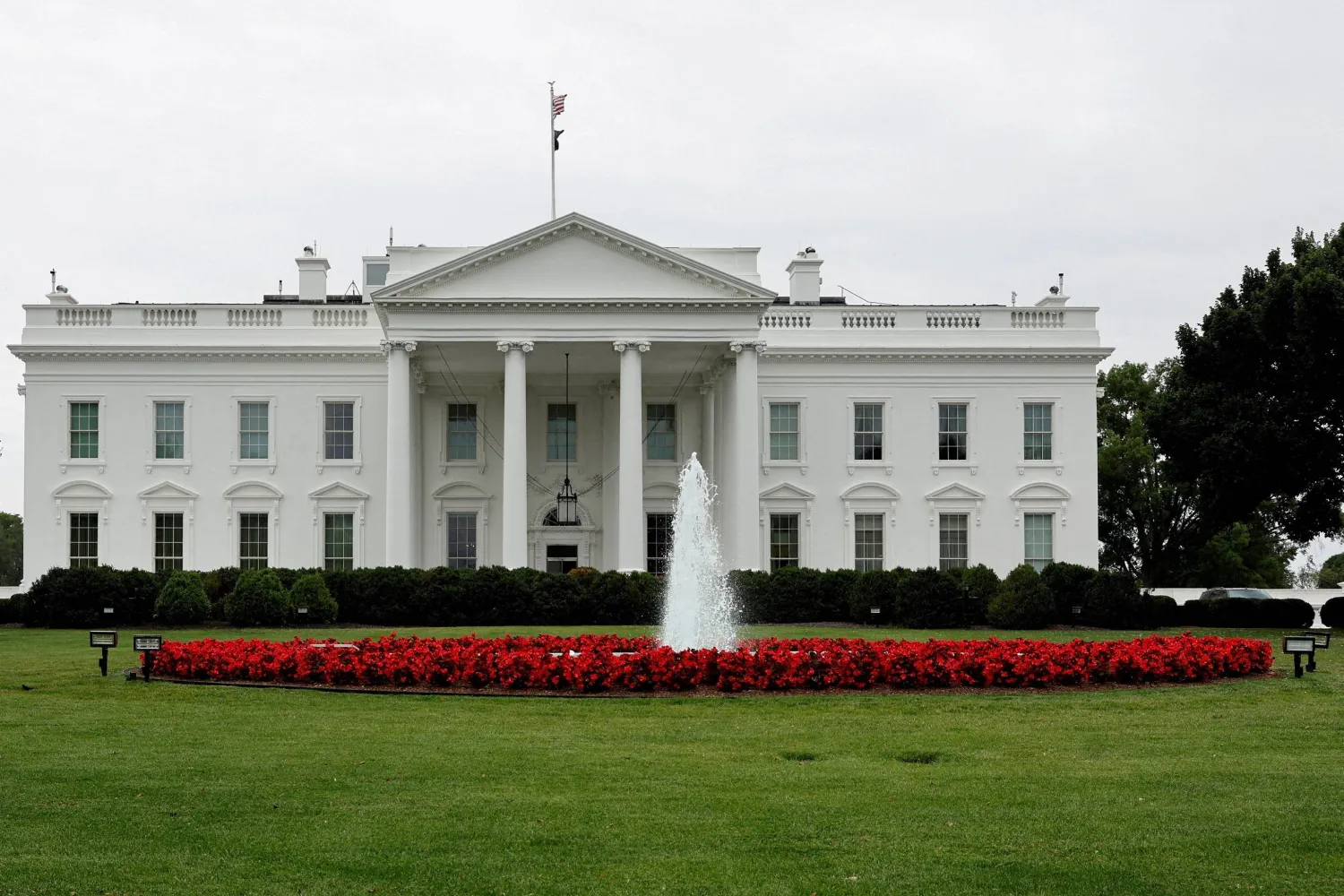
The White House in Washington. (Reuters)
TT

White House Wants Deep Cut in US Funding for War Crimes Investigations

The White House in Washington. (Reuters)

The White House has recommended terminating US funding for nearly two dozen programs that conduct war crimes and accountability work globally, including in Myanmar, Syria and on alleged Russian atrocities in Ukraine, according to three US sources familiar with the matter and internal government documents reviewed by Reuters.

The recommendation from the Office of Management and Budget, which was made on Wednesday and has not been previously reported, is not the final decision to end the programs since it gives the State Department the option to appeal.

But it sets up a potential back-and-forth between the OMB and US Secretary of State Marco Rubio and his aides, who will reply to OMB with their suggestions on which programs deserve to continue.

The programs also include work in Iraq, Nepal, Sri Lanka, Colombia, Belarus, Sudan, South Sudan, Afghanistan and the Gambia, according to the sources and a list seen by Reuters.

The State Department declined to comment. OMB did not immediately respond to a request for comment.

The expectation that Rubio would argue for many of the programs to be continued is slim, according to three US officials. However, the top US diplomat could make a case to keep crucial programs, such as aiding potential war crimes prosecutions in Ukraine, according to one source familiar with the matter.

Several of the programs earmarked for termination operate war crimes accountability projects in Ukraine, three sources familiar with the matter said, including Global Rights Compliance, which is helping to collect evidence of war crimes and crimes against humanity across Ukraine, such as sexual violence and torture.

Another is Legal Action Worldwide, a legal aid group which supports local efforts to bring cases against Russian suspects of war crimes in Ukraine, the sources said.

Requests seeking comment from the groups were not immediately answered.

State Department bureaus that would like to preserve any war crimes and accountability programs should send their justifications by close of business day on July 11, said an internal State Department email seen by Reuters.

CHANGING PRIORITIES

Many of the programs recommended for termination are dedicated to empowering local organizations seeking to advance justice in societies that have faced atrocities, one of the sources said, adding that some programs have been going on for decades across Democratic and Republican administrations.

"Even if Secretary Rubio intervenes to save these programs, many of which he supported as a senator, there will be no one left to manage these programs," the source said.

The administration of President Donald Trump has frozen and then cut back billions of dollars of foreign aid since taking office on January 20 to ensure American-taxpayer money funds programs that are aligned with his "America First" policies.

The unprecedented cutbacks have effectively shut down its premier aid arm US Agency for International Development, jeopardized the delivery of life-saving food and medical aid and thrown global humanitarian relief operations into chaos.

The OMB recommendation is yet another sign that the administration is increasingly de-prioritizing advocacy for human rights and rule of law globally, an objective that previous US administrations have pursued.

While US foreign aid freezes had already started hampering an international effort to hold Russia responsible for alleged war crimes in Ukraine, Wednesday's recommendations raise the risk of US completely abandoning those efforts.

Among the programs that are recommended for termination is a $18 million State Department grant for Ukraine's Prosecutor General's Office that is implemented by Georgetown University's International Criminal Justice Initiative, two sources said.

An official at Georgetown declined to comment.

While the programs do not directly impact Ukraine's frontline efforts to fend off Russia's invasion, supporters say they represent the best chance of extensively documenting reported battlefield atrocities in Europe's biggest conflict since World War Two, now grinding toward a fourth year.

Ukraine has opened more than 140,000 war crime cases since Moscow's February 2022 invasion, which has killed tens of thousands, ravaged vast swathes of the country and left behind mental and physical scars from occupation. Russia consistently denies war crimes have been committed by its forces in the conflict.

PATH TO APPEAL

Other programs include one that does accountability work on Myanmar army's atrocities against Rohingya minorities as well as on the persecution of Christians and other minorities by Syria's ousted former president Bashar al-Assad, two sources said.

While the OMB recommendations could face State Department push-back, the criteria to appeal are set very strictly.

In an internal State Department email, the administration cautioned that any effort to preserve programs that were recommended to be terminated should be thoroughly argued and directly aligned with Washington's priorities.

"Bureaus must clearly and succinctly identify direct alignment to administration priorities," the email, reviewed by Reuters said.



China Urges US to Handle Taiwan Issue ‘with Utmost Caution’

 US Secretary of State Marco Rubio (L) shakes hands with China's Foreign Minister Wang Yi in Munich, on February 12, 2026. (AFP/Getty Images)
US Secretary of State Marco Rubio (L) shakes hands with China's Foreign Minister Wang Yi in Munich, on February 12, 2026. (AFP/Getty Images)
TT

China Urges US to Handle Taiwan Issue ‘with Utmost Caution’

 US Secretary of State Marco Rubio (L) shakes hands with China's Foreign Minister Wang Yi in Munich, on February 12, 2026. (AFP/Getty Images)
US Secretary of State Marco Rubio (L) shakes hands with China's Foreign Minister Wang Yi in Munich, on February 12, 2026. (AFP/Getty Images)

Chinese Foreign Minister Wang Yi urged the US to handle matters related to Taiwan with "the utmost caution", during a phone call with US Secretary of State Marco Rubio on Tuesday, Wang's ministry said on Wednesday.

"A slight move on the Taiwan issue could affect the whole situation," Wang said, adding that ‌China and ‌the US should work to manage ‌all ⁠kinds of risks, ⁠according to an official Chinese summary of the phone conversation.

The US State Department did not immediately respond to a Reuters request for comment.

The call followed a mid-May summit between Chinese President Xi ⁠Jinping and US President Donald ‌Trump in Beijing, ‌where Xi told Trump that mishandling the countries' ‌disagreements over Taiwan could push China-US relations ‌into an "extremely dangerous place".

Beijing claims the democratically governed island as its own territory and refuses to rule out military force to gain ‌control of it. Taipei rejects Beijing's claims, and the United States ⁠is bound ⁠by law to provide Taipei with the means to defend itself.

Wang said the US and China should work to build a "constructive, strategically stable relationship".

"Both sides should eliminate disruptions, overcome obstacles, and continue firmly along this correct direction," Wang said.

The Chinese foreign ministry said Wang and Rubio agreed to "continue maintaining communication in a flexible manner".


‘Thought They’d Never Be Caught’: The Strike That Killed Iran’s Ali Khamenei

An Iranian man rides a motorbike past a large-scale poster of late Iranian Supreme Leader Ali Khamenei displayed along a highway, in Tehran, Iran, 01 July 2026. (Reuters)
TT

‘Thought They’d Never Be Caught’: The Strike That Killed Iran’s Ali Khamenei

An Iranian man rides a motorbike past a large-scale poster of late Iranian Supreme Leader Ali Khamenei displayed along a highway, in Tehran, Iran, 01 July 2026. (Reuters)

On Saturday, February 28, Tehran residents were embarking on the working week during the Islamic holy month of Ramadan, nervously anticipating celebrations for the Iranian New Year against the background of diplomatic efforts to stave off war with the US and Israel.

That morning, there was also activity around and inside the main government complex in Tehran just off Pasteur Street in the heart of the capital, which housed the residence and offices of then supreme leader Ali Khamenei.

The morning rush was rocked as several explosions shook the area, with smoke seen rising from around the government complex, known locally as the beit-e rahbari (house of the leader).

"The State of Israel has launched a preemptive strike against Iran," the Israeli defense ministry announced.

For hours, uncertainty surrounded the fate of the man aged 86 who had ruled Iran for more than three and a half decades and had maintained a position of zero compromise with the United States as well as crushing dissent.

"Khamenei, one of the most evil people in History, is dead," US President Donald Trump wrote that night on Truth Social, saying he "was unable to avoid our Intelligence and Highly Sophisticated Tracking Systems".

Iranian officials initially insisted that Khamenei had survived. But on the morning of March 1 a state television announcer, his voice breaking with emotion, declared that the leader had been martyred during the holy month of Ramadan.

- 'Path of sacrifice' -

The New York Times subsequently reported that the CIA had been tracking Khamenei for months and had learned that a meeting of top Iranian officials would take place that Saturday morning at the leadership compound, with the leader present.

The intelligence was passed to Israel and, two hours and five minutes after the Israeli jets took off, at around 9:40 am Tehran time, the long-range missiles struck the compound, it said.

The attack took place in broad daylight, which is highly unusual for such a strike.

"They thought they would never be caught, because we never bomb during breakfast. But we bombed," Trump said during the G7 summit in France last month.

Khamenei was not the only top official killed, with a whole echelon of senior figures wiped out including Revolutionary Guards chief Mohammad Pakpour, Khamenei's military advisor Ali Shamkhani and defense minister Aziz Nasirzadeh.

His family was also not spared with a daughter, daughter-in-law, son-in-law and infant granddaughter also killed.

While his son Mojtaba Khamenei, a key figure for years in his father's office, lost his wife Zahra Haddad-Adel, he survived albeit with wounds according to Iranian officials. One week later he was named the new supreme leader but has yet to be seen in public.

Ali Khamenei had always taken major security precautions. He never left Iran as supreme leader and his speeches were rarely carried live on television or announced in advance. During Israel's 12-day war against Iran in June 2025, he had reportedly retreated to a bunker.

But in an apparent act of defiance, he had never disappeared totally from public view and on February 17 gave his final public speech in the northern city of Tabriz, saying the US wanted to "devour" Iran.

He urged people to stay calm and go about their business "without any worries".

Observers were startled that, given the risks, Ali Khamenei was present in the very center of Tehran on February 28 rather than in hiding elsewhere in the vast country.

- 'You wouldn't believe' -

But the attack also further revealed the startling US and Israeli intelligence penetration of Iran, a strategic weakness exposed in the 2025 war when Israel killed a succession of key figures in targeted strikes.

According to the Financial Times, road-surveillance cameras in Tehran including around the leadership compound had been hacked years ago by Israel, enabling the identification of guards, their routines and movements.

Trump said at the G7 that satellite surveillance meant that "if somebody walks in and he has got a badge with his name on it... they can tell the name, they can give you the serial number".

"We can see things, you wouldn't believe the quality of the stuff that we have. That's why we have been so successful."


France Sets Presidential Election Dates

File photo: A person casts their vote at a polling station in the Magenta district during the first round of France's crunch legislative elections in Noumea in the first constituency of the French Pacific territory of New Caledonia, on June 30, 2024. (AFP)
TT

France Sets Presidential Election Dates

File photo: A person casts their vote at a polling station in the Magenta district during the first round of France's crunch legislative elections in Noumea in the first constituency of the French Pacific territory of New Caledonia, on June 30, 2024. (AFP)

France will hold the first round of its next presidential election on April 18, 2027, with a run-off set ‌for May ‌2, the ‌government ⁠spokeswoman, Maud Bregeon, said ⁠on Wednesday following a cabinet meeting to officially approve the dates.

The race to ‌succeed ‌President Emmanuel Macron — ‌who cannot run ‌again after two terms — is shaping up as a ‌fragmented contest, with polls placing the ⁠far-right ⁠National Rally in a leading position, and a crowded field raising the prospect of a run-off dominated by political extremes, Reuters said.