


Trump Signs Order Lifting Sanctions on Syria, White House Says

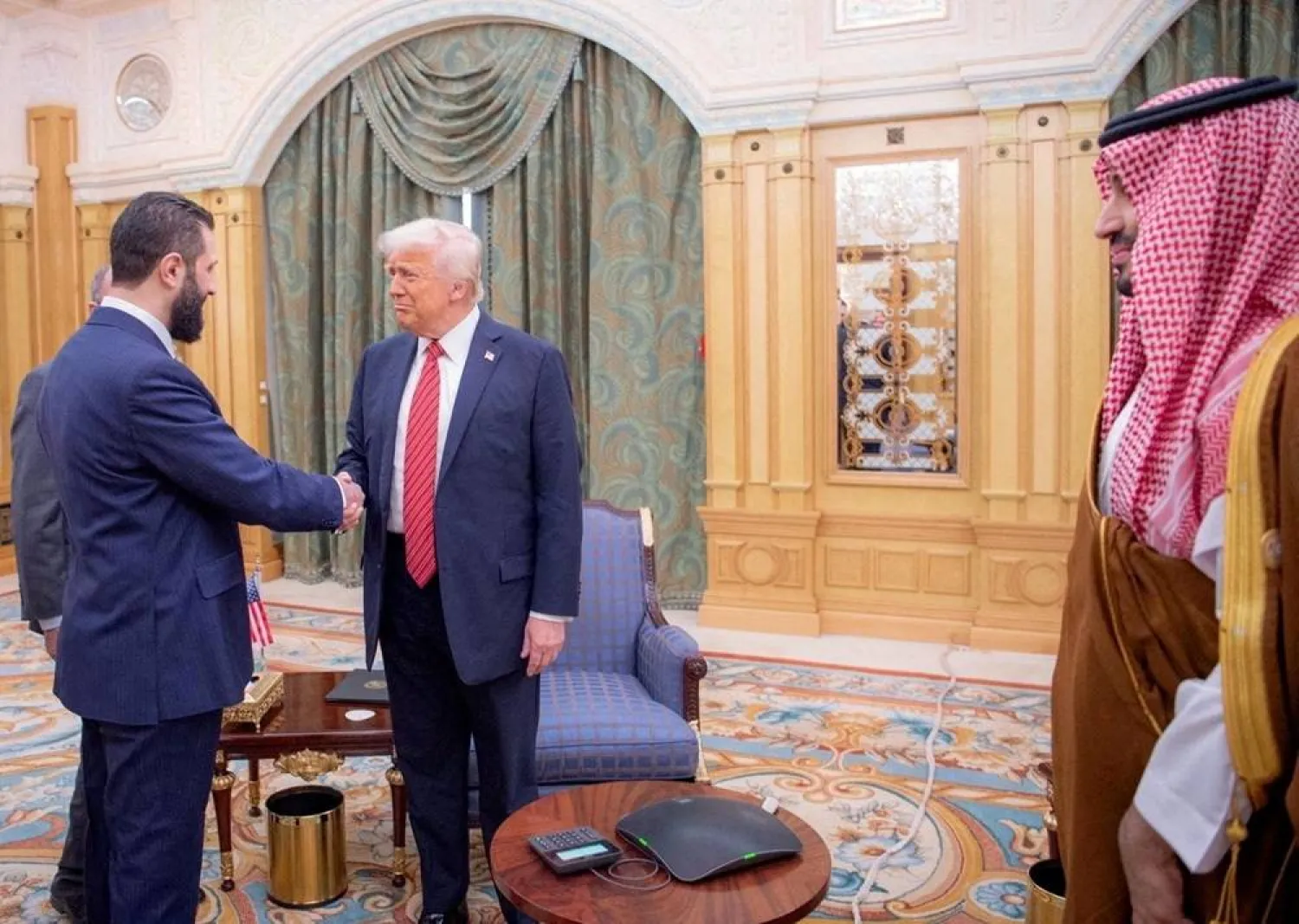
US President Donald Trump meets with Syrian President Ahmed al-Sharaa in Riyadh, Saudi Arabia, in this handout released on May 14, 2025. (SPA)
TT

Trump Signs Order Lifting Sanctions on Syria, White House Says

US President Donald Trump meets with Syrian President Ahmed al-Sharaa in Riyadh, Saudi Arabia, in this handout released on May 14, 2025. (SPA)

President Donald Trump signed on Monday an executive order terminating a US sanctions program on Syria, allowing an end to the country's isolation from the international financial system and building on Washington's pledge to help it rebuild after a devastating civil war.

The move will allow the US to maintain sanctions on Syria's ousted former president Bashar al-Assad, his associates, human rights abusers, drug traffickers, people linked to chemical weapons activities, the ISIS group and its affiliates and proxies for Iran, White House spokeswoman Karoline Leavitt told reporters in a briefing.

Assad was toppled in December in a lightning offensive by opposition factions and Syria has since taken steps to re-establish international ties.

Syrian Foreign Minister Asaad al-Shibani said Trump's termination of the Syria sanctions program would "open door of long-awaited reconstruction and development," according to a post by the foreign minister on social media platform X.

He said the move would "lift the obstacle" against economic recovery and open the country to the international community.

Syria's President Ahmed al-Sharaa and Trump met in Riyadh in May where, in a major policy shift, Trump unexpectedly announced he would lift US sanctions on Syria, prompting Washington to significantly ease its measures.

Some in Congress are pushing for the measures to be totally repealed, while Europe has announced the end of its economic sanctions regime.

"Syria needs to be given a chance, and that's what's happened," US Special Envoy for Syria Thomas Barrack told reporters in a briefing call. He described Monday's move as "the culmination of a very tedious, detailed, excruciating process of how do you unwrap these sanctions."

The White House in a fact sheet said the order directs the Secretary of State to review the terrorism designations of Hayat Tahrir al-Sham, a group that Sharaa led that has roots in al-Qaeda, as well as Syria's designation as a state sponsor of terrorism.

The White House said the administration would continue to monitor Syria's progress on key priorities including "taking concrete steps toward normalizing ties with Israel, addressing foreign terrorists, deporting Palestinian terrorists and banning Palestinian terrorist groups."

Syrians hope the easing of sanctions will clear the way for greater engagement by humanitarian organizations working in the country, encouraging foreign investment and trade as it rebuilds.

In the aftermath of Trump's announcement in May, the US Treasury Department issued a general license that authorized transactions involving the interim Syrian government as well as the central bank and state-owned enterprises.

However, the US has imposed layers of sanctions against Syria, some of which are authorized by legislation, including the Caesar Act. Repealing the measures is necessary for Syria to attract long-term investment without parties fearing the risk of violating US sanctions.

"We are now, pursuant to the executive order, going to look at suspension criteria for the Caesar Act," a senior administration official said.

Most of the US sanctions on Syria were imposed on Assad's government and key individuals in 2011 after civil war erupted in the country.

The dismantling of the US sanctions program on Syria includes terminating from Tuesday a national emergency declared in 2004 and revoking linked executive orders, according to the order signed on Monday.

The executive order also directs additional actions, including some with respect to waivers of export controls and other restrictions, the order read.


EU Condemns Israel's West Bank Control Measures

The Israeli settlement of Har Homa, seen from the West Bank city of Bethlehem, Tuesday, Dec. 17, 2024. (AP)
TT

EU Condemns Israel's West Bank Control Measures

The Israeli settlement of Har Homa, seen from the West Bank city of Bethlehem, Tuesday, Dec. 17, 2024. (AP)

The European Union on Monday condemned new Israeli measures to tighten control of the West Bank and pave the way for more settlements in the occupied Palestinian territory, AFP reported.

"The European Union condemns recent decisions by Israel's security cabinet to expand Israeli control in the West Bank. This move is another step in the wrong direction," EU spokesman Anouar El Anouni told journalists.


Atrocities in Sudan's El-Fasher Were 'Preventable Human Rights Catastrophe'

Sudanese displaced people who left El Fasher after its fall, sit in the shade in Tawila at the Rwanda camp reception point on December 17, 2025. (Photo by AFP)
TT

Atrocities in Sudan's El-Fasher Were 'Preventable Human Rights Catastrophe'

Sudanese displaced people who left El Fasher after its fall, sit in the shade in Tawila at the Rwanda camp reception point on December 17, 2025. (Photo by AFP)

The atrocities unleashed on El-Fasher in Sudan's Darfur region last October were a "preventable human rights catastrophe", the United Nations said Monday, warning they now risked being repeated in the neighbouring Kordofan region.


"My office sounded the alarm about the risk of mass atrocities in the besieged city of El-Fasher for more than a year ... but our warnings were ignored," UN rights chief Volker Turk told the Human Rights Council in Geneva.


He added that he was now "extremely concerned that these violations and abuses may be repeated in the Kordofan region".


Arab League Condemns Israel's Decisions to Alter Legal, Administrative Status of West Bank

A general view shows the opening session of the meeting of Arab foreign ministers at the Arab League Headquarters (Reuters)
TT

Arab League Condemns Israel's Decisions to Alter Legal, Administrative Status of West Bank

A general view shows the opening session of the meeting of Arab foreign ministers at the Arab League Headquarters (Reuters)

The General Secretariat of the Arab League strongly condemned decisions by Israeli occupation authorities to impose fundamental changes on the legal and administrative status of the occupied Palestinian territories, particularly in the West Bank, describing them as a dangerous escalation and a flagrant violation of international law, international legitimacy resolutions, and signed agreements, SPA reported.

In a statement, the Arab League said the measures include facilitating the confiscation of private Palestinian property and transferring planning and licensing authorities in the city of Hebron and the area surrounding the Ibrahimi Mosque to occupation authorities.

It warned of the serious repercussions of these actions on the rights of the Palestinian people and on Islamic and Christian holy sites.

The statement reaffirmed the Arab League’s firm support for the legitimate rights of the Palestinian people, foremost among them the establishment of their independent state on the June 4, 1967 borders, with East Jerusalem as its capital.
