



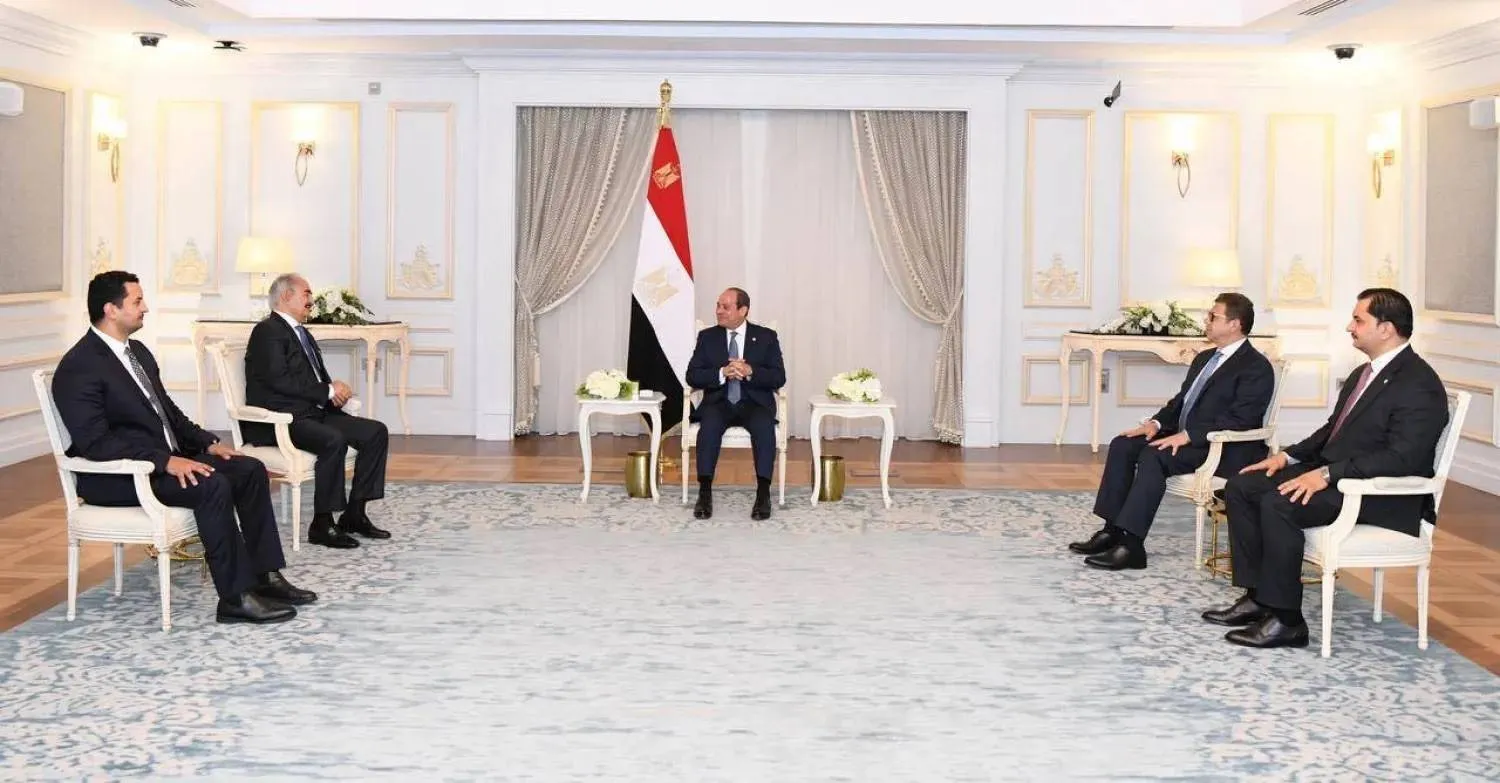

Egyptian President Abdel Fattah el-Sisi has called for increased coordination among Libyan factions to establish a clear political roadmap aimed at resolving the ongoing crisis.
This came during his meeting on Monday with Field Marshal Khalifa Haftar, commander of Libya’s National Army, in the new city of Al-Alamein on Egypt’s northwestern coast. Major General Hassan Rashad, also attended.
The talks focused on several pressing issues, including foreign interference in Libya, the stalled political roadmap, and the disruption of general elections. Both sides stressed the importance of stabilizing Libya, with Egypt stressing that Libya’s security is integral to its own national security. According to Egyptian presidential spokesperson Ambassador Mohamed El-Shenawy, Egypt is fully committed to supporting Libyan efforts to maintain unity, sovereignty, and to resume development.
Sisi also highlighted the necessity of preserving the unity and cohesion of Libya’s state institutions and stressed the need for all parties to coordinate in order to create a comprehensive political roadmap that would pave the way for simultaneous presidential and parliamentary elections.
Libyan political analyst Youssef Hosseini noted that this visit coincides with three major regional shifts: the end of the Iran-Israel conflict and attempts to reshape the regional order, unprecedented security deterioration in western Libya with fears of expanded militia warfare, and escalating economic tensions over Eastern Mediterranean water rights amid disputes between Türkiye, Greece, and Egypt. Libya firmly rejects Greek offshore drilling near Crete, reaffirming its sovereign rights in the region.
The Egyptian presidency also underscored the importance of confronting foreign interventions and called for the withdrawal of all foreign forces and mercenaries from Libya. It praised the Libyan army’s national role in combating terrorism, especially in eastern Libya.
A Libyan academic, speaking anonymously, described the meeting as crucial amid intense international rivalry over Libya, emphasizing the need for Egypt to play a greater role in supporting Libya’s security institutions and unifying its military forces.
Haftar, for his part, expressed deep appreciation for Egypt’s pivotal role in restoring Libya’s security and stability, praising its longstanding support for the Libyan people and efforts to share developmental expertise through Egyptian companies.
His visit follows a meeting with Sisi six months ago, focusing on key principles for a secure transition in Libya.
Meanwhile, the UN advisory committee overseeing Libya’s transition has proposed four potential political roadmaps: holding presidential and legislative elections within two years; electing a bicameral legislature within two years; adopting a constitution before elections, which includes reviewing the controversial 2017 draft; or activating a dialogue mechanism to replace current political bodies with a constituent assembly chosen through consensus.


