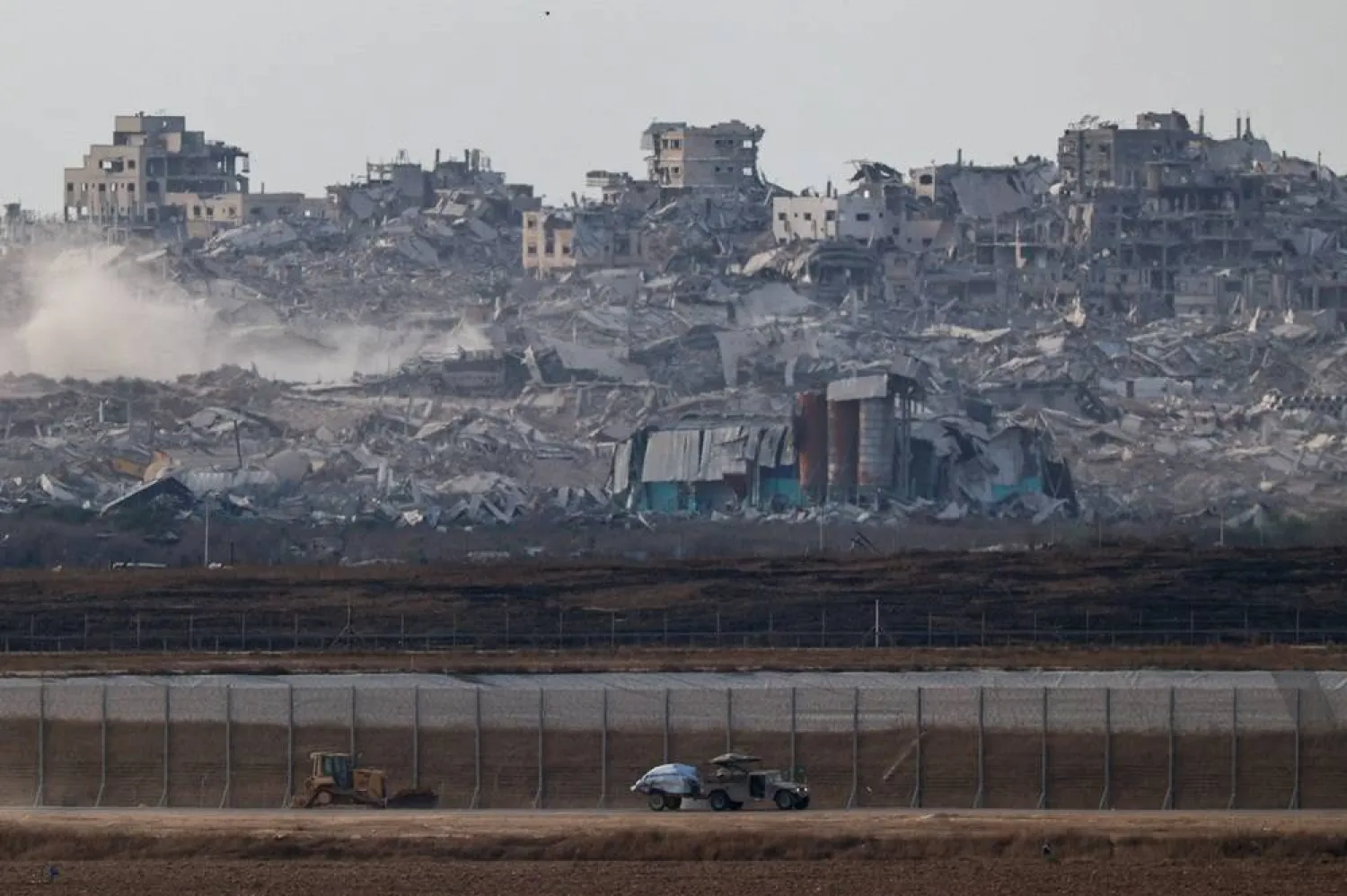
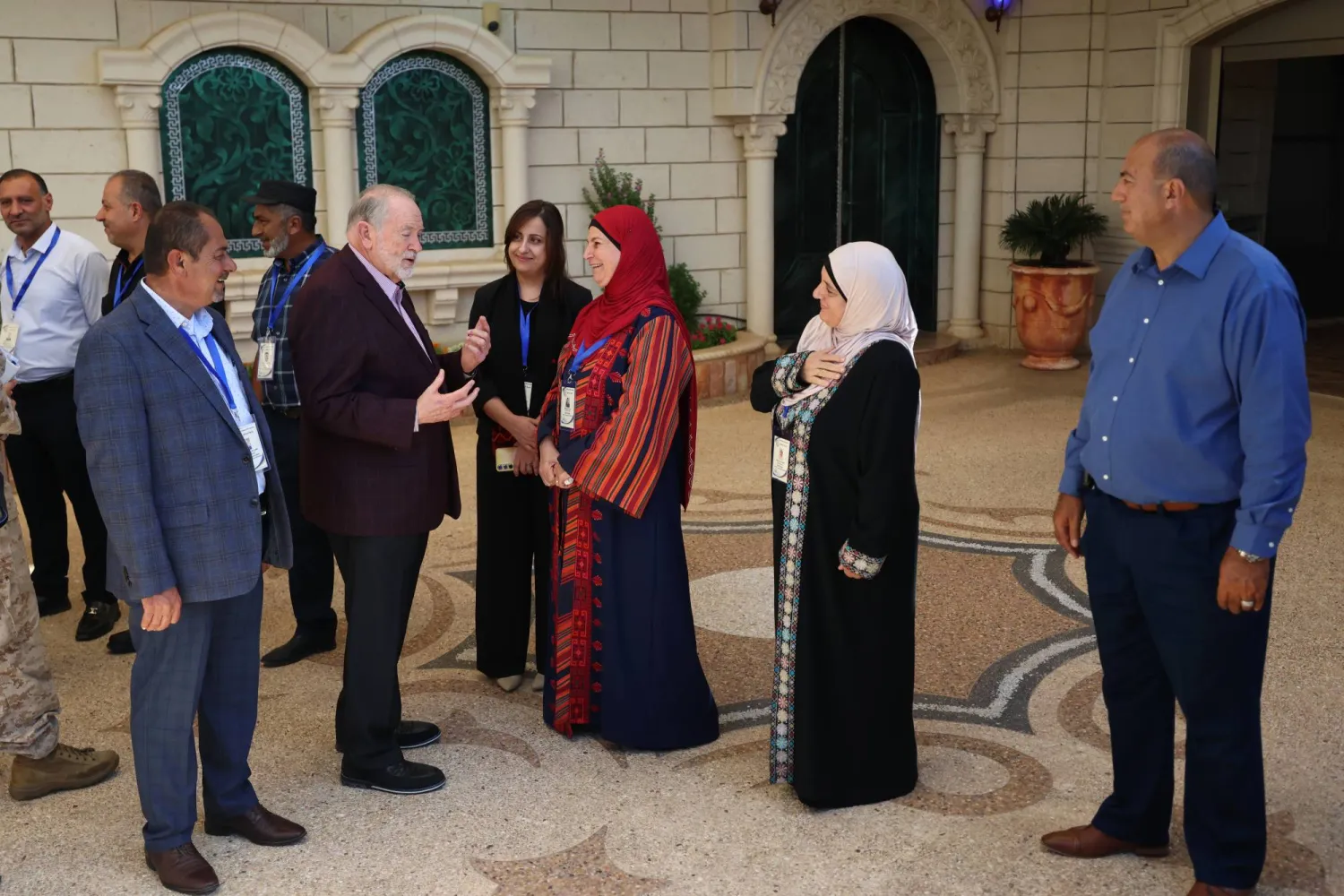
Fears that Sudan’s war could turn into a regional conflict are no longer merely assessments raised by observers following cross-border strikes and mutual accusations between Sudan and Chad, alongside troubling military movements near the border with Ethiopia.
Massad Boulos, senior adviser to the US president for Arab and African affairs, conveyed those concerns to the UN Security Council, warning that the repercussions could fuel the conflict and threaten to draw neighboring countries more deeply into the war.
The US warnings do not appear to have emerged in a vacuum. They are difficult to separate from Washington’s extensive intelligence capabilities, which allow it to monitor military movements, weapons and drone routes, and cross-border networks.
Raising the level of concern to the Security Council therefore reflects a US assessment that the risks are real and growing, even if the administration has not publicly disclosed all the information on which that assessment is based.
The warning was reinforced by a call Boulos held with Chadian President Mahamat Idriss Deby following reports of a military strike inside Chadian territory.
Boulos said the two expressed “deep concern about the war in Sudan spilling across its borders, fueling further escalation and threatening regional peace and stability,” while calling for an end to external support for the warring parties.
More than three years after the war began, it is no longer simply an internal confrontation between the Sudanese army and the paramilitary Rapid Support Forces. As fighting has moved into areas bordering Chad and Ethiopia and the use of sophisticated weapons has expanded, Sudan has become the center of a conflict in which the calculations of neighboring countries intersect with the interests of regional and international powers.
Growing internationalization
Evidence of the war’s internationalization can be seen in the UN Fact-Finding Mission’s finding that weapons, military technology, fighters and external supply networks are helping prolong the conflict and strengthen the capabilities of both sides.
The mission described a cross-border network linked to individuals, entities and countries that it said had provided the RSF with weapons, equipment, logistical support and foreign personnel. The countries concerned have denied the accusations, saying they remain neutral and support peace efforts.
The mission, meanwhile, said its investigations into sources of external support for the army were still at a preliminary stage.
Sudanese researcher Kholood Khair, director of Confluence Advisory, told the Financial Times in April that the war had “spread across the Red Sea, the Horn of Africa and the Sahel,” and that none of Sudan’s seven neighbors was entirely removed from its effects.
Alan Boswell, director of the Horn of Africa project at the International Crisis Group, has similarly argued that the war is dividing the region and increasing polarization among surrounding countries over the two sides.
He considers Chad and South Sudan the most exposed to its repercussions, while also pointing to the need to watch Ethiopia and tensions in Somalia.
A prolonged conflict, he has warned, could drag the region into a “spiral of violence.”
Amin Ismail Majzoub, an expert on crisis management and negotiation at the Center for Research and Strategic Studies, ruled out the conflict developing into a direct military confrontation between Sudan and neighboring countries.
He said the more likely scenario was an escalation of “proxy warfare,” through continued financial and military support and the use of mercenaries and armed groups, which would prolong the war.
Majzoub told Asharq Al-Awsat that Khartoum’s accusations against Chad and Ethiopia were, according to Sudanese authorities, based on evidence submitted to the African Union, IGAD and the Security Council, in addition to reports that bases and airports had been used in support of the RSF.
He added that if those parties moved from indirect support to declared military intervention, Sudan’s regional allies could step in to back it, at which point the conflict could expand to include the Horn of Africa and sub-Saharan Africa.
Majzoub nevertheless dismissed that scenario, saying: “This will not happen,” because a comprehensive regional war would not be welcomed by the countries of the region.
At the same time, he noted that the conflict’s repercussions were already becoming visible inside neighboring countries, citing increasingly vocal opposition groups in Chad that reject what they say is support being provided to Arab groups aligned with the RSF.
Retired Sudanese army Maj. Gen. Kamal Ismail, for his part, warned that the intersection of regional interests was gradually pushing the conflict beyond Sudan’s borders.
“We have repeatedly warned that the conflict could move from inside Sudan into the region, and the indicators point to that direction,” Ismail told Asharq Al-Awsat.
He added that the widening scope of the fighting could lead to a broader civil war and further complicate the situation.
Ismail said intensifying competition over regional interests could push some actors toward direct intervention under the pretext of protecting their interests, warning that “the longer the war continues, the more its parties lose the ability to control its course or stop it.”
He urged Sudanese to unite to halt the fighting and preserve what remains of the country.
Ethiopia and Chad
The movement of military operations into Blue Nile state near the Ethiopian border is among the most worrying developments.
Yale University’s Humanitarian Research Lab has published reports based on satellite imagery and open-source analysis pointing to the assembly of brigade-size military support inside an Ethiopian National Defense Force base in Asosa and linking it to RSF activity.
Asosa is significant because of its proximity to Blue Nile and the town of Kurmuk. Any military presence in the area connected to the war, if confirmed, could therefore lay the groundwork for a new border front.
To the west, Chad stands at the center of the storm because of its long border with Darfur and the tribal ties spanning both sides.
Tensions escalated after Sovereignty Council Chairman and army commander Gen. Abdel Fattah al-Burhan accused N’Djamena of facilitating support to the RSF, while Chad denies that its territory or airports are being used to transfer weapons.
Cameron Hudson, a former US official and Sudan expert, says the repercussions of strikes inside Chad are no longer confined to the battlefield but have developed into a diplomatic confrontation.
Countries affected by the war
South Sudan may be the country most exposed to the consequences of the war. Its economy depends on exporting oil through Sudanese facilities and ports, while it has received more than 1 million Sudanese and returning South Sudanese since the fighting began.
A halt in oil exports or the spread of fighting to the border could threaten Juba’s fragile stability.
Kenya, although it does not share a border with Sudan, is exposed to the spillover of political polarization, financing and fighter networks, as well as trade disruption and damage to the role of IGAD, of which Nairobi is a key pillar.
Uganda faces similar risks through South Sudan. Any renewed eruption of instability in Juba could trigger a new refugee influx into Uganda, which already hosts more than 1 million South Sudanese refugees. In this way, the effects of the war could spread from Sudan to South Sudan and then to Uganda and Kenya without regular armies ever crossing borders.
Egypt, for its part, faces repercussions related to refugees, security along its southern border, Nile waters and the balance with Ethiopia. Eritrea fears instability spreading into eastern Sudan and the Red Sea coast.
IGAD Executive Secretary Workneh Gebeyehu has said that peace and security challenges have become too interconnected for any single country or institution to confront alone, describing Sudan as one of the clearest examples of the convergence of military confrontation, humanitarian catastrophe, institutional fragmentation, regional spillover and geopolitical rivalry.
Sudan’s war has not yet become a full-fledged regional confrontation, but it long ago moved beyond the confines of an internal conflict. As the different strands become increasingly intertwined, the question in the future may no longer be: Will the war spread into the region? But rather has it already begun?