Local Peace Efforts in Yemen Outpace UN Performance

UN steps in late as local efforts succeed in reopening Yemen roads (UN)
TT

Local Peace Efforts in Yemen Outpace UN Performance

UN steps in late as local efforts succeed in reopening Yemen roads (UN)

Local peace initiatives in Yemen have made notable strides in recent years, eclipsing the stalled efforts of United Nations mediators since the collapse of the Kuwait-hosted peace talks in mid-2016, which were derailed by the Iran-aligned Houthis.

These efforts have achieved key breakthroughs, particularly in facilitating prisoner exchanges and reopening roads between provinces – areas where UN-led negotiations have largely faltered.

Since the Houthis seized the capital and toppled the internationally recognized government in late 2014, UN envoys have made limited headway. The only tangible outcome was the 2018 Stockholm Agreement, which sought to halt fighting around the strategic Red Sea port of Hodeidah – a deal that analysts say primarily benefited the Houthis.

A separate nationwide ceasefire was brokered through regional diplomacy in 2022, but it remains fragile and at risk of collapse amid repeated violations by Houthi forces.

In the realm of prisoner swaps, local initiatives have far outpaced the UN's achievements. While the United Nations has overseen the release of around 2,500 detainees from both government and Houthi sides, grassroots negotiators have facilitated the exchange of more than 11,000 prisoners, along with the recovery of dozens of bodies.

As interest in UN Special Envoy Hans Grundberg’s visits and initiatives wanes among Yemenis, local politicians and activists say few expect him to achieve any real breakthrough.

Many believe Grundberg now waits for regional powers to lead negotiations and merely lends UN legitimacy to any resulting agreements.

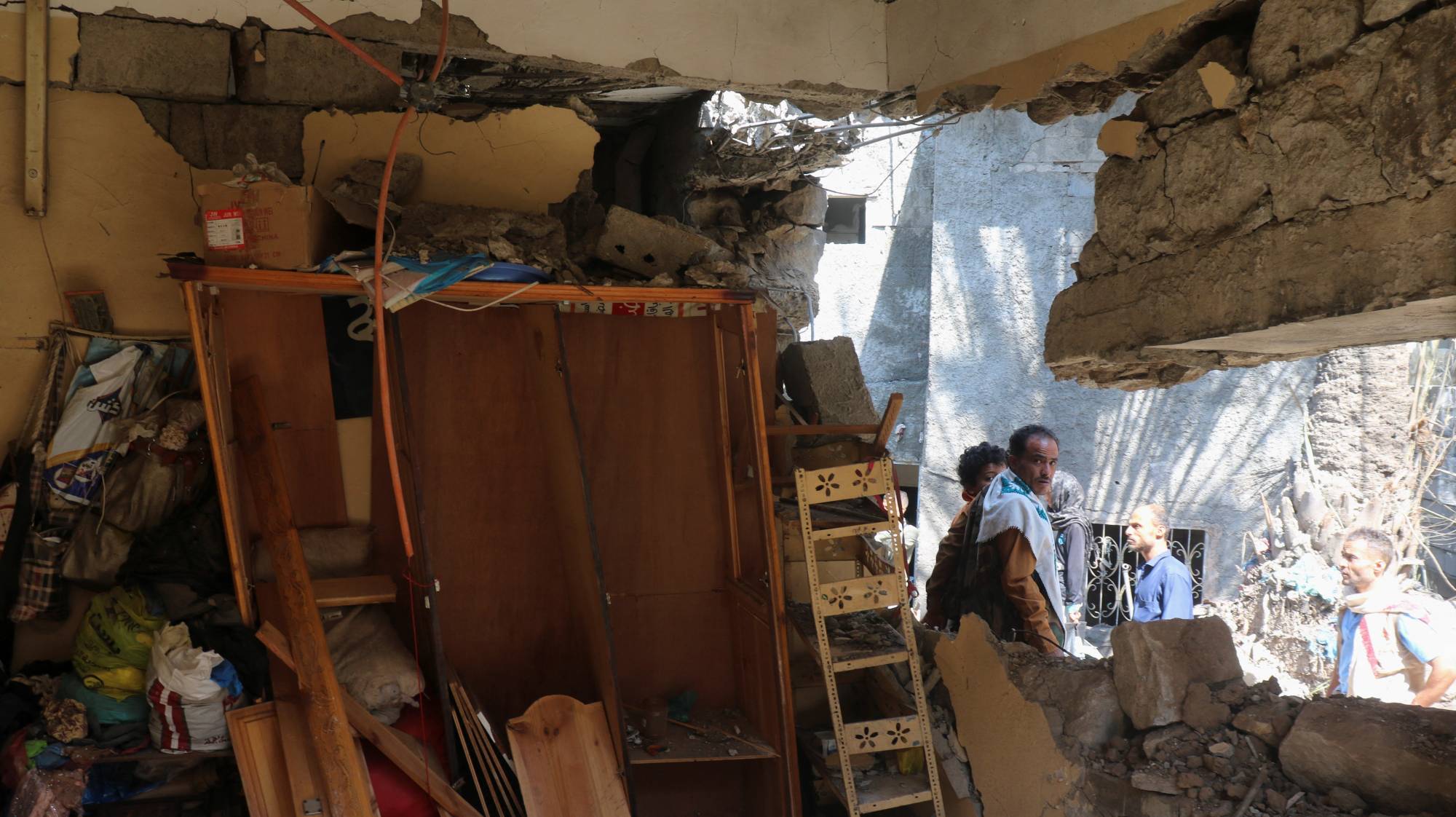
While the UN-led process remains stalled, local initiatives have delivered meaningful gains, particularly in reopening roads long blockaded by Houthi forces. The rebels had used road closures to punish civilians and restrict the movement of goods into areas under their control.

Activists credit local mediators with playing a pivotal role in easing the Houthi-imposed siege on Taiz by reopening the key road linking the city center to the eastern suburb of Al-Hawban — a move widely seen as a humanitarian relief.

The momentum of these local efforts continued with the reopening of a major route connecting the southern port city of Aden to Houthi-held areas through the provinces of Al-Dhale and Ibb, restoring a vital commercial and civilian artery.

With no new rounds of UN-sponsored talks since the collapse of the Kuwait negotiations, Yemen’s grassroots peace initiatives are rekindling hopes for further breakthroughs beyond road openings and prisoner swaps.

Local mediators are now pushing the Houthis to reopen Al-Fakher road in Al-Dhale province, which leads to the neighboring city of Ibb.

They are also working to reopen a vital route linking Abyan and Al-Bayda provinces through the mountainous Thura Pass — a road that would cut travel time between the two regions by half.

The UN has expressed support for these local initiatives aimed at restoring road links across a country fractured by nearly a decade of conflict.

Grundberg’s office said it recently dispatched a delegation to Al-Dhale, where officials met with government representatives and security leaders to discuss the latest proposal to reopen the main route connecting the capital Sanaa with the southern port city of Aden via Al-Dhale.


Palestinians Say Israeli Army Killed Man in Occupied West Bank

 Israeli military vehicles roll during a raid in Ramallah, in the occupied West Bank on December 1, 2025. (AFP)
Israeli military vehicles roll during a raid in Ramallah, in the occupied West Bank on December 1, 2025. (AFP)
TT

Palestinians Say Israeli Army Killed Man in Occupied West Bank

 Israeli military vehicles roll during a raid in Ramallah, in the occupied West Bank on December 1, 2025. (AFP)
Israeli military vehicles roll during a raid in Ramallah, in the occupied West Bank on December 1, 2025. (AFP)

The Ramallah-based Palestinian health ministry said that Israeli forces killed a man in the northern occupied West Bank on Friday.

"Bahaa Abdel-Rahman Rashid (38 years old) was killed by Israeli fire in the town of Odala, south of Nablus," the health ministry said in a statement.

Shortly before, the Palestinian Red Crescent said its teams handled the case of a man "who suffered a critical head injury during clashes in the town of Odala near Nablus, and CPR is currently being performed on him".

The Israeli military told AFP it was looking into the incident.

Witness and Odala resident Muhammad al-Kharouf told AFP that Israeli troops were patrolling in Odala and threw tear gas canisters at men who were exiting the local mosque for Friday prayer.

Rashid was killed by live fire in the clashes that followed, added Kharouf, who had been inside the mosque with him.

The Israeli military said Friday it had completed a two-week counter-terrorism operation in the northern West Bank during which it killed six gunmen and questioned dozens of suspects.

It told AFP that Rashid was not among the six gunmen killed over the past two weeks.

Dozens of men including Rashid's father gathered at the nearby city of Nablus' Rafidia hospital to bid him goodbye on Friday, an AFP journalist reported.

Violence in the West Bank has soared since Hamas's October 2023 attack on Israel triggered the Gaza war.

It has not ceased despite the fragile truce between Israel and Hamas that came into effect in October.

Israeli troops or settlers have killed more than 1,000 Palestinians, many of them gunmen, but also scores of civilians, in the West Bank since the start of the Gaza war, according to an AFP tally based on Palestinian health ministry figures.

At least 44 Israelis, including both soldiers and civilians, have been killed in Palestinian attacks or Israeli military operations, according to official Israeli figures.


Lebanese President, Hezbollah Split Over Expanded Talks with Israel

A handout photo made available by the Lebanese Presidency press office shows Lebanese President Joseph Aoun (9-R) posing for a photo with a United Nations Security Council delegation following their meeting at the Presidential Palace in Baabda, east of Beirut, Lebanon, 05 December 2025. (Lebanese Presidency)
TT

Lebanese President, Hezbollah Split Over Expanded Talks with Israel

A handout photo made available by the Lebanese Presidency press office shows Lebanese President Joseph Aoun (9-R) posing for a photo with a United Nations Security Council delegation following their meeting at the Presidential Palace in Baabda, east of Beirut, Lebanon, 05 December 2025. (Lebanese Presidency)

Lebanon's president on Friday defended his decision to expand talks with Israel as a way to avoid further violence, but the head of armed group Hezbollah called it a blunder, lifting the lid on divisions at a watershed moment for the country.

Israel and Lebanon on Wednesday both sent civilian envoys to a military committee monitoring their ceasefire, a step towards a months-old US demand that the two countries broaden talks in line with President Donald Trump's Middle East peace agenda.

President Joseph Aoun told visiting representatives of the United Nations Security Council that his country "has adopted the option of negotiations with Israel" and that "there is no going back".

"These negotiations are mainly aimed at stopping the hostile actions carried out by Israel on Lebanese territory, securing the return of the captives, scheduling the withdrawal from the occupied areas, and resolving the disputed points along the Blue Line," Aoun said in a statement on Friday, referring to the UN-mapped line that separates Israel from Lebanon.

HEZBOLLAH CALLS MOVE 'FREE CONCESSION'

But the expanded talks were criticized by armed group Hezbollah.

Its head, Sheikh Naim Qassem, said on Friday afternoon that sending a civilian delegate to the truce monitoring committee was a "blunder," and urged the government to rethink its decision.

"You offered a free concession that will not change anything in the enemy's (Israel's) position or its attacks," Qassem said.

Lebanon and Israel have been officially enemy states for more than 70 years, and meetings between their civilian officials have been extraordinarily rare throughout their fraught history.

Over the last year, military officials have met as part of a committee, chaired by the United States, to monitor a 2024 truce that ended more than a year of fighting between Israel and Hezbollah which badly weakened the Lebanese Iran-backed armed group.

In that time, Israel has continued its air strikes on what it says are Hezbollah's attempts to re-arm in violation of the truce. Lebanon says those strikes and Israel's occupation of southern Lebanese territory are ceasefire breaches.

Fears are growing in Lebanon that Israel could expand its air campaign further to ratchet up pressure on the Lebanese government to disarm Hezbollah more swiftly across the country.

The group has refused to disarm in full and has raised the specter of internal strife if the state tries to confront it.


Hezbollah Unhappy with Political Negotiations with Israel but Unlikely to Confront the State

A joint patrol of UNIFIL forces and the Lebanese Army in the Marjayoun area near the border with Israel (AFP)
TT

Hezbollah Unhappy with Political Negotiations with Israel but Unlikely to Confront the State

A joint patrol of UNIFIL forces and the Lebanese Army in the Marjayoun area near the border with Israel (AFP)

Hezbollah officials have avoided commenting on the Lebanese government’s decision to appoint former ambassador Simon Karam as head of the Lebanese delegation to the “mechanism committee” overseeing the ceasefire with Israel, which effectively shifted the committee’s work from military-technical talks to political negotiations.

A formal party position is expected Friday, to be delivered by Hezbollah Secretary-General Sheikh Naim Qassem in a previously scheduled appearance.

Yet media outlets aligned with Hezbollah, along with its supporters on social platforms, quickly denounced the presidential decision. They described it as “another act of surrender by Lebanon, taken despite the absence of any Israeli willingness to meet Lebanese demands, chief among them ending attacks and violations, withdrawing from occupied territory, and releasing detainees.”

Sources familiar with Hezbollah’s internal discussions told Asharq Al-Awsat that Qassem will reiterate the party’s refusal to enter “a new round of negotiations as long as Israel fails to meet its obligations.”

He is also expected to reference the open letter he sent on November 6 to Lebanon’s President, Parliament Speaker, Premier and the public, stressing rejection of any new talks and reaffirming “the right of resistance.”

The sources added that both Hezbollah and Speaker Nabih Berri are dissatisfied with Karam’s appointment because of his known political stance against “the resistance.”

Still, neither intends to provoke internal conflict. Instead, they will continue working with the state “within the framework of insisting that Lebanon assume responsibility for halting Israeli aggression, recovering land, securing prisoner releases, initiating reconstruction, and above all, preventing another Israeli war.”

On Wednesday evening, Hezbollah’s Al-Manar TV criticized the inclusion of a civilian in the mechanism committee, declaring that “the Lebanese state has taken its decisions and must bear their consequences.”

It added that the government “has stepped into the unknown without guaranteed returns,” insisting that “the people of the land will not concede rights or surrender.”

Political analyst Kassem Kassir, who closely follows Hezbollah, stressed that the priority for the party and its supporters remains achieving concrete outcomes: stopping Israeli assaults, withdrawing from occupied land, freeing prisoners, and rebuilding devastated areas.

Ali Al-Amin, editor of the Janoubia news site, recalled that Hezbollah had already informed Lebanon’s leaders of its rejection of negotiations with Israel.

Still, Karam’s appointment was “a Lebanese decision driven by internal considerations,” and the party cannot block it at a time when Israel has threatened a devastating war.

While Hezbollah signaled displeasure - prompting small street protests - it has not issued an outright rejection.

Asked about the party’s red lines, Al-Amin said Hezbollah will not relinquish its weapons, particularly north of the Litani River.

Should the government attempt to enforce disarmament, he warned, confrontation with the army could follow, an outcome still viewed by Hezbollah as less costly than a new Israeli war with unpredictable consequences.