


UN Trade Agency: New Trade War Deadline Prolongs Instability

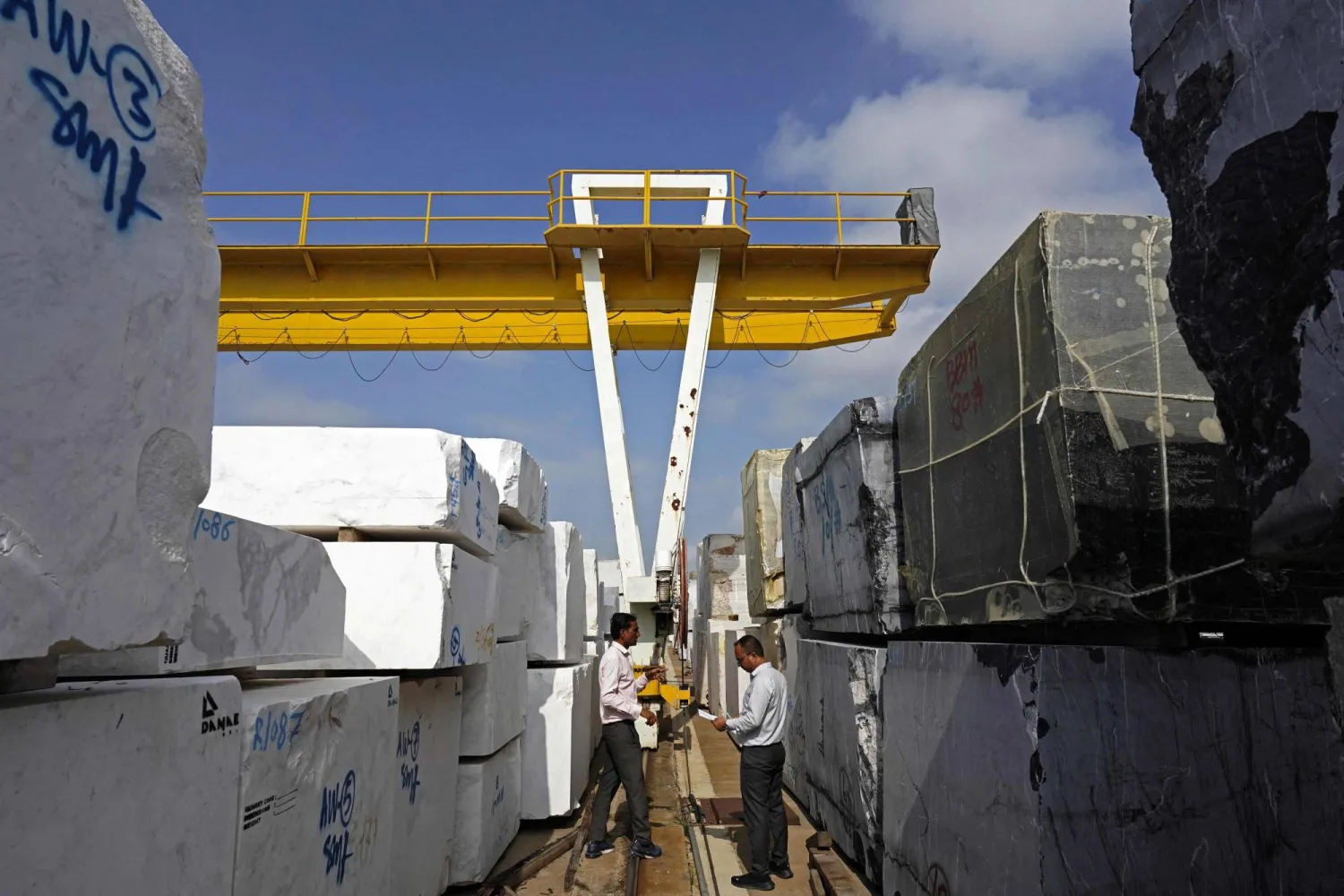
Workers inspect imported stones at a marble factory in Kishangarh, in India's Rajasthan state on July 8, 2025. (Photo by HIMANSHU SHARMA / AFP)
TT

UN Trade Agency: New Trade War Deadline Prolongs Instability

Workers inspect imported stones at a marble factory in Kishangarh, in India's Rajasthan state on July 8, 2025. (Photo by HIMANSHU SHARMA / AFP)

The Trump administration's decision to extend a negotiating deadline for tariff rates is prolonging uncertainty and instability for countries, the executive director of the United Nations trade agency said on Tuesday.

US President Donald Trump on Monday ramped up his trade war, telling 14 nations, from powerhouse suppliers such as Japan and South Korea to minor trade players, that they now face sharply higher tariffs from a new deadline of August 1.

"This move actually extends the period of uncertainty, undermining long-term investment and business contracts, and creating further uncertainty and instability," Pamela Coke-Hamilton, executive director of the International Trade Centre, told reporters in Geneva, according to Reuters.

"If a business is not clear on what costs they are going to pay, they cannot plan, they cannot decide on who will invest," Coke-Hamilton said, citing the example of Lesotho, where major textile exporting companies have withheld their investment for the time being, pending a tariff outcome.

The uncertainty, combined with deep cuts in development aid, had created a "dual shock" for developing countries, she added.

Countries have been under pressure to conclude deals with the US after Trump unleashed a global trade war in April that roiled financial markets and sent policymakers scrambling to protect their economies.



Iraq Says Oil Output, Exports Can Recover within a Week Once Hormuz Crisis Ends

 A tanker, left, and a car carrier are anchored at sea in the Gulf of Oman near the Strait of Hormuz, as seen from the coast near Khor Fakkan, United Arab Emirates, Friday, May 1, 2026.(AP)
A tanker, left, and a car carrier are anchored at sea in the Gulf of Oman near the Strait of Hormuz, as seen from the coast near Khor Fakkan, United Arab Emirates, Friday, May 1, 2026.(AP)
TT

Iraq Says Oil Output, Exports Can Recover within a Week Once Hormuz Crisis Ends

 A tanker, left, and a car carrier are anchored at sea in the Gulf of Oman near the Strait of Hormuz, as seen from the coast near Khor Fakkan, United Arab Emirates, Friday, May 1, 2026.(AP)
A tanker, left, and a car carrier are anchored at sea in the Gulf of Oman near the Strait of Hormuz, as seen from the coast near Khor Fakkan, United Arab Emirates, Friday, May 1, 2026.(AP)

‌Iraq can restore oil output and exports to normal levels within seven days of the end of the crisis ‌over the ‌Strait of ‌Hormuz, Deputy ⁠Oil Minister Basim Mohammed ⁠said on Saturday.

He said production currently stood at 1.5 ⁠million barrels per day, ‌with ‌about 200,000 ‌bpd exported via ‌Ceyhan, while two tankers had been prepared and two ‌more were expected depending on security ⁠conditions ⁠in the strait, which Tehran has largely closed during the US-Israeli war against Iran.


Saudi Arabia Ranks Second Globally in Data Center Market Attractiveness

A view of the Riyadh skyline, the Saudi capital (Royal Commission for Riyadh City)
TT

Saudi Arabia Ranks Second Globally in Data Center Market Attractiveness

A view of the Riyadh skyline, the Saudi capital (Royal Commission for Riyadh City)

Saudi Arabia has ranked second globally, after the United States, among the most attractive markets for data centers—an achievement that reflects the Kingdom’s growing position in digital infrastructure and its rapid expansion in a market increasingly driven by artificial intelligence and cloud computing.

According to a Bloomberg analysis, Saudi Arabia secured second place globally in data center market attractiveness. The analysis also indicated that power availability and land enablement together account for 58% of market attractiveness for data center projects. At the same time, 22.8 gigawatts of new capacity are currently under development worldwide and are expected to come online within the next three years, increasing the value of markets capable of absorbing this growth at scale and with speed, SPA reported.

This progress builds on the rapid expansion of the data center sector in the Kingdom, where operational capacity increased from 68 megawatts in 2021 to 440 megawatts in 2025—representing nearly sixfold growth over four years. This reflects the accelerated development of digital infrastructure and the growing attractiveness of the Saudi market in this critical sector.

The sector continued its growth in the first quarter of 2026, with capacity rising to 467 megawatts—an increase of more than 6% since the beginning of the year—highlighting the sustained expansion of a market that has become a key driver of digital infrastructure and the data-driven economy powered by cloud computing and artificial intelligence.

According to SPA, today, Saudi Arabia hosts more than 60 data centers across multiple regions, reflecting the expansion of the market, the strengthening of its operational base, and its ability to meet the growing demand for digital services, cloud computing, and AI applications. This growth is further supported by the Kingdom’s geographic depth, which provides developers and operators with greater flexibility in site distribution and phased expansion, in addition to its strategic location linking Asia, Europe, and Africa—enabling access to broad markets from a single hub.

Commenting on this progress, head of the Artificial Intelligence Enablement Office at the Ministry of Communications and Information Technology Eng. Bassam Al-Bassam stated: “This reflects the Kingdom’s growing position in the data center sector and confirms that the progress achieved in digital infrastructure, power availability, development speed, and operational readiness has positioned Saudi Arabia among the most capable markets in attracting high-quality investments in this sector.”

He added that this progress strengthens the confidence of global investors in the Saudi market and supports the Kingdom’s positioning as a global hub for digital infrastructure and artificial intelligence.

This achievement gains further significance as Saudi Arabia ranked first globally in the Digital Readiness Framework 2025, scoring 94 out of 100 in the “very high” category, ahead of Finland, Germany, the United Kingdom, Norway, and France. This reflects the maturity of the regulatory environment, digital governance, and institutional efficiency—factors that are increasingly critical in a sector that depends on regulatory clarity, operational reliability, and speed of execution.

This position is further reinforced by an advanced digital ecosystem, including 99% internet penetration, fiber coverage reaching 5.8 million homes, and a technology market exceeding SAR199 billion in 2025. In addition, local internet traffic through the Saudi Internet Exchange surpassed 2.462 terabits per second in the same year, enhancing the readiness and reliability of the digital environment supporting data center operations.

This achievement underscores that Saudi Arabia is not only keeping pace with growing demand for digital infrastructure but is also advancing in building the foundational capabilities required for the next phase of the digital economy. As global pressures on power and land intensify in traditional markets, Saudi Arabia is emerging as a destination that combines capacity, readiness, flexibility, and scalability—further strengthening its position as a rising global hub in the data center race.


China Rejects US Sanctions on Five Oil Refineries

Independent small Chinese refineries purchase 90% of Iranian oil shipments (Reuters).
TT

China Rejects US Sanctions on Five Oil Refineries

Independent small Chinese refineries purchase 90% of Iranian oil shipments (Reuters).

China will not comply with US sanctions against five firms targeted for purchasing Iranian oil, Beijing's commerce ministry said on Saturday.

China is a key customer for Iranian oil, mainly through independent "teapot" refineries that rely on discounted crude from Iran.

The United States, seeking to choke off revenue to Tehran, has ramped up sanctions on such refineries.

The commerce ministry's injunction, relating to sanctions announced separately since last year, states that the US measures "shall not be recognized, implemented, or complied with".

The sanctions "improperly prohibit or restrict Chinese enterprises from conducting normal economic, trade and related activities with third countries... and violate international law and the basic norms governing international relations," the ministry said in a statement.

"The Chinese government has consistently opposed unilateral sanctions lacking UN authorization and a basis in international law."

The injunction applies to three companies in Shandong province -- Shandong Jincheng Petrochemical Group, Shandong Shouguang Luqing Petrochemical and Shandong Shengxing Chemical -- and two others based elsewhere in China, Hengli Petrochemical (Dalian) Refinery and Hebei Xinhai Chemical Group.

Washington imposed on Friday sanctions on yet another Chinese firm which it said had imported "tens of millions of barrels" of Iranian crude oil, generating billions of dollars in revenue for Tehran.

The firm, Qingdao Haiye Oil Terminal Co., Ltd., was not mentioned in the commerce ministry's injunction.