


Trump Says Steep Copper Tariffs in Store as He Broadens His Trade War

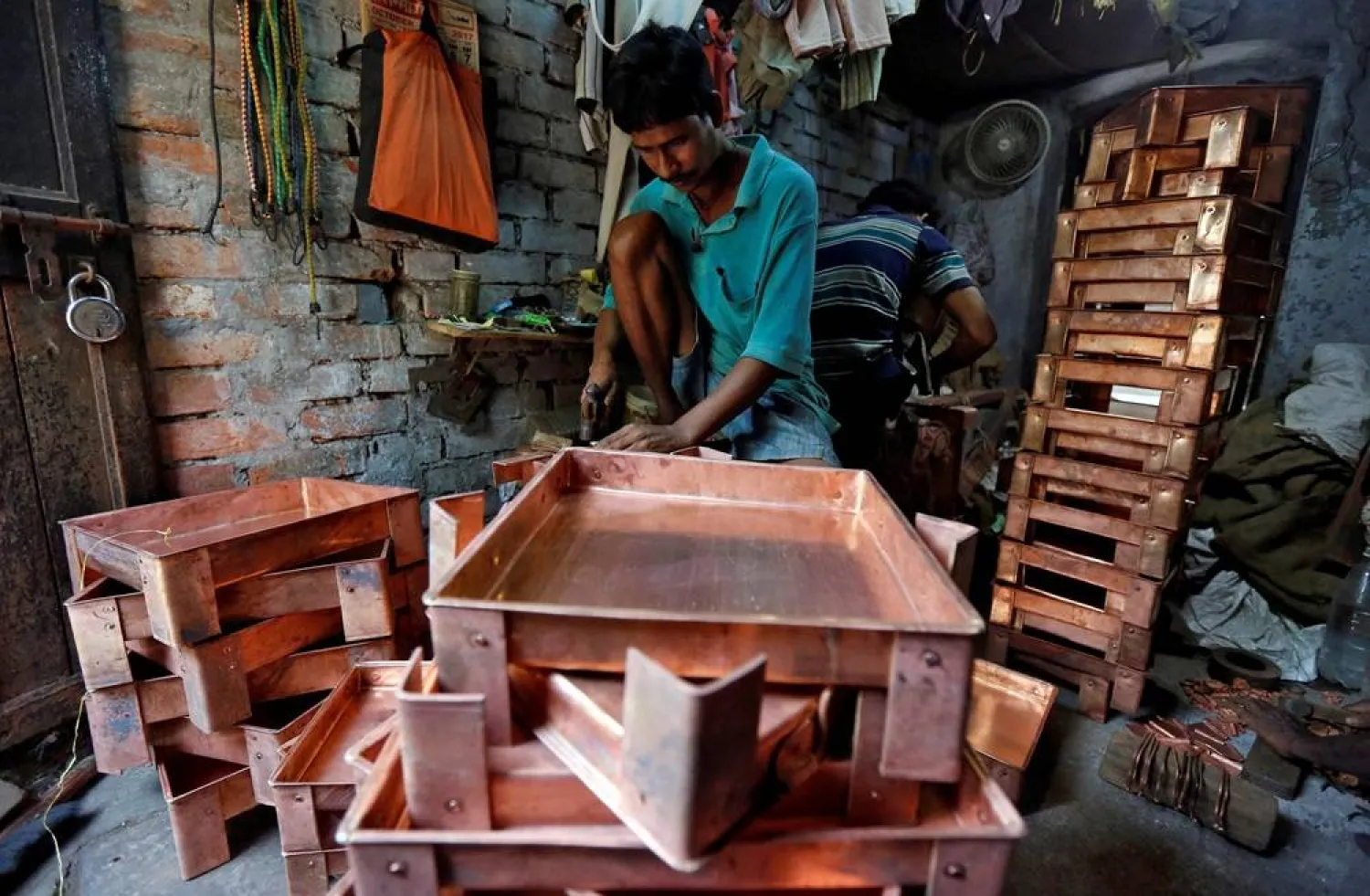
A worker makes copper trays inside a workshop in Kolkata, India, October 26, 2017. Picture taken October 26, 2017. (Reuters)
TT

Trump Says Steep Copper Tariffs in Store as He Broadens His Trade War

A worker makes copper trays inside a workshop in Kolkata, India, October 26, 2017. Picture taken October 26, 2017. (Reuters)

US President Donald Trump on Tuesday said he would impose a 50% tariff on imported copper and soon introduce long-threatened levies on semiconductors and pharmaceuticals, broadening his trade war that has rattled markets worldwide.

One day after he pressured 14 trading partners, including powerhouse US suppliers like South Korea and Japan, with sharply higher tariffs, Trump reiterated his threat of 10% tariffs on products from Brazil, India and other members of the BRICS group of countries.

He also said trade talks have been going well with the European Union and China, though he added he is only days away from sending a tariff letter to the EU.

Trump's remarks, made during a White House cabinet meeting, could inject further instability into a global economy that has been shaken by the tariffs he has imposed or threatened on imports to the world's largest consumer market.

US copper futures jumped more than 10% after Trump's announcement of new duties on a metal that is critical to electric vehicles, military hardware, the power grid and many consumer goods. They would join duties already in place for steel, aluminum and automobile imports, though it was unclear when the new tariffs might take effect.

US pharmaceutical stocks also slid following Trump's threat of 200% tariffs on drug imports, which he said could be delayed by about a year.

Other countries, meanwhile, said they would try to soften the impact of Trump's threatened duties after he pushed back a Wednesday deadline to August 1.

Trump's administration promised "90 deals in 90 days" after he unveiled an array of country-specific duties in early April. So far only two agreements have been reached, with the United Kingdom and Vietnam. Trump has said a deal with India is close.

Trump said countries have been clamoring to negotiate.

"It's about time the United States of America started collecting money from countries that were ripping us off ... and laughing behind our back at how stupid we were," he said.

Trading partners across the globe say it has been difficult to negotiate even framework agreements with the US given the haphazard way new tariffs are announced, complicating their internal discussions about concessions.

HIGHEST LEVELS SINCE 1934

Following Trump's announcement of higher tariffs for imports from the 14 countries, US research group Yale Budget Lab estimated consumers face an effective US tariff rate of 17.6%, up from 15.8% previously and the highest in nine decades.

Trump's administration has been touting those tariffs as a significant revenue source. Treasury Secretary Scott Bessent said Washington has taken in about $100 billion so far and could collect $300 billion by the end of the year.

The United States has taken in about $80 billion annually in tariff revenue in recent years.

The S&P 500 finished slightly lower on Tuesday, a day after Wall Street markets sold off sharply following Trump's new tariffs announcement.

Trump said he will "probably" tell the European Union within two days what rate it can expect for its exports to the US, adding that the 27-member bloc had been treating his administration "very nicely" in trade talks.

The EU, the largest bilateral trade partner of the US, aims to strike a deal before August 1 with concessions for key export industries such as aircraft, medical equipment and spirits, according to EU sources. Brussels is also considering an arrangement that would protect European automakers with large US production facilities.

However, German Finance Minister Lars Klingbeil warned that the EU was prepared to retaliate if necessary.

"If we don't reach a fair trade deal with the US, the EU is ready to take counter measures," he said in the lower house of parliament. Japan, which faces a possible 25% tariff, wants concessions for its large automobile industry and will not sacrifice its agriculture sector, a powerful domestic lobby, for the sake of an early deal, top trade negotiator Ryosei Akazawa said on Tuesday.

South Korea, which also faces a possible 25% tariff, said it planned to intensify trade talks over the coming weeks "to reach a mutually beneficial result."

Washington and Beijing agreed to a trade framework in June, but with many of the details still unclear, traders and investors are watching to see if it unravels before a separate, US-imposed August 12 deadline or leads to a lasting detente.

"We have had a really good relationship with China lately, and we're getting along with them very well. They've been very fair on our trade deal, honestly," Trump said, adding that he has been speaking regularly with Chinese President Xi Jinping.

Trump said the United States would impose tariffs of 25% on goods from Tunisia, Malaysia and Kazakhstan; 30% on South Africa and Bosnia and Herzegovina; 32% on Indonesia; 35% on Serbia and Bangladesh; 36% on Cambodia and Thailand; and 40% on Laos and Myanmar.

Cambodia hailed as a big success a reduction in the tariff rate from 49% to 36% and said it was seeking to negotiate a further cut. The tariffs have been an issue for Cambodia's garments and footwear sector, the biggest driver of its economy.

The US is also the main export market for Bangladesh's ready-made garments industry, which accounts for more than 80% of its export earnings and employs 4 million people.

India’s Modi Lauds Interim Trade Pact After US Tariff Rollback

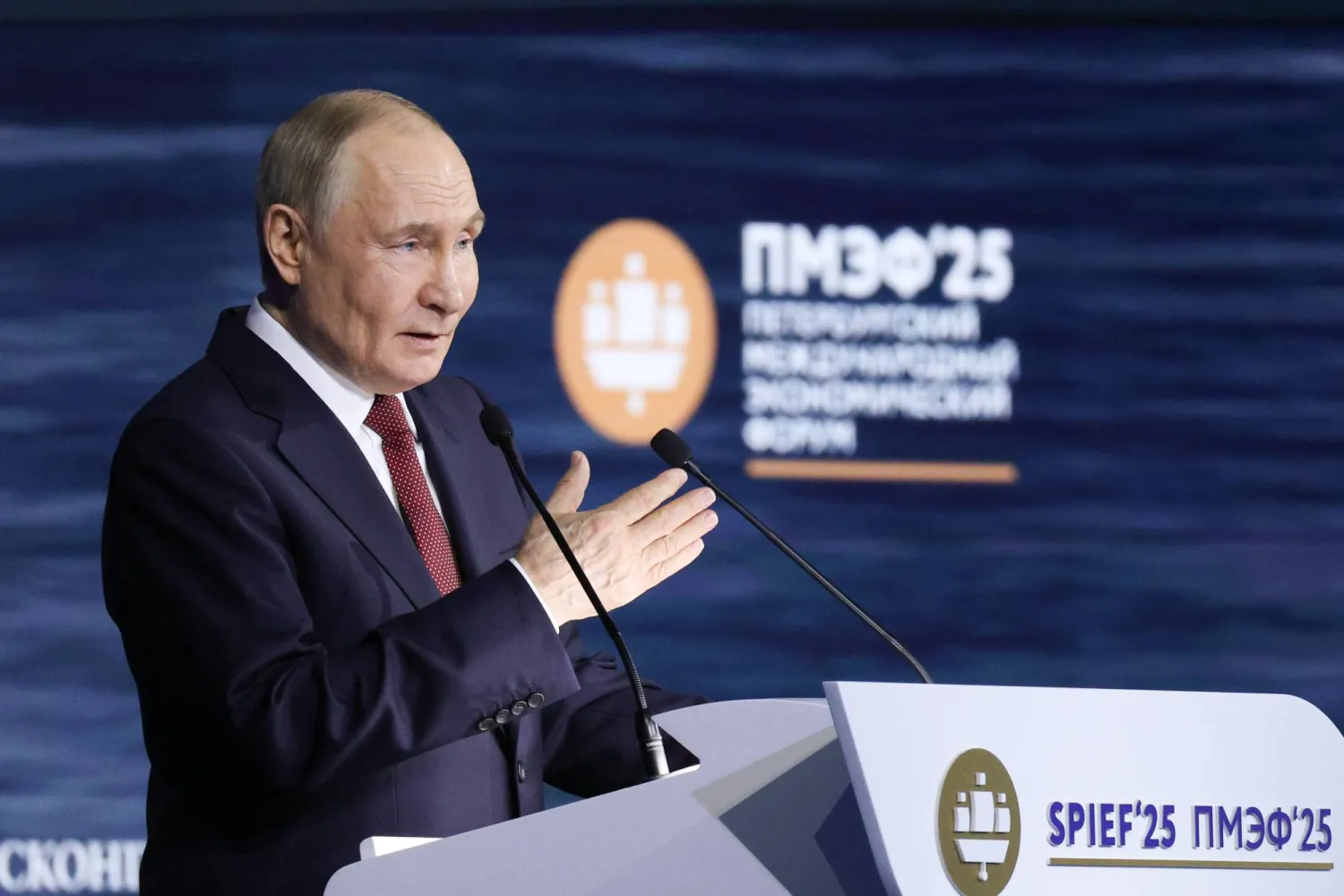
Indian Prime Minister Narendra Modi addresses the media before the budget session of Parliament at Parliament House in New Delhi, India, 29 January 2026. (EPA)
TT

India’s Modi Lauds Interim Trade Pact After US Tariff Rollback

Indian Prime Minister Narendra Modi addresses the media before the budget session of Parliament at Parliament House in New Delhi, India, 29 January 2026. (EPA)

Indian Prime Minister Narendra Modi on Saturday hailed an interim trade agreement with the United States, saying it would bolster global growth and deepen economic ties between the two countries.

The pact cuts US "reciprocal" duties on Indian products to 18 percent from 25 percent, and commits India to large purchases of US energy and industrial goods.

US President Donald Trump, while announcing the deal Tuesday, had said Modi promised to stop buying Russian oil over the war in Ukraine.

The deal eases months of tensions over India's oil purchases -- which Washington says fund a conflict it is trying to end -- and restores the close ties between Trump and the man he describes as "one of my greatest friends."

"Great news for India and USA!" Modi said on X on Saturday, praising US President Donald Trump's "personal commitment" to strengthening bilateral ties.

The agreement, he said, reflected "the growing depth, trust and dynamism" of their partnership.

Modi's remarks came hours after Trump issued an executive order scrapping an additional 25 percent levy imposed over New Delhi's purchases of Russian oil, in a step to implement the trade deal announced this week.

Modi, who has faced criticism at home about opening access of Indian agricultural markets to the United States and terms on oil imports, did not mention Russian oil in his statement.

"This framework will also strengthen resilient and trusted supply chains and contribute to global growth," he said.

It would also create fresh opportunities for Indian farmers, entrepreneurs and fishermen under the "Make in India" initiative.

In a separate statement, Commerce Minister Piyush Goyal said the pact would "open a $30 trillion market for Indian exporters".

Goyal also said the deal protects India's sensitive agricultural and dairy products, including maize, wheat, rice, soya, poultry and milk.

Other terms of the agreement include the removal of tariffs on certain aircraft and parts, according to a separate joint statement released Friday by the White House.

The statement added that India intends to purchase $500 billion of US energy products, aircraft and parts, precious metals, tech products and coking coal over the next five years.

The shift marks a significant reduction in US tariffs on Indian products, down from a rate of 50 percent late last year.

Washington and New Delhi are expected to sign a formal trade deal in March.


Gold Bounces Back on Softer Dollar, US-Iran Concerns; Silver Rebounds

Gold and silver bars are stacked in the safe deposit boxes room of the Pro Aurum gold house in Munich, Germany, January 10, 2025. REUTERS/Angelika Warmuth
TT

Gold Bounces Back on Softer Dollar, US-Iran Concerns; Silver Rebounds

Gold and silver bars are stacked in the safe deposit boxes room of the Pro Aurum gold house in Munich, Germany, January 10, 2025. REUTERS/Angelika Warmuth

Gold rebounded on Friday and was set for a weekly gain, helped by bargain hunting, a slightly weaker dollar and lingering concerns over US-Iran talks in Oman, while silver recovered from a 1-1/2-month low.

Spot gold rose 3.1% to $4,916.98 per ounce by 09:31 a.m. ET (1431 GMT), recouping losses posted during a volatile Asia session that followed a fall of 3.9% on Thursday. Bullion was headed for a weekly gain of about 1.3%.

US gold futures for April delivery gained 1% to $4,939.70 per ounce.

The US dollar index fell 0.3%, making greenback-priced bullion cheaper for the overseas buyers.

"The gold market is seeing perceived bargain hunting from bullish traders," said Jim Wyckoff, senior analyst at Kitco Metals.

Iran and the US started high-stakes negotiations via Omani mediation on Friday to try to overcome sharp differences over Tehran's nuclear program.

Wyckoff said gold's rebound lacks momentum and the metal is unlikely to break records without a major geopolitical trigger.

Gold, a traditional safe haven, does well in times of geopolitical and economic uncertainty.

Spot silver rose 5.3% to $74.98 an ounce after dipping below $65 earlier, but was still headed for its biggest weekly drop since 2011, down over 10.6%, following steep losses last week as well.

"What we're seeing in silver is huge speculation on the long side," said Wyckoff, adding that after years in a boom cycle, gold and silver now appear to be entering a typical commodity bust phase.

CME Group raised margin requirements for gold and silver futures for a third time in two weeks on Thursday to curb risks from heightened market volatility.

Spot platinum added 3.2% to $2,052 per ounce, while palladium gained 4.9% to $1,695.18. Both were down for the week.


Europe, Türkiye Agree to Work Toward Updating Customs Union

European Union (R) and Turkish flags fly at the business and financial district of Levent in Istanbul, Türkiye September 4, 2017. REUTERS/Osman Orsal
TT

Europe, Türkiye Agree to Work Toward Updating Customs Union

European Union (R) and Turkish flags fly at the business and financial district of Levent in Istanbul, Türkiye September 4, 2017. REUTERS/Osman Orsal

The European enlargement chief and the Turkish foreign minister said on Friday they had agreed to continue work toward modernizing the EU-Türkiye customs union and to improve its implementation, Reuters reported.

European Commissioner for Enlargement Marta Kos met Turkish Foreign Minister Hakan Fidan in the capital Ankara on Friday.

"They shared a willingness to work for paving the way for the modernization of the Customs Union and to achieve its full potential in order to support competitiveness, and economic security and resilience for both sides," they said in a joint statement afterward.

The sides also welcomed the gradual resumption of European Investment Bank (EIB) operations in Türkiye and said they intended to support projects across the country and neighbouring regions in cooperation with the bank.
