


US Republicans Grill University Leaders in Latest House Antisemitism Hearing

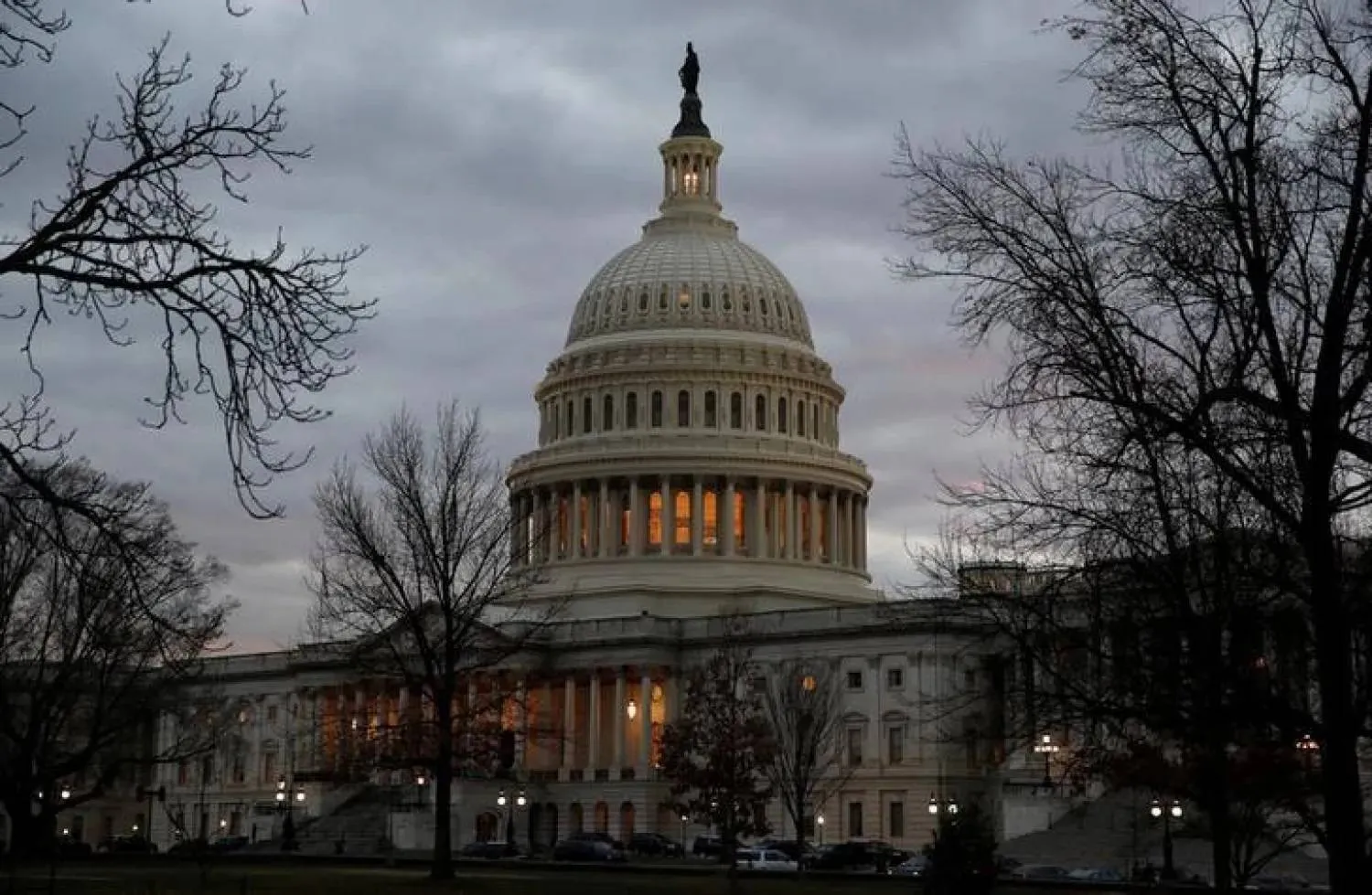
The US Capitol building is lit at dusk (Reuters)
TT

US Republicans Grill University Leaders in Latest House Antisemitism Hearing

The US Capitol building is lit at dusk (Reuters)

The leaders of three US universities testified before a House of Representatives panel on Tuesday about what they have done to combat antisemitism on campus, saying they were committed to stamping out hatred while protecting academic freedom.

At Tuesday's three-hour hearing, Georgetown University interim President Robert Groves, City University of New York Chancellor Felix Matos Rodriguez, and University of California, Berkeley Chancellor Richard Lyons came under sharp fire from Republicans.

Many of them echoed President Donald Trump's recent attacks on universities, which he has described as "infested with radicalism," and questioned whether the presidents were doing enough to protect Jewish students and faculty.

"The genesis of this antisemitism, this hatred that we're seeing across our country, is coming from our universities," said Representative Burgess Owens, a Utah Republican.

It was the latest in a series of hearings about antisemitism on campus in which university leaders testified before the House Committee on Education and the Workforce, which is tasked with higher education oversight.

Democrats on the panel used the session to question the Trump administration's gutting of the Department of Education's Office for Civil Rights, which probes incidents of antisemitism and other forms of discrimination. That has led to a backlog in investigations at a time when Republicans say universities are not doing enough to combat antisemitism.

The US Supreme Court on Monday cleared the way for the administration to resume dismantling the entire department, part of Trump's bid to shrink the federal role in education and give more control to the states.

Representative Mark Takano, a California Democrat, called the hearing a "kangaroo court."

"This scorched earth warfare against higher education will endanger academic freedom, innovative research and international cooperation for generations to come," Takano said, referring to the administration's efforts to cut off funding to some schools, including Harvard and Columbia, and impose other sanctions.

University leaders have come under fire from both pro-Israel and pro-Palestinian communities for their handling of protests that broke out after the 2023 attack on Israel by the Hamas group and conflict that emerged from it. On some campuses, clashes erupted between pro-Palestinian and pro-Israel demonstrators, spawning antisemitic and Islamophobic rhetoric and assaults in some cases.

During the hearing, the university leaders were repeatedly asked about their responses to antisemitic actions by faculty or affiliated scholars.

Representative Mary Miller, an Illinois Republican, asked Berkeley's Lyons about a February event in which speakers "repeatedly denied that Israeli women were gang-raped by Hamas terrorists on October 7, 2023, and argued that Israel was weaponizing feminism."

Lyons said the online event in question was organized by a faculty member but the comments that Miller cited did not come from the Berkeley faculty member. He said the school anticipated that some of the ideas discussed at the event would prove controversial.

"I did not prevent it from happening because I felt that keeping the marketplace for ideas open was really important in this instance," he said.

Previous hearings held by the panel have led to significant consequences for university presidents.

In December 2023, Representative Elise Stefanik, a New York Republican, raised her own political profile by grilling the presidents of Harvard, University of Pennsylvania and Massachusetts Institute of Technology.

She asked them whether "calling for the genocide of Jews" would violate their schools' codes of conduct related to bullying and harassment. Each president declined to give a simple "yes" or "no" answer, noting that a wide range of hateful speech is protected under the US Constitution's First Amendment and under university policies.

Their testimony, which many viewed as insensitive and detached, triggered an outcry. More than 70 US lawmakers later signed a letter demanding that the governing boards of the three universities remove the presidents. Soon afterwards, Harvard's Claudine Gay and Penn's Liz Magill resigned.

Columbia President Minouche Shafik resigned in August, following her April testimony before the committee.


Dutch Authorities Seek 2 Suspects in Blast Outside Amsterdam Jewish School

Policemen stand at the scene following an overnight explosion at a Jewish school on Zeelandstraat in the Buitenveldert district of Amsterdam, the Netherlands, 14 March 2026. EPA/MICHEL VAN BERGEN
TT

Dutch Authorities Seek 2 Suspects in Blast Outside Amsterdam Jewish School

Policemen stand at the scene following an overnight explosion at a Jewish school on Zeelandstraat in the Buitenveldert district of Amsterdam, the Netherlands, 14 March 2026. EPA/MICHEL VAN BERGEN

Dutch authorities were hunting Saturday for two people suspected of setting off an explosion outside a Jewish school in Amsterdam. The mayor denounced the attack as a cowardly act of aggression against the city's Jewish community.

A City Hall statement said the overnight blast against the outer wall of the school in the Dutch capital’s Buitenveldert district caused only limited damage.

According to The Associated Press, a police statement said investigators established that the two suspects arrived on a motor scooter. One placed an object against the wall and then ran back to the scooter, with the detonation following as they sped away.

Mayor Femke Halsema said that Amsterdam’s Jewish residents feel “fear and anger” and are increasingly being targeted by antisemitism.

"That is unacceptable. A school must be a place where children can learn safely.

Amsterdam must be a place where Jews can live safely," she said.

Security around Jewish schools and other sites was reinforced after an explosion near a synagogue in Liege, Belgium, and a blast that caused a small fire at the entrance of a synagogue in the Dutch port city of Rotterdam on Friday.

“Two nights in a row, a cowardly attack with an explosive at a Jewish building. First in Rotterdam, now in Amsterdam," the Dutch justice and security minister, David van Weel, posted on X.

“The safety of Jewish institutions has our full attention. An investigation into the perpetrators is underway.”


Trump Urges Other Nations to Send Ships to Secure Hormuz

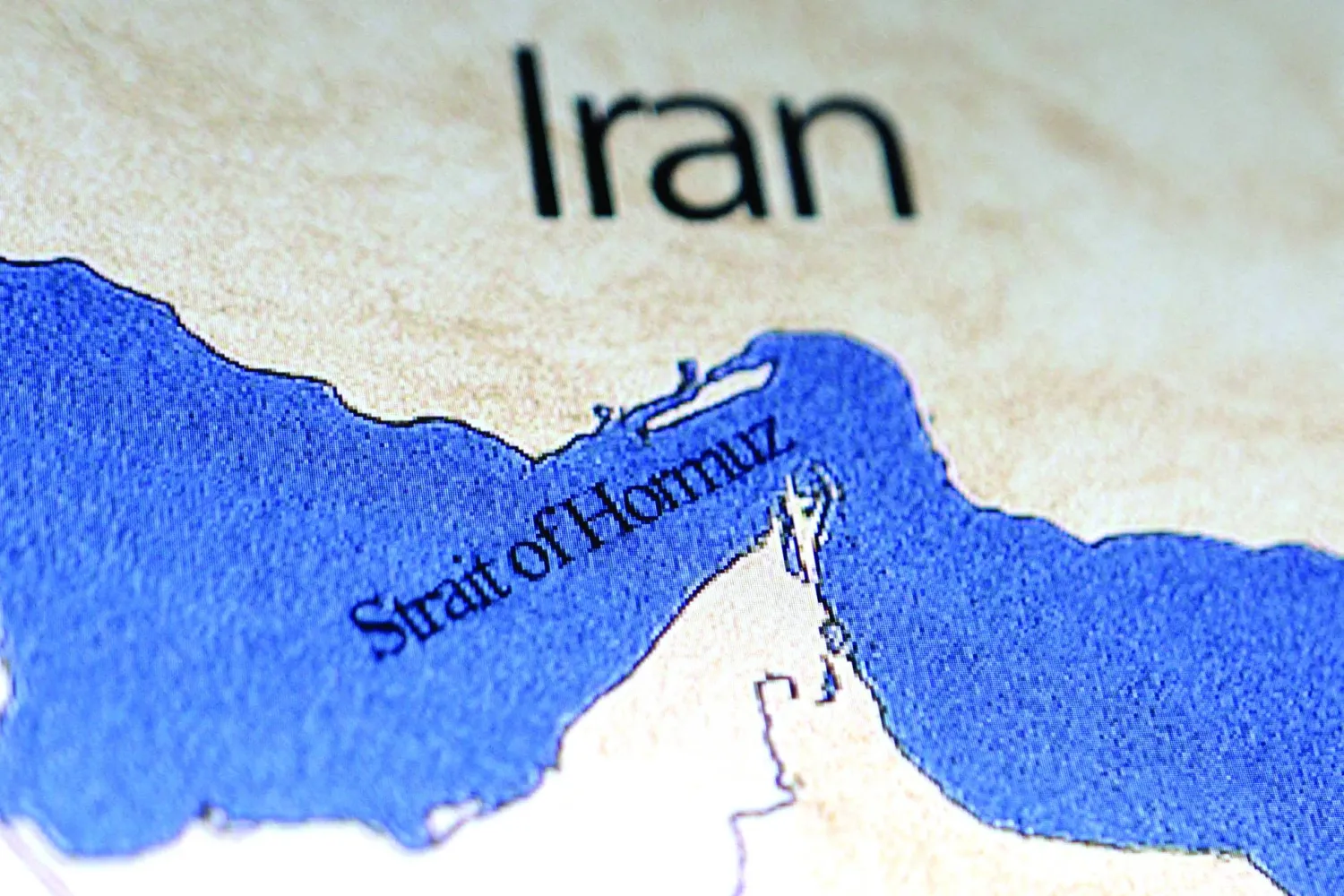
FILE PHOTO: A map showing the Strait of Hormuz and Iran is seen in this illustration taken June 22, 2025. REUTERS/Dado Ruvic/Illustration/File Photo
TT

Trump Urges Other Nations to Send Ships to Secure Hormuz

FILE PHOTO: A map showing the Strait of Hormuz and Iran is seen in this illustration taken June 22, 2025. REUTERS/Dado Ruvic/Illustration/File Photo

US President Donald Trump on Saturday urged other nations to send ships to help secure the Strait of Hormuz, the critical chokepoint for global oil supplies disrupted by the Mideast war.

Trump, who has said the United States will soon start escorting tankers through the strait, posted on Truth Social that "Many countries, especially those who are affected by Iran's attempted closure of the Hormuz Strait, will be sending War Ships, in conjunction with the United States of America, to keep the Strait open and safe."

The US president added: "Hopefully China, France, Japan, South Korea, the UK, and others, that are affected by this artificial constraint, will send Ships to the area."

Iranian strikes have all but halted maritime traffic in the strait, through which a fifth of global crude oil and liquefied natural gas normally pass. It is just 54 kilometers (34 miles) wide at its narrowest point.

With oil prices spiking, Trump was asked Friday when the US Navy would begin escorting tankers through the Strait of Hormuz. "It'll happen soon, very soon," he said.

In his post on Saturday, Trump asserted that Iran's military capability had been eliminated but he conceded that it was still able to attack the strait.

"We have already destroyed 100% of Iran's Military capability, but it's easy for them to send a drone or two, drop a mine, or deliver a close range missile somewhere along, or in, this Waterway, no matter how badly defeated they are," he wrote.

As he urged nations to send ships to the strait, he added that "the United States will be bombing the hell out of the shoreline, and continually shooting Iranian Boats and Ships out of the water. One way or the other, we will soon get the Hormuz Strait OPEN, SAFE, and FREE!"


Israeli Defense Minister Says War with Iran Entering 'Decisive Phase'

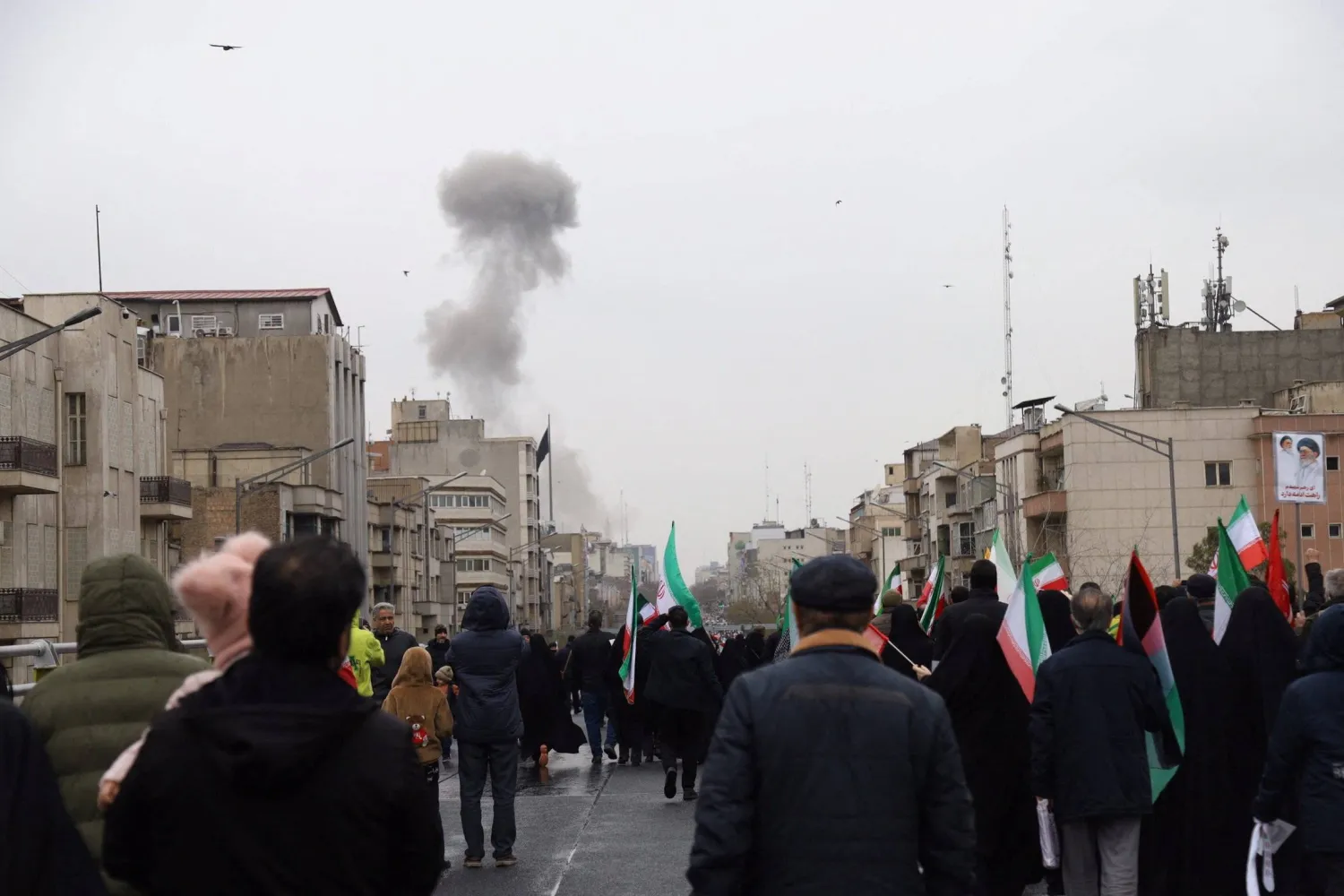
Smoke rises following an explosion during a protest marking the annual al-Quds Day (Jerusalem Day) on the last Friday of the holy month of Ramadan, amid the US-Israeli conflict with Iran, in Tehran, Iran, March 13, 2026. Elahe Asiabai/Fars News/WANA (West Asia News Agency) via REUTERS
TT

Israeli Defense Minister Says War with Iran Entering 'Decisive Phase'

Smoke rises following an explosion during a protest marking the annual al-Quds Day (Jerusalem Day) on the last Friday of the holy month of Ramadan, amid the US-Israeli conflict with Iran, in Tehran, Iran, March 13, 2026. Elahe Asiabai/Fars News/WANA (West Asia News Agency) via REUTERS

Israel said the war against Iran was entering its "decisive phase" on Saturday, as explosions rocked cities across the Middle East, with strikes on the US embassy in Baghdad and a major Emirati energy facility.

Washington's embassy in Iraq was hit by a drone, security sources told AFP, the second time it has been targeted since February 28, when the United States and Israel attacked Iran and plunged the Gulf into a conflict that has sent shockwaves through the global economy.

Millions have been displaced by waves of drone, missile and aerial bombing, while more than 1,200 people have reportedly been killed in Iran, with little sign of the conflict slowing as it entered its third week.

Oil prices have surged by 40 percent as Iran chokes off the vital Strait of Hormuz with threats to shipping and strikes on Gulf energy facilities.

Clouds of black smoke rose Saturday over Fujairah, home to a major Emirati oil storage and export terminal, shortly after Iran's military warned UAE civilians to avoid port areas.

President Donald Trump said Friday that US forces had struck Iran's Kharg Island, its biggest oil export hub, and "obliterated every MILITARY target", though sparing its energy facilities.

Iranian media confirmed the island's oil facilities were unaffected. Iran had threatened US-linked oil and energy firms would be "turned into a pile of ashes" if they were hit.

The strike could be a "turning point" with both sides escalating in a bid to force a surrender, said analyst Vali Nasr of John Hopkins University in a social media post. "The end will likely not be Iranian backing off but inflaming the Gulf."

Trump said the US Navy would start escorting tankers through the Strait of Hormuz "very soon", but governments around the world fear a prolonged blow to their economies.

Israel's Defense Minister Israel Katz said the strikes on Kharg showed the war was entering a "decisive phase", though he cautioned it would "continue as long as necessary".

Yet, despite facing superior US and Israeli firepower, Iran appears determined to fight on.

Blasts were heard by AFP journalists over Jerusalem on Saturday after the army detected missiles fired from Iran.

Iran has launched missile and drone attacks against at least 10 of its neighbors.

The Palestinian Islamist movement Hamas urged Iran to refrain from targeting Gulf neighbors.

Qatar said it intercepted two missiles over the capital's downtown area on Saturday and evacuated key areas after blasts were heard by AFP journalists in Doha.

Strikes continue in Iran, with heavy blasts shaking Tehran late Friday and local media reporting strikes in several provinces through Saturday.

Israel's army warned people in an industrial zone of Tabriz in northern Iran to evacuate, signalling an imminent attack.

Iran's health ministry says more than 1,200 people have been killed by US and Israeli attacks, numbers that could not be independently verified.

Up to 3.2 million people have been displaced inside Iran, according to the UN refugee agency.

Trump described Iran as "totally defeated" and in search of a deal he was unwilling to consider.

More than 15,000 targets in Iran have been hit by the US and Israel in two weeks, the Pentagon said.

A report this week said the first six days alone cost the US $11.3 billion and it has lost 13 military personnel.

US media raised the possibility of a ground invasion, with the New York Times and Wall Street Journal reporting the Pentagon had dispatched the Japan-based amphibious assault ship USS Tripoli to the region with some 2,500 Marines.

Iran's rulers appear intent on showing they will survive the war and maintain control, despite their supreme leader Ali Khamenei being killed on day one.

Khamenei's son Mojtaba Khamenei was named the new supreme leader, but has been absent from public view and is reportedly wounded.

Reza Pahlavi, the US-based son of Iran's last shah, said on social media Saturday that he was ready to lead a transition "as soon as the Islamic Republic falls".

But Iran's Revolutionary Guards have threatened a heavy crackdown on any anti-government protests. Thousands were killed in mass demonstrations in January, and a near-total internet blackout has been imposed since since the war began.