


Egypt: ‘Volatile Borders’ Continue to Pose Terror Threats

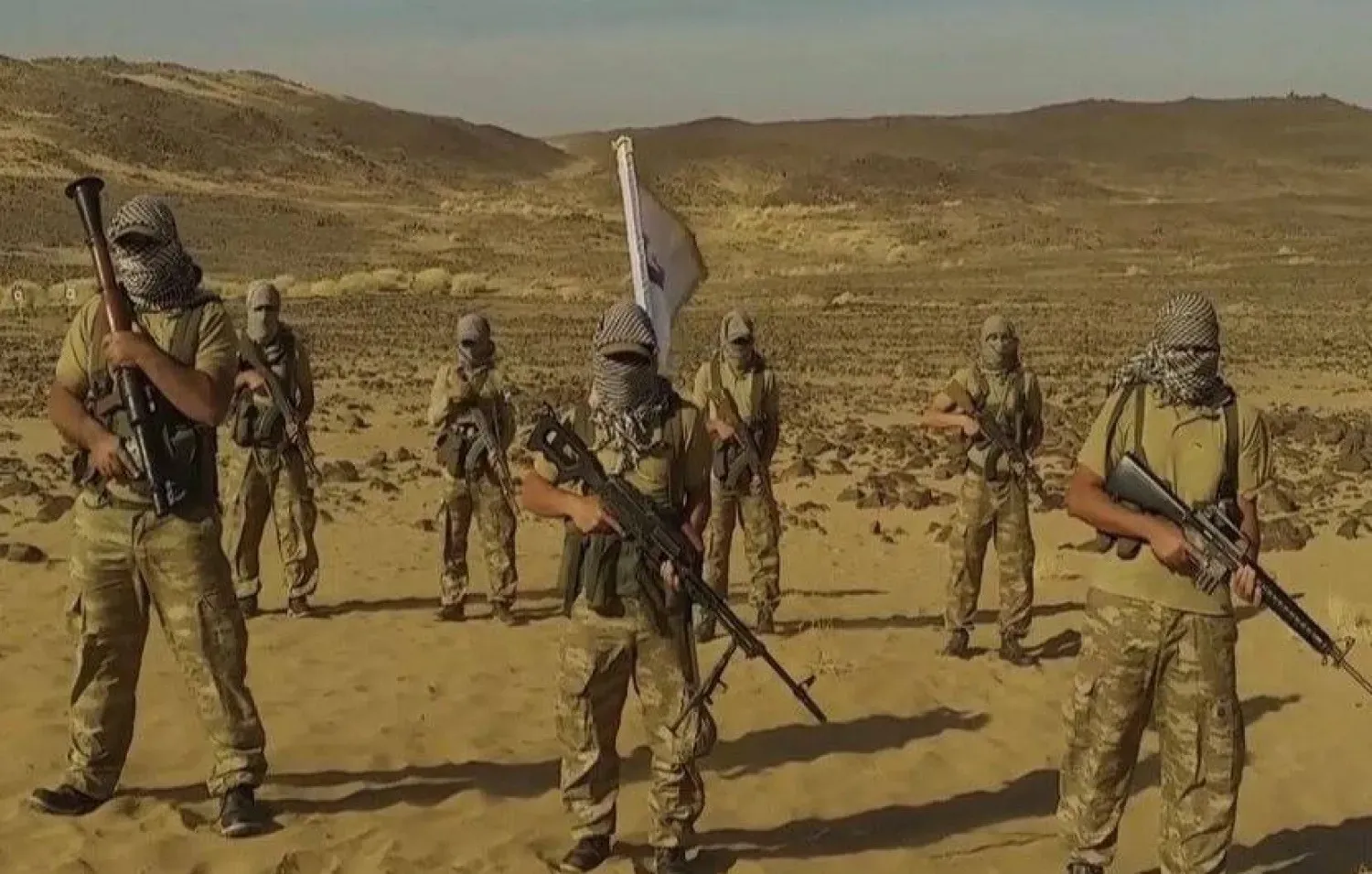
A still image from a circulated video in which the Hasm movement announces its intention to resume operations in Egypt
TT

Egypt: ‘Volatile Borders’ Continue to Pose Terror Threats

A still image from a circulated video in which the Hasm movement announces its intention to resume operations in Egypt

A preemptive security operation recently carried out by Egypt’s Interior Ministry has highlighted growing concerns over the country’s volatile borders, which security sources say are being exploited by armed groups to stage attempted “hostile operations” inside Egypt.

The ministry announced on Sunday that it had foiled a planned terrorist attack by the outlawed Hasm movement, an armed wing of the banned Muslim Brotherhood.

According to the statement, one of the group’s operatives, trained in advanced military tactics abroad, attempted to infiltrate Egypt illegally to carry out sabotage activities.

A security source revealed to Asharq Al-Awsat that the suspect, who was killed in a raid along with other militants, had previously trained in Libya and had also resided in Sudan. “He crossed into Egypt illegally before planning the attack,” the source said.

The Interior Ministry said it had received intelligence indicating that Hasm’s leadership, currently operating from Türkiye, was preparing to revive the group’s militant activities, targeting economic and security installations across the country.

This information follows a video posted online two weeks ago, allegedly by Hasm, in which masked gunmen are shown conducting live-fire drills in a desert environment, accompanied by a written statement threatening new attacks.

Security officials say parts of the video were compiled from old footage, but some clips showed recent training sessions in Libya, prompting intensified surveillance and tracking efforts.

The ministry stated that the raid on the militant hideout was met with heavy gunfire from the suspects, leading to a firefight in which the terrorists were killed. Tragically, a civilian passerby was also killed, and a police officer was injured while attempting to rescue the wounded man.

Former Interior Ministry spokesperson Gen. Hany Abdel Latif praised the operation as a “significant success,” noting Egypt’s sustained security dominance. However, he cautioned that “this does not mean terrorism has been eradicated. It remains a threat, both here and globally.”

Abdel Latif pointed to Egypt’s “volatile borders”, particularly with Libya, Sudan, and Gaza, as persistent vulnerabilities. “These frontiers provide opportunities for extremists to infiltrate and plot attacks,” he said.

He warned that the Hasm movement - despite being weakened – continues to have active operatives and ideological remnants capable of regrouping. “We must remain vigilant. The threat is ongoing, and no warning should be underestimated,” he underlined.


Israeli Strikes Kill Five People in Gaza

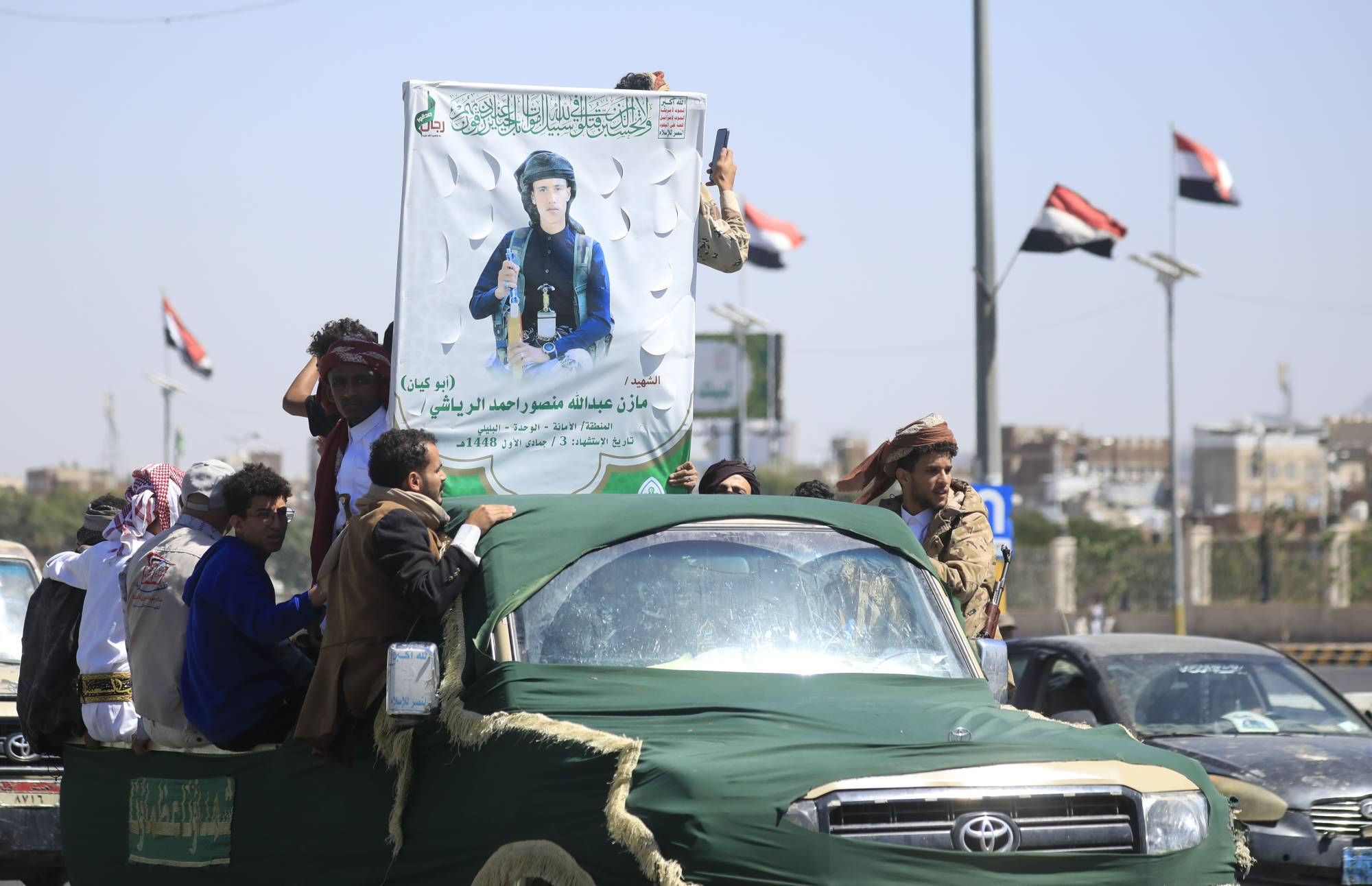
Mourners carry a body during the funeral of Palestinians who were killed in an Israeli strike, according to medics, in Gaza City, May 17, 2026. REUTERS/Dawoud Abu Alkas
TT

Israeli Strikes Kill Five People in Gaza

Mourners carry a body during the funeral of Palestinians who were killed in an Israeli strike, according to medics, in Gaza City, May 17, 2026. REUTERS/Dawoud Abu Alkas

Israeli strikes killed at least five Palestinians in the Gaza Strip on Sunday, health officials said, as ceasefire efforts meant to end fighting between Israel and Hamas falter.

In the weeks since halting its joint bombing with the US in Iran, Israel has stepped up its attacks in Gaza, where Hamas has been tightening its grip, even as Israeli troops remain in control of more than half the territory.

Medics said an Israeli strike killed one Palestinian near a police ⁠post and another ⁠at a tent encampment in Khan Younis in the southern Gaza Strip. The Israeli military said it killed a militant who posed an immediate threat to forces in the area.

Separately, Gaza medics said another Israeli airstrike killed at least three people at a community kitchen near Al-Aqsa Hospital in Deir Al-Balah, in the central Gaza area. The Israeli military did not immediately ⁠comment on that incident.

On Saturday, the Israeli military said that Izz al-Din al-Haddad, the head of Hamas' armed wing in Gaza, was killed in what it described as a precise strike on Gaza City on Friday.

Hamas confirmed Haddad's death but stopped short of threatening revenge.

The Israeli military said it had also killed Bahaa Baroud, a Hamas Operations Headquarters commander, in an airstrike on Saturday, accusing him of planning multiple imminent attacks against troops and Israeli civilians in recent weeks.

According to Reuters, the military said Baroud posed an immediate threat and was targeted in a precise strike, adding ⁠that measures ⁠were taken beforehand to reduce civilian harm, including the use of precision munitions and aerial surveillance.

Gaza health officials said Baroud, along with another person, was killed in the airstrike, which targeted their car in Gaza City.

Israel and Hamas remain deadlocked in indirect talks to advance US President Donald Trump's post-war plan for Gaza that is meant to end more than two years of fighting with Hamas disarming as Israeli troops withdraw from Gaza.


Israel Strikes Lebanon as Hezbollah Calls Talks 'Dead End'

Smoke rises from the site of an Israeli airstrike that targeted the southern Lebanese village of Choukine on May 17, 2026. Photo by Abbas FAKIH / AFP
TT

Israel Strikes Lebanon as Hezbollah Calls Talks 'Dead End'

Smoke rises from the site of an Israeli airstrike that targeted the southern Lebanese village of Choukine on May 17, 2026. Photo by Abbas FAKIH / AFP

Israel struck eastern and southern Lebanon on Sunday, state media reported, despite a fragile ceasefire as Hezbollah called US-brokered talks between the two countries a "dead end".

Two Israeli strikes hit the town of Sohmor in eastern Lebanon's Bekaa valley, the state-run National News Agency (NNA) said, adding that others took place across southern Lebanon.

The Israeli army later issued an evacuation warning to four villages near the southern coastal city of Sidon, dozens of kilometres from the border area, which were also subject to an evacuation warning on Saturday, AFP reported.

Israeli airstrikes hit three of the four villages following the warning, the NNA said.

Despite the ceasefire, Israel continues to strike widely in southern Lebanon and issues frequent evacuation warnings to towns and villages across the south.

Speaking at the start of a cabinet meeting on Sunday, Israeli Prime Minister Benjamin Netanyahu said Israel was "holding territory, clearing territory, protecting Israel's communities, but also fighting an enemy that is trying to outsmart us".

"We are facing the challenge of neutralizing FPV (First-Person view) drones," he said, as Hezbollah has increasingly made use of the drones to strike Israeli forces.

The latest exchanges of fire came after envoys from Israel and Lebanon held a third round of negotiations in Washington and agreed to extend the ceasefire, talks that Iran-backed Hezbollah has repeatedly denounced.

"The direct negotiations that the authorities in Lebanon have conducted with the Israeli enemy have... led them down a dead-end path that will result in nothing but one concession after another," Hezbollah lawmaker Hussein Hajj Hassan said on Sunday.

"Neither they nor anyone else will be able to carry out what the enemy wants, especially when it comes to the issue of disarming the resistance," he said, adding that authorities were creating "very big predicaments" for the country.

In a statement on Saturday, the group called the proposed establishment of a US-facilitated security track a fresh addition "to the series of free concessions" the Lebanese government "offers the enemy".

On Saturday the group also said it had struck a military target in northern Israel, having earlier announced several operations against Israeli forces in southern Lebanon.

Israel sent ground forces into southern Lebanon during the latest war and they continue to occupy territory near the border between the two countries.

Israeli attacks since the start of the war have killed more than 2,900 people in Lebanon, including more than 400 since the truce began on April 17, according to Lebanese authorities.


Palestinian President's Son Elected to Top Fatah Leadership Body

Palestinian President Mahmoud Abbas with his son Yasser in Ramallah, West Bank, on May 28, 2018 (Reuters file photo)
TT

Palestinian President's Son Elected to Top Fatah Leadership Body

Palestinian President Mahmoud Abbas with his son Yasser in Ramallah, West Bank, on May 28, 2018 (Reuters file photo)

The son of Palestinian President Mahmoud Abbas won a seat on Fatah's top decision-making body on Sunday, as initial results emerged from the Palestinian movement's first congress in years.

Yasser Abbas, 64, a businessman who spends most of his time in Canada, secured a place on the central committee after being appointed around five years ago as his father's "special representative" - a role that marked his gradual emergence on the political scene.

Jailed Fatah leader Marwan Barghouti topped the preliminary results, retaining his seat on the committee with the highest number of votes, according to figures seen by AFP.

Jibril Rajoub was reelected as the secretary-general of the committee, retaining the seat he has held since 2017.

Palestinian vice president Hussein Al-Sheikh, Fatah deputy leader Mahmoud Al-Aloul and ex-Palestinian intelligence chief Tawfiq Tirawi also held their seats on the body.

Among the newcomers was Zakaria Zubeidi, 50, a former commander of the Al-Aqsa Martyrs Brigades -- Fatah's armed wing in the Jenin refugee camp -- who was freed from Israeli prison last year under a prisoner exchange deal with Hamas.

Two women also won seats, including Ramallah governor Laila Ghannam.

The three-day congress, held simultaneously across Ramallah, Gaza, Cairo and Beirut, drew 2,507 voters -- a turnout of 94.64 percent, organisers said.

Fifty-nine candidates competed for 18 seats on the central committee, while 450 vied for 80 seats on the revolutionary council, the party's parliament.

Counting for the council was still under way.

The congress opened Thursday, with Abbas being reelected as head of the movement.
In his opening address, he vowed to pursue reforms and hold long-delayed presidential and parliamentary elections.
