Saudi Industry Ministry: Record 144% Surge in New Mining Exploitation Licenses in H1 2025 

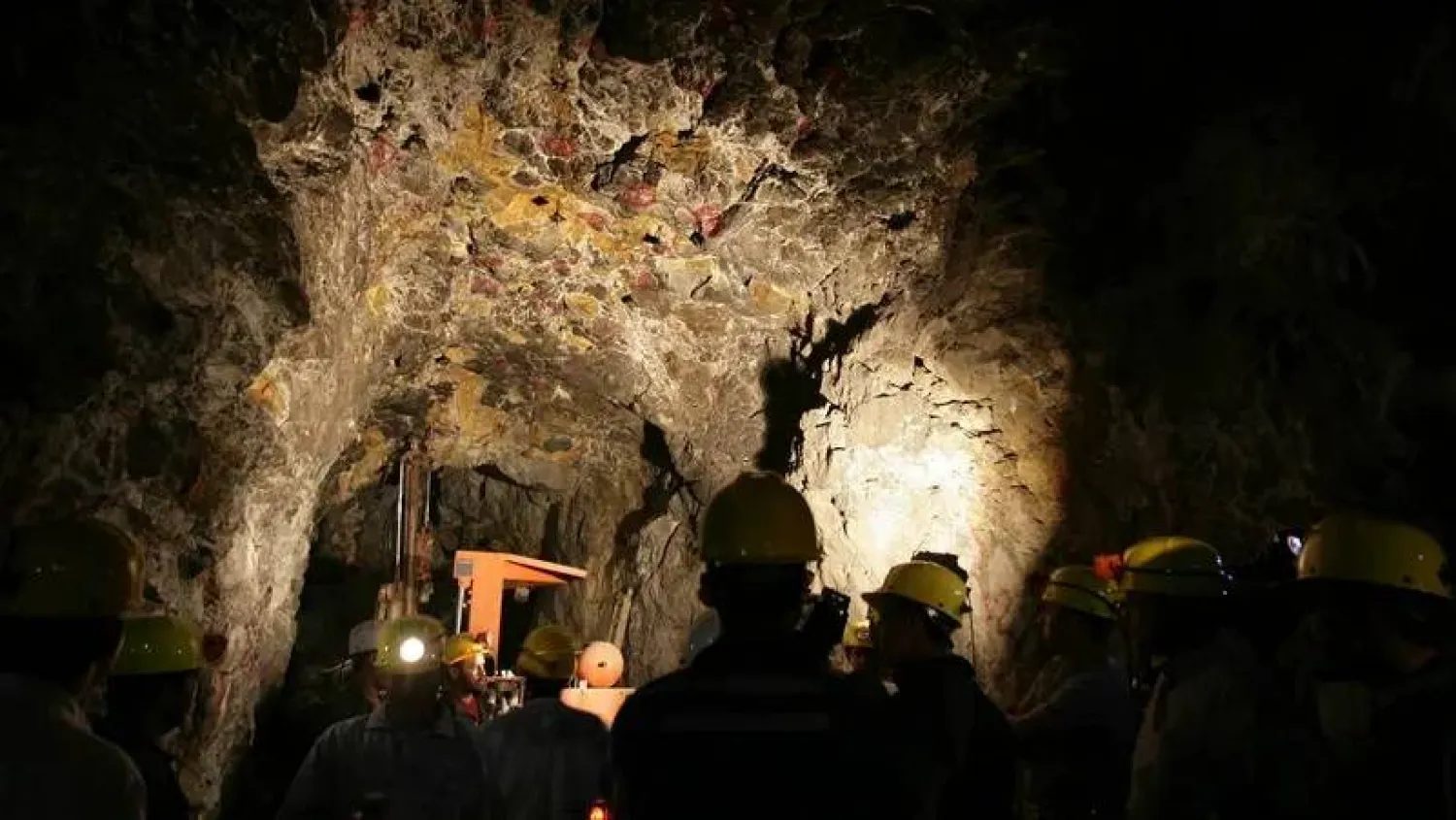
Miners works in the Al Amar gold mine, 200km (124 miles) southwest of Riyadh, May 28, 2008. (Reuters)
TT

Saudi Industry Ministry: Record 144% Surge in New Mining Exploitation Licenses in H1 2025 

Miners works in the Al Amar gold mine, 200km (124 miles) southwest of Riyadh, May 28, 2008. (Reuters)

The Ministry of Industry and Mineral Resources announced on Thursday a significant rise in new mining exploitation licenses during the first half of 2025, marking a 144% increase compared to the same period in 2024.

A total of 22 licenses were issued - up from just nine in the previous year - reflecting growing investor interest and the ministry's efforts to create a more attractive and competitive mining environment.

The jump is also aligned with the rapid development of the Saudi mining sector, which is undergoing as part of the country's broader push for economic diversification.

According to the ministry's spokesperson, Jarrah bin Mohammed Al-Jarrah, 23 companies were granted exploitation licenses during this period, 16 of them receiving a mining license for the very first time. Combined, these projects represent investments exceeding SAR134 million and cover an area of 47 square kilometers.

Annual production capacity from the newly licensed operations is estimated at 7.86 million tons of various mineral resources, including salt, clay, silica sand, low-grade iron ore, feldspar, and gypsum.

Currently, the Kingdom holds a total of 239 active mining exploitation and small-mine licenses. Of these, 32 fall under Category A, covering high-value minerals such as gold, copper, phosphate, and bauxite, while the remaining 207 are Category B licenses for a range of other minerals, including silica sand, gypsum, limestone, salt, and clay.

The ministry underlined its commitment to advancing the mining sector as a central pillar of Saudi Vision 2030.

With mineral wealth in the Kingdom estimated at over SAR9.4 trillion, the sector is being positioned as the third key industrial pillar, supporting national efforts to diversify sources of income and drive sustainable economic growth.


Indian Refiners Avoid Russian Oil in Push for US Trade Deal

An employee walks inside the premises of an oil refinery of Essar Oil in Vadinar in the western state of Gujarat, India, October 4, 2016. REUTERS/Amit Dave/File Photo
TT

Indian Refiners Avoid Russian Oil in Push for US Trade Deal

An employee walks inside the premises of an oil refinery of Essar Oil in Vadinar in the western state of Gujarat, India, October 4, 2016. REUTERS/Amit Dave/File Photo

Indian refiners are avoiding Russian oil purchases for delivery in April and are expected to stay away from such trades for longer, refining and trade sources said, a move that could help New Delhi seal a trade pact with Washington, according to Reuters.

The US and India moved closer to a trade pact on Friday, announcing a framework for a deal they hope to conclude by March that would lower tariffs and deepen economic cooperation.

Indian Oil, Bharat Petroleum and Reliance Industries are not accepting offers from traders for Russian oil loading in March and April, said a trader who approached the refiners.

These refiners, however, had already scheduled some deliveries of Russian oil in March, refining sources said. Most other refiners have stopped buying Russian crude.

A foreign ministry spokesperson said: “Diversifying our energy sourcing in keeping with objective market conditions and evolving international dynamics is at the core of our strategy” to ensure energy security for the world's most-populous nation.

Although a US-India statement on the trade framework did not mention Russian oil, President Donald Trump rescinded his 25% tariffs on Indian goods, imposed over Russian oil purchases, because, he said, New Delhi had “committed to stop directly or indirectly” importing Russian oil.

New Delhi has not announced plans to halt Russian oil imports.

India became the top buyer of discounted Russian seaborne crude after Russia invaded Ukraine in 2022, spurring a backlash from Western nations that had targeted Russia's energy sector with sanctions aimed at curtailing Moscow's revenue and making it harder to fund the war.

One regular Indian buyer is Russia-backed private refiner Nayara, which relies solely on Russian oil for its 400,000-barrel-per-day refinery. Sources said Nayara may be allowed to keep buying Russian oil because other crude sellers pulled back after the European Union sanctioned the refiner in July.

Nayara also does not plan to import Russian crude in April due to a month-long refinery maintenance shutdown, a source familiar with its operations said.

Nayara did not respond to an email seeking comment.

Indian refiners may change their plan and place orders for Russian oil only if advised by the government, sources said.

Trump's order said US officials would monitor and recommend reinstating the tariffs if India resumed oil procurement from Russia.

Sources said last month that India was preparing to cut Russian oil imports below 1 million bpd by March, with volumes eventually falling to 500,000–600,000 bpd, compared with an average 1.7 million bpd last year. India's Russian oil imports topped 2 million bpd in mid-2025.

The intake of Russian oil by India, the world's third-biggest oil consumer and importer, declined to its lowest level in two years in December, data from trade and industry sources show.


IMF and Arab Monetary Fund Sign MoU to Enhance Cooperation

The MoU was signed by IMF Managing Director Dr. Kristalina Georgieva and AMF Director General Dr. Fahad Alturki - SPA
TT

IMF and Arab Monetary Fund Sign MoU to Enhance Cooperation

The MoU was signed by IMF Managing Director Dr. Kristalina Georgieva and AMF Director General Dr. Fahad Alturki - SPA

The International Monetary Fund (IMF) and the Arab Monetary Fund (AMF) signed a memorandum of understanding (MoU) on the sidelines of the AlUla Conference on Emerging Market Economies (EME) to enhance cooperation between the two institutions.

The MoU was signed by IMF Managing Director Dr. Kristalina Georgieva and AMF Director General Dr. Fahad Alturki, SPA reported.

The agreement aims to strengthen coordination in economic and financial policy areas, including surveillance and lending activities, data and analytical exchange, capacity building, and the provision of technical assistance, in support of regional financial and economic stability.

Both sides affirmed that the MoU represents an important step toward deepening their strategic partnership and strengthening the regional financial safety net, serving member countries and enhancing their ability to address economic challenges.


Saudi Chambers Federation Announces First Saudi-Kuwaiti Business Council

File photo of the Saudi flag/AAWSAT
TT

Saudi Chambers Federation Announces First Saudi-Kuwaiti Business Council

File photo of the Saudi flag/AAWSAT

The Federation of Saudi Chambers announced the formation of the first joint Saudi-Kuwaiti Business Council for its inaugural term (1447–1451 AH) and the election of Salman bin Hassan Al-Oqayel as its chairman.

Al-Oqayel said the council’s formation marks a pivotal milestone in economic relations between Saudi Arabia and Kuwait, reflecting a practical approach to enabling the business sectors in both countries to capitalize on promising investment opportunities and strengthen bilateral trade and investment partnerships, SPA reported.

He noted that trade between Saudi Arabia and Kuwait reached approximately SAR9.5 billion by the end of November 2025, including SAR8 billion in Saudi exports and SAR1.5 billion in Kuwaiti imports.