

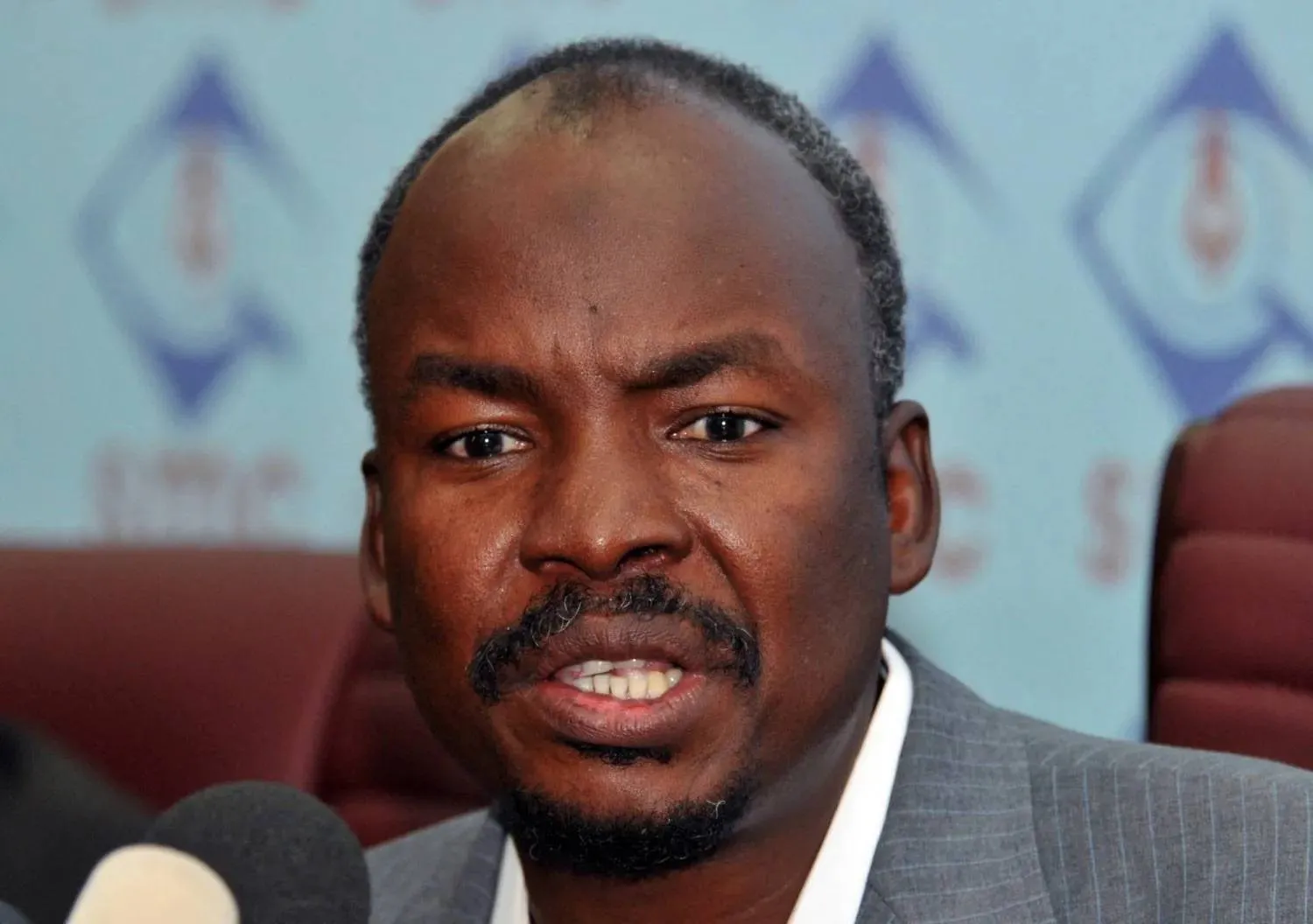

Islamist Leader in Sudan’s Former Ruling Party Eyes Power After War

Ahmed Haroun, chairman of the National Congress Party (NCP), which ruled during the presidency of ousted leader Omar al-Bashir. (Reuters)
TT

Islamist Leader in Sudan’s Former Ruling Party Eyes Power After War

Ahmed Haroun, chairman of the National Congress Party (NCP), which ruled during the presidency of ousted leader Omar al-Bashir. (Reuters)

A senior figure in Sudan’s dissolved ruling party has revealed that the country’s Islamist movement is preparing for a return to power once the ongoing conflict ends, even if it means supporting prolonged military rule in the interim.

The remarks, made by Ahmed Haroun, former head of the National Congress Party and one of four Sudanese figures wanted by the International Criminal Court, reflect growing confidence among Islamists following their military involvement in the war.

The war, now in its third year, pits Sudan’s army against the Rapid Support Forces (RSF) and has triggered massive displacement, famine, and ethnic violence. Despite the RSF holding strategic ground in Darfur and parts of southern Sudan, the army has recently gained momentum on multiple fronts.

Islamist factions claim credit for assisting in these advances, contributing fighters and logistical support.

According to military and government sources, the Islamist movement has been increasingly visible on the battlefield.

These networks, dismantled following the 2019 uprising that ousted Omar al-Bashir, have resurfaced amid the chaos of war.

A leaked party document reviewed by Reuters outlines the movement’s growing role, stating that between 2,000 and 3,000 Islamist fighters were mobilized in the conflict’s first year, with over 70,000 civilians trained for combat under the army’s call for general mobilization.

While military leadership has downplayed connections to political factions, army sources and Islamists alike acknowledge that coordination exists, particularly within elite units where Islamist-trained operatives are embedded. Islamist forces have reportedly reinforced dwindling army ranks, especially in key battles around the capital, Khartoum.

Ahmed Haroun, who escaped from prison at the onset of the conflict, proposed a governance model that preserves military control over national sovereignty and security, with a civilian prime minister emerging from future elections.

He insisted that Islamists will only return through elections, not via transitional arrangements, and argued that Sudan needs a tailored political model that accommodates military involvement due to ongoing security threats and foreign interference.

While denying the scale of Islamist involvement described in the leaked documents, Haroun admitted that supporting the army was part of a broader strategy in response to the national call for mobilization.

Military sources estimate that at least 5,000 fighters directly linked to the former ruling party are active, with many serving in specialized units or intelligence services.

Despite these developments, Haroun and other Islamist figures maintain that they do not wield authority over the army. Still, their growing influence on the battlefield and political landscape has sparked renewed concerns about the possible resurgence of Sudan’s old guard in the post-war order.



EU Condemns Israel's West Bank Control Measures

The Israeli settlement of Har Homa, seen from the West Bank city of Bethlehem, Tuesday, Dec. 17, 2024. (AP)
TT

EU Condemns Israel's West Bank Control Measures

The Israeli settlement of Har Homa, seen from the West Bank city of Bethlehem, Tuesday, Dec. 17, 2024. (AP)

The European Union on Monday condemned new Israeli measures to tighten control of the West Bank and pave the way for more settlements in the occupied Palestinian territory, AFP reported.

"The European Union condemns recent decisions by Israel's security cabinet to expand Israeli control in the West Bank. This move is another step in the wrong direction," EU spokesman Anouar El Anouni told journalists.


Atrocities in Sudan's El-Fasher Were 'Preventable Human Rights Catastrophe'

Sudanese displaced people who left El Fasher after its fall, sit in the shade in Tawila at the Rwanda camp reception point on December 17, 2025. (Photo by AFP)
TT

Atrocities in Sudan's El-Fasher Were 'Preventable Human Rights Catastrophe'

Sudanese displaced people who left El Fasher after its fall, sit in the shade in Tawila at the Rwanda camp reception point on December 17, 2025. (Photo by AFP)

The atrocities unleashed on El-Fasher in Sudan's Darfur region last October were a "preventable human rights catastrophe", the United Nations said Monday, warning they now risked being repeated in the neighbouring Kordofan region.


"My office sounded the alarm about the risk of mass atrocities in the besieged city of El-Fasher for more than a year ... but our warnings were ignored," UN rights chief Volker Turk told the Human Rights Council in Geneva.


He added that he was now "extremely concerned that these violations and abuses may be repeated in the Kordofan region".


Arab League Condemns Israel's Decisions to Alter Legal, Administrative Status of West Bank

A general view shows the opening session of the meeting of Arab foreign ministers at the Arab League Headquarters (Reuters)
TT

Arab League Condemns Israel's Decisions to Alter Legal, Administrative Status of West Bank

A general view shows the opening session of the meeting of Arab foreign ministers at the Arab League Headquarters (Reuters)

The General Secretariat of the Arab League strongly condemned decisions by Israeli occupation authorities to impose fundamental changes on the legal and administrative status of the occupied Palestinian territories, particularly in the West Bank, describing them as a dangerous escalation and a flagrant violation of international law, international legitimacy resolutions, and signed agreements, SPA reported.

In a statement, the Arab League said the measures include facilitating the confiscation of private Palestinian property and transferring planning and licensing authorities in the city of Hebron and the area surrounding the Ibrahimi Mosque to occupation authorities.

It warned of the serious repercussions of these actions on the rights of the Palestinian people and on Islamic and Christian holy sites.

The statement reaffirmed the Arab League’s firm support for the legitimate rights of the Palestinian people, foremost among them the establishment of their independent state on the June 4, 1967 borders, with East Jerusalem as its capital.