


Saudi Banking Sector Posts Highest Quarterly Profits in Its History

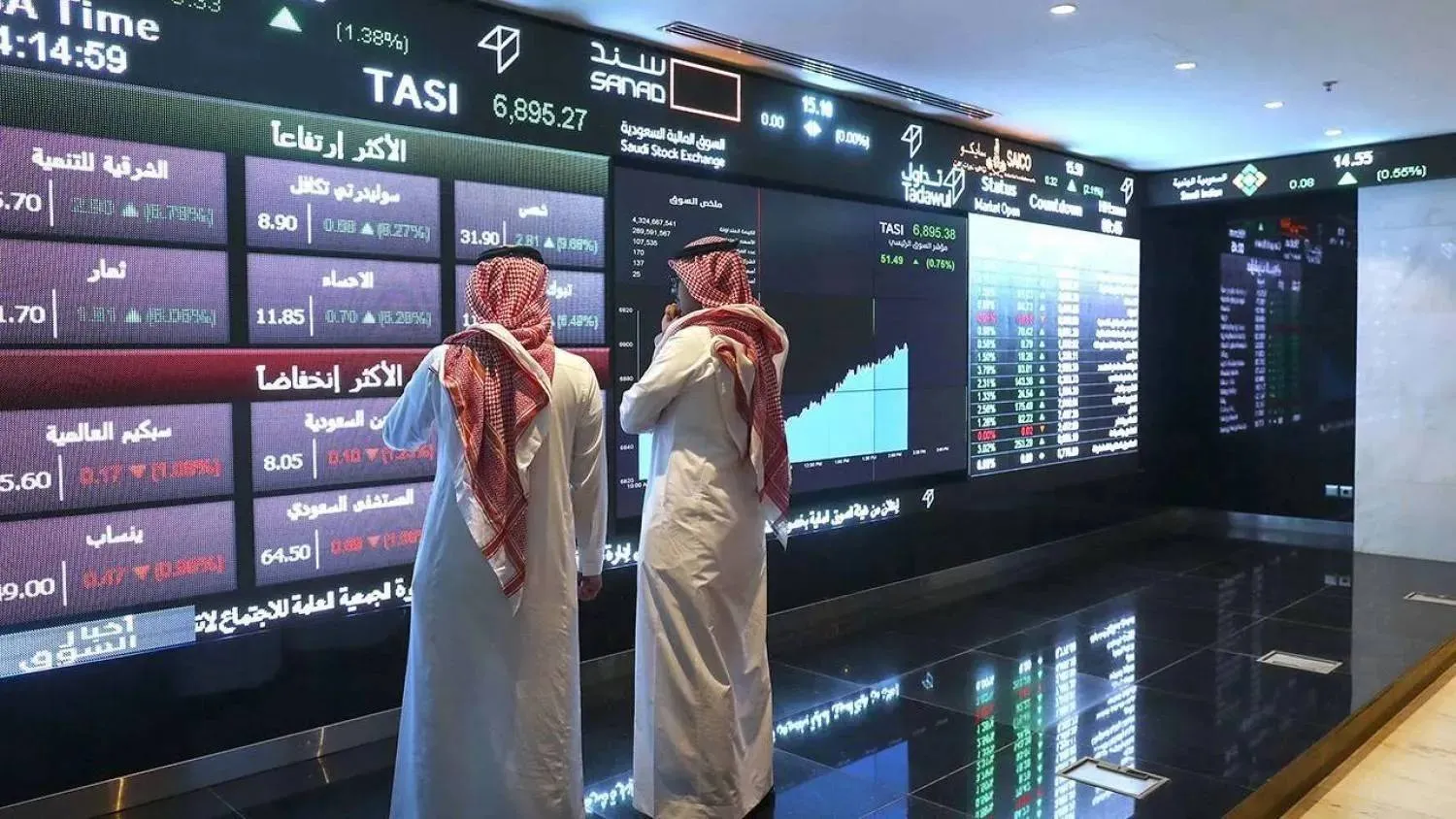
Investors monitor stock prices on the Saudi Tadawul screen. (Reuters)
TT

Saudi Banking Sector Posts Highest Quarterly Profits in Its History

Investors monitor stock prices on the Saudi Tadawul screen. (Reuters)

Saudi Arabia’s banking sector has achieved record-breaking quarterly earnings, reporting its highest-ever profits during the second quarter of 2025. According to financial disclosures, profits surged by 17.65% year-on-year, increasing by SAR 3.54 billion ($944 million) to reach SAR 22.98 billion ($6.13 billion), compared to SAR 19.54 billion ($5.21 billion) in the same period of 2024.

This exceptional performance was driven by all ten listed banks on the Saudi stock exchange, highlighting the continued strength and resilience of the Kingdom’s financial sector. The banks include the Saudi National Bank (SNB), Al Rajhi Bank, Riyad Bank, SAB (Saudi Awwal Bank), Banque Saudi Fransi, Arab National Bank, Alinma Bank, Bank Albilad, Saudi Investment Bank, and Bank AlJazira.

Al Rajhi Bank led the sector in both net profit and growth, posting earnings of SAR 6.15 billion riyals, an impressive 30.9% increase compared to the same quarter last year. Close behind was Saudi National Bank, which reported profits just over SAR 6.14 billion, marking a growth rate of 17.3%. Riyad Bank came third with SAR 2.59 billion in profits, reflecting an 11.1% increase.

In its Article IV consultation report published in June, the International Monetary Fund affirmed the Saudi banking sector’s resilience, citing its strong capitalization and profitability despite rising financing costs. Similarly, financial advisory firm Alvarez & Marsal noted the sector’s robust credit growth, cost-efficiency, and financial flexibility.

Hamad Al-Olayan, CEO of investment firm Villa Capital, emphasized that the Saudi banking sector’s performance merits deeper analysis.

He highlighted the sector’s consistent growth over the past 15 years, driven by capital increases, expanded lending, and strategic expansion.

Al-Olayan also noted that the sector has become the most attractive in the Saudi financial market for both local and international investors, dominating equity fund holdings due to its stable returns and strong fundamentals.

The banking sector has played a key role in maintaining the stability of the Saudi stock market index, especially as other sectors such as petrochemicals and cement, have struggled and dragged down overall market sentiment, he added.

Without the performance of Al Rajhi Bank’s stock, he said, the market index would likely be hovering between 9,300 and 9,500 points.

Looking ahead, Al-Olayan expects banks to lead the next phase of market growth, especially if interest rates begin to decline and economic clarity improves. He projected that the banking sector could drive the stock market index toward the 14,000-point mark.

He also stressed the sector’s vital role in financing projects across all scales, noting that many banks have already increased their capital and lending activity in response to growing demand.

Al-Olayan predicted that both Al Rajhi and SNB may announce capital increases and generous dividends by the end of the year, further boosting investor confidence.


Egypt to Establish Middle East’s 1st Sodium Cyanide Plant for Gold Extraction

CEO of the General Authority for Investment and Free Zones (GAFI) Mohamed el-Gawsaky, received a delegation from DrasChem Specialty Chemicals (Egyptian Cabinet)
TT

Egypt to Establish Middle East’s 1st Sodium Cyanide Plant for Gold Extraction

CEO of the General Authority for Investment and Free Zones (GAFI) Mohamed el-Gawsaky, received a delegation from DrasChem Specialty Chemicals (Egyptian Cabinet)

The Egyptian government has announced the establishment of the first sodium cyanide production plant in the Middle East in Alexandria Governorate on the Mediterranean coast, with an annual production capacity of 50,000 tons and investments of $200 million in the first phase.

In a statement, the cabinet said on Saturday that CEO of the General Authority for Investment and Free Zones (GAFI) Mohamed el-Gawsaky met with a delegation from DrasChem Specialty Chemicals, a Private Free Zone company, to discuss the steps required to establish the company’s sodium cyanide production facility at the Sidi Kerir Petrochemicals Complex in Alexandria.

The DrasChem project plans to begin production in 2028 following the completion of the facility’s first phase, with initial investments estimated at $200 million. This phase targets the production and export of 50,000 tons of sodium cyanide annually, a key input in gold extraction.

The second phase will focus on either doubling production capacity or manufacturing additional sodium cyanide derivatives, while a third phase will target the production of sodium-ion battery components.

El-Gawsaky said the project aligns with the country’s developmental priorities, particularly those related to increasing exports, transferring and localizing advanced technology, deepening local manufacturing and creating sustainable job opportunities.

The CEO also noted that the plant would benefit from the results of Egypt's economic reform program, which has caused significant improvements in investment, trade, and logistics indicators.

El-Gawsaky urged Egyptian companies, including DrasChem, to adopt integrated, export-oriented industrial strategies, with a particular focus on African markets.

He said the Ministry of Investment and Foreign Trade aims to increase exports by $4 billion. The focus will be on sectors with high competitive advantages, particularly the chemicals sector.

He also highlighted that DrasChem’s sodium cyanide products are of strategic importance to gold mines in Africa, which account for about a quarter of global gold production.

Bassem El-Shemmy, Vice President for Strategic Partnerships at Austria-based Petrochemical Holding GmbH, the largest shareholder in DrasChem, said project partner Draslovka of the Czech Republic will, for the first time, transfer its proprietary technology - developed at its facilities in the US - to Africa and the Middle East.

This move, he said, will help position Egypt as a regional hub for gold extraction technologies and sodium-ion battery manufacturing, a more sustainable and cost-effective alternative to lithium-ion batteries.

For his part, Andrey Yurkevich, Deputy Managing Director for Strategy and Business Development at Petrochemical Holding GmbH, said the DrasChem facility will create up to 500 direct jobs and generate approximately $120 million in annual foreign-currency revenues.

He said that the project will enhance the stability and sustainability of local supply chains and strengthen Egypt’s regional standing as home to the first sodium cyanide production facility in both Egypt and the Middle East.


Türkiye Says to Maintain Tight Monetary Policy, Fiscal Discipline

FILE PHOTO: People shop at a green market in Istanbul, Türkiye, October 22, 2025. REUTERS/Dilara Senkaya/File Photo
TT

Türkiye Says to Maintain Tight Monetary Policy, Fiscal Discipline

FILE PHOTO: People shop at a green market in Istanbul, Türkiye, October 22, 2025. REUTERS/Dilara Senkaya/File Photo

Türkiye will maintain its tight monetary policy and keep fiscal discipline in order to further lower inflation, Vice President Cevdet Yilmaz said on Saturday.

Turkish consumer price inflation leapt to a higher-than-expected 4.84% month-on-month in January, official data showed on Tuesday, driven in part by new year price adjustments and a jump in food and non-alcoholic drinks prices. Annual inflation dipped to 30.65%.

Speaking at an event in the southeastern province of Siirt, Yilmaz said ⁠the 45-point fall in inflation since May 2024 was not enough, adding the government was on a path to further lower consumer prices.

"We will maintain our tight monetary policy, we will keep our disciplined fiscal policies, we are determined to do this. But ⁠these are not enough either. On the other hand, we have to contribute to our battle with inflation through our supply-side policies," he added, according to Reuters.

Last month, Türkiye's central bank lowered its key interest rate by a less-than-expected 100 basis points to 37%, citing firming inflation, pricing behavior and expectations that threaten the disinflation process.

After a brief policy reversal early last year due to political turmoil, the bank's ⁠rate-cutting cycle resumed in July with a 300-basis-point cut, followed by more subsequent cuts.

The bank has eased by 1,300 points since 2024, when it held rates at 50% for most of the year to wrestle down inflation expectations.

Last month, the head of the Turkish Exporters Assembly told reporters late that Türkiye's extended period of tight economic policies had hurt manufacturers, with high interest rates and costs posing risks to the country's official $282 billion export target.


India, Malaysia Renew Pledges to Boost Trade and Collaboration

Malaysia's Prime Minister Anwar Ibrahim shakes hands with India's Prime Minister Narendra Modi in Putrajaya on February 8, 2026. (Photo by Hasnoor Hussain / POOL / AFP)
TT

India, Malaysia Renew Pledges to Boost Trade and Collaboration

Malaysia's Prime Minister Anwar Ibrahim shakes hands with India's Prime Minister Narendra Modi in Putrajaya on February 8, 2026. (Photo by Hasnoor Hussain / POOL / AFP)

India's Prime Minister Narendra Modi and his Malaysian counterpart Anwar Ibrahim renewed pledges on Sunday to bolster trade and explore potential collaborations in semiconductors, defense and other fields.

Modi is on a two-day visit to the Southeast Asian nation, his first since the two countries elevated ties to ⁠a comprehensive strategic partnership in August 2024.

Anwar said the partnership included deep collaborations in multiple fields, including trade and investments, food security, defense, healthcare and tourism.

"It's really comprehensive, and we believe ⁠that we can advance this and execute in a speedy manner with the commitment of our both governments," he told a press conference after hosting Modi at his official residence in the administrative capital Putrajaya.

Following their meeting, Anwar and Modi also witnessed the exchange of 11 cooperation agreements, including ⁠on semiconductors, disaster management and peacekeeping, Reuters reported.

Anwar said India and Malaysia would continue efforts to promote the use of local-currency settlement for cross-border activities and expressed hope that bilateral trade would surpass last year's $18.6 billion.

Malaysia will also support India's efforts to open a consulate in Malaysia's Sabah state on Borneo island, Anwar said.
