
8 Decades After Atomic Bombing in Hiroshima, Search for Missing Continues on Nearby Island

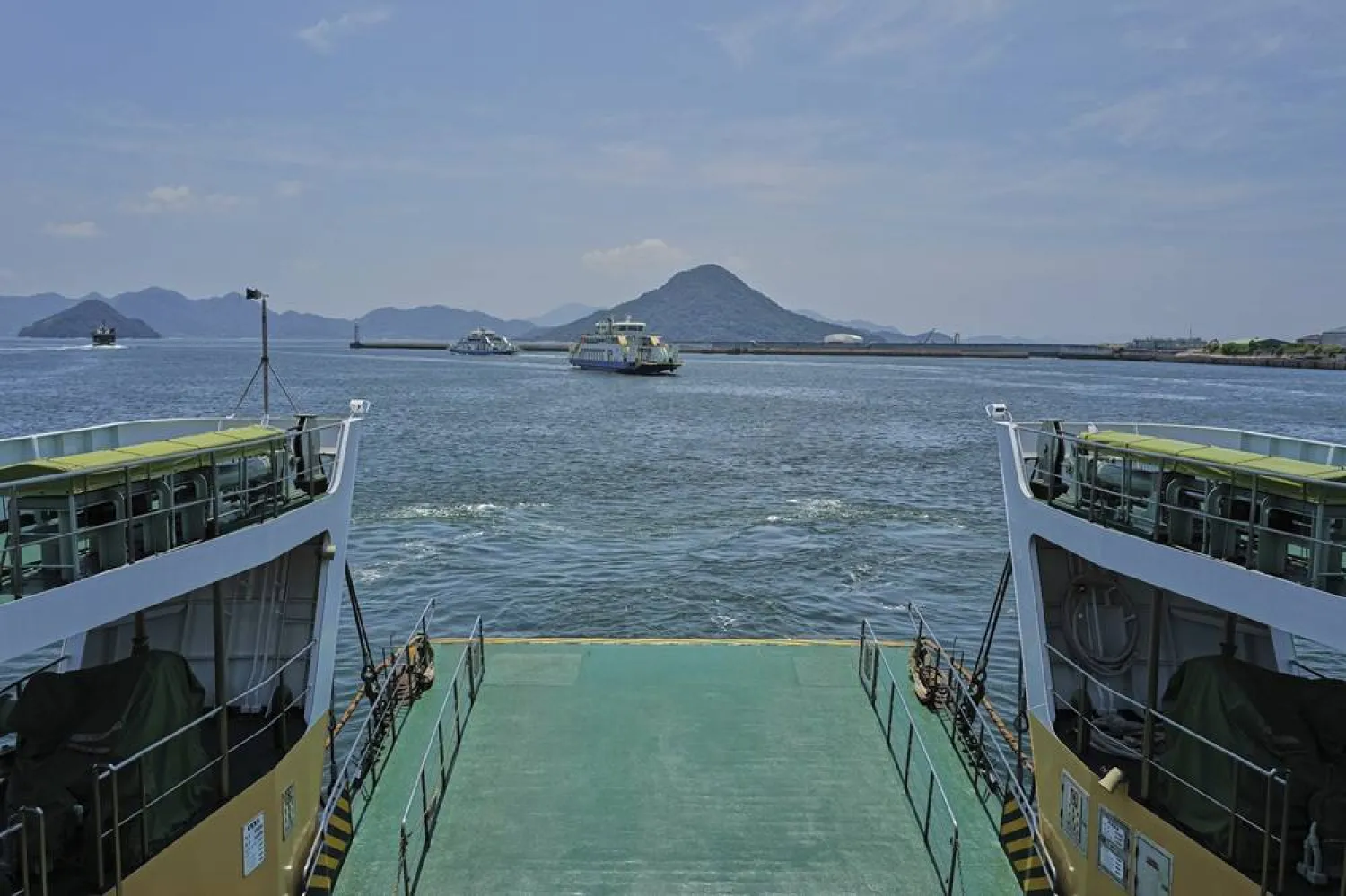
 Ninoshima, an island where thousands of the dead and dying were brought after the first atomic bomb detonated 80 years ago, is seen from a ferry on Monday, July 7, 2025, in Horishima, western Japan. (AP Photo/Eugene Hoshiko)
Ninoshima, an island where thousands of the dead and dying were brought after the first atomic bomb detonated 80 years ago, is seen from a ferry on Monday, July 7, 2025, in Horishima, western Japan. (AP Photo/Eugene Hoshiko)
TT

8 Decades After Atomic Bombing in Hiroshima, Search for Missing Continues on Nearby Island

 Ninoshima, an island where thousands of the dead and dying were brought after the first atomic bomb detonated 80 years ago, is seen from a ferry on Monday, July 7, 2025, in Horishima, western Japan. (AP Photo/Eugene Hoshiko)
Ninoshima, an island where thousands of the dead and dying were brought after the first atomic bomb detonated 80 years ago, is seen from a ferry on Monday, July 7, 2025, in Horishima, western Japan. (AP Photo/Eugene Hoshiko)

When the first atomic bomb detonated 80 years ago on Aug. 6, thousands of the dead and dying were brought to the small, rural island of Ninoshima, just south of Hiroshima, by military boats with crews that had trained for suicide attack missions.

Many of the victims had their clothes burned off and their flesh hung from their faces and limbs. They moaned in pain.

Because of poor medicine and care, only a few hundred were alive when the field hospital closed Aug. 25, according to historical records. They were buried in various locations in chaotic and rushed operations.

Decades later, people in the area are looking for the remains of the missing, driven by a desire to account for and honor the victims and bring relief to survivors who are still tormented by memories of missing loved ones.

"Until that happens, the war is not over for these people," said Rebun Kayo, a Hiroshima University researcher who regularly visits Ninoshima to search for remains.

Evidence of the missing is still being unearthed

On a recent morning, Kayo visited a hillside plot in the forest where he has dug for remains since 2018. He put on rubber boots and a helmet and sprayed insect repellent.

After planting chrysanthemum flowers and praying, Kayo carefully began shoveling gravel from a hole the size of a bathtub. When the soil was soft enough, he sifted it for bone fragments.

As he worked under the scorching sun, he imagined the pain and sadness that the victims felt when they died.

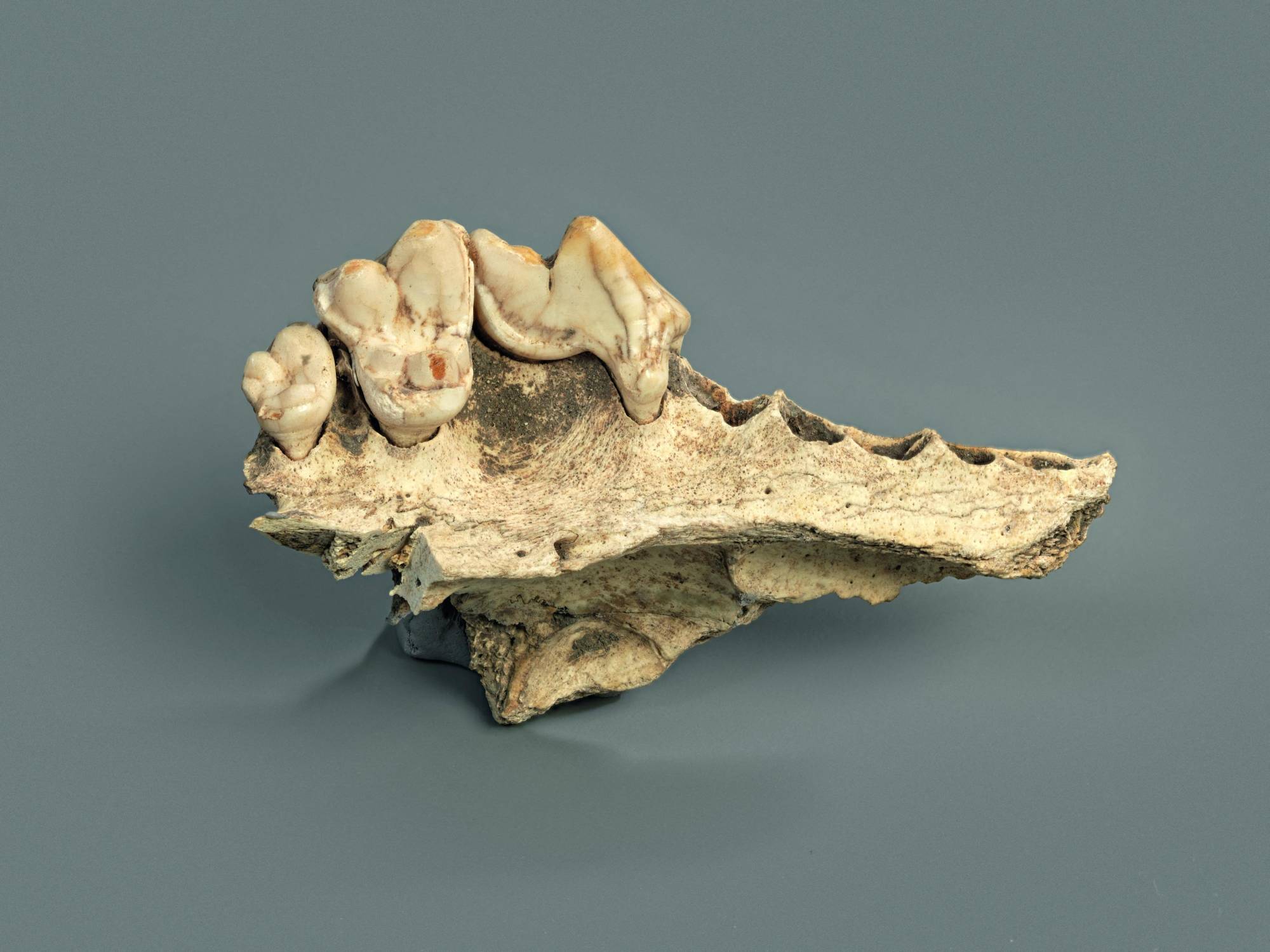
Kayo so far has found about 100 bone fragments, including skull pieces and an infant’s jawbone with little teeth attached. He found the bones in an area suggested by a Ninoshima resident, whose father had witnessed soldiers burying bodies that were brought to the island on boats from Hiroshima 80 years ago.

"The little child buried here has been alone for all these years," he said of the bones he believes belonged to a toddler. "It's just intolerable."

Victims arrived in the bombing's chaotic aftermath

The US atomic attack on Hiroshima instantly destroyed the city and killed tens of thousands near the hypocenter, about 10 kilometers (6 miles) north of Ninoshima. The death toll by the end of that year was 140,000.

As a 3-year-old child, Tamiko Sora was with her parents and two sisters at their home just 1.4 kilometers (0.9 mile) from the hypocenter. The blast destroyed their house and Sora's face was burned, but most of her family survived.

As they made their way to a relatives' home, she met an unattended 5-year-old girl who identified herself as Hiroko and a woman with severe burns desperately asking people to save the baby she carried. Sora still thinks of them often and regrets her family could not help. Her family visited orphanages but could not find the girl.

Sora now thinks the people she met that day, as well as her missing aunt and uncle, might have ended up on Ninoshima.

Weeks of chaos, deaths and rushed burials

Within two hours of the blast, victims began arriving by boat from Hiroshima at the island's No. 2 quarantine center. Its buildings filled with patients with severe wounds. Many died on the way to the island.

Imperial Army service members were on around-the-clock shifts for cremation and burials on the island, according to Hiroshima City documents.

Eiko Gishi, then an 18-year-old boat trainee, oversaw carrying patients from the pier to the quarantine area for first aid. He and other soldiers cut bamboo to make cups and trays. Many of the wounded died soon after sipping water.

In recollections published by the city years later, Gishi wrote that soldiers carefully handled bodies one by one at the beginning, but were soon overwhelmed by the huge number of decomposing bodies and used an incinerator originally meant for military horses.

Even this wasn't enough and they soon ran out of space, eventually putting bodies into bomb shelters and in burial mounds.

"I was speechless from the shock when I saw the first group of patients that landed on the island," a former army medic, Yoshitaka Kohara, wrote in 1992.

"I was used to seeing many badly wounded soldiers on battlefields, but I had never seen anyone in such a cruel and tragic state," he said. "It was an inferno."

Kohara was at the facility until its closure, when only about 500 people were left alive. When he told surviving patients that the war had ended on Aug. 15, he recalled they looked emotionless and "tears flowed from their crushed eyes, and nobody said a word."

Thousands of remains found on Ninoshima but more are still missing

Kazuo Miyazaki, a Ninoshima-born historian and guide, said that toward the end of WWII the island was used to train suicide attackers using wooden boats meant for deployment in the Philippine Sea and Okinawa.

"Hiroshima was not a city of peace from the beginning. Actually, it was the opposite," Miyazaki said. "It’s essential that you learn from the older generations and keep telling the lessons to the next."

Miyazaki, 77, lost a number of relatives in the atomic bombing. He has heard first-person stories from his relatives and neighbors about what happened on Ninoshima, which was home to a major army quarantine during Japan's militarist expansion. His mother was an army nurse who was deployed to the field hospital on the island.

The remains of about 3,000 atomic bombing victims brought to Ninoshima have been found since 1947 when many were dug out of bomb shelters. Thousands more are thought to be missing.

People visit the island to remember the missing

After learning of the search for remains on Ninoshima, Sora, the atomic bomb survivor struck by the girl and infant she met after the explosion, traveled to the island twice to pray at a cenotaph commemorating the dead.

"I feel they are waiting for me to visit," Sora said. "When I pray, I speak the names of my relatives and tell them I’m well and tell them happy stories."

In a recent visit to Sora at her nursing home, the researcher Kayo brought a plastic box containing the baby jaw with little teeth and skull fragments he found on Ninoshima. The bones were placed carefully on a bed of fluffy cotton.

Kayo said he wanted to show Sora the fragile fragments, which could be from a child the same age as the one Sora met 80 years ago. He plans to eventually take the bones to a Buddhist temple.

Sora prayed in silence while looking at the bones in the box and then spoke to them.

"I’m so happy you were finally found," she said. "Welcome back."


Three Million Pounds to Save Polar Explorer Shackleton's Villa

A person taking a photo of Ernest Shackleton's grave, polar explorer, who died after a heart attach in 1922 (Shutterstock)
TT

Three Million Pounds to Save Polar Explorer Shackleton's Villa

A person taking a photo of Ernest Shackleton's grave, polar explorer, who died after a heart attach in 1922 (Shutterstock)

Work is under way on a South Atlantic island to preserve a key building in the story of polar explorer Ernest Shackleton.

Shackleton famosly reached the whaling station of Stromness on South Georgia in 1916 after spending 18 months stranded on Antarctica with his crew.

The now-dilapidated Stromness Manager's Villa was used as a base by Shackleton while he orchestrated the rescue of his men.

The Dundee-based South Georgia Heritage Trust have been working to stabilize the structure, with plans to create a digital “twin” of the building for people around the world to see it.

A 2022 survey found the building was very close to collapse.

Alison Neil, chief executive of the South Georgia Heritage Trust, said: “The reason for that is rotting timbers. This is an old-fashioned version of a flat-pack house. They would've been brought down from Norway on ships and then assembled on the island.”

The trust raised more than £3 million to send a team to South Georgia.
They arrived in October and have been working on stabilizing the structure.

Alison said: “It's in the middle of a whaling station that's full of asbestos, dangerous debris, and is not accessible to the public. Our plan is not to open it up to the public, our plan is to maintain it for the future.”

Shackleton's extraordinary story of survival has fascinated and inspired people for more than a century.

His most famous mission was his plan to cross Antarctica through the South Pole after travelling on board his ship The Endurance.

In 1915, The Endurance became trapped in ice, and his crew abandoned ship, crossing onto floating ice, which they hoped would drift towards land.

But by April 1916, the ice floes were breaking up, so Shackleton took his crew in lifeboats first to Elephant Island, then led a smaller group to find help for the others.

They crossed about 800 miles (1,300km) of ocean in the open boat before reaching the island of South Georgia.

Leaving three of the men behind with the boat, Shackleton, Frank Worsley and Tom Crean trekked across the island for three days until they reached Stromness whaling station on the far side of the island.

Alison said the men made it to the villa in a dishevelled state.

She said: “No-one recognized them, they must've looked terrifying. They knocked on the door of the villa and famously the whaling manager opened the door and said, 'who the hell are you?' Shackleton allegedly said: 'My name is Shackleton'.”

It was the men's first contact with the outside world for 17 months.

Shackleton, Worsley and Crean were invited in to the villa where they had a hot meal and a bath, before immediately starting the rescue of the rest of their crew with the help of the whalers.

Alison said: “That's a really important part of The Endurance story and it effectively is the next chapter on from the sinking of the vessel.”


James Cameron Describes Strategy for Surviving Titanic Disaster

Titanic ocean liner after it struck an iceberg in 1912 off the coast of Newfoundland in the Atlantic Ocean (Shutterstock/3d illustration)
TT

James Cameron Describes Strategy for Surviving Titanic Disaster

Titanic ocean liner after it struck an iceberg in 1912 off the coast of Newfoundland in the Atlantic Ocean (Shutterstock/3d illustration)

James Cameron, the filmmaker behind the hit 1997 disaster movie Titanic, has revealed his strategy for hypothetically surviving the famed 1912 cruise liner sinking.

Titanic starred Leonardo DiCaprio and Kate Winslet and is one of the highest-grossing films of all time. The film was set during the sinking of the RMS Titanic, which claimed the lives of more than 1,500 people.

In a new interview with The Hollywood Reporter, Cameron was asked: “If you were traveling by yourself as a second-class passenger on Titanic when it hit an iceberg, what would you have done?”

As the filmmaker explained, third-class passengers were trapped below decks, while first-class passengers were more likely to secure a spot on the lifeboats, according to the interview reported by The Independent.

“I think there were interesting ways to what-if or second-guess the whole thing,” Cameron replied. “One I like to play with my Titanic experts is – with what we know now, and if you had the captain’s ear – how could you save everybody?

“The other is: What if you’re a time traveler, you go back and want to experience the sinking, and your little time-travel thing that gets you back fails, and you’re like, ‘I’m really on the ship, I’ve got to get off it.'”

In this latter scenario, Cameron argued that the best thing to do would be to stand by the edge of the deck, and wait for a lifeboat to launch during the early stages of the evacuation. At this point, he would jump off, and swim to the boat, relying on the passengers to pull him aboard.

“Most people wouldn’t have had the courage to jump into the water,” he continued. “They couldn’t quite believe that the ship was really going to sink. But if you knew for sure it was going to sink and you weren’t on a lifeboat, you jump in the water next to the boat the second it casts off."


Hiker Killed in Rare Suspected Mountain Lion Attack in Colorado

FILE - The General Store is seen Oct. 24, 2006, in Glen Haven, Colo. (AP Photo/The Denver Post, Karl Gehring, File)
TT

Hiker Killed in Rare Suspected Mountain Lion Attack in Colorado

FILE - The General Store is seen Oct. 24, 2006, in Glen Haven, Colo. (AP Photo/The Denver Post, Karl Gehring, File)

A hiker in Colorado has died in the state's first suspected fatal mountain lion attack in over 25 years, authorities said.

The woman was found unresponsive by other hikers on the Crosier Mountain trail northeast of Estes Park around noon on Thursday.

The hikers saw a mountain lion near the woman's body and scared it away by throwing rocks. A doctor was among the hikers and attended to the woman but found no pulse, Colorado Parks and Wildlife spokesperson Kara Van Hoose told reporters, according to Reuters.

CPW officers responded to the ⁠scene and shot dead two lions in the area. It is not known whether one or multiple animals were involved in the suspected attack, the agency said in a statement. It is believed the woman was hiking alone.

“There were signs that this was consistent with a mountain lion attack,” Van Hoose told a press ⁠conference.

Mountain lion attacks on humans in Colorado are rare, with 28 reported to CPW since 1990. The last fatal attack was in 1999.

CPW pathologists are performing necropsies on the dead animals to check for abnormalities and neurological diseases like rabies and avian influenza, as well as human DNA, Van Hoose said.

CPW policy mandates the killing of any mountain lion involved in an attack on a human so as to prevent repeat incidents. If human DNA is not found on either dead lion, authorities will continue to ⁠search for animals that may have been involved, Van Hoose said.

Larimer County Coroner will release the identity of the victim and cause of death, she said.

Colorado has a healthy mountain lion population, estimated by CPW to be between 3,800 and 4,400 adults. Conservation efforts have brought the species back from near extinction in the 1960s due to bounty hunting.

Mountain lions are common in the Front Range area where the woman was found, Van Hoose said. The animals go down to lower elevations in winter in search of prey like deer and elk, increasing chances of encounters with humans.