


Bangladesh ex-PM Palace Becomes Revolution Museum

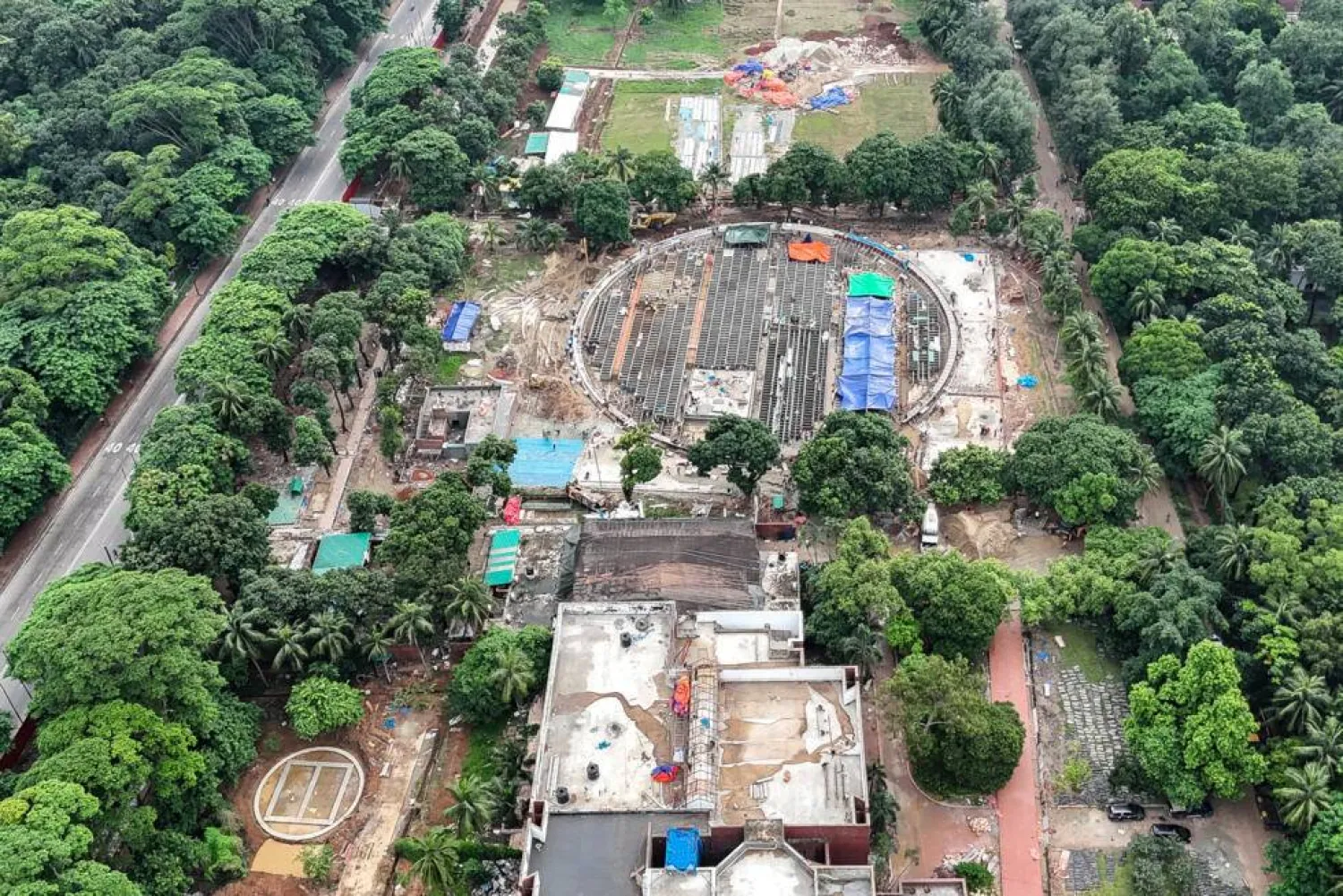
Authorities hope the sprawling Gono Bhaban palace offers a message to the future. Munir UZ ZAMAN / AFP
TT

Bangladesh ex-PM Palace Becomes Revolution Museum

Authorities hope the sprawling Gono Bhaban palace offers a message to the future. Munir UZ ZAMAN / AFP

Once a heavily guarded palace, the former official residence of Bangladesh's ousted prime minister Sheikh Hasina is being turned into a museum as a lasting reminder of her autocratic rule.

Photographs of jubilant flag-waving crowds clambering onto the rooftop of the Dhaka palace after Hasina fled by helicopter to India were a defining image of the culmination of student-led protests that toppled her government on August 5, 2024.

One year later, with the South Asian nation of around 170 million people still in political turmoil, the authorities hope the sprawling Ganabhaban palace offers a message to the future, AFP said.

Graffiti daubed on the walls condemning her regime remains untouched.

"Freedom", one message reads. "We want justice."

Hasina's rule saw widespread human rights abuses, including the mass detention and extrajudicial killings of her political opponents.

Up to 1,400 people were killed between July and August 2024 in her failed bid to cling to power, according to the United Nations.

The 77-year-old has defied court orders to attend her ongoing trial on charges amounting to crimes against humanity in Dhaka, accusations she denies.

"Dictator", another message reads, among scores being protected for posterity. "Killer Hasina".

Muhammad Yunus, the 85-year-old Nobel Peace Prize winner who is leading the caretaker government until elections are held in early 2026, said the conversion to a museum would "preserve memories of her misrule and the people's anger when they removed her from power".

'Symbol of fascism'

Mosfiqur Rahman Johan, 27, a rights activist and documentary photographer, was one of the thousands who stormed the luxurious palace, when crowds danced in her bedroom, feasted on food from the kitchens, and swam in the lake Hasina used to fish in.

"It will visualize and symbolize the past trauma, the past suffering -- and also the resistance," he said.

"Ganabhaban is a symbol of fascism, the symbol of an autocratic regime".

The complex was built by Hasina's father, the first leader of Bangladesh, Sheikh Mujibur Rahman, and Hasina made it her official residence during her 15 years in power.

Tanzim Wahab, the curator of the under-construction museum, told AFP that exhibits would include artefacts of the protesters killed.

Their life stories will be told through films and photographs, while plaques will host the names of the people killed by the security forces during the longer period of Hasina's rule.

"The museum's deeper purpose is retrospective, looking back at the long years of misrule and oppression", said Wahab.

"That, I believe, is one of the most important aspects of this project."

Wahab said the museum would include animation and interactive installations, as well as documenting the tiny cells where Hasina's opponents were detained in suffocating conditions.

"We want young people... to use it as a platform for discussing democratic ideas, new thinking, and how to build a new Bangladesh," Wahab said.

'Statues of dictatorship'

That chimes with the promised bolstering of democratic institutions that interim leader Yunus wants to ensure before elections -- efforts slowed as political parties jostle for power.

The challenges he faces are immense, warned Human Rights Watch ahead of the one-year anniversary of the revolution.

"The interim government appears stuck, juggling an unreformed security sector, sometimes violent religious hardliners, and political groups that seem more focused on extracting vengeance on Hasina's supporters than protecting Bangladeshis' rights," HRW said.

But while Hasina's palace is being preserved, protesters have torn down many other visible signs of her rule.

Statues of Hasina's father were toppled, and portraits of the duo torn and torched.

Protesters even used digger excavators to smash down the home of the late Sheikh Mujibur Rahman -- that Hasina had turned into a museum to her father.

Muhibullah Al Mashnun, who was among the crowds that tore down the house believes that removing such symbols was necessary for Bangladesh to move forward to a better future.

"They were the statues of dictatorship," Mashnun said.


Al-Qatif Street Food Festival Celebrates Saudi Culinary Arts

The event features six pavilions that allow visitors to explore a wide variety of foods and beverages made from local ingredients, reflecting the Kingdom’s diverse environments and regional flavors - SPA
TT

Al-Qatif Street Food Festival Celebrates Saudi Culinary Arts

The event features six pavilions that allow visitors to explore a wide variety of foods and beverages made from local ingredients, reflecting the Kingdom’s diverse environments and regional flavors - SPA

The Culinary Arts Commission launched Al-Qatif Street Food Festival, which runs until December 30, 2025, offering visitors a rich cultural experience that highlights Saudi culinary arts in a setting that reflects the authenticity and diversity of the Kingdom’s national cuisine, while reinforcing the presence of heritage within the contemporary cultural landscape.

The festival showcases Saudi food culture as a vital component of national identity through live cooking stations where traditional dishes are prepared and presented by culinary experts, SPA reported.

The event features six pavilions that allow visitors to explore a wide variety of foods and beverages made from local ingredients, reflecting the Kingdom’s diverse environments and regional flavors.

In addition to the culinary offerings, the festival presents a range of accompanying cultural experiences designed to enrich the visitor journey and encourage engagement with food as both an artistic and knowledge-based experience.

These include a dedicated children’s pavilion, interactive tasting spaces for dishes, and innovative beverage experiences inspired by Saudi agricultural products.


Want to Read More in 2026? Here's How to Revive Your Love of Books

A woman reads a book in the afternoon sun on a bench outside South Station in Boston, on Friday, May 31, 2024. (AP Photo/David Goldman, File)
TT

Want to Read More in 2026? Here's How to Revive Your Love of Books

A woman reads a book in the afternoon sun on a bench outside South Station in Boston, on Friday, May 31, 2024. (AP Photo/David Goldman, File)

People stop reading in adulthood for lots of reasons. But it’s never too late to turn the page on old habits and start again.

Curling up with a good book can reduce stress, increase creativity and boost empathy. A recent analysis of US government data found that the percentage of Americans who read for pleasure during an average day has fallen to 16% in 2023 from 28% in 2004. That includes not just books but audiobooks, e-books and periodicals like magazines, The AP news reported.

Some people say they're fatigued from years of assigned reading in school. Others don't have the time or would rather zone out by doom-scrolling on social media. And many just got out of the habit.

“It’s difficult for people who are really tired and busy to think about getting into reading if it’s not something they’re used to,” said Jacqueline Rammer, director of Menomonee Falls Public Library in Wisconsin.

For those looking to set reading goals or resolutions in 2026, here's how to get back into the habit.

Choose the right book When picking your next book, avoid dense nonfiction or a 500-page doorstop.

“Your first book should be something that you think will be joyful,” said Jocelyn Luizzi, a software engineer from Chicago who blogs about books.

Everyone's taste is different, so get recommendations from a variety of places including friends, booksellers and online communities like BookTok.

Rammer and her staff ask library visitors: What was the last book, TV show or movie that you really enjoyed? Then, they look for similar genres or themes.

Many libraries offer access to a service called NoveList which suggests “read-alikes” for various books and authors.

Set a reading routine To create a habit that sticks, “start by scheduling reading into your day,” said Gloria Mark, an attention span expert with the University of California, Irvine. Read five pages during a lunch break or right before bed.

If you're reading a physical book, Mark said to avoid distractions by keeping phones and laptops out of sight.

But experimenting with other formats can make reading more convenient. E-books are portable and audiobooks are a good candidate to accompany chores or the morning commute. You can likely access both for free by downloading an app called Libby and signing in with a library card.

Try to read in a quiet setting, but don't be afraid to make it a social activity. Many cities in the US and around the world host silent book clubs where people read their own books together in coffee shops and libraries.

Setting a reading goal for the year or joining a local library's winter reading challenge can help with motivation — but if it feels like added pressure, don't do it.

Shannon Whitehead Smith, a book blogger from the Atlanta area who also works in marketing, says scrolling through lists of other people's reads on social media and trackers like StoryGraph encourages her to keep the habit.

“Seeing all these other people reading motivates me to put my phone down and pick up this book that’s sitting beside me,” she said.

Feel free to skip a read if a book feels particularly sluggish, it's OK to put it down and start another. Reading “shouldn't feel like a burden,” said Jess Bone with University College London, who analyzed the survey data about American adults reading for pleasure.

Routine readers say the habit helps them stay curious and release the stress of the day. Rammer, the library director, reads mysteries rife with twists and turns, and romances that cycle through roller coasters of emotions.

Most of all, she likes books that end with a “happily ever after.”

“I think the guarantee of knowing that things are going to end up OK is really reassuring,” Rammer said.


Saudi Architecture and Design Commission Launches Graphic Design Association in Riyadh

The association aims to unify graphic design practitioners
TT

Saudi Architecture and Design Commission Launches Graphic Design Association in Riyadh

The association aims to unify graphic design practitioners

The Graphic Design Association has been launched in Riyadh under the patronage of the Saudi Architecture and Design Commission.

Sunday’s event, attended by officials and culture experts, marks a significant step in empowering graphic design talents.

The ceremony included a presentation outlining the association’s vision and operational plans for developing the graphic design sector. Key goals include supporting designers and enhancing their professional presence locally and internationally.

The association aims to unify graphic design practitioners, providing a framework that fosters skill development, stimulates innovation, and creates opportunities in the cultural sector.

Acting CEO of the Architecture and Design Commission Prince Nawaf bin Abdulaziz bin Ayyaf stressed that the association is vital for organizing the sector and improving professional practices, thereby enhancing its role in the cultural ecosystem.

The Graphic Design Association is one of the professional associations established under the Saudi Ministry of Culture, aimed at building an integrated system of organizations to empower practitioners across various cultural fields.
