
Hezbollah Says Lebanon Cabinet Decision to Seek State Monopoly on Arms Is 'Grave Sin'

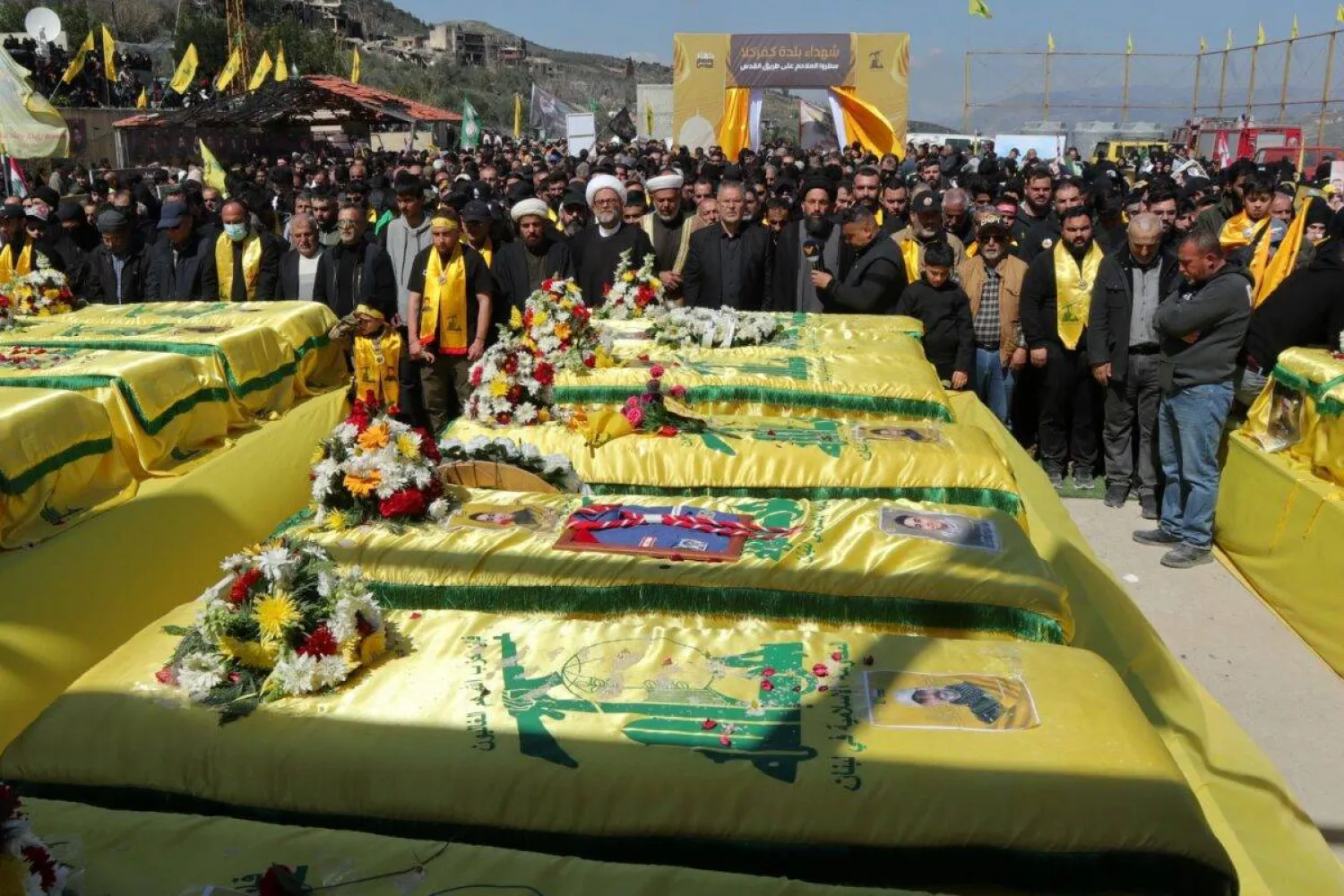
Mourners surround the flag-draped coffins of Hezbollah fighters, during their funeral along with civilians killed in the recent war with Israel, in the southern Lebanese border village of Kfar Kila on March 9, 2025. (AFP)
TT

Hezbollah Says Lebanon Cabinet Decision to Seek State Monopoly on Arms Is 'Grave Sin'

Mourners surround the flag-draped coffins of Hezbollah fighters, during their funeral along with civilians killed in the recent war with Israel, in the southern Lebanese border village of Kfar Kila on March 9, 2025. (AFP)

Hezbollah said on Wednesday the Lebanese government was committing a "grave sin" by tasking the army with establishing a state monopoly on arms, sharpening a national divide over calls for the Shiite group to disarm.

Despite unprecedented pressure from Washington and from its domestic rivals, the Iran-backed group has refused to fully relinquish its arsenal, which it retained after Lebanon's civil war ended in 1990 even as other militias disarmed.

Now, the US has demanded Lebanon's cabinet explicitly pledge to strip Hezbollah of its weapons - a move that risks reigniting tensions in Lebanon, a nation of multiple sects where Hezbollah retains significant support among Shiites.

The cabinet on Tuesday tasked the Lebanese army with drawing up a plan to confine arms across the country to six official security forces by year's end.

Hezbollah rejected the decision in a written statement on Wednesday, saying it was a result of US "diktats" and that it would "deal with it as if it does not exist".

"The government of Prime Minister Nawaf Salam committed a grave sin by taking a decision to strip Lebanon of its weapons to resist the Israeli enemy... This decision fully serves Israel's interest," the group said.

The statement said Shiite ministers walked out of the cabinet session before the decision was reached as "an expression of the resistance's (Hezbollah's) rejection of this decision".

The group said it remained ready to discuss a broader national security strategy and called on its supporters to remain patient.

WAR WITH ISRAEL

The session at Lebanon's presidential palace was the first time the cabinet addressed Hezbollah's weapons - unimaginable when the group was at the zenith of its power before a devastating war with Israel last year.

A US-brokered ceasefire between Lebanon and Israel in November ended that conflict, called on Lebanon to confiscate all "unauthorized" weapons across the country and said Israel would stop offensive operations against Lebanese targets.

But Israel has kept its troops at five points in Lebanon's southern border region and has continued air strikes against what it says are Hezbollah fighters and arms depots.

In June, the US submitted a roadmap to Lebanese officials that proposed Hezbollah fully disarm in exchange for Israel withdrawing its troops and halting its strikes.

Hezbollah and its main ally, the Amal Movement led by parliament speaker Nabih Berri, have demanded the order be reversed, saying Israel must halt its strikes before any discussion on weapons can be held.

On Wednesday, Amal said Lebanon's government should focus on consolidating the November ceasefire and said the next cabinet session on Thursday would be a chance to correct course.

Ministers will meet again on Thursday to continue discussions on the US proposal.

Imad Salamey, chairman of the Lebanese-American University's Department of Political and International Studies, said the country's Shiite community, hit hardest by last year's war, was now concerned that relinquishing Hezbollah's arms would leave them vulnerable to further Israeli attacks.

"We are most probably going into a polarized political landscape," he told Reuters.


Israeli Airstrikes on Southern Lebanon Kill 7 Amid Fragile Ceasefire

Smoke rises from the site of an Israeli airstrike that targeted the southern Lebanese village of Mayfadoun in the Nabatieh district on May 2, 2026. (AFP)
TT

Israeli Airstrikes on Southern Lebanon Kill 7 Amid Fragile Ceasefire

Smoke rises from the site of an Israeli airstrike that targeted the southern Lebanese village of Mayfadoun in the Nabatieh district on May 2, 2026. (AFP)

Israeli airstrikes on southern Lebanon kill at least seven people and wounded others on Saturday as hostilities continue between Israel and Hezbollah despite a ceasefire.

The Israeli airstrikes on southern Lebanon Saturday came as Israel’s military issued a new warning for residents of nine southern villages to evacuate.

Israel’s military and Lebanon’s Hezbollah have kept up their attacks despite a ceasefire in place since April 17.

Lebanon’s state-run National News Agency reported an airstrike on a car in the village of Kfar Dajal that killed 2 people, while another hit a home in the village of Lwaizeh killing three. NNA also reported a strike on the village of Shoukin that killed two people.

Israel’s military Arabic-language spokeswoman, Lt. Col. Ella Waweya, posted on X that the Israeli air force carried out about 50 airstrikes over the past 24 hours, saying that they targeted Hezbollah infrastructure and members.

Hezbollah said that it attacked on Saturday Israeli troops who gathered inside a house in the coastal village of Bayed with a drone.

The latest war between Israel and Hezbollah began on March 2, when Hezbollah fired rockets into northern Israel two days after the United States and Israel launched a war on its main backer, Iran. Israel has since carried out hundreds of airstrikes and launched a ground invasion of southern Lebanon, capturing dozens of towns and villages along the border.

Since then Lebanon and Israel have held their first direct talks in more than three decades. The two countries have formally been in a state of war since the founding of the state of Israel in 1948.

A 10-day ceasefire declared in Washington went into effect on April 17. The ceasefire was later extended by three weeks.


Why Does Trump Favor Iraq’s Al-Zaidi?

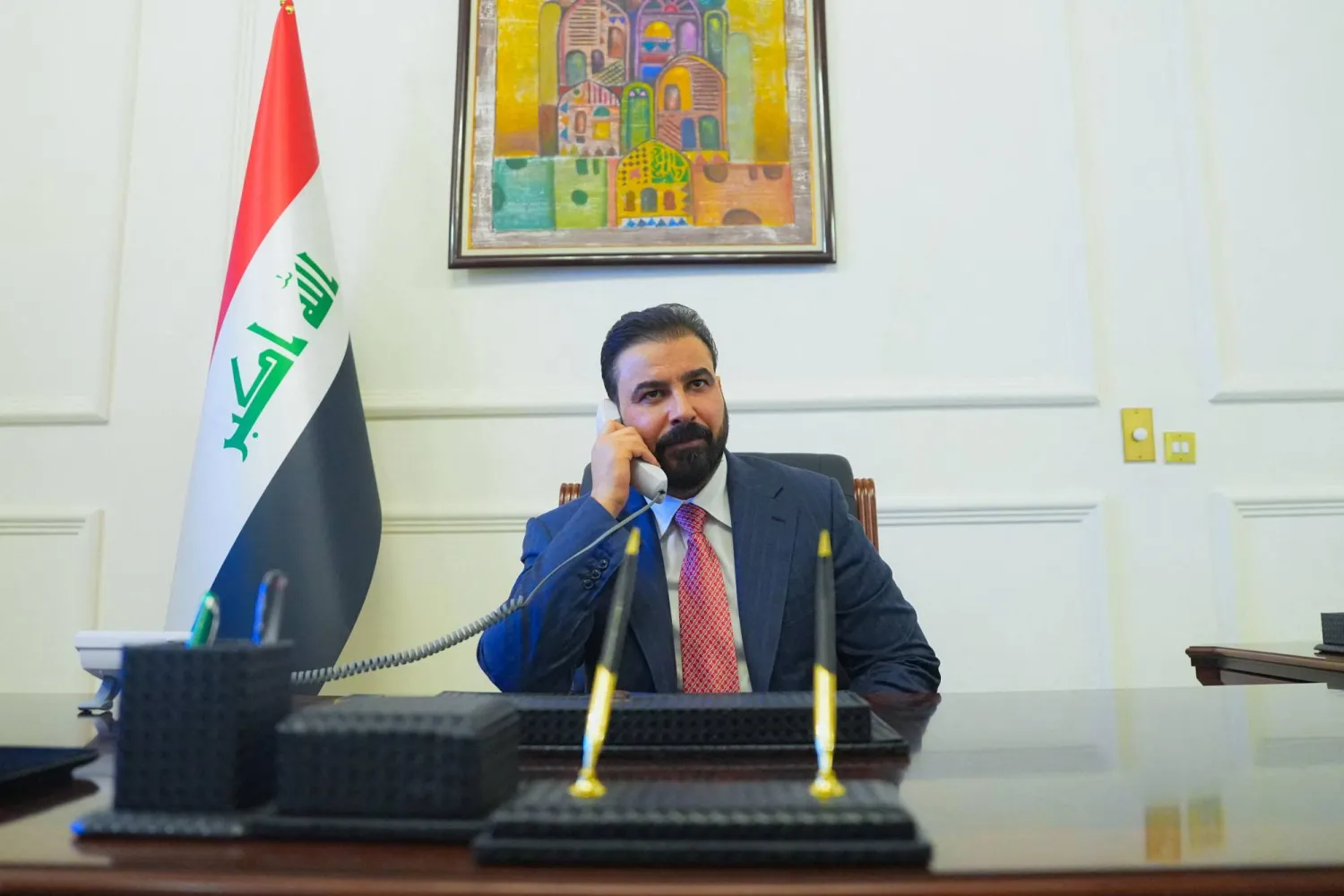
New Iraqi Prime Minister-designate Ali al-Zaidi, uses a phone at his office in Baghdad, Iraq, April 28, 2026. (Iraqi Prime Minister’s Media Office/Handout via Reuters).
TT

Why Does Trump Favor Iraq’s Al-Zaidi?

New Iraqi Prime Minister-designate Ali al-Zaidi, uses a phone at his office in Baghdad, Iraq, April 28, 2026. (Iraqi Prime Minister’s Media Office/Handout via Reuters).

Iraq’s ruling Coordination Framework has been on an intriguing journey that started with the United States’ adamant rejection of former Prime Minister Nouri al-Maliki being appointed to head a new government and that ended with President Donald Trump personally congratulating Ali al-Zaidi on his appointment as PM-designate earlier this week.

On January 27, Trump threatened to cut US support to Iraq if Maliki returned to power. After 93 days, the Shiite forces in Iraq were surprised when Trump congratulated al-Zaidi and urged him to form a government that is free of “terrorism”. He even received an invitation to visit Washington.

Iran has yet to comment on any of these developments.

Trump’s envoy to Syria Tom Barrack had telephoned al-Zaidi on Tuesday ahead of Trump’s telephone call to the PM-designate, a banker who, with Shiite consensus, has become the face of a potential and still ambiguous American deal.

Normally, pro-Iran factions in Iraq don’t let such friendly American contacts go without a fierce wave of criticism against any attempt to normalize ties with Washington, the perceived great enemy. That did not happen.

On the contrary, the hawks of the so-called “Resistance Axis” are preoccupied with giving the new PM-designate advice over including “strong” figures in his cabinet lineup to ensure its success. They have already sent him numerous possible candidates.

Al-Zaidi was named to his post just two hours after his name was floated in the media. His name appeared out of nowhere just days after commander of Iran’s Quds Force Esmail Qaani visited Baghdad. It remains to be seen if Qaani had imposed his conditions or surrendered to a deal that is beyond Iran’s control.

Al-Zaidi's designation took place as Iraq finds itself caught between the US-Iran conflict with each country trying to impose its influence over Baghdad. The appointment could have been a victory of one party against the other.

The American veto over Maliki had limited the Coordination Framework’s options and forced it into a battle of wills with Washington. With the eruption of the conflict with Iran, al-Zaidi's name was floated as a possible candidate and way out. An evident deal was reached that led to his designation and it continues to raise questions.

Observers believe that the appointment is the beginning of a broader deal that may have intrigued Trump.

Sources said that al-Zaidi did not appear out of nowhere in the Framework and that he was actually always there as a “winning card” that can be used by influential parties.

Other sources said that al-Zaidi now faces two possibilities: His proposed cabinet lineup will fail to receive the parliament’s vote of confidence, giving the Framework room to catch its breath in the political impasse and line up other options.

This is viewed as a scenario that outgoing Prime Minister Mohammed Shia al-Sudani could come up with.

The second possibility would be for the lineup to win the vote of confidence and for al-Zaidi to lead a transitional phase of two years or less. Observers have suggested that early elections could be held during this period. This scenario favors influential cleric Moqtada al-Sadr.

There also lies a third possibility that al-Zaidi was indeed designated through an American deal amid rumors that the US is seeking to limit China’s influence in the region.

The way Trump congratulated al-Zaidi suggests that Washington may have won something major in return from Baghdad. Or it could mean that Iran’s influence in Iraq had gotten so weak that it allowed major players in Baghdad to seize the reins and do what was necessary, including appointing al-Zaidi, to avoid US economic sanctions that would only further isolate Iraq and Iran.


Hamas, Israel Exchange Views over Latest Gaza Roadmap

A displaced Palestinian child play inside a car destroyed during the Israel-Hamas war in the Bureij refugee camp, in the central Gaza Strip on May 1, 2026. (AFP)
TT

Hamas, Israel Exchange Views over Latest Gaza Roadmap

A displaced Palestinian child play inside a car destroyed during the Israel-Hamas war in the Bureij refugee camp, in the central Gaza Strip on May 1, 2026. (AFP)

Contacts and meetings between the Hamas movement, other Palestinian factions, head of the Board of Peace Nickolay Mladenov and mediators are ongoing in Cairo to reach a ceasefire agreement following the factions’ positive response to the latest proposal.

Palestinian sources told Asharq Al-Awsat that the Palestinian delegation informed the mediators and Mladenov that the latest proposal will be composed of 15 articles and can be the launching point for negotiations over the second phase of the ceasefire.

Two Hamas sources said the movement, with the backing of the factions, stressed the need to complete the implementation of the first phase of the ceasefire in full. This includes allowing the entry of the national committee for the management of Gaza into the enclave without delay so that it can assume its duties.

The sources told Asharq Al-Awsat that the mediators and Mladenov have been handed a five-point document in response to their proposal. It calls for completing the first phase and obligating Israel to implement it in full. It also says that the factions are in agreement over the roadmap and are serious about engaging in serious negotiations over it, including the best way to implement US President Donald Trump’s main plan for Gaza.

The document also says that the issue of the weapons of factions should be tied to a comprehensive Palestinian political path and that it would be decided as part of a broader national framework seeing as it is not limited to Hamas alone.

The two sources and a third from the factions said the negotiating team asked the mediators and Mladenov for Israel’s response to the latest proposal before kicking off any negotiations over it.

Mladenov has submitted amendments to the proposal to the factions that they will study.

All the sources said that Israel’s response to the mediators’ latest proposal was negative as it clearly refuses to offer any guarantees that it would fully commit to implementing all the articles of the first phase of the ceasefire, especially those related to it ceasing its ongoing violations and withdrawing from the “Yellow Line” in Gaza.

A Palestinian source revealed to Asharq Al-Awsat that Mladenov had asked Israel on Tuesday to suspend its air raids on Gaza for 48 hours to allow the success of the Cairo talks. He did not receive a response in return, but Israel did noticeably ease its attacks on the enclave.

Israel has also allowed more trucks with humanitarian aid into Gaza in the past three days, but they are not enough to meet demand.

The sources said the Cairo talks will continue even though they were supposed to end on Friday.

One of the sources said that it appears the US is starting to pressure Israel to make progress in the negotiations, but they have yielded few results so far.

An informed Palestinian source told Asharq Al-Awsat that a senior American official from envoy Jared Kushner’s team had taken part in a meeting between Hamas and Mladenov.

The source said that Kushner himself will work on obligating Israel to implement the first phase of the ceasefire in full.