


Why Does Trump Favor Iraq’s Al-Zaidi?

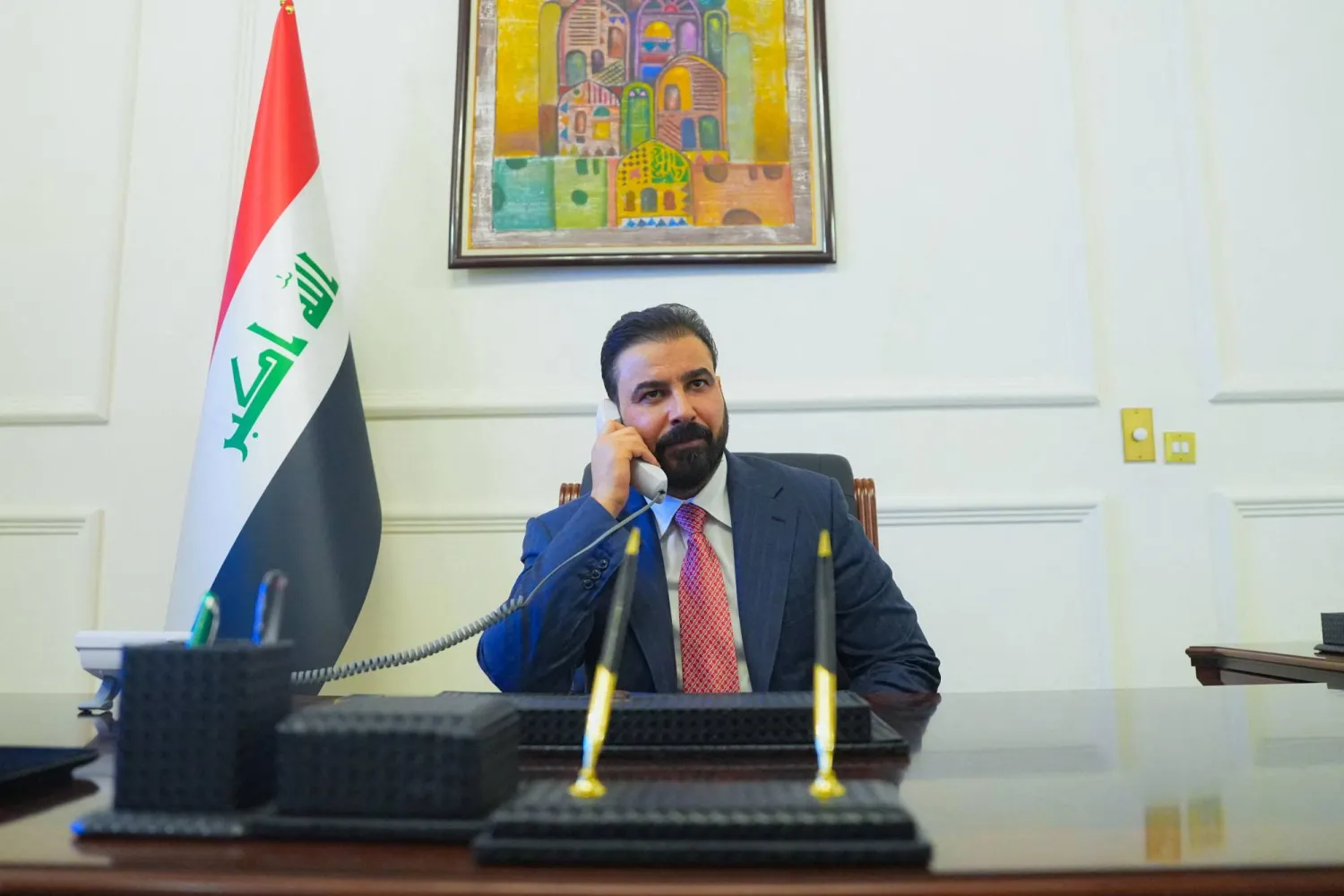
New Iraqi Prime Minister-designate Ali al-Zaidi, uses a phone at his office in Baghdad, Iraq, April 28, 2026. (Iraqi Prime Minister’s Media Office/Handout via Reuters).
TT

Why Does Trump Favor Iraq’s Al-Zaidi?

New Iraqi Prime Minister-designate Ali al-Zaidi, uses a phone at his office in Baghdad, Iraq, April 28, 2026. (Iraqi Prime Minister’s Media Office/Handout via Reuters).

Iraq’s ruling Coordination Framework has been on an intriguing journey that started with the United States’ adamant rejection of former Prime Minister Nouri al-Maliki being appointed to head a new government and that ended with President Donald Trump personally congratulating Ali al-Zaidi on his appointment as PM-designate earlier this week.

On January 27, Trump threatened to cut US support to Iraq if Maliki returned to power. After 93 days, the Shiite forces in Iraq were surprised when Trump congratulated al-Zaidi and urged him to form a government that is free of “terrorism”. He even received an invitation to visit Washington.

Iran has yet to comment on any of these developments.

Trump’s envoy to Syria Tom Barrack had telephoned al-Zaidi on Tuesday ahead of Trump’s telephone call to the PM-designate, a banker who, with Shiite consensus, has become the face of a potential and still ambiguous American deal.

Normally, pro-Iran factions in Iraq don’t let such friendly American contacts go without a fierce wave of criticism against any attempt to normalize ties with Washington, the perceived great enemy. That did not happen.

On the contrary, the hawks of the so-called “Resistance Axis” are preoccupied with giving the new PM-designate advice over including “strong” figures in his cabinet lineup to ensure its success. They have already sent him numerous possible candidates.

Al-Zaidi was named to his post just two hours after his name was floated in the media. His name appeared out of nowhere just days after commander of Iran’s Quds Force Esmail Qaani visited Baghdad. It remains to be seen if Qaani had imposed his conditions or surrendered to a deal that is beyond Iran’s control.

Al-Zaidi's designation took place as Iraq finds itself caught between the US-Iran conflict with each country trying to impose its influence over Baghdad. The appointment could have been a victory of one party against the other.

The American veto over Maliki had limited the Coordination Framework’s options and forced it into a battle of wills with Washington. With the eruption of the conflict with Iran, al-Zaidi's name was floated as a possible candidate and way out. An evident deal was reached that led to his designation and it continues to raise questions.

Observers believe that the appointment is the beginning of a broader deal that may have intrigued Trump.

Sources said that al-Zaidi did not appear out of nowhere in the Framework and that he was actually always there as a “winning card” that can be used by influential parties.

Other sources said that al-Zaidi now faces two possibilities: His proposed cabinet lineup will fail to receive the parliament’s vote of confidence, giving the Framework room to catch its breath in the political impasse and line up other options.

This is viewed as a scenario that outgoing Prime Minister Mohammed Shia al-Sudani could come up with.

The second possibility would be for the lineup to win the vote of confidence and for al-Zaidi to lead a transitional phase of two years or less. Observers have suggested that early elections could be held during this period. This scenario favors influential cleric Moqtada al-Sadr.

There also lies a third possibility that al-Zaidi was indeed designated through an American deal amid rumors that the US is seeking to limit China’s influence in the region.

The way Trump congratulated al-Zaidi suggests that Washington may have won something major in return from Baghdad. Or it could mean that Iran’s influence in Iraq had gotten so weak that it allowed major players in Baghdad to seize the reins and do what was necessary, including appointing al-Zaidi, to avoid US economic sanctions that would only further isolate Iraq and Iran.


Gaza Hospital Says Child among Three Killed in Israeli Strike

Residents inspect the rubble of a building that belongs to the Palestinian family of Abu Saif and was destroyed by an Israeli airstrike in Nuseirat, central Gaza Strip, Saturday, May 23, 2026. (AP Photo/Abdel Kareem Hana)
TT

Gaza Hospital Says Child among Three Killed in Israeli Strike

Residents inspect the rubble of a building that belongs to the Palestinian family of Abu Saif and was destroyed by an Israeli airstrike in Nuseirat, central Gaza Strip, Saturday, May 23, 2026. (AP Photo/Abdel Kareem Hana)

A pre-dawn Israeli airstrike killed three members of a Palestinian family, including a one-year-old child, in central Gaza on Sunday, a hospital said.

Gaza remains gripped with daily violence despite a formal ceasefire in place since October, with both the Israeli military and Hamas accusing one another of violating the truce, says AFP.

Al-Aqsa Martyrs hospital in Deir el-Balah said it had received the bodies of a couple and their infant after an Israeli strike hit a residential apartment in the Al-Nuseirat camp before dawn.

The hospital said around 10 people were wounded.

There was no immediate comment from the Israeli military about the three deaths, though it said it had struck three Hamas weapons storage facilities in central Gaza over the preceding 24 hours.

A ceasefire has been in place in Gaza since October, but Israel reserves the right to strike targets it deems a threat.

At least 890 Palestinians have been killed since the October 10 ceasefire, according to Gaza's health ministry, which operates under Hamas authority and whose figures are considered reliable by the UN.

The Israeli military says five of its soldiers have also been hit during the same period.

Media restrictions and limited access in Gaza have prevented AFP from independently verifying casualty figures or freely covering the fighting.


Iraq’s Nujaba Movement Warns against ‘US Plot’ to Integrate PMF in New Security Ministry

Slain Iranian Supreme Leader Ali Khamanei (R) and Nujaba Movement leader Akram al-Kaabi in Tehran in December 2018. (Supreme leader’s website)
TT

Iraq’s Nujaba Movement Warns against ‘US Plot’ to Integrate PMF in New Security Ministry

Slain Iranian Supreme Leader Ali Khamanei (R) and Nujaba Movement leader Akram al-Kaabi in Tehran in December 2018. (Supreme leader’s website)

The Iran-aligned Nujaba Movement in Iraq warned on Saturday against an “American plot” to merge the pro-Iran Popular Mobilization Forces (PMF) in state institutions, presenting new Prime Minister Ali al-Zaidi with his first test in imposing state monopoly over arms.

It made its warning in wake of a visit to Iraq earlier this week by former US Central Command Commander David Petraeus, who also previously led US forces stationed in Iraq.

The new Iraqi government appears to be a taking a tougher stance against the Iran-aligned armed factions in the country in wake of attacks launched from Iraq against Saudi Arabia and the United Arab Emirates.

Riyadh and Abu Dhabi have said the attacks were launched from Iraqi territory. Zaidi has slammed the attacks as “criminal acts”.

Spokesperson for the Commander-in-Chief of the Iraqi Armed Forces Sabah al-Numan said the committee probing the attacks will cooperate with Riyadh and Abu Dhabi to uncover the perpetrators.

“The official statements are not up for debate: the security of our brothers is a read line and there can be no replacing the rule of law,” he said in statements carried by the official state news agency INA.

Any party found responsible for the attacks will face judicial and military measures, he vowed, adding that the attacks were a “threat to Iraq’s national security and flagrant violation of its sovereignty”.

On the state monopoly over arms, al-Numan said the decision “is not a mere political slogan, but a security strategy that must be implemented.”

“The success of the government will be measured by how much it establishes itself as the sole party that holds power over weapons,” he stressed.

Prominent armed factions, such as the Kataib Hezbollah and Kataib Sayyid al-Shuhada, have not made any statements over the recent developments.

The Nujaba Movement, however, has openly defied the state’s decision to impose monopoly over weapons.

The party, which is seen as the most hardline, has also rejected attempts to restructure the PMF.

Deputy head of the movement’s executive council Hussein al-Saeedi said: “The resistance’s weapons are not open to compromise.”

“Stripping the factions of their weapons will leave society exposed to the ongoing threats,” he declared from Basra.

He also slammed as an “American plot” the alleged plan to merge the PMF with the federal police and other forces as part of a new “federal security ministry”.

He said such efforts are “futile” and “impossible to execute”, warning that insisting on forging ahead with the plan will have “political and popular implications.”


10,000 Kurds Apply for Syrian Citizenship

Syrian Kurds demonstrate to mark Kurdish Language Day, demanding constitutional recognition of the Kurdish language by the Syrian government, in Qamishli, Syria, May 14, 2026. (Reuters)
TT

10,000 Kurds Apply for Syrian Citizenship

Syrian Kurds demonstrate to mark Kurdish Language Day, demanding constitutional recognition of the Kurdish language by the Syrian government, in Qamishli, Syria, May 14, 2026. (Reuters)

Damascus announced on Saturday that it has received over 10,000 applications for Syrian citizenship from Kurds in wake of a recent decree that preserves their rights in the country.

The Interior Ministry said it received applications for citizenship from 2,892 families and 10,516 individuals.

The majority of the applications were filed in the northeastern Hasakeh region, followed by Aleppo, Raqqa, then Deir Ezzor.

Authorities began receiving applications for citizenship from the Kurds on April 6. A May 7 deadline for receiving applications was extended to allow people more time to complete their official procedures ahead of applying.

Receiving the application is the first step towards citizenship. It will be followed by interviews with applicants to verify their documents and eligibility. The final step culminates in receiving citizenship and a document that allows them to enjoy all of their civilian rights.

The process covers all Kurds who do not have an identification document in Syria, as well as expatriates.
