


Musk Says He Plans to Sue Apple for Not Featuring X or Grok Among Its Top Apps 

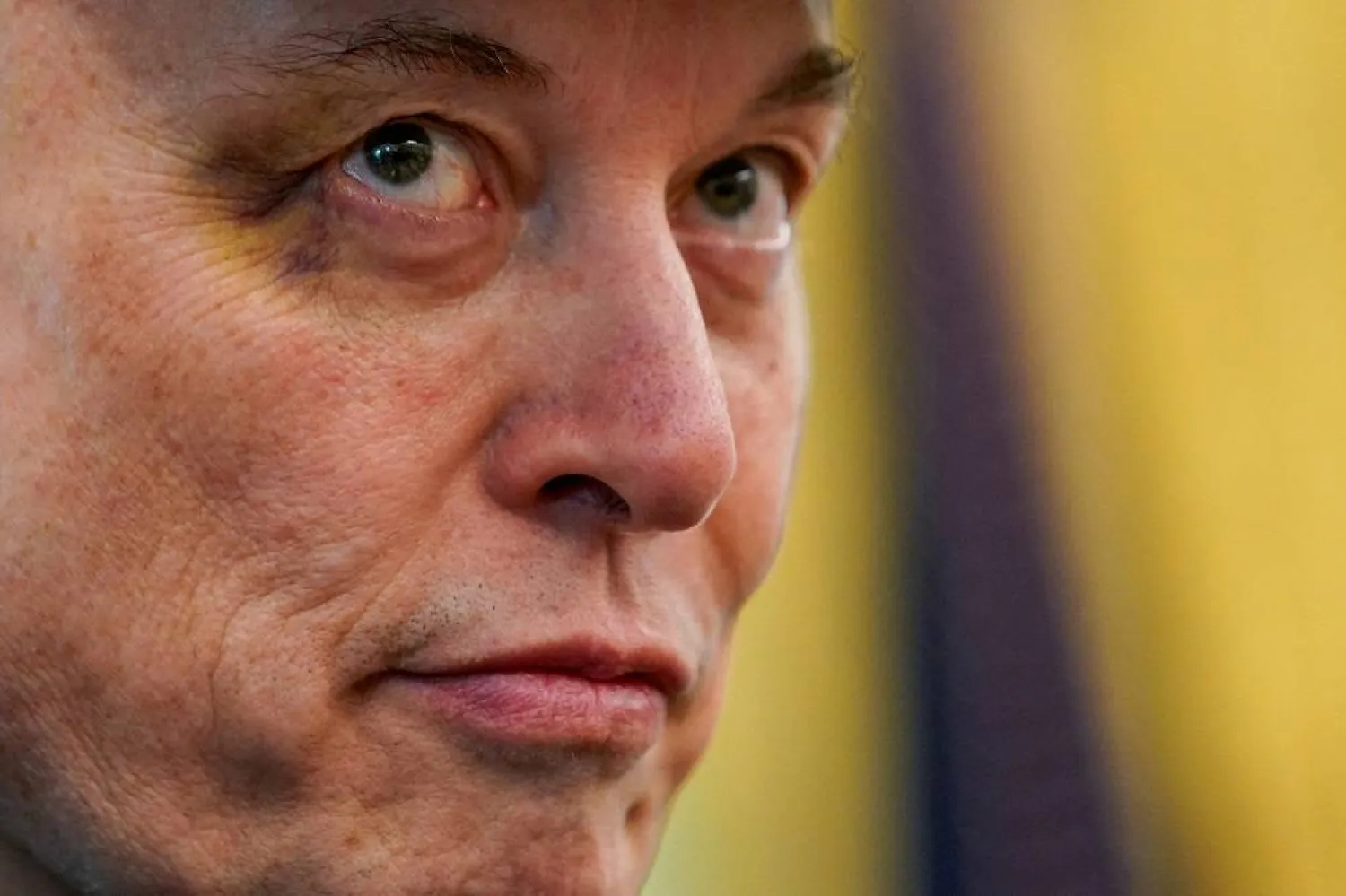
Elon Musk is seen with a bruised eye that Musk claimed he received at the hands of his son, X Æ A-12, as he attends a press conference with US President Donald Trump in the Oval Office at the White House in Washington, DC, US, May 30, 2025. (Reuters)
TT

Musk Says He Plans to Sue Apple for Not Featuring X or Grok Among Its Top Apps 

Elon Musk is seen with a bruised eye that Musk claimed he received at the hands of his son, X Æ A-12, as he attends a press conference with US President Donald Trump in the Oval Office at the White House in Washington, DC, US, May 30, 2025. (Reuters)

Billionaire SpaceX, Tesla and X owner Elon Musk says he plans to sue Apple for not featuring X and its Grok artificial intelligence chatbot app in its top recommended apps in its App Store.

Musk posted the comments on X late Monday, saying, “Hey @Apple App Store, why do you refuse to put either X or Grok in your ‘Must Have’ section when X is the #1 news app in the world and Grok is #5 among all apps? Are you playing politics? What gives? Inquiring minds want to know.”

Grok is owned by Musk's artificial intelligence startup xAI.

Musk went on to say that “Apple is behaving in a manner that makes it impossible for any AI company besides OpenAI to reach #1 in the App Store, which is an unequivocal antitrust violation. xAI will take immediate legal action.”

He gave no further details.

There was no immediate comment from Apple, which has faced various allegations of antitrust violations in recent years.

A federal judge recently found that Apple violated a court injunction in an antitrust case filed by Fortnite maker Epic Games.

Regulators of the 27-nation European Union fined Apple 500 million euros in April for breaking competition rules by preventing app makers from pointing users to cheaper options outside its App Store.

Last year, the EU fined the US tech giant nearly $2 billion for unfairly favoring its own music streaming service by forbidding rivals like Spotify from telling users how they could pay for cheaper subscriptions outside of iPhone apps.

As of early Tuesday, the top app in Apple's App Store was TikTok, followed by Tinder, Duolingo, YouTube and Bumble. Open AI's ChatGPT was ranked 7th.



Australia Aims to Tax Tech Giants Unless They Pay News Outlets

A photograph taken during the World Economic Forum (WEF) annual meeting in Davos on January 19, 2025, shows the logo of Meta, the US company that owns and operates Facebook, Instagram, Threads, and WhatsApp. (AFP)
TT

Australia Aims to Tax Tech Giants Unless They Pay News Outlets

A photograph taken during the World Economic Forum (WEF) annual meeting in Davos on January 19, 2025, shows the logo of Meta, the US company that owns and operates Facebook, Instagram, Threads, and WhatsApp. (AFP)

Australia unveiled draft laws on Tuesday that would tax tech giants Meta, Google and TikTok unless they voluntarily strike deals to pay local outlets for news.

Traditional media companies around the world are in a battle for survival as readers increasingly consume their news on social media.

Australia wants big tech companies to compensate local publishers for sharing articles that drive traffic on their platforms.

Prime Minister Anthony Albanese said tech giants Meta, Google and TikTok would be given a chance to strike content deals with local news publishers.

If they refused, they faced a compulsory levy that amounted to 2.25 percent of their Australian revenue, he said.

"Large digital platforms cannot avoid their obligations under the news media bargaining code," Albanese told reporters.

"At this point the three organizations are Meta, Google and TikTok."

The changes aim to close a loophole under a previous media law which allowed organizations to avoid a levy if they removed news from their platforms.

The three firms were singled out based on a combination of their Australian revenues and large numbers of domestic users.

The draft laws have been designed to stop the tech giants from simply stripping news from their platforms -- something Meta and Google have done in the past.

"What we are encouraging is for them to sit down with news organizations and get these deals done," Albanese said.

When Canberra mooted similar laws in 2024, Facebook parent Meta announced that Australian users would no longer be able to access the "news" tab.

Meta had previously announced it would not renew content deals with news publishers in the United States, Britain, France and Germany.

- 'Only fair' -

Google has similarly threatened to restrict its search engine in Australia if forced to compensate news outlets.

Journalism needed to have a "monetary value attached to it", Albanese said.

"It shouldn't be able to be taken by a large multinational corporation and used to generate profits with no compensation."

Supporters of such laws argue that social media companies attract users with news stories and hoover up online advertising dollars that would otherwise go to struggling newsrooms.

Meta said the proposed laws were "nothing more than a digital services tax".

"News organizations voluntarily post content on our platforms because they receive value from doing so," a spokeswoman said in a statement to AFP.

"The idea that we take their news content is simply wrong."

Australia's University of Canberra has found that more than half the country uses social media as a source of news.

"People are increasingly getting their news directly from Facebook, from TikTok and Google," Communications Minister Anika Wells said.

"We believe it's only fair that large digital platforms contribute to the hard work that enriches their feeds and that drives their revenue."

The draft laws were presented for public consultation on Tuesday, which will close in May.

They would then be introduced into parliament later this year.


Google Breaks Ground on Indian AI Megahub

Google's logo during the CERAWeek energy conference 2026 in Houston, Texas, US, March 24, 2026. (Reuters)
TT

Google Breaks Ground on Indian AI Megahub

Google's logo during the CERAWeek energy conference 2026 in Houston, Texas, US, March 24, 2026. (Reuters)

Tech giant Google on Tuesday marked the ceremonial start of work on its largest artificial intelligence hub outside of the United States with a groundbreaking ceremony in India.

The firm promised in October 2025 to spend $15 billion over five years to construct the vast center in Visakhapatnam, a southeastern port in Andhra Pradesh state of around two million people, popularly known as "Vizag".

"Today marks the first concrete milestone in Google's largest commitment to India's digital future," Bikash Koley, Google's Vice President for Global Infrastructure, told the ceremony.

"This project represents a $15 billion blueprint to deliver a full stack AI ecosystem," he added.

"At its core is our gigawatt scale data center campus, purpose built for the immense computational demand of the AI era, powering services like Gemini and Google Search."

Nara Lokesh, information technology minister for Andhra Pradesh state, said he was "excited as we embark on this journey to build India's most coveted AI and deep-tech hub".

Vizag is being pitched as a landing point for submarine internet cables linking India to Singapore.

"By establishing Vizag as an international subsea gateway, we will add vital diversity from the existing landings, in Mumbai and Chennai, increasing the resilience of India's digital backbone and improving economic security," Koley added.

"New strategic fiber optic routes will further connect India with the rest of the world."

Globally, data centers are an area of phenomenal growth, fueled by the need to store massive amounts of digital data, and to train and run energy-intensive AI tools.

"This is a pivotal moment for India, Vizag, and for Google," Koley added.


Microsoft Cuts OpenAI Revenue Share in a Fresh Step to Loosen Their AI Alliance

FILE PHOTO: A Microsoft logo is seen next to a cloud in Los Angeles, California, US June 14, 2016. REUTERS/Lucy Nicholson/File Photo
TT

Microsoft Cuts OpenAI Revenue Share in a Fresh Step to Loosen Their AI Alliance

FILE PHOTO: A Microsoft logo is seen next to a cloud in Los Angeles, California, US June 14, 2016. REUTERS/Lucy Nicholson/File Photo

Microsoft said Monday it will no longer pay a share of its revenue to ChatGPT maker OpenAI, the latest move to untether a close partnership that helped unleash an artificial intelligence boom.

OpenAI relied exclusively on Microsoft's investments in cloud computing services to build the technology that helped make ChatGPT a household name. Microsoft, in turn, relied on OpenAI's technology to build its own AI assistant Copilot.

But the partnership has evolved as San Francisco-based OpenAI, founded as a nonprofit, has shifted to a capitalistic enterprise on a path toward an initial public offering on Wall Street and has balanced its reliance on Microsoft with other cloud partners like Amazon, Google and Oracle, The AP news reported.

OpenAI said Monday it will continue to pay Microsoft a share of its revenue through 2030.

The two companies said Microsoft remains the primary cloud computing partner for OpenAI, and products made by the AI company will ship first on Microsoft's cloud platform, called Azure, “unless Microsoft cannot and chooses not to support the necessary capabilities.”

Wedbush Securities analyst Dan Ives said in a note to investors Monday that the new agreement “puts OpenAI on a strong path forward to going public through IPO given its clearer opportunity in the cloud environment while reducing significant barriers from its original partnership with Microsoft.”

Ives said it's also important for Microsoft as it “looks to develop tech independence from OpenAI” in advancing Copilot's capabilities and partnering with other AI providers such as OpenAI rival Anthropic, maker of the chatbot Claude.