


Mexican-American Designer Apologizes for Adidas Sandal Design Accused of Cultural Appropriation

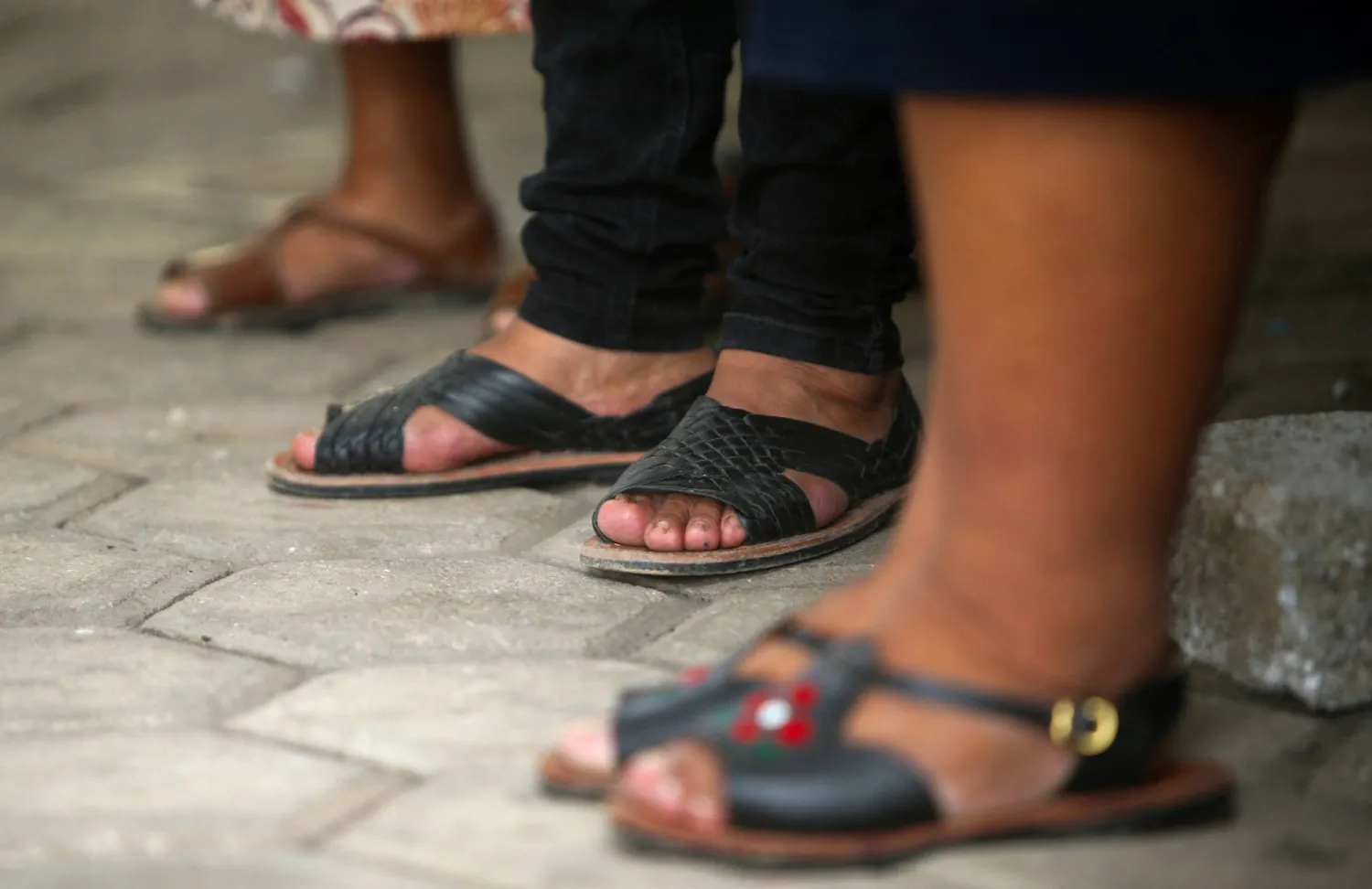
People wear traditional Indigenous sandals in Villa Hidalgo Yalalag, in Villa Hidalgo Yalalag, Oaxaca, Mexico, August 9, 2025.  REUTERS/Jorge Luis Plata
People wear traditional Indigenous sandals in Villa Hidalgo Yalalag, in Villa Hidalgo Yalalag, Oaxaca, Mexico, August 9, 2025. REUTERS/Jorge Luis Plata
TT

Mexican-American Designer Apologizes for Adidas Sandal Design Accused of Cultural Appropriation

People wear traditional Indigenous sandals in Villa Hidalgo Yalalag, in Villa Hidalgo Yalalag, Oaxaca, Mexico, August 9, 2025.  REUTERS/Jorge Luis Plata
People wear traditional Indigenous sandals in Villa Hidalgo Yalalag, in Villa Hidalgo Yalalag, Oaxaca, Mexico, August 9, 2025. REUTERS/Jorge Luis Plata

Mexican-American clothing designer Willy Chavarria has apologized for an Adidas sandal he created after being accused by Mexican authorities of “cultural appropriation” for imitating an Indigenous shoe design.

The design launched by Adidas, known as the Oaxaca Slip On, is a black sandal with braided leather straps attached to a chunky sports shoe sole.

Mexican artisans and authorities say the intricate leather braids look strikingly similar to the traditional footwear known as huaraches made by the Zapotec Indigenous people in Oaxaca, produced mostly in the town of Villa Hidalgo Yalalag.

They have accused the brand and Chavarria of “cultural appropriation” and of copying the design without the permission of the Indigenous community. Authorities were quick to note that cultural Mexican designs have long been copied by major brands before, and said they planned to tighten laws to protect Mexican designs.

Chavarria responded to mounting criticisms in comments sent to The Associated Press on Tuesday. In a statement addressed to the “people of Oaxaca,” he said that the design was intended to “to honor the powerful cultural and artistic spirit of Oaxaca and its creative communities — a place whose beauty and resistance have inspired me.”

“I am deeply sorry that the shoe was appropriated in this design and not developed in direct and meaningful partnership with the Oaxacan community,” Chavarria wrote. “This falls short of the respect and collaborative approach that Oaxaca, the Zapotec community of Villa Hidalgo Yalalag, and its people deserve.”

Chavarria is a Mexican-American designer, who has risen to fame for his designs exploring Chicano, or Mexican-American, culture, often mixing Mexican themes with American products. His designs include sweaters reading “Chicano” in red, scripted font, and styles with the Mexican flag and cowboy hats reminiscent of northern Mexican culture.

In recent months, Chavarria also was put in the spotlight for a show at Paris Fashion Week that was intended as criticism of the Trump administration's deportation policy.

Chavarria's comments came days after Adidas made a public apology for the design, and in a statement said it was reaffirming “our commitment to collaborate with Yalalag in a respectful dialogue that honors their cultural legacy.” Last week, in a letter to Oaxacan state officials, the company requested to sit down with local officials and to discuss how it can “repair the damage” to Indigenous populations.

“Adidas recognizes and values the cultural richness of Mexico’s Indigenous communities and the meaning of their artisanal heritage,” it wrote in a statement.



Syrian Culture Minister Applauds Saudi Pavilion at Damascus Book Fair

The 2026 Damascus International Book Fair is held from February 6 to 16 - SPA
TT

Syrian Culture Minister Applauds Saudi Pavilion at Damascus Book Fair

The 2026 Damascus International Book Fair is held from February 6 to 16 - SPA

Syrian Minister of Culture Mohammed Yassin Saleh visited the Kingdom’s pavilion at the 2026 Damascus International Book Fair, held from February 6 to 16, where the Kingdom is serving as the Guest of Honor.

He commended the efforts of the Literature, Publishing and Translation Commission in showcasing the rich diversity of the Saudi cultural and literary scene. The pavilion features exhibitions of manuscripts, a Saudi fashion corner, and archaeological replicas, SPA reported.

The minister reviewed the commission's Tarjim translation initiative and Saudi literature comics.

This participation at the 2026 Damascus International Book Fair showcases Saudi creativity and fosters cultural dialogue, supporting Saudi Vision 2030’s goals of knowledge exchange and cultural leadership.


Saudi Arabia, Syria Underline Depth of their Cultural Ties

Syrian President al-Sharaa receives the Saudi minister of culture and the accompanying delegation at the Conference Palace in Damascus on Thursday. (SPA)
TT

Saudi Arabia, Syria Underline Depth of their Cultural Ties

Syrian President al-Sharaa receives the Saudi minister of culture and the accompanying delegation at the Conference Palace in Damascus on Thursday. (SPA)

Saudi Arabia and Syria underlined the strength of their cultural relationship during high-level meetings held in Damascus on Thursday, on the sidelines of the opening of the Damascus International Book Fair 2026, where the Kingdom is participating as guest of honor.

Syrian President Ahmad al-Sharaa received Saudi Minister of Culture Prince Badr bin Abdullah bin Farhan at the Conference Palace in the capital.

Earlier the same day, Prince Badr met with his Syrian counterpart, Minister of Culture Mohammad Yassin Saleh, during an official visit to attend the fair. T

he Saudi minister congratulated Syria on hosting the exhibition and expressed his wishes for continued prosperity, progress, and stability for the Syrian government and people.

Both meetings highlighted the depth of cultural relations between the two countries, the importance of expanding joint cultural cooperation across various fields, and the alignment of positions on issues of mutual interest in a way that serves both nations.

The Saudi delegation included senior officials and advisers, among them representatives from the Royal Court, the Ministry of Culture, and the King Abdulaziz Public Library, reflecting broad institutional engagement in the visit.

In the evening, Prince Badr attended the opening ceremony of the fair’s special session, held under the patronage and in the presence of al-Sharaa. The event drew wide official and cultural participation, including Arab ministers, political and intellectual figures, and a distinguished group of writers and cultural figures.

In a post on the X platform, Prince Badr thanked “our brothers in Syria for their generous hospitality and their efforts in organizing the Damascus International Book Fair.”

The minister also inaugurated the Kingdom’s pavilion at the fair in the presence of the Syrian minister of culture and the Qatari minister of culture.

Saudi Arabia’s guest-of-honor participation continues until Feb. 16 and reflects its growing prominence and leadership in the Arab and global cultural landscape.

This participation aligns with Saudi Vision 2030, which places culture at the heart of national development, viewing it as a space for dialogue, a bridge for civilizational communication, and a tool for strengthening ties among Arab peoples.

The Saudi Literature, Publishing and Translation Commission is leading the Kingdom’s participation, highlighting the development of the cultural sector and reaffirming the central role of books as carriers of knowledge and awareness.

The Saudi pavilion boasts a comprehensive cultural program featuring intellectual seminars, poetry evenings, a manuscript exhibition, traditional Saudi fashion displays, hospitality corners, archaeological replicas, and performing arts that express the depth of the Kingdom’s cultural heritage.

On the sidelines of the visit, Prince Badr, accompanied by Minister Saleh, toured the National Museum of Damascus, which houses rare artifacts spanning prehistoric eras, ancient Syrian civilizations, classical and Islamic periods, as well as traditional and modern art.


UNESCO Honors Al-Bisht Al-Hasawi as Thousands Flock to Al-Ahsa Festival

Visitors can explore interactive displays, participate in live workshops, and witness the meticulous process of tailoring this iconic symbol of prestige - SPA
TT

UNESCO Honors Al-Bisht Al-Hasawi as Thousands Flock to Al-Ahsa Festival

Visitors can explore interactive displays, participate in live workshops, and witness the meticulous process of tailoring this iconic symbol of prestige - SPA

The third edition of Al-Bisht Al-Hasawi Festival is drawing thousands of regional and international visitors to Ibrahim Palace in historic Al-Hofuf.

Organized by the Heritage Commission, this year’s festival celebrates the inscription of the Bisht on UNESCO’s Representative List of the Intangible Cultural Heritage of Humanity.

The event showcases Al-Ahsa’s centuries-old tradition of hand-weaving and gold embroidery, a craft passed down through generations of local families, SPA reported.

Visitors can explore interactive displays, participate in live workshops, and witness the meticulous process of tailoring this iconic symbol of prestige.

With UNESCO's participation and representatives from six countries, the festival has evolved into a global platform for cultural dialogue, cementing the Bisht’s status as a world-class cultural treasure.