
Does Paris Have Too Many Tourists? A European Crisis Comes to Montmartre 

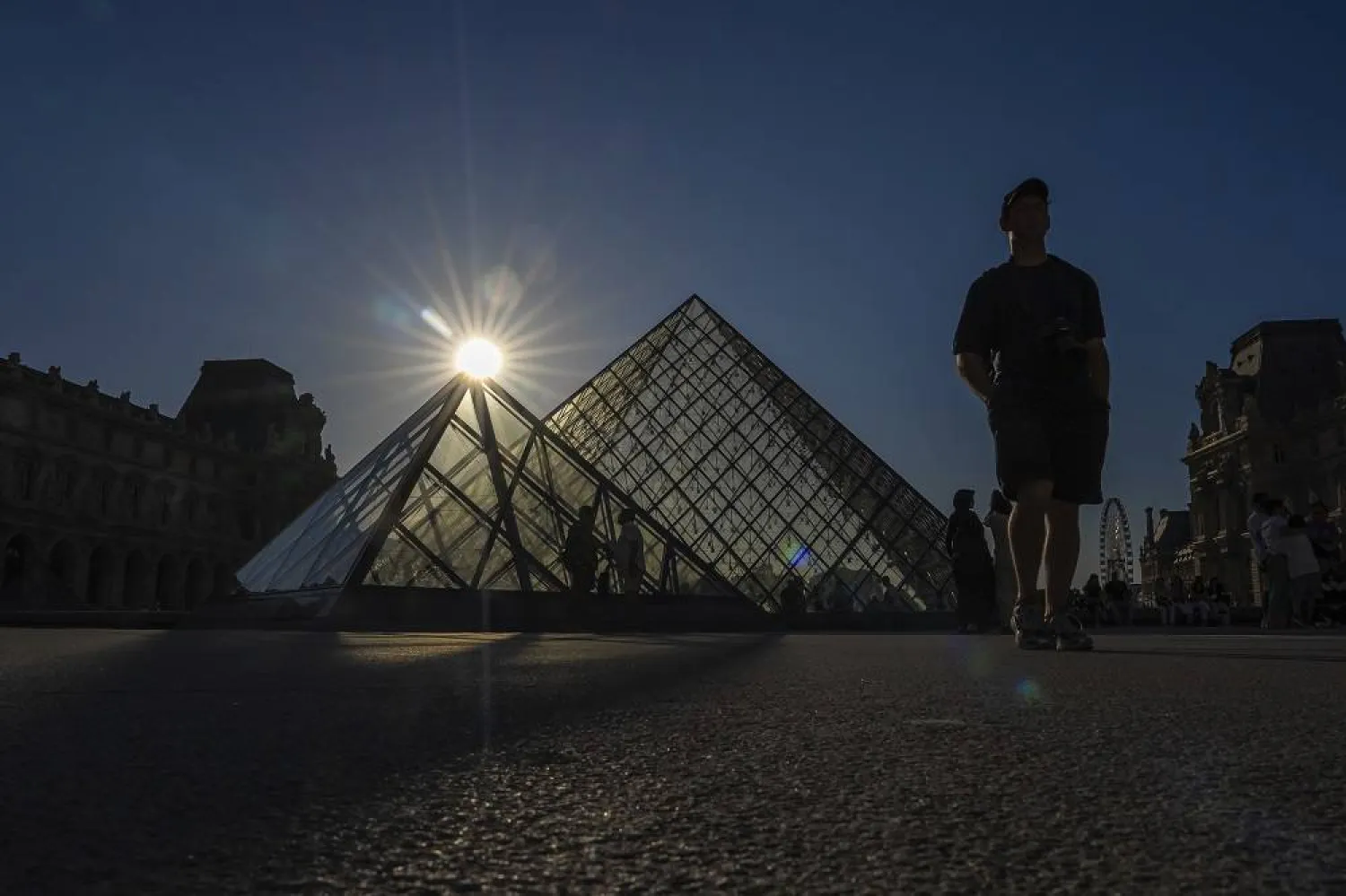
Tourists walk near the Louvre in Paris, Sunday, Aug. 17, 2025. (AP)
TT

Does Paris Have Too Many Tourists? A European Crisis Comes to Montmartre 

Tourists walk near the Louvre in Paris, Sunday, Aug. 17, 2025. (AP)

When Olivier Baroin moved into an apartment in Montmartre about 15 years ago, it felt like he was living in a village in the heart of Paris. Not anymore.

Stores for residents are disappearing, along with the friendly atmosphere, he says. In their place are hordes of people shooting selfies, shops selling tourist trinkets and cafés whose seating spills into the narrow cobbled streets as overtourism takes its toll.

Baroin has had enough. He put his apartment up for sale after local streets were designated pedestrian-only while accommodating the growing number of visitors.

“I told myself that I had no other choice but to leave since, as I have a disability, it’s even more complicated when you can no longer take your car, when you have to call a taxi from morning to night," he told The Associated Press.

From Venice to Barcelona to Amsterdam, European cities are struggling to absorb surging numbers of tourists.

Some residents in one of Paris' most popular neighborhoods for tourists are now pushing back. A black banner strung between two balconies in Montmartre reads, in English: “Behind the postcard: locals mistreated by the Mayor.” Another, in French, says: “Montmartre residents resisting.”

Atop the hill where the Basilica of Sacré-Cœur crowns the city's skyline, residents lament what they call the “Disneyfication” of the once-bohemian slice of Paris. The basilica says it now attracts up to 11 million people a year — even more than the Eiffel Tower — while daily life in the neighborhood has been overtaken by tuk-tuks, tour groups, photo queues and short-term rentals.

“Now, there are no more shops at all, there are no more food shops, so everything must be delivered,” said 56-year-old Baroin, a member of a residents' protest group called Vivre a Montmartre, or Living in Montmartre.

The unrest echoes tensions across town at the Louvre Museum, where staff in June staged a brief wildcat strike over chronic overcrowding, understaffing and deteriorating conditions. The Louvre logged 8.7 million visitors in 2024, more than double what its infrastructure was designed to handle.

Paris, a city of just over 2 million residents if you count its sprawling suburbs, welcomed 48.7 million tourists in 2024, a 2% increase from the previous year.

Sacré-Cœur, the most visited monument in France in 2024, and the surrounding Montmartre neighborhood have turned into what some locals call an open-air theme park.

Local staples like butchers, bakeries and grocers are vanishing, replaced by ice-cream stalls, bubble-tea vendors and souvenir T-shirt stands.

Paris authorities did not immediately respond to requests for comment.

Visitors seemed largely to be enjoying the packed streets on a sunny Tuesday this week.

“For the most part, all of Paris has been pretty busy, but full of life, for sure," said American tourist Adam Davidson. “Coming from Washington, DC, which is a lively city as well, I would say this is definitely full of life to a different degree for sure.”

In Barcelona, thousands have taken to the streets this year, some wielding water pistols, demanding limits on cruise ships and short-term tourist rentals. Venice now charges an entry fee for day-trippers and caps visitor numbers. And in Athens, authorities are imposing a daily limit on visitors to the Acropolis, to protect the ancient monument from record-breaking tourist crowds.

Urban planners warn that historic neighborhoods risk becoming what some critics call “zombie cities” — picturesque but lifeless, their residents displaced by short-term visitors.

Paris is trying to mitigate the problems by cracking down on short term rentals and unlicensed properties.

But tourism pressures are growing. By 2050, the world’s population is projected to reach nearly 10 billion, according to United Nations estimates. With the global middle class expanding, low-cost flights booming and digital platforms guiding travelers to the same viral landmarks, many more visitors are expected in iconic cities like Paris.

The question now, residents say, is whether any space is left for those who call it home.


Ancient Egyptian Pharaoh’s Boat Is Being Reassembled in Public at Grand Egyptian Museum

People walk next to King Khufu's boat gem, also known as the Solar Boat, as work to restore the second solar boat has started with wooden planks part of the 1,650-piece structure being installed on a metal frame through Egyptian-Japanese cooperation with two Japanese universities, marking the start of preparations for the second boat's public display at the Grand Egyptian Museum (GEM), near the Giza Pyramid Complex, in Giza, Egypt, December 23, 2025.
TT

Ancient Egyptian Pharaoh’s Boat Is Being Reassembled in Public at Grand Egyptian Museum

People walk next to King Khufu's boat gem, also known as the Solar Boat, as work to restore the second solar boat has started with wooden planks part of the 1,650-piece structure being installed on a metal frame through Egyptian-Japanese cooperation with two Japanese universities, marking the start of preparations for the second boat's public display at the Grand Egyptian Museum (GEM), near the Giza Pyramid Complex, in Giza, Egypt, December 23, 2025.

A boat belonging to an Egyptian pharaoh is being assembled in full view at the Grand Egyptian Museum’s exhibition hall.

Staff began piecing together the cedarwood boat, one of two that were found that belong to King Khufu, Tuesday morning as dozens of visitors watched.

The assembly of the 42-meter (137-foot) -long vessel, which sits next to its already-assembled twin that has been on display, is expected to take around four years, according to Issa Zeidan, head of restoration at the Grand Egyptian Museum. It contains 1,650 wooden pieces.

King Khufu ruled ancient Egypt more than 4,500 years ago and built the Great Pyramid of Giza.

“You’re witnessing today one of the most important restoration projects in the 21st century,” said Tourism and Antiquities Minister Sherif Fathy, who attended the event.

The $1 billion museum, also known as GEM, was touted as the world’s largest when it was lavishly inaugurated last month. It's home to nearly 50,000 artifacts, including the collection of treasures from the tomb of the famed King Tutankhamun, which was discovered in 1922. The museum, located near the pyramids at the edge of Cairo, is expected to boost Egypt’s tourism revenues and help bolster its economy.

The boat was one of two discovered in 1954, opposite the southern side of the Great Pyramid. The excavation of its wooden parts began in 2014, according to the museum’s website.

The exact purpose of the boats remains unclear, but experts believe they were either used to transport King Khufu’s body during his funeral or were meant to be used for his afterlife journey with the sun god Ra, according to the museum.


Louvre Museum Installs Security Bars on Balcony Used in October’s Heist

 Workers install metal security bars over the window where thieves broke into the Louvre museum on Oct.19, Tuesday Dec.23, 2025 in Paris. (AP)
Workers install metal security bars over the window where thieves broke into the Louvre museum on Oct.19, Tuesday Dec.23, 2025 in Paris. (AP)
TT

Louvre Museum Installs Security Bars on Balcony Used in October’s Heist

 Workers install metal security bars over the window where thieves broke into the Louvre museum on Oct.19, Tuesday Dec.23, 2025 in Paris. (AP)
Workers install metal security bars over the window where thieves broke into the Louvre museum on Oct.19, Tuesday Dec.23, 2025 in Paris. (AP)

France's Louvre museum on Tuesday installed security bars on the balcony that burglars used to break in and steal some of the crown jewels.

Four people broke into the world's most visited museum on October 19 and escaped with jewels worth an estimated $102 million, exposing glaring security gaps and revealing its deteriorating state.

They parked a movers' lift outside the museum, jumped on the balcony of the Apollo gallery, smashed a window, cracked open display cases ‌with angle grinders ‌and fled on the ‌back ⁠of scooters driven by ‌accomplices in a heist lasting less than 7 minutes.

On Tuesday, a crane lifted the security grille into place to seal the glass door leading to the balcony.

"The Louvre is learning all the lessons from the theft of October 19 and is continuing its transformation ⁠and the strengthening of its security architecture," the museum said in a ‌post on X.

It also said a ‍mobile police squad was ‍now present at the roundabout in front of ‍the iconic glass pyramid, and 100 more cameras would be deployed around the museum next year.

Police have identified eight suspects in connection with the heist, though the jewels are still missing.

The break-in raised awkward questions about security at the Louvre, which is home to ⁠priceless artworks such as the Mona Lisa.

Louvre officials have admitted there was inadequate security camera coverage of the outside walls of the museum and no coverage of the balcony involved in the break-in.

The heist was one of several woes to hit the museum in recent weeks: another gallery, adjacent to the Apollo, was closed because of structural weakness, a water leak damaged books at the Egyptian antiquities department and the museum ‌was partly closed for several days after its staff went on strike.


Najran: Saudi Arabia’s Southern Tourist and Cultural Gem

Najran is an exceptional tourist destination, where stunning landscapes meet a rich historical heritage. (SPA)
TT

Najran: Saudi Arabia’s Southern Tourist and Cultural Gem

Najran is an exceptional tourist destination, where stunning landscapes meet a rich historical heritage. (SPA)

Najran is an exceptional tourist destination, where stunning landscapes meet a rich historical heritage. Visitors can experience towering mountains, vast plains, and enchanting deserts that leave a lasting impression.

The region has undergone significant development to enhance its urban landscape and quality of life. Approximately 25 projects, valued at over SAR711 million, have been completed or are underway, including stormwater drainage improvements and upgraded infrastructure, said the Saudi Press Agency.

These initiatives are part of a broader plan to strengthen road networks and improve the city’s readiness to meet environmental and service challenges, in line with Saudi Vision 2030.

Najran is home to numerous archaeological sites that reflect its storied past. The historic city of Al-Ukhdood, dating back to the 4th and 5th centuries AD, serves today as a living, open-air museum attracting visitors from across the Kingdom and abroad.

The Hima Cultural Area, a UNESCO World Heritage Site, features over 5,500 rock carvings spanning different historical periods, offering valuable insights into the wildlife and culture of the Arabian Peninsula.

Najran also stands out as one of Saudi Arabia’s most important agricultural areas, with its unique climate allowing year-round cultivation of high-quality fruits and vegetables across more than 5,000 farms covering 27,000 hectares.

Its strategic location, natural resources, and advanced infrastructure make it a prime investment destination in southern Saudi Arabia. The region hosts around 90 factories and is rich in mineral resources, including gold, copper, iron, and copper-zinc reserves spanning over 70 square kilometers.

Foreign tourists have praised Najran for its seamless blend of history and natural beauty, noting that every corner tells the story of this ancient land and reflects a rich cultural heritage, making it a destination truly worth exploring.