

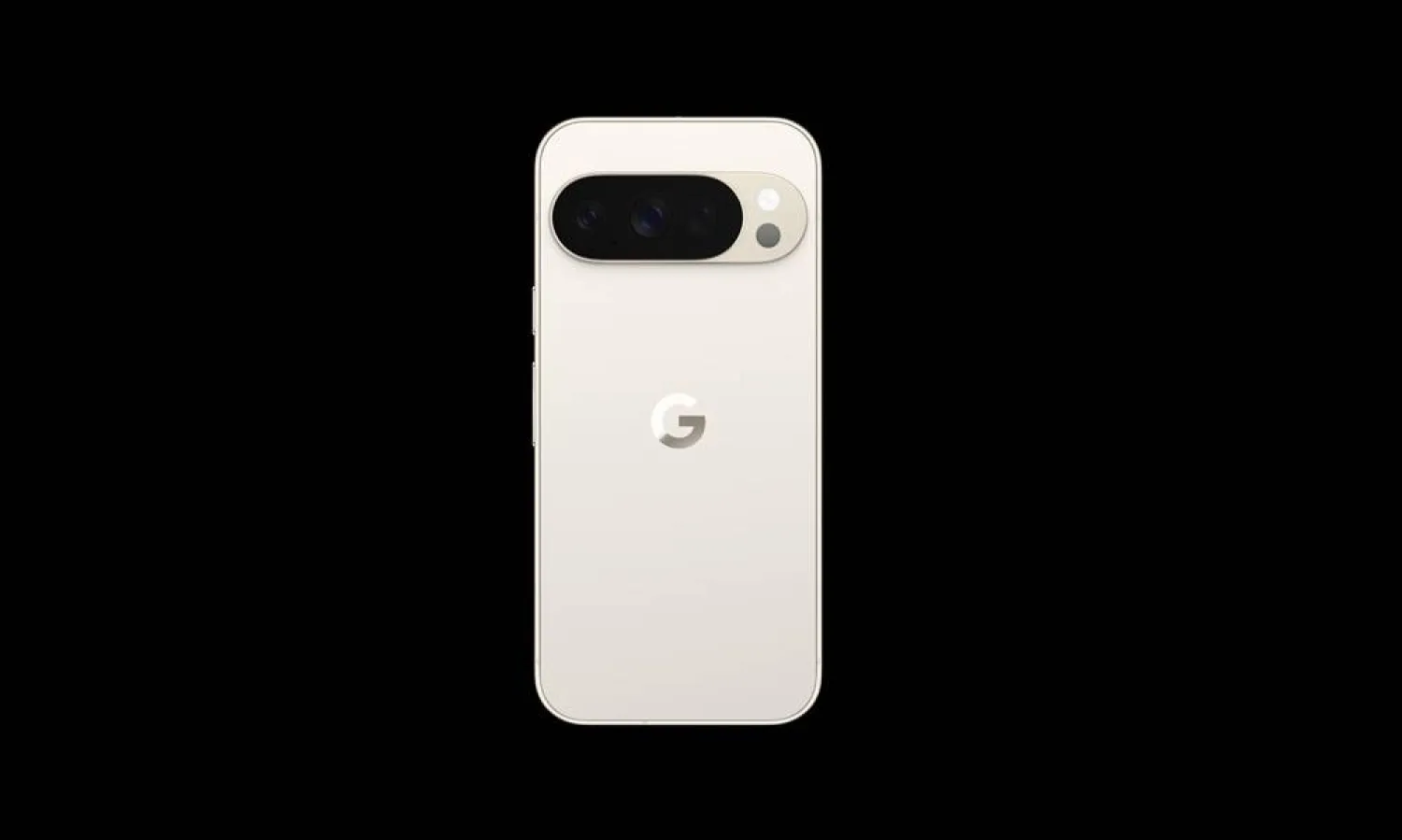

Google’s Pixel 10 Phones Raises the Ante on Artificial Intelligence

This undated photo released by Google shows a new smartphone loaded with an array of artificial intelligence features, including the Pixel 10 Pro. (Google LLC via AP)
TT

Google’s Pixel 10 Phones Raises the Ante on Artificial Intelligence

This undated photo released by Google shows a new smartphone loaded with an array of artificial intelligence features, including the Pixel 10 Pro. (Google LLC via AP)

Google on Wednesday unveiled a new line-up of Pixel smartphones injected with another dose of artificial intelligence that's designed to do everything from fetch vital information stored on the devices to help improve photos as they're being taken.

The AI expansion on the four Pixel 10 models amplifies Google's efforts to broaden the use of a technology that is already starting to reshape society. At the same time, Google is taking a swipe at Apple's Achilles' heel on the iPhone.

Apple so far has only been able to introduce a few basic AI features on the iPhone while failing to deliver on last year’s promise to deliver a more conversational and versatile version of its often-blundering virtual assistant Siri.

Without mentioning the iPhone by name, Google has already been mocking Apple’s missteps in online ads promoting the four new Pixel models as smartphones loaded with AI technology that consumers won’t have to wait for more than a year to arrive.

Google, in contrast, has been steadily increasing the amount of AI that it began to implant on its Pixels since 2023, with this year’s models taking it to another level.

Taking advantage of a more advanced processor, Google is introducing a new AI feature on the Pixel 10 phones called “Magic Cue” that’s designed to serve as a digital mind reader that automatically fetches information stored on the devices and displays the data at the time it’s needed. For instance, if a Pixel 10 user is calling up an airline, Magic Cue is supposed to instantaneously recognize the phone number and display the flight information if it’s in Gmail or a Google Calendar.

The Pixel 10 phones will also come with a preview feature of a new AI tool called “Camera Coach” that will automatically suggest the best framing and lighting angle as the lens is being aimed at a subject. Camera Coach will also recommend the best lens mode to use for an optimal picture.

The premium models — Pixel 10 Pro and Pixel 10 Pro XL — will also include a “Super Res” option that deploys a grab bag of software and AI tricks to zoom up to 100 times the resolution to capture the details of objects located miles away from the camera. The AI wizardry could happen without users even realizing it’s happening, making it even more difficult to know whether an image captured in a photo reflects how things really looked at the time a picture was taken or was modified by technology.

Google is also offering a free one-year subscription to its AI Pro plan to anyone who buys the more expensive Pixel 10 Pro or Pixel 10 Pro XL models in hopes of hooking more people on the Gemini toolkit it has assembled to compete against OpenAI’s ChatGPT.

The prices on all four Pixel 10 models will remain unchanged from last year’s Pixel 9 generation, with the basic starting at $800 and the Pro selling for $1,000, the Pro XL at $1,200 and a foldable version at $1,800. All the Pixel 10s expect the foldable model will be in stores on August 28. The Pixel 10 Pro Fold will be available starting October 9.

Although the Pixel smartphone remains a Lilliputian next to the Gulliverian stature of the iPhone and Samsung's Galaxy models, Google's ongoing advances in AI while holding the line on its marquee devices raise the competitive stakes.

“In the age of AI, it is a true laboratory of innovation,” Forrester Research analyst Thomas Husson said of the Pixel.

Apple, in particular, will be facing more pressure than usual when it introduces the next-generation iPhone next month.

Although the company has already said the smarter Siri won't be ready until next year at the earliest, Apple will still be expected to show some progress in AI to demonstrate the iPhone is adapting to technology's AI evolution rather than tilting toward gradual obsolescence. Clinging to a once-successful formula eventually sank the BlackBerry and its physical keyboard when the iPhone and its touch screen came along nearly 20 years ago.

Apple's pricing of the next iPhone will also be under the spotlight, given that the devices are made in China and India — two of the prime targets in President Donald Trump's trade war.

But Apple appeared to gain a reprieve from Trump's most onerous threats earlier this month by adding another $100 billion on top of an earlier $500 billion investment pledge to the US The tariff relief may enable Apple to minimize or even avoid price increases for the iPhone, just as Google has done with the Pixel 10 models.

Ubisoft Unveils Sweeping Restructuring, Updates Targets

The Ubisoft logo is seen at the Paris Games Week (PGW), a trade fair for video games in Paris, France, October 27, 2024. (Reuters)
TT

Ubisoft Unveils Sweeping Restructuring, Updates Targets

The Ubisoft logo is seen at the Paris Games Week (PGW), a trade fair for video games in Paris, France, October 27, 2024. (Reuters)

French video game publisher Ubisoft will undergo a reorganization, splitting the company into five creative divisions, it said on Wednesday while also revising its financial outlook.

The revamp, set to commence in early April, divides Ubisoft into five units focusing on specific game genres. The company also announced the cancellation of six games, including a "Prince of Persia" remake and three unannounced titles, alongside delays to seven other projects.

INTERNAL REORGANIZATION

Under the new structure, Ubisoft's five "Creative Houses" will oversee their ‌portfolios from ‌brand development to sales and be ‌responsible ⁠for their own ‌budget.

Each division will have separate management teams. Their pay will be tied to metrics like player engagement and value creation, the company said.

The first unit, Vantage Studios, established in November with a 1.16-billion-euro investment from China's Tencent, will manage Ubisoft's biggest franchises, including "Assassin's Creed". ⁠The four other units will respectively focus on multiplayer shooters, live services, ‌narrative-driven games, and casual and family games.

FINANCIAL ‍TARGETS UPDATED

For 2026, Ubisoft ‍now forecasts net bookings of around 1.5 billion euros ‍and an operating loss of roughly 1 billion euros. This includes a 650 million euros hit from game cancellations and delays. It previously expected net bookings of around 1.9 billion euros and to break even at operating level.

Ubisoft anticipates net debt of 150-250 million euros ⁠by the end of 2026, with cash reserves of 1.25-1.35 billion euros. Free cash flow is projected to be negative 400-500 million euros.

The company's cost reduction program of 100 million euros is expected to be fully achieved by March, one year after its initial target. It is also setting a new cost savings target of an additional 200 million euros over the next two years and will continue to consider potential asset sales.

The company withdrew ‌its prior fiscal 2026-27 guidance and plans to outline medium-term projections in May 2026.


OpenAI Seeks to Increase Global AI Use in Everyday Life

The OpenAI logo is seen in this illustration taken May 20, 2024. (Reuters)
TT

OpenAI Seeks to Increase Global AI Use in Everyday Life

The OpenAI logo is seen in this illustration taken May 20, 2024. (Reuters)

OpenAI is expanding its efforts to convince global governments to build more data centers and encourage greater usage of artificial intelligence in areas such as education, health ​and disaster preparedness.

The initiative – called OpenAI for Countries – will expand the reach of its products and help close the gap between countries with broad access to AI technology and nations that do not yet have the capacity, the company said.

OpenAI also hopes to encourage deeper usage of its tools, adding that AI systems are capable of more complex tasks than many ‌people realize.

“Most ‌countries are still operating far short ‌of ⁠what today’s ​AI ‌systems make possible,” the company said in a report shared with Reuters.

OpenAI started the international initiative last year and appointed former British finance minister George Osborne to oversee the project in December. Osborne and Chris Lehane, OpenAI chief global affairs officer, are pitching government officials on the project this week in Davos.

The initiative is part of ⁠a broader strategy that has helped cement ChatGPT creator OpenAI at the vanguard of ‌the modern AI boom. The company was ‍most recently worth $500 billion ‍and is exploring a public offering that could be worth as ‍much as $1 trillion.

Eleven countries have signed up for OpenAI for Countries. Each deal is structured differently.
Estonia, for example, is embedding OpenAI's education tool, ChatGPT Edu, into secondary schools across the country. In Norway, OpenAI is working with other companies to build data centers and become their first customer.

On Wednesday, OpenAI ⁠executives said they were hoping to work with governments in other areas, like disaster planning. In South Korea, OpenAI is exploring a deal with the government’s water authority to build a real-time, water-disaster warning and defense system against water problems driven by climate change.

In its report, OpenAI said its typical “power user” - or those in the 95th percentile - reaches for OpenAI’s advanced reasoning capabilities seven times more often than a typical user. There are also big gaps within countries.

For example, in Singapore, which has broad access to ‌AI tools, people send more than three times more messages about coding than average, the report said.


Beijing Vows to ‘Safeguard’ Rights if EU Bans Telecom Suppliers

21 January 2026, China, Beijing: Guo Jiakun, spokesman for the Chinese Foreign Ministry, answers questions from journalists. (dpa)
TT

Beijing Vows to ‘Safeguard’ Rights if EU Bans Telecom Suppliers

21 January 2026, China, Beijing: Guo Jiakun, spokesman for the Chinese Foreign Ministry, answers questions from journalists. (dpa)

Beijing vowed on Wednesday that it would "safeguard" the rights and interests of Chinese businesses if the European Union pushes on with plans to ban "high-risk" foreign telecoms suppliers, a move seen as targeting China.

Brussels unveiled the proposal on Tuesday as part of plans to revise its cybersecurity rules in a bid to bolster Europe's defenses against a surge in cyber attacks.

It did not name any country or company as a target, but has taken an Increasingly tough stance on trade issues with China, often citing security concerns.

China's foreign ministry spokesman Guo Jiakun told reporters on Wednesday the move amounts to protectionism by the bloc.

"We urge the EU to avoid going further down the wrong path of protectionism, otherwise, China will inevitably take necessary measures to resolutely safeguard the legitimate rights and interests of Chinese enterprises," Guo told a news conference.

The plans would see the European Union block third-country companies from European mobile networks if they are deemed a security risk, building on previous measures in 2023 that saw Chinese companies Huawei and ZTE excluded from networks.

Guo warned that the EU plans would again incur "huge" economic costs.

"It is naked protectionism. Behavior that wantonly interferes in the market and goes against the laws of economics not only fails to achieve so-called security but also incurs huge costs," he said.

Brussels took the new step after the 2023 measures failed to yield enough change across the 27-country bloc.