


Israel Says It Has Taken First Steps of Military Operation in Gaza City

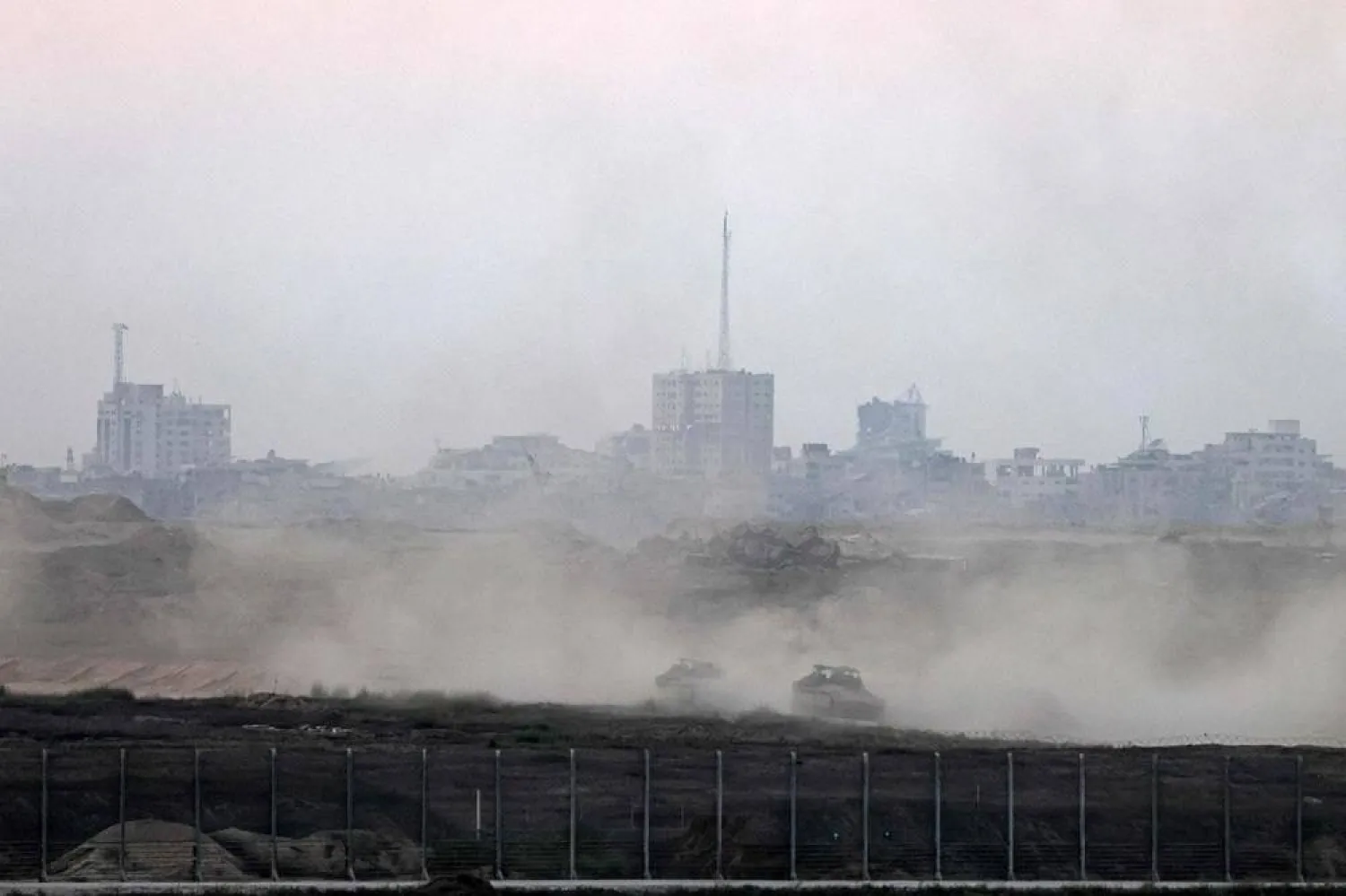
 This picture taken from a position on the Israeli border with the Gaza Strip, shows Israeli armored personnel carriers driving behind the separation barrier on August 20, 2025. (AFP)
This picture taken from a position on the Israeli border with the Gaza Strip, shows Israeli armored personnel carriers driving behind the separation barrier on August 20, 2025. (AFP)
TT

Israel Says It Has Taken First Steps of Military Operation in Gaza City

 This picture taken from a position on the Israeli border with the Gaza Strip, shows Israeli armored personnel carriers driving behind the separation barrier on August 20, 2025. (AFP)
This picture taken from a position on the Israeli border with the Gaza Strip, shows Israeli armored personnel carriers driving behind the separation barrier on August 20, 2025. (AFP)

Israel's military has taken the first steps of a planned operation to take over Gaza City, Israeli military spokesman Brigadier General Effie Defrin said on Wednesday.

Following a clash with Hamas south of Khan Younis in the strip on Wednesday, he said: "We will deepen the attack on Hamas in Gaza City, a stronghold of governmental and military terror for the terrorist organization."

Defrin said troops had already begun circling the outskirts of Gaza City and Hamas was now a "battered and bruised" guerrilla force.

"We have begun the preliminary operations and the first stages of the attack on Gaza City, and already now forces are holding the outskirts of Gaza City," he said.

Israel's military called up tens of thousands of reservists on Wednesday in preparation for the expected assault on Gaza City, as the Israeli government considered a new proposal for a ceasefire after nearly two years of war.

The call-up signals Israel is pressing ahead with its plan to seize Gaza's biggest urban center despite international criticism of an operation likely to force the displacement of many more Palestinians.

But a military official briefing reporters said reserve soldiers would not report for duty until September, an interval that gives mediators some time to bridge gaps between Palestinian militant group Hamas and Israel over truce terms.

Israeli troops clashed on Wednesday with more than 15 Hamas fighters who emerged from tunnel shafts and attacked with gunfire and anti-tank missiles near Khan Younis, south of Gaza City, severely wounding one soldier and lightly wounding two others, an Israeli military official said.

In a statement, Hamas' Al-Qassam Brigades confirmed carrying out a raid on Israeli troops southeast of Khan Younis and engaging Israeli troops at point-blank range. It said one fighter blew himself up among the soldiers, causing casualties, during an attack that lasted several hours.



Israel Continues Assassinations of Hamas, Islamic Jihad Leaders

Palestinian women mourn the dead after an Israeli strike in central Gaza (AP)
TT

Israel Continues Assassinations of Hamas, Islamic Jihad Leaders

Palestinian women mourn the dead after an Israeli strike in central Gaza (AP)

Israel pressed ahead with targeted killings of senior Hamas and Islamic Jihad figures in Gaza, citing recent attacks on its forces, even as a ceasefire agreement entered its second phase, and plans were announced for a technocratic body to administer the enclave.

On Thursday, Israel killed two senior figures from the military wings of Hamas and Islamic Jihad, along with other activists, in a series of air strikes on homes in several areas of Gaza that killed 12 Palestinians.

The first strike targeted Saeed al-Jarou, an activist in the Izz al-Din al-Qassam Brigades, the armed wing of Hamas, who worked in military manufacturing, sources told Asharq Al-Awsat.

Another Palestinian was killed alongside him when the courtyard of the Jarou family home in Deir al-Balah in central Gaza was hit. The house had already been damaged in an earlier strike a month ago that killed Saeed’s brother, who was also a Qassam activist.

Less than an hour later, another strike hit the home of Mohammed al-Houli, a senior commander in the Qassam Brigades, killing him along with a young man and a child.

Al-Houli held several positions within Qassam, including deputy commander of the Central Brigade and head of the intelligence apparatus.

He previously served as commander of the Field Control Forces, according to sources.

Hours later, Israeli aircraft struck the home of Ashraf al-Khatib, a leader in the Al-Quds Brigades, the armed wing of Islamic Jihad, in the Nuseirat refugee camp in central Gaza, killing him, his wife, and her brother.

Sources said al-Khatib was responsible for the rocket unit in the central Gaza area and was among the first to fire rockets toward Tel Aviv during the 2012 war. He was also an officer in the Palestinian Authority security services.

Shortly afterward, an Israeli strike targeted Amjad Shamlakh, a Hamas activist, as he was passing through the Nabulsi area in the Sheikh Ajlin neighborhood south of Gaza City. Shamlakh worked as a nurse at Al-Shifa Medical Complex. His brother, a Qassam activist, was killed earlier in the war.

The Israeli army said it, together with the Shin Bet security agency, had attacked Hamas and Islamic Jihad members following what it described as a violation of the ceasefire earlier this week in western Rafah in southern Gaza.

It said it views any breach of the agreement with utmost seriousness and will continue to act against any attempt to advance what it called terrorist plots.

On Friday, Israeli forces killed an elderly woman after what witnesses described as indiscriminate fire from Israeli vehicles toward displacement tents south of Khan Younis in southern Gaza.

A child was also killed by fire from a drone in the town of Beit Lahia in northern Gaza.

The death toll in Gaza since Oct. 7, 2023, has risen to 71,457, including 465 killed since the ceasefire took effect on Oct. 10, 2025.

Expansion of the “Yellow Line”

In related field developments, satellite images showed that over the past three months, since the ceasefire was announced, the Israeli army has expanded the so-called Yellow Line zone it occupies in Gaza, which now covers more than half of the enclave.

The army has advanced hundreds of meters into areas that were officially meant, under a plan by US President Donald Trump, to remain under Hamas control.

Satellite imagery cited by the Israeli newspaper Haaretz showed the army continuing to demolish buildings in Jabalia and the Shujaiya neighborhood, both inside and outside the Yellow Line zone.

According to the London-based organization Forensic Architecture, Israeli forces have established 13 military sites in Gaza since the ceasefire was announced and until mid-December, including two large military positions in the Jabalia area. These elevated sites overlook vast distances.

Buildings were destroyed, areas were evacuated, and heavy engineering equipment was used to construct high earth berms to monitor the entire northern Gaza area.

The Israeli army deliberately places unclear markers for the Yellow Line, setting yellow concrete blocks hundreds of meters apart, making it impossible for Palestinians to determine where the occupied zone begins as they attempt to reach their land and homes.

Israeli forces then open fire indiscriminately, killing hundreds, including more than 100 children.

The army frequently shifts the concrete blocks westward into areas under Hamas control.

Analysis of satellite imagery along the Yellow Line shows discrepancies between the location of the concrete blocks and the official Yellow Line as defined by Israeli military data.

The yellow concrete blocks appear to be positioned about 300 meters west of the official Yellow Line shown on Israeli army maps.

The destruction of buildings in recent months adds to the erasure of entire cities in Gaza during the war.

According to the latest report by the United Nations satellite center, the Israeli army has destroyed or irreparably damaged more than 80 percent of buildings in the enclave, triggering a massive displacement crisis.

Hundreds of thousands are now living in tents, struggling to survive amid severe weather, strong winds, and seawater flooding tent areas, destroying shelters and contributing to the spread of disease.


Gaza Administration Committee Meets in Cairo Amid Cautious Optimism

Palestinians salvage belongings from a home after an Israeli military attack west of Deir al Balah in central Gaza (AFP)
TT

Gaza Administration Committee Meets in Cairo Amid Cautious Optimism

Palestinians salvage belongings from a home after an Israeli military attack west of Deir al Balah in central Gaza (AFP)

The Gaza ceasefire agreement entered a new phase on Friday with the first meeting in Cairo of a technocrat committee tasked with administering the enclave, following its formation by Palestinian consensus, a welcome from Washington, and the absence of an official Israeli objection after earlier reservations.

The inaugural meeting came hours after Israel killed eight Palestinians, prompting Hamas to accuse it of “sabotaging the agreement,” leaving analysts expressing cautious optimism about the ceasefire’s trajectory in light of these developments and the continued Israeli strikes.

They stressed the need for a decisive US position to complete the requirements of the second phase, which began with the formation of the Gaza administration committee and faces major obstacles, including the entry of aid, an Israeli withdrawal, and the disarmament of Hamas.

Egyptian satellite channel Al-Qahera News reported on Friday that the first meeting of the Palestinian National Committee for the Administration of Gaza had begun in the Egyptian capital, with Palestinian Ali Shaath in the chair.

In his first media appearance, Shaath said the committee had officially started its work from Cairo and consists of 15 professional Palestinian national figures. He said the committee had received financial support and had been allocated a two-year budget, which is the duration of its mandate.

He called for the establishment of a World Bank fund for the reconstruction and relief of Gaza, noting that influential countries in the region had promised substantial, tangible financial support.

Shaath said the relief plan is based on the Egyptian plan approved by the Arab League in March 2025, which spans five years and is estimated to cost about $53 billion, and has been welcomed by the European Union.

He added that the first step adopted by the Gaza administration committee was to supply 200,000 prefabricated housing units to the territory.

Hamas said on Friday it was ready to hand over control of Gaza to a technocratic administration.

In a statement, it warned that “massacres” committed by the Israeli army in Gaza, including the killing of nine Palestinians, among them a woman and a child, in air strikes and gunfire targeting displaced people’s tents, underscored Israel’s continued policy of undermining the ceasefire agreement and obstructing declared efforts to entrench calm in the enclave.

Hamas described the attacks as a “dangerous escalation” that coincided with mediators announcing the formation of a technocratic government and the entry into the second phase of the agreement, as stated on Wednesday, as well as US President Donald Trump’s announcement on Thursday of the establishment of a Board of Peace.

It called on mediators and guarantor countries to shoulder their responsibilities by pressuring Israel to halt its violations and comply with what was agreed.

On Thursday, Trump announced the creation of a Gaza-focused Board of Peace, saying the parties had officially entered the second phase of the Gaza ceasefire agreement.

The Gaza government media office said in a statement the same day that Israel had committed 1,244 violations of the ceasefire during its first phase, resulting in the killing, injury, or arrest of 1,760 Palestinians since the deal took effect.

Rakha Ahmed Hassan, a member of the Egyptian Council for Foreign Affairs and a former assistant foreign minister, said the launch of the committee’s work was extremely important and effectively removed one of Israel’s pretexts regarding the presence of Hamas, particularly since the committee is technocratic and enjoys consensus.

He said that while this undermines those pretexts and marks the end of Hamas’s political authority, developments must be handled cautiously and completed with the deployment of stabilization forces and a Palestinian police presence, provided no new Israeli obstacles emerge.

Palestinian political analyst Ayman al-Raqab also voiced cautious optimism, telling Asharq Al-Awsat that the committee faces major challenges, notably administering a territory that has been completely devastated, as well as Israeli complications related to the weapons of the resistance and opposition to full reconstruction and withdrawal.

Mediator efforts are continuing. Egyptian Foreign Minister Badr Abdelatty received a phone call from US Middle East envoy Steve Witkoff regarding next steps and procedures following the transition to the second phase of Trump’s plan.

According to an Egyptian foreign ministry statement on Friday, the call emphasized the need to move forward with implementing the second phase’s obligations, including the start of work by the Palestinian technocrats committee following its formation, the deployment of an international stabilization force to monitor the ceasefire, the achievement of an Israeli withdrawal from the Strip and the launch of early recovery and reconstruction.

Hassan said Egypt’s role remains crucial and focused on completing the agreement without Israeli obstruction, particularly as the Rafah crossing was not opened during the first phase, and delays persist in deploying stabilization forces to oversee border crossings.

He stressed that Washington would seek to complete the agreement to preserve its credibility.

Al-Raqab said that any progress in the second phase and avoiding a repeat of the first phase’s stagnation hinges on US support for fully implementing the deal, particularly securing an Israeli withdrawal rather than just addressing disarmament.


Israeli Soldiers Kill Palestinian Teen in West Bank

Israeli Soldiers Kill Palestinian Teen in West Bank
TT

Israeli Soldiers Kill Palestinian Teen in West Bank

Israeli Soldiers Kill Palestinian Teen in West Bank

Israeli soldiers shot dead a Palestinian hurling a rock at them in the occupied West Bank, the military said on Friday, and the Palestinian health ministry said the person killed was a 14-year-old boy.

There was no further comment from Palestinian officials about the fatal incident in the village of ⁠Al-Mughayyir. Official Palestinian news agency WAFA said the teen was killed during an Israeli military raid that led to confrontations, Reuters reported.

The Israeli military said its forces were called to the area after ⁠receiving reports that Palestinians were throwing stones at Israelis and blocking a road with burning tires.

The soldiers fired warning shots in an attempt to repel a person who was running at them with a rock, the military said, and then shot and killed him to eliminate the ⁠danger.

Violence has surged over the past year in the West Bank. Attacks by Israeli settlers on Palestinians have risen sharply, while the military has tightened movement restrictions and carried out sweeping raids in several cities.

Palestinians have also carried out attacks on Israeli soldiers and civilians, some of them deadly.