PlayStation Prices Rise as US Tariffs Bite

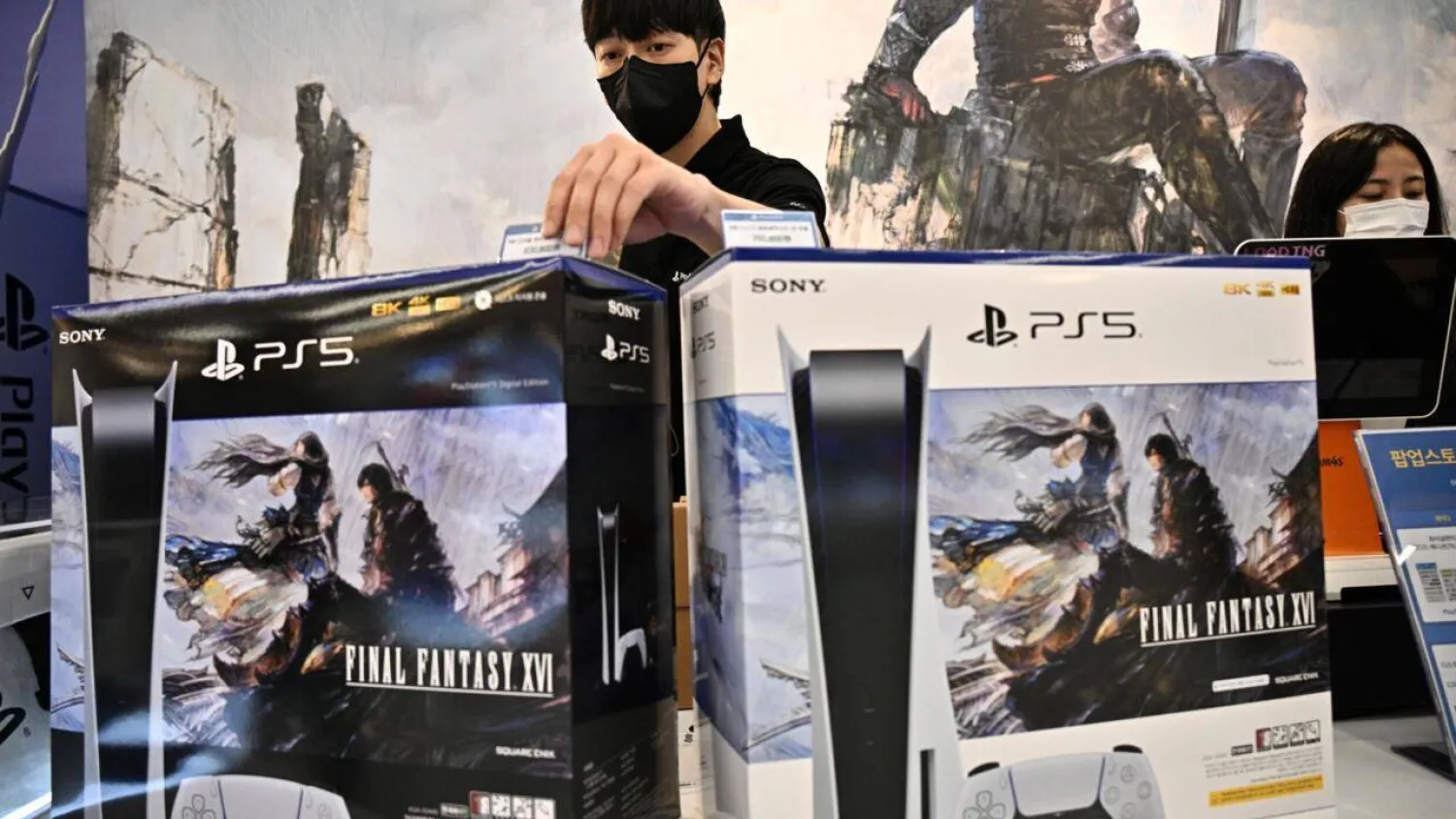
US tariffs have left companies like PlayStation-maker Sony to choose whether to pass higher costs on to consumers or take a hit to their profit. Anthony WALLACE / AFP/File
TT

PlayStation Prices Rise as US Tariffs Bite

US tariffs have left companies like PlayStation-maker Sony to choose whether to pass higher costs on to consumers or take a hit to their profit. Anthony WALLACE / AFP/File

Sony on Wednesday said it is bumping up the price of PlayStation 5 video game consoles by $50 in the United States due to a "challenging economic environment."

Tariffs imposed by President Donald Trump hike the cost of goods brought into the US, leaving companies like Japan's Sony to decide whether to pass that on to consumers, AFP said.

"Similar to many global businesses, we continue to navigate a challenging economic environment," Sony Interactive Entertainment vice president of global marketing Isabelle Tomatis said in a post.

After initially being threatened with a 25 percent hike, Japan negotiated a 15 percent tariff with the Trump administration.

"As a result, we've made the difficult decision to increase the recommended retail price for PlayStation 5 consoles in the US."

The new price for PS5 will be $550, with a "Digital Edition" priced at $500 and a Pro version for $750, according to Tomatis.

In May, Sony warned it was considering tweaking prices in the US, estimating that tariffs could wind up costing the company about $680 million in the fiscal year.

American companies are feeling the crunch, too.

New York-based cosmetics giant Estee Lauder recently estimated the impact of the new tariffs at around $100 million for the 2026 financial year and plans to adjust its prices to offset the additional cost.

US snack giant PepsiCo could increase prices of its soft drinks about 10 percent to mitigate effects of US tariffs, particularly those on imported aluminum used to make soda cans, according to trade magazine Beverage Digest.

Meanwhile, California-based energy drink maker Monster Beverages is considering raising prices due to a "complex and dynamic customs landscape," according to chief executive Hilton Schlosberg.

The Commerce Department this week said the US broadened its steel and aluminum tariffs, impacting hundreds more products that contain both metals such as child seats, tableware and heavy equipment.

Since returning to the presidency, Trump has imposed tariffs on almost all US trading partners.

Though the impact of Trump's tariffs on consumer prices has been limited so far, economists warn that their full effects are yet to be seen.

Some businesses have coped by bringing forward purchases of products they expected will encounter tariffs. Others have passed on additional costs to their consumers, or absorbed a part of the fresh tariff burden.


Ubisoft Unveils Sweeping Restructuring, Updates Targets

The Ubisoft logo is seen at the Paris Games Week (PGW), a trade fair for video games in Paris, France, October 27, 2024. (Reuters)
TT

Ubisoft Unveils Sweeping Restructuring, Updates Targets

The Ubisoft logo is seen at the Paris Games Week (PGW), a trade fair for video games in Paris, France, October 27, 2024. (Reuters)

French video game publisher Ubisoft will undergo a reorganization, splitting the company into five creative divisions, it said on Wednesday while also revising its financial outlook.

The revamp, set to commence in early April, divides Ubisoft into five units focusing on specific game genres. The company also announced the cancellation of six games, including a "Prince of Persia" remake and three unannounced titles, alongside delays to seven other projects.

INTERNAL REORGANIZATION

Under the new structure, Ubisoft's five "Creative Houses" will oversee their ‌portfolios from ‌brand development to sales and be ‌responsible ⁠for their own ‌budget.

Each division will have separate management teams. Their pay will be tied to metrics like player engagement and value creation, the company said.

The first unit, Vantage Studios, established in November with a 1.16-billion-euro investment from China's Tencent, will manage Ubisoft's biggest franchises, including "Assassin's Creed". ⁠The four other units will respectively focus on multiplayer shooters, live services, ‌narrative-driven games, and casual and family games.

FINANCIAL ‍TARGETS UPDATED

For 2026, Ubisoft ‍now forecasts net bookings of around 1.5 billion euros ‍and an operating loss of roughly 1 billion euros. This includes a 650 million euros hit from game cancellations and delays. It previously expected net bookings of around 1.9 billion euros and to break even at operating level.

Ubisoft anticipates net debt of 150-250 million euros ⁠by the end of 2026, with cash reserves of 1.25-1.35 billion euros. Free cash flow is projected to be negative 400-500 million euros.

The company's cost reduction program of 100 million euros is expected to be fully achieved by March, one year after its initial target. It is also setting a new cost savings target of an additional 200 million euros over the next two years and will continue to consider potential asset sales.

The company withdrew ‌its prior fiscal 2026-27 guidance and plans to outline medium-term projections in May 2026.


OpenAI Seeks to Increase Global AI Use in Everyday Life

The OpenAI logo is seen in this illustration taken May 20, 2024. (Reuters)
TT

OpenAI Seeks to Increase Global AI Use in Everyday Life

The OpenAI logo is seen in this illustration taken May 20, 2024. (Reuters)

OpenAI is expanding its efforts to convince global governments to build more data centers and encourage greater usage of artificial intelligence in areas such as education, health ​and disaster preparedness.

The initiative – called OpenAI for Countries – will expand the reach of its products and help close the gap between countries with broad access to AI technology and nations that do not yet have the capacity, the company said.

OpenAI also hopes to encourage deeper usage of its tools, adding that AI systems are capable of more complex tasks than many ‌people realize.

“Most ‌countries are still operating far short ‌of ⁠what today’s ​AI ‌systems make possible,” the company said in a report shared with Reuters.

OpenAI started the international initiative last year and appointed former British finance minister George Osborne to oversee the project in December. Osborne and Chris Lehane, OpenAI chief global affairs officer, are pitching government officials on the project this week in Davos.

The initiative is part of ⁠a broader strategy that has helped cement ChatGPT creator OpenAI at the vanguard of ‌the modern AI boom. The company was ‍most recently worth $500 billion ‍and is exploring a public offering that could be worth as ‍much as $1 trillion.

Eleven countries have signed up for OpenAI for Countries. Each deal is structured differently.
Estonia, for example, is embedding OpenAI's education tool, ChatGPT Edu, into secondary schools across the country. In Norway, OpenAI is working with other companies to build data centers and become their first customer.

On Wednesday, OpenAI ⁠executives said they were hoping to work with governments in other areas, like disaster planning. In South Korea, OpenAI is exploring a deal with the government’s water authority to build a real-time, water-disaster warning and defense system against water problems driven by climate change.

In its report, OpenAI said its typical “power user” - or those in the 95th percentile - reaches for OpenAI’s advanced reasoning capabilities seven times more often than a typical user. There are also big gaps within countries.

For example, in Singapore, which has broad access to ‌AI tools, people send more than three times more messages about coding than average, the report said.


Beijing Vows to ‘Safeguard’ Rights if EU Bans Telecom Suppliers

21 January 2026, China, Beijing: Guo Jiakun, spokesman for the Chinese Foreign Ministry, answers questions from journalists. (dpa)
TT

Beijing Vows to ‘Safeguard’ Rights if EU Bans Telecom Suppliers

21 January 2026, China, Beijing: Guo Jiakun, spokesman for the Chinese Foreign Ministry, answers questions from journalists. (dpa)

Beijing vowed on Wednesday that it would "safeguard" the rights and interests of Chinese businesses if the European Union pushes on with plans to ban "high-risk" foreign telecoms suppliers, a move seen as targeting China.

Brussels unveiled the proposal on Tuesday as part of plans to revise its cybersecurity rules in a bid to bolster Europe's defenses against a surge in cyber attacks.

It did not name any country or company as a target, but has taken an Increasingly tough stance on trade issues with China, often citing security concerns.

China's foreign ministry spokesman Guo Jiakun told reporters on Wednesday the move amounts to protectionism by the bloc.

"We urge the EU to avoid going further down the wrong path of protectionism, otherwise, China will inevitably take necessary measures to resolutely safeguard the legitimate rights and interests of Chinese enterprises," Guo told a news conference.

The plans would see the European Union block third-country companies from European mobile networks if they are deemed a security risk, building on previous measures in 2023 that saw Chinese companies Huawei and ZTE excluded from networks.

Guo warned that the EU plans would again incur "huge" economic costs.

"It is naked protectionism. Behavior that wantonly interferes in the market and goes against the laws of economics not only fails to achieve so-called security but also incurs huge costs," he said.

Brussels took the new step after the 2023 measures failed to yield enough change across the 27-country bloc.