
The Lebanese government’s decision to move toward ending the armed presence of Hezbollah across the country has set off a heated political debate, with eyes now on how Israel will respond following US-brokered talks in Beirut.
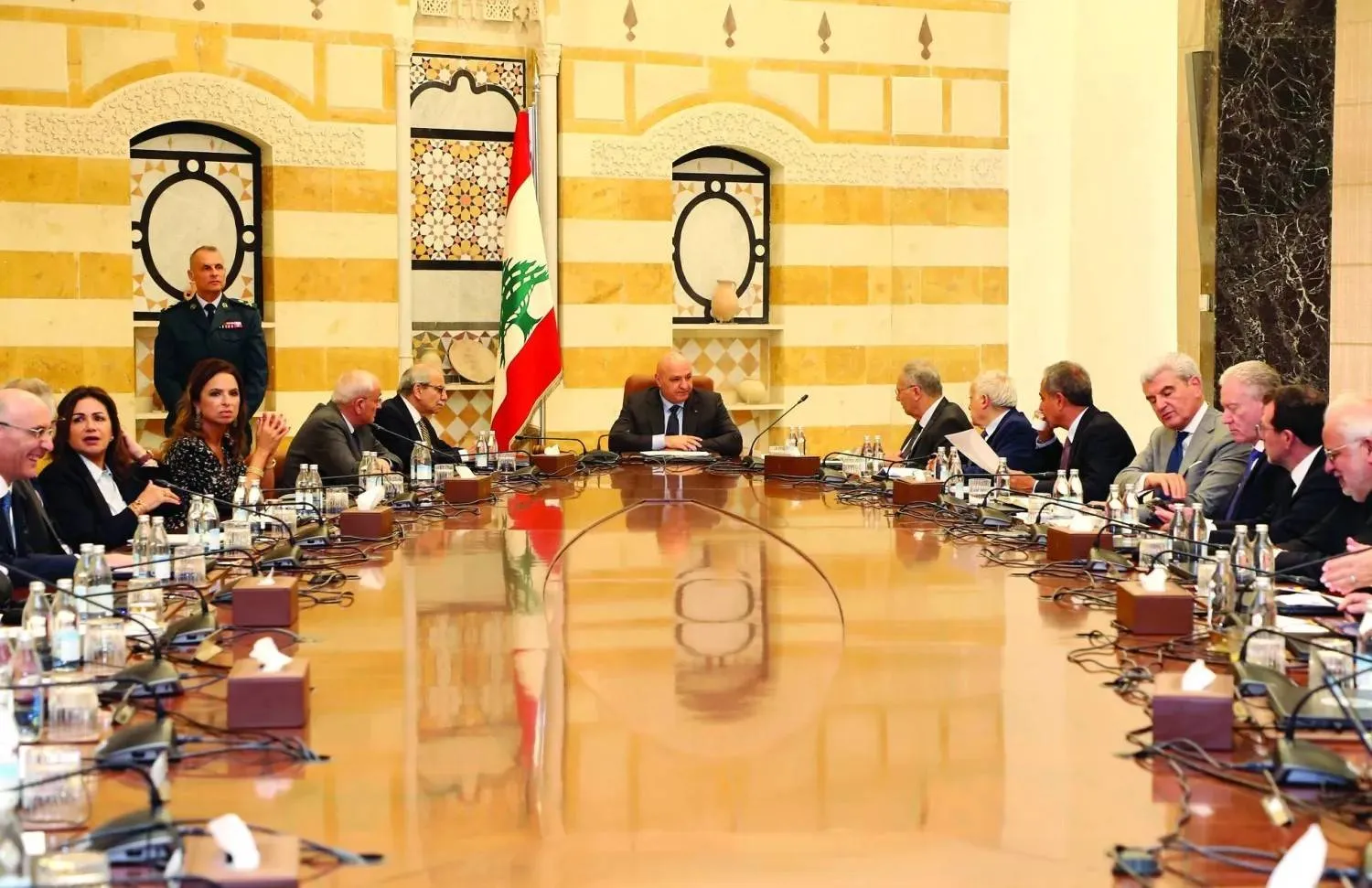
US envoy Tom Barrack met Lebanese President Joseph Aoun at the presidential palace this week in what officials described as a constructive round of diplomacy.
The envoy conveyed that Beirut had taken the “first step” by pledging to disarm Hezbollah by year’s end, and said Israel must now reciprocate within the framework of a ceasefire.
Hezbollah, which initially reacted with fiery rhetoric to the government’s announcement, has notably toned down its messaging since Barrack’s visit.
The group has issued no fresh threats, while Mustafa Bayram, a former minister aligned with Hezbollah, struck a more symbolic note on Wednesday, saying the movement “will remain like a seed growing in the dark, destined to blossom into spring.”
Kataeb Party Slams Hezbollah Rhetoric
The Kataeb Party lashed out at Hezbollah deputy chief Naim Qassem, who recently warned of civil war if the group’s weapons were challenged.
Party leader Samy Gemayel chaired a political bureau meeting that described Qassem’s remarks as a “serious threat to national security and social peace.”
Kataeb said Qassem’s comments echoed those of senior Iranian official Ali Larijani, accusing Hezbollah of prioritizing Tehran’s interests over Lebanon’s.
The party reaffirmed that only constitutional institutions had the authority to decide on weapons, urging the army to present its operational plan for implementing the government’s decision.
Lebanese Forces: Hezbollah’s Legitimacy Eroded
Fadi Karam, a lawmaker from the Lebanese Forces bloc, said Hezbollah had lost any “legitimate cover” for its arsenal.
He dismissed talk of internal strife, arguing security forces were in control.
“All this scaremongering is pressure to prevent the army from executing government decisions,” he said, adding Hezbollah had brought only “destruction” to Lebanon.
Karam called for curbing Hezbollah’s “ideological project” and stressed Lebanon must resist external ambitions, whether from Israel or Iran.
Bilal Abdallah of the Progressive Socialist Party expressed strong backing for Prime Minister Nawaf Salam and his cabinet.
He said the government was committed to stability and implementing UN Security Council Resolution 1701, which calls for an Israeli withdrawal from occupied Lebanese land, the return of detainees and an end to attacks and assassinations.
“Stability is a prerequisite for political consensus, investment and economic recovery,” Abdallah said, while warning against personal attacks on Salam, who he said enjoyed parliamentary legitimacy and significant national support.