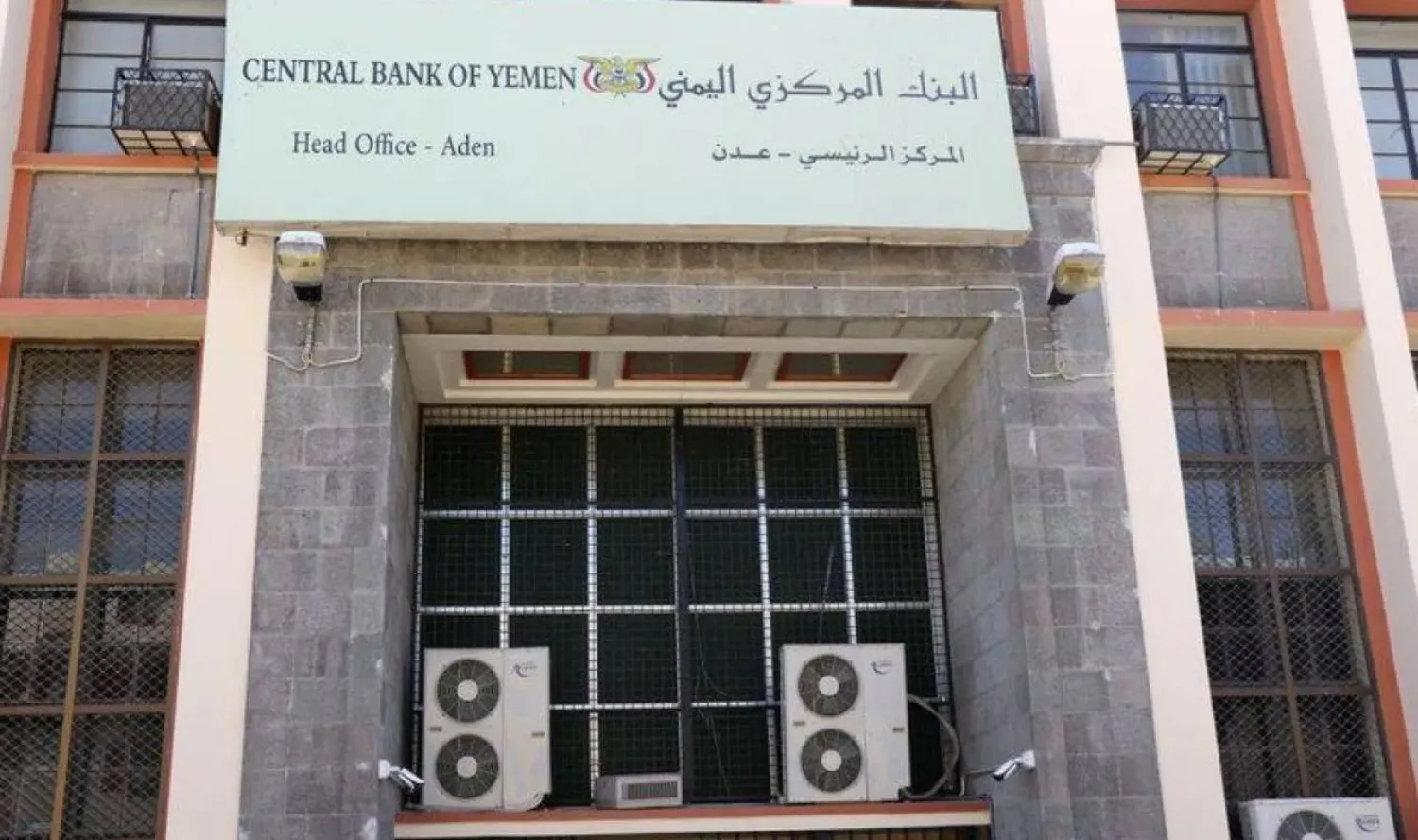

Yemen’s government has shored up its battered currency, the riyal, and stepped up economic pressure on the Iran-aligned Houthi movement, prompting the group to bar banks and companies in areas under its control from dealing with businesses based in government-held territory.
Economists say the move reflects the government’s growing ability to isolate the Houthis, who control several ports, levy heavy taxes on residents and profit from fuel and basic goods sold on the black market.
But researchers warn the group could retaliate with countermeasures that would damage the wider economy and deepen hardship for Yemenis.
The Houthi-controlled branch of the central bank in the capital Sanaa issued a directive banning banks and firms from submitting requests to their counterparts in government areas on behalf of importers, including applications for trade-related currency transfers.
The Houthis accused the internationally recognized government of “economic escalation” by imposing new restrictions and costs on imports.
Yemeni economist Youssef Shamsan told Asharq Al-Awsat that the Houthis were unlikely to stand idle in the face of what he described as a government “economic victory.”
He predicted the group could block goods from passing through government-controlled areas, raise taxes and ban the operations of companies headquartered in the south from their strongholds, depriving them of revenues from territories that house about three-quarters of the country’s population.
The government meanwhile said its National Committee for Regulating and Financing Imports, established by the central bank in Aden, had approved 91 import applications worth nearly $40 million between Aug. 10 and 14 through 15 banks and three exchange firms.
The measures are aimed at supplying foreign currency, stabilizing markets and ensuring smooth flows of goods, officials say.
Economic researcher Ihab al-Qurashi said the recovery of the riyal was “strategic more than purely economic,” as it reduces the currency gap between government and Houthi zones, undermining the group’s ability to manipulate exchange rates and restoring the central bank in Aden’s monetary authority.
He said the stronger riyal would strip the Houthis of leverage in foreign currency dealings, as import transactions ultimately rely on government-held territory. A narrowing price gap between the rival banknotes circulating in the two zones could also force the Houthis to import via Aden, cutting their access to foreign currency for fuel and arms procurement.
The riyal’s rebound has boosted public confidence in the government after years of decline, while US sanctions and restrictions on oil imports have squeezed Houthi finances.
Still, analysts caution the government faces structural hurdles, including a yawning fiscal deficit, a divided banking system, weak resilience to external shocks such as global energy prices, and risks to international shipping lanes.
The riyal is currently trading at around 1,650 to the dollar, strengthening from nearly 3,000 late last month.
Mohammed Qahtan, an academic, said that if the currency continues recovering by a further third this year, the government could regain control over the national banking system, unify monetary policy and attract back some investment.
But Shamsan warned that without deeper reforms – such as cutting government spending, particularly on the foreign ministry, and restarting oil and gas exports – the riyal’s recovery may not hold. He urged fair distribution of energy revenues to prevent new disputes within pro-government factions.