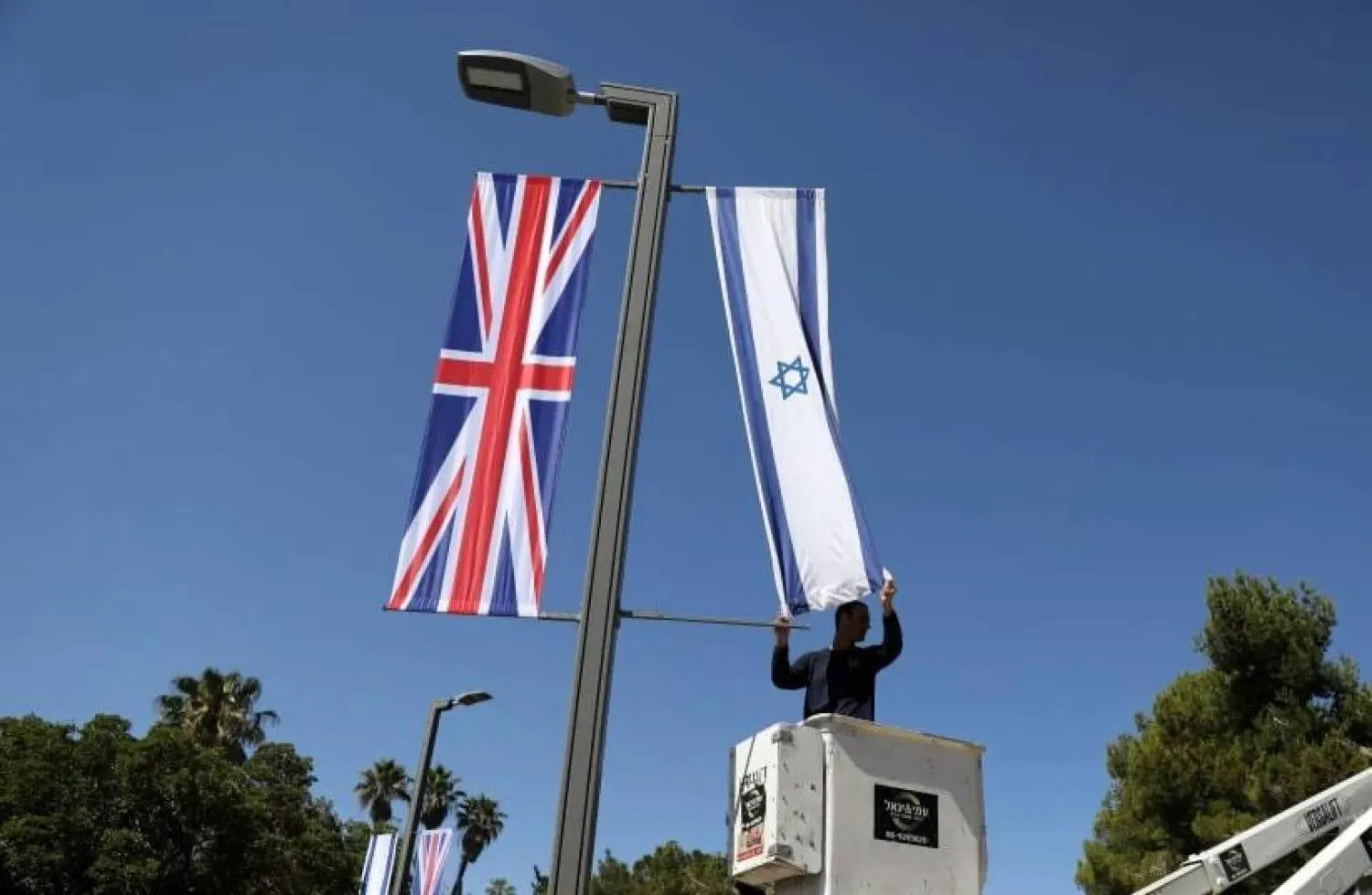
The right-wing Israeli newspaper Israel Hayom revealed on Sunday details of an agreement reached between Israel and the United Kingdom following a diplomatic row over Tel Aviv’s decision to suspend operations of the British consulate in Jerusalem, which handles Palestinian affairs.
“Israel and the UK have reached a compromise over Britain’s diplomatic presence in Jerusalem, ending a standoff that had threatened to further strain relations between the two countries,” the newspaper wrote.
It said Britain had backed down from imposing measures against Israel, including the expulsion of Israeli diplomats from the UK.
The decision came after security agencies in London warned the government of the risks of further escalating the crisis. The agencies informed the government that Israel was threatening to sever security cooperation with British intelligence, a move that would seriously undermine national security, according to Israel Hayom.
Last Thursday, Britain announced its consulate in Jerusalem, which began operating in the city nearly 200 years ago, would continue its work on a more limited scale under the title “UK Mission, Jerusalem.” The decision came after Israel ordered the closure of the British consulate in response to the UK's sanctions on Israeli settlements.
Israel Hayom, which is close to Prime Minister Benjamin Netanyahu’s government, claimed that “in recent weeks, Israel has shared highly sensitive intelligence that enabled the foiling of Palestinian and Iranian terrorist plots in Britain, including at the military base hosting US fighter jets.”
Therefore, the two countries agreed to continue a dialogue to address the points of contention and prevent further deterioration in relations, while Israel backed down from imposing tough conditions.
Also under the reached agreement, the British consul general and 19 other diplomats will leave, while seven diplomats will remain, Israel Hayom wrote.
Although the British Consulate General in Jerusalem will no longer have a sign at the building's entrance bearing that title, it will retain its status as an official diplomatic mission serving Palestinians with a scaled-down presence, rebranded as “UK Mission, Jerusalem” and reporting directly to the UK Foreign Office.
The newspaper said the remaining consular services that will no longer be provided at the Jerusalem office will be made available to Palestinians through the British Embassy in Jordan, where most of the diplomats have relocated.
Israel on September 8 ordered Britain to close the East Jerusalem consulate within 30 days and remove its diplomats from the city, after Britain said it would impose a ban on trade of goods made in Israeli settlements in the occupied West Bank, including a ban on trade in goods produced there.
Israel had been adamant that the consulate will close even as Britain sought to keep it open, including sending the country’s top national security adviser to Israel last week for talks.
Britain’s consulate was founded in 1839, more than a century prior to the establishment of the State of Israel in 1948. The closure order does not affect Britain’s embassy in Tel Aviv, which handles diplomatic relations with Israel’s government.
The consulate, in the Sheikh Jarrah neighborhood of East Jerusalem, handles Britain’s relations with Palestinians in Jerusalem, as well as in the West Bank and Gaza. It also provides consular services to Palestinians.
Shortly before the 30-day deadline for Britain to close the consulate ended last Thursday, Reuters said Britain was likely to expel Israeli diplomats if Israel carries out its order to shut the British consulate in East Jerusalem.
It noted that if the consulate is closed, Britain is likely to respond by expelling a similar number of Israeli diplomats from Israel's embassy to the United Kingdom, the sources said, speaking on the condition of anonymity.
But the two sides reached an 11th-hour compromise after the Israeli Foreign Ministry authorized the British to operate a reduced task force of just seven diplomats at the site.
The two countries also agreed to continue a dialogue to address the points of contention and prevent further deterioration in relations, with Britain, under the understandings, refraining from taking any further response measures, according to Israel Hayom.
In a post on X, Israeli Foreign Minister Gideon Sa'ar announced an agreement with London on the continuation of dialogue between the governments, within which both sides will be able to raise issues important to them.
“We believe in dialogue and will continue to believe in dialogue. Unfortunately, in recent years, no genuine dialogue has taken place with the Labor Government. This is despite good relations with Britain, reflected, among other things, in security and intelligence cooperation,” he wrote.
The minister added that “relations between Israel and Britain are important and have repeatedly proven their value also in protecting the lives and interests of British citizens.”