


Washington and Moscow: Secret Discussions on US Investments in Russian Energy Sector in Exchange for Peace

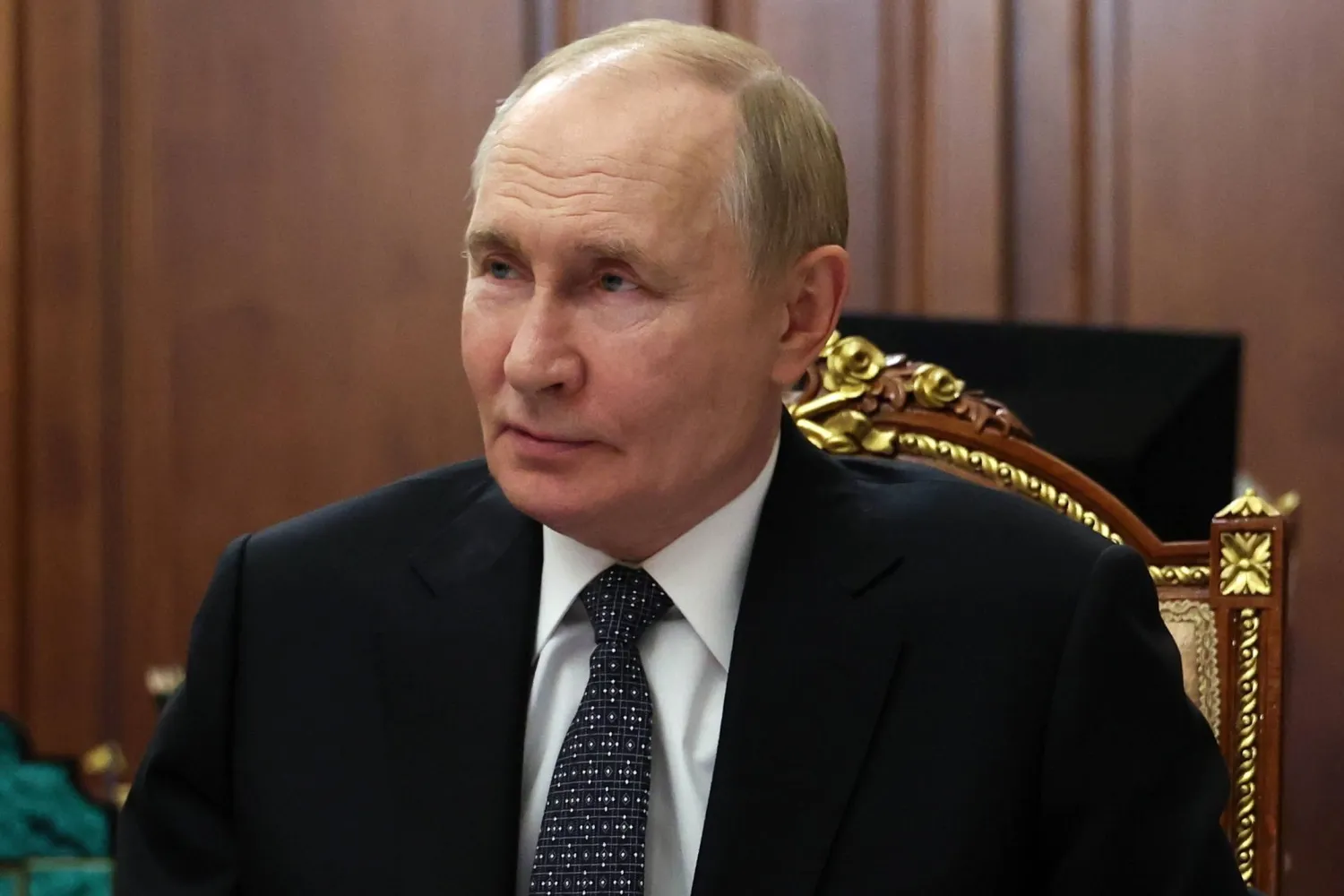
Russian President Vladimir Putin meets with Kherson Region Governor Vladimir Saldo (not pictured) at the Kremlin in Moscow, Russia, 26 August 2025. EPA/VYACHESLAV PROKOFYEV / SPUTNIK / KREMLIN POOL
TT

Washington and Moscow: Secret Discussions on US Investments in Russian Energy Sector in Exchange for Peace

Russian President Vladimir Putin meets with Kherson Region Governor Vladimir Saldo (not pictured) at the Kremlin in Moscow, Russia, 26 August 2025. EPA/VYACHESLAV PROKOFYEV / SPUTNIK / KREMLIN POOL

US and Russian government officials discussed several energy deals on the sidelines of negotiations this month that sought to achieve peace in Ukraine, according to five sources familiar with the talks.

These deals were put forward as incentives to encourage the Kremlin to agree to peace in Ukraine and for Washington to ease sanctions on Russia, they said.

The officials discussed the possibility of Exxon Mobil re-entering Russia’s Sakhalin-1 oil and gas project, three of the sources said.

Government officials also raised the prospect of Russia purchasing US equipment for its LNG projects, such as Arctic LNG 2, which is under western sanctions, four sources said.

Another idea was for the US to purchase nuclear-powered icebreaker vessels from Russia, Reuters reported on August 15.

The talks were held during US envoy Steve Witkoff’s trip to Moscow earlier this month when he met with Russian President Vladimir Putin and his investment envoy Kirill Dmitriev, three of the sources said. They were also discussed within the White House with Trump, two of the sources said.

These deals were also briefly discussed at the Alaska summit on August 15, one source said.

“The White House really wanted to put out a headline after the Alaska summit, announcing a big investment deal,” said one of the sources. “This is how Trump feels like he’s achieved something.”

Trump and his national security team continue to engage with Russian and Ukrainian officials towards a bilateral meeting to stop the killing and end the war, a White House official said in response to questions about the deals. It is not in the national interest to further negotiate these issues publicly, the official said.

Trump has threatened to impose more sanctions on Russia unless peace talks make progress and to place harsh tariffs on India, a major buyer of Russian oil. Those measures would make it difficult for Russia to maintain the same level of oil exports.

Trump’s dealmaking style of politics has been on display before in the Ukraine talks, when earlier this year the same officials explored ways for the US to revive Russian gas flows to Europe. These plans have been stalled by Brussels, which put forward proposals to fully phase out Russian gas imports by 2027.

The latest discussions have shifted to bilateral deals between the US and Russia, pivoting away from the European Union, which, as a bloc, has been steadfast in its support for Ukraine.

On the same day as the Alaska summit, Putin signed a decree that could allow foreign investors, including Exxon Mobil, to regain shares in the Sakhalin-1 project. It is conditional on the foreign shareholders taking action to support the lifting of Western sanctions on Russia.

Exxon exited its Russian business in 2022 after the Ukraine invasion, taking a $4.6 billion impairment charge. Its 30% operator share in the Sakhalin-1 project in Russia's far east was seized by the Kremlin that year.

The US has placed several waves of sanctions on Russia’s Arctic LNG 2 project, starting in 2022 and cutting off access to ice-class ships that are needed to operate in that region for most of the year.

The project is majority-owned by Novatek, which started working with lobbyists in Washington last year to try to rebuild relations and lift the sanctions.

The Arctic LNG 2 plant resumed natural gas processing in April, albeit at a low rate, Reuters reported. Five cargoes have been loaded from the project this year onto tankers under sanctions. A production train was previously shut down due to the difficulties in exporting given the sanctions.

This project was intended to have three LNG processing trains. The third is in planning stages, with technology expected to be supplied by China.

Washington is seeking to prompt Russia to buy US technology rather than Chinese as part of a broader strategy to alienate China and weaken relations between Beijing and Moscow, one of the sources said.

China and Russia declared a “no limits” strategic partnership days before Putin sent troops into Ukraine. Xi has met Putin over 40 times in the last decade and Putin in recent months described China as an ally.


Gold Bounces Back on Softer Dollar, US-Iran Concerns; Silver Rebounds

Gold and silver bars are stacked in the safe deposit boxes room of the Pro Aurum gold house in Munich, Germany, January 10, 2025. REUTERS/Angelika Warmuth
TT

Gold Bounces Back on Softer Dollar, US-Iran Concerns; Silver Rebounds

Gold and silver bars are stacked in the safe deposit boxes room of the Pro Aurum gold house in Munich, Germany, January 10, 2025. REUTERS/Angelika Warmuth

Gold rebounded on Friday and was set for a weekly gain, helped by bargain hunting, a slightly weaker dollar and lingering concerns over US-Iran talks in Oman, while silver recovered from a 1-1/2-month low.

Spot gold rose 3.1% to $4,916.98 per ounce by 09:31 a.m. ET (1431 GMT), recouping losses posted during a volatile Asia session that followed a fall of 3.9% on Thursday. Bullion was headed for a weekly gain of about 1.3%.

US gold futures for April delivery gained 1% to $4,939.70 per ounce.

The US dollar index fell 0.3%, making greenback-priced bullion cheaper for the overseas buyers.

"The gold market is seeing perceived bargain hunting from bullish traders," said Jim Wyckoff, senior analyst at Kitco Metals.

Iran and the US started high-stakes negotiations via Omani mediation on Friday to try to overcome sharp differences over Tehran's nuclear program.

Wyckoff said gold's rebound lacks momentum and the metal is unlikely to break records without a major geopolitical trigger.

Gold, a traditional safe haven, does well in times of geopolitical and economic uncertainty.

Spot silver rose 5.3% to $74.98 an ounce after dipping below $65 earlier, but was still headed for its biggest weekly drop since 2011, down over 10.6%, following steep losses last week as well.

"What we're seeing in silver is huge speculation on the long side," said Wyckoff, adding that after years in a boom cycle, gold and silver now appear to be entering a typical commodity bust phase.

CME Group raised margin requirements for gold and silver futures for a third time in two weeks on Thursday to curb risks from heightened market volatility.

Spot platinum added 3.2% to $2,052 per ounce, while palladium gained 4.9% to $1,695.18. Both were down for the week.


Europe, Türkiye Agree to Work Toward Updating Customs Union

European Union (R) and Turkish flags fly at the business and financial district of Levent in Istanbul, Türkiye September 4, 2017. REUTERS/Osman Orsal
TT

Europe, Türkiye Agree to Work Toward Updating Customs Union

European Union (R) and Turkish flags fly at the business and financial district of Levent in Istanbul, Türkiye September 4, 2017. REUTERS/Osman Orsal

The European enlargement chief and the Turkish foreign minister said on Friday they had agreed to continue work toward modernizing the EU-Türkiye customs union and to improve its implementation, Reuters reported.

European Commissioner for Enlargement Marta Kos met Turkish Foreign Minister Hakan Fidan in the capital Ankara on Friday.

"They shared a willingness to work for paving the way for the modernization of the Customs Union and to achieve its full potential in order to support competitiveness, and economic security and resilience for both sides," they said in a joint statement afterward.

The sides also welcomed the gradual resumption of European Investment Bank (EIB) operations in Türkiye and said they intended to support projects across the country and neighbouring regions in cooperation with the bank.


Bitcoin Falls 8% and Asian Shares Mostly Slip after Wall Street is Hit by Tech Stock Losses

FILE PHOTO: Representation of Bitcoin cryptocurrency in this illustration taken September 10, 2025. REUTERS/Dado Ruvic/Illustration/File Photo
TT

Bitcoin Falls 8% and Asian Shares Mostly Slip after Wall Street is Hit by Tech Stock Losses

FILE PHOTO: Representation of Bitcoin cryptocurrency in this illustration taken September 10, 2025. REUTERS/Dado Ruvic/Illustration/File Photo

US futures and Asian shares traded mostly lower on Friday, tracking Wall Street’s losses as technology stocks again dragged on markets.

Bitcoin sank to roughly half its record price, giving back all it gained since US President Donald Trump won the White House for his second term.

Tokyo’s Nikkei 225 was up 0.8% to 54,253.68, recovering from losses earlier this week, with technology-related stocks leading gains. SoftBank Group rose 2.2% and chipmaker Tokyo Electron rose 2.6%. Japan will also be holding its general election on Sunday, in which Prime Minister Sanae Takaichi expects to win a stronger public mandate for her policies.

Shares of Toyota Motor were up 2%. The carmaker said Friday its CEO Koji Sato will be stepping down in April, and is to be replaced by Chief Financial Officer Kenta Kon, The Associated Press said.

South Korea’s Kospi lost 1.4% to 5,089.14, weighed down by tech shares. Samsung Electronics, the country’s biggest listed company, fell 0.4%. Chipmaker SK Hynix was also down 0.4%.

Hong Kong’s Hang Seng fell 1.4% to 26,519.60. The Shanghai Composite index was down 0.3% to 4,065.58.

In Australia, the S&P/ASX 200 shed 2% to 8,708.80.

Taiwan’s Taiex was mostly flat. India's Sensex traded 0.1% lower.

Against the backdrop of the technology sell-off this week, bitcoin, the world’s largest cryptocurrency, saw dimming enthusiasm and was trading about 8% lower at just under $65,000 early Friday, after it briefly sank over 12% to below $64,000 on Thursday. That’s down from a record of above $124,000 in October.

The future for the S&P 500 was 0.2% lower, while that for the Dow Jones Industrial Average fell 0.1%.

On Thursday, the S&P 500 fell 1.2% to 6,798.40, its sixth loss in the seven days. The Dow Jones Industrial Average fell 1.2% to 48,908.72. The Nasdaq composite dropped 1.6% to 22,540.59.

Technology stocks were among the worst hit as concerns persist over whether massive AI investments by many of the Big Tech firms will pay off.

Chipmaker Qualcomm sank 8.5% despite better-than-expected quarterly revenues. Alphabet lost 0.5% as investors were focused on its huge spendings on AI.

Amazon fell 11% in after hours trading Thursday after it announced plans to boost capital spending by more than 50% to $200 billion in AI and other areas.

American artificial intelligence startup Anthropic ’s new AI tools also fueled the sell-off of software stocks on Wall Street this week, as its sophistication means many traditional software development services and products could be disrupted or replaced.

Gold and silver prices have been volatile this week following a monthslong rally as investors moved into safe haven assets prompted by factors including elevated geopolitical tensions. Gold prices fell 0.6% on Friday to $4,858.60 per ounce, after nearing $5,600 last week.

Silver prices dropped 5.5% to $72.52 per ounce after rising earlier this week. It lost more than 31% last Friday.

In other dealings early Friday, US benchmark crude oil gained 35 cents to $63.64 a barrel. Brent crude, the international standard, rose 36 cents to $67.91 a barrel.

The US dollar fell to 156.74 Japanese yen from 157.03 yen. The euro was trading at $1.1789, up from $1.1777.
