

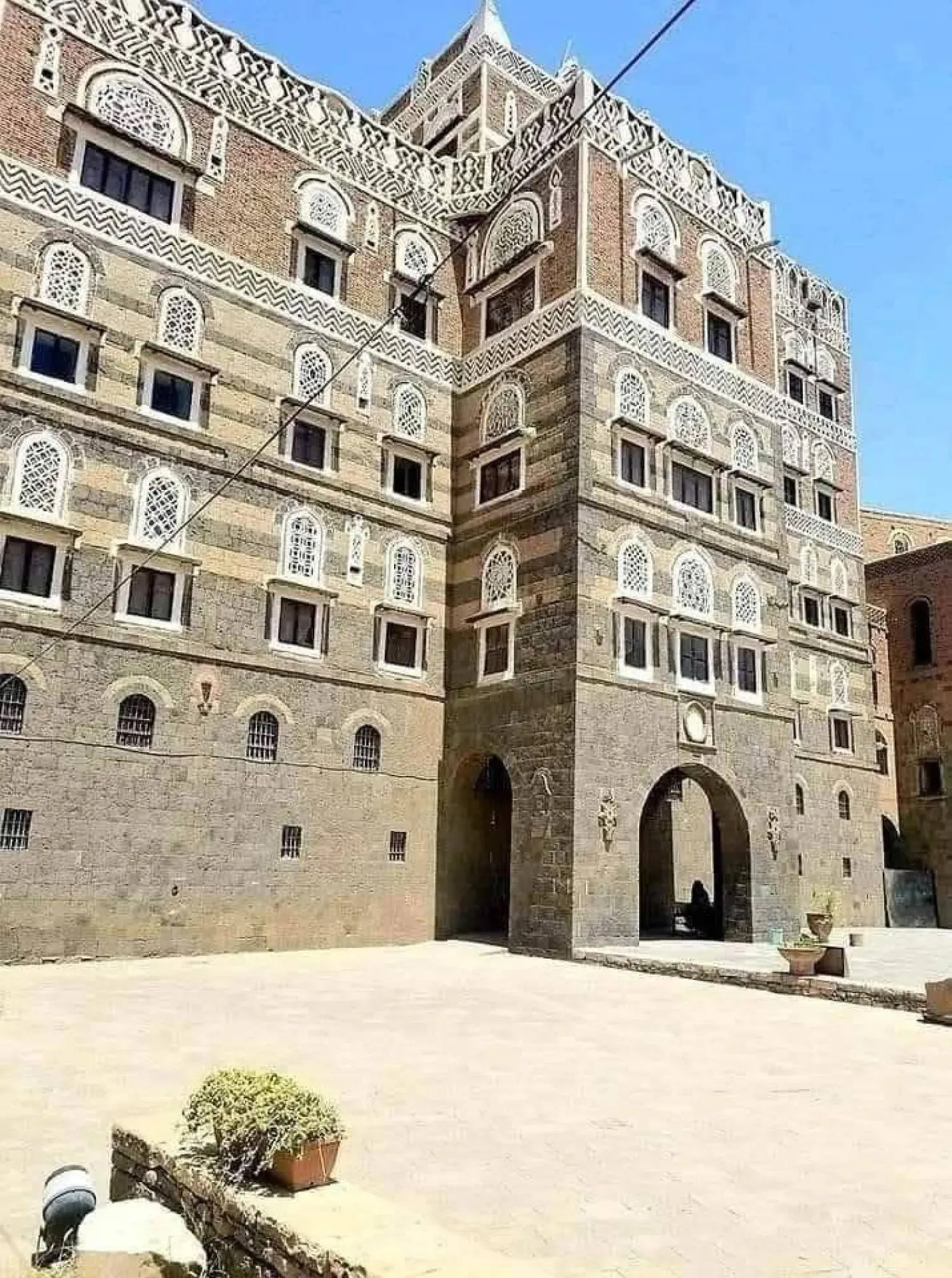

Sanaa National Museum Shuts Down Due to Funding Crisis, 54 Years after Opening

The closure of the museums came as a surprise given that the authority had announced less than two months ago that they were receiving an unprecedented number of visitors. (Local media)
TT

Sanaa National Museum Shuts Down Due to Funding Crisis, 54 Years after Opening

The closure of the museums came as a surprise given that the authority had announced less than two months ago that they were receiving an unprecedented number of visitors. (Local media)

Sanaa National Museum in the Yemeni capital shut down on Tuesday for the first time since its opening 54 years ago due to a funding crisis.

The museum, the country’s largest, went bankrupt after the Iran-backed Houthis stopped supporting its budget. The museum administration could no longer afford paying staff and bills.

The General Antiquities Authority, which is run by the Houthis, announced that another museum, the Heritage Folk Museum, in Sanaa will also be shut due to a lack of funds.

In a statement, it apologized for the closure, saying it was beyond its control and that it was working on addressing the financial problems so that the museums can be reopened “as soon as possible.”

The authority did not clarify where the revenues from the museums were going, raising questions that they were seized by the Houthis. It also did not discuss the annual budget, which should have been adopted by the illegal Houthi government.

The closure of the museums came as a surprise given that the authority had announced less than two months ago that they were receiving an unprecedented number of visitors.

Sanaa National Museum was established in 1971 at an Imami palace that was once used by the country’s former rulers who were ousted in the 1960s. Once called the Dar al-Shukr, or Palace of Gratefulness, it lies in the heart of the capital.

It boasted two main sections, one covering ancient artifacts and the other on national heritage. It also featured several sections on Islamic artifacts.

It was moved to a larger building just next to its former location to accommodate its growing collection. The government was planning on expanding it but the Houthi coup aborted all plans.



King Salman Arabic Language Academy Launches Arabic Language Month in Mexico

The Arabic Language Month features specialized training courses, scientific and outreach activities - SPA
TT

King Salman Arabic Language Academy Launches Arabic Language Month in Mexico

The Arabic Language Month features specialized training courses, scientific and outreach activities - SPA

The King Salman Global Academy for Arabic Language launched the Arabic Language Month in Mexico as part of its international efforts to support Arabic language education for non-native speakers and strengthen its cultural and intellectual presence in global academic institutions.

The program runs throughout January and includes a variety of scientific and educational events, such as intensive training courses for teachers and learners, specialized programs for teachers of Arabic as a foreign language, a symposium on the current state and challenges of Arabic language education in Mexico, the administration of the “Hamza” academic test to assess learners’ proficiency, and organized scientific and cultural visits, SPA reported.

Implemented in cooperation with key institutions in Mexico, the program targets teachers, learners, and anyone interested in teaching Arabic as a foreign language.

The Arabic Language Month features specialized training courses, scientific and outreach activities, and active participation from the academy leaders in academic events. It aims to enhance institutional and scientific collaboration, expand international partnerships, and advance the academy’s mission of promoting Arabic language education worldwide.


Holy Sites Journey Program Fosters Cultural Dialogue Among Youth

Participants emphasized the importance of cultural dialogue among youth from Islamic countries - SPA
TT

Holy Sites Journey Program Fosters Cultural Dialogue Among Youth

Participants emphasized the importance of cultural dialogue among youth from Islamic countries - SPA

The Holy Sites Journey Program for Arab and Islamic Youth, organized by the Ministry of Sport in collaboration with the Organization of Islamic Cooperation (OIC) and the League Arab, has fostered cultural dialogue among youth from Arab and Islamic countries through specialized discussion sessions.

These sessions highlighted shared values and religious and cultural experiences within a framework that reflects the Kingdom’s civilizational and humanitarian message, SPA reported.

Participants emphasized the importance of cultural dialogue among youth from Islamic countries, highlighting its role in fostering mutual understanding, challenging stereotypes, and building bridges of communication grounded in respect and coexistence.


Janadriyah Village Opens Friday with Culture, Camels, and Family Entertainment

These events are organized under the supervision of the Saudi Camel Sports - SPA
TT

Janadriyah Village Opens Friday with Culture, Camels, and Family Entertainment

These events are organized under the supervision of the Saudi Camel Sports - SPA

The Janadriyah village, part of the Custodian of the Two Holy Mosques Camel Festival, will open to visitors this Friday, offering a rich cultural and entertainment experience for the entire family. Spanning 15,000 square meters, the village includes more than 60 diverse booths designed to meet visitors’ needs, SPA reported.

The village is an ideal destination for families and tourists interested in camel racing heritage. It offers a wide range of restaurants and cafés, alongside shops selling traditional handicrafts and modern products that cater to all tastes.

It also features a dedicated events stage hosting continuous cultural and artistic performances, as well as camel-riding activities that offer visitors a unique hands-on experience.

These events are organized under the supervision of the Saudi Camel Sports, reflecting its commitment to preserving this national heritage, introducing it to younger generations, and transforming camel racing from a traditional sport into a global cultural, tourism, and economic platform, supporting Saudi cultural identity and aligning with the Kingdom’s Vision 2030 goals in culture and entertainment.