



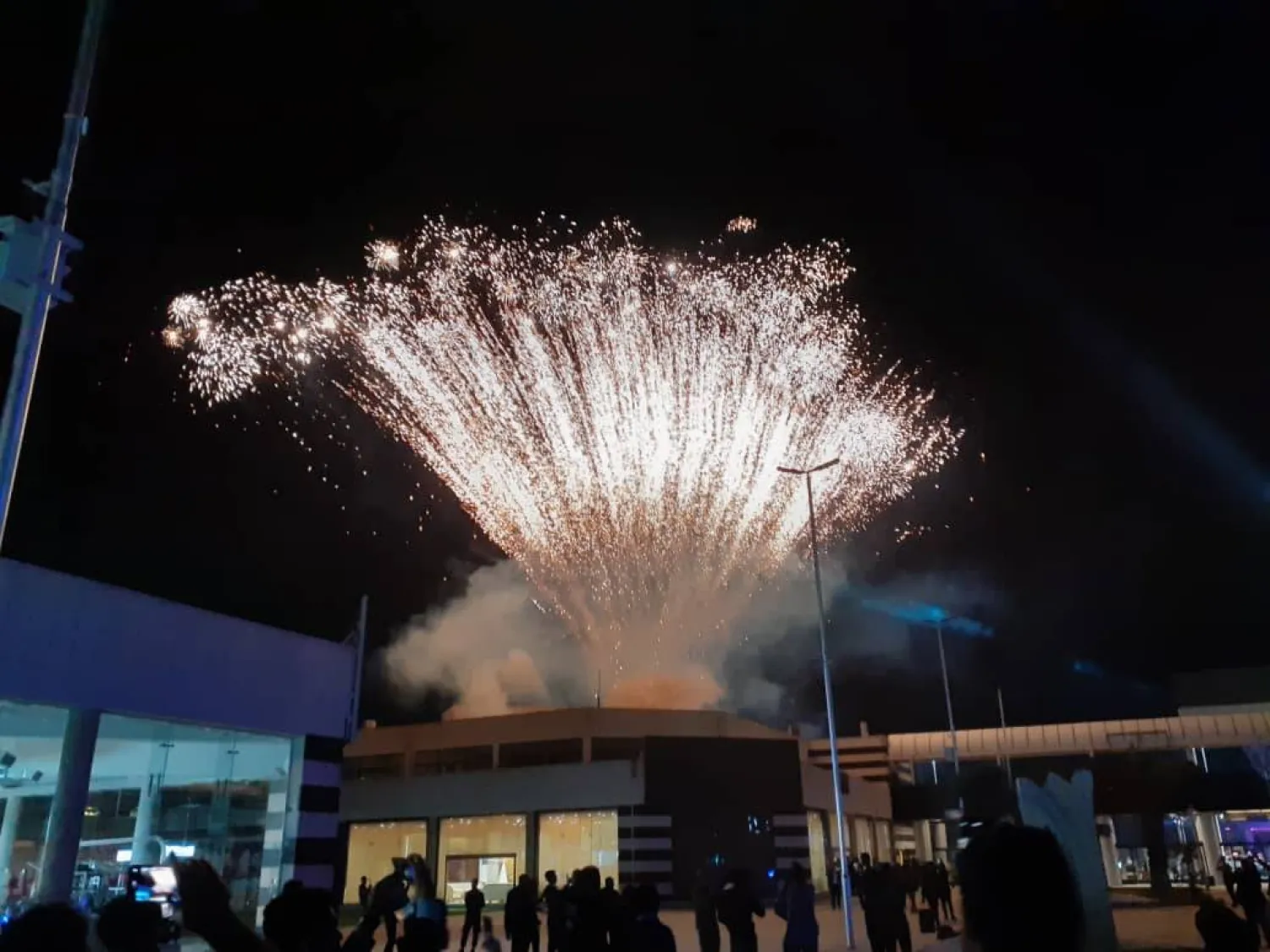

Syrian President Ahmad Al-Sharaa officially opened the 62nd Damascus International Fair on Wednesday, marking the first edition of the event since the fall of Bashar al-Assad’s regime.
In his opening remarks, Al-Sharaa reflected on Syria’s tumultuous past, saying: “With the decisive victory achieved by the people of Syria, and with the fall of the former regime, Syria has returned. Her citizens, her heroes, and the heirs of her glory have all returned to rebuild her and to restore the continuity of her history.”
The fair also underscored the depth and significance of Saudi-Syrian relations. The Saudi delegation took a leading role in the opening ceremony, reflecting the Kingdom’s commitment to strengthening economic and investment ties.
Osama Qadi, Senior Adviser to Syria’s Ministry of Economy and Industry, described the delegation’s presence as “a real boost to the reputation of the fair and a remarkable contribution that encourages Arab and foreign investors to enter the Syrian market.”
The Saudi delegation included Deputy Minister of Investment Abdullah Aldubaikhi and Syrian-Saudi Business Council Chairman Mohammed Abu Nayan, alongside prominent Saudi businessmen and investors.
Syrian officials, including Minister of Economy and Industry Mohammed Nidal Al-Shaar, Saudi Ambassador to Damascus Faisal Al-Mujfel, Chairman of the Syrian Investment Authority Talal Al-Hilali, and Director General of the Syrian Development Fund Mohammed Safwat Raslan, welcomed the delegation.
The 62nd Damascus International Fair, held from August 27 to September 5, will feature around 800 companies from Syria and abroad, covering a 95,000-square-meter space at Damascus Exhibition City.
Participating countries include Saudi Arabia, Jordan, Qatar, Egypt, Türkiye, Sudan, Belgium, South Africa, Algeria, Libya, Pakistan, Palestine, Abkhazia, Indonesia, North Macedonia, the Philippines, Poland, and the Czech Republic, alongside the European Chamber of Commerce.
Saudi Arabia is serving as Guest of Honor under the theme “Syria Welcomes the World.”
The Kingdom’s presence includes government entities such as the Ministries of Energy and Investment, the Saudi Export Development Authority, the Saudi-Syrian Business Council, and the Saudi Export-Import Bank, along with more than 80 private-sector companies spanning diverse industries.
Qadi stressed the strategic importance of the delegation’s visit, describing it as “extremely important for encouraging Saudi investors, following up on Saudi projects in Syria and their implementation stages, in addition to supporting the Damascus International Fair.”
He pointed to earlier remarks by Mohammed Abu Nayan, who noted that Saudi investments in Syria “have no ceiling” and that the recently signed memorandums of understanding represent only “a drop in the ocean compared to what lies ahead.”
Qadi added that approximately 550 Saudi businessmen are waiting for the opportunity to enter the Syrian market.
The visit follows a series of high-level interactions, including the Syrian-Saudi Investment Forum in Damascus on July 24, which resulted in 47 agreements worth $6.4 billion in strategic and development projects.
Subsequent meetings included Syrian Energy Minister Mohammed Al-Bashir’s visit to Riyadh to meet Saudi Energy Minister Prince Abdulaziz bin Salman, culminating in a memorandum of understanding to enhance cooperation in the energy sector.
Later in mid-August, Syrian Minister of Economy and Industry Mohammed Nidal Al-Shaar visited the Kingdom to hold further discussions on expanding bilateral economic collaboration.
Mohammed Hamza, Director General of the Syrian General Organization for Fairs and International Markets, described the fair as a “major step in reconnecting Syria with global markets and reestablishing the country as a hub for regional trade and investment.”
He highlighted that the current edition reflects Syria’s renewed openness and willingness to attract both regional and international investors after years of conflict.


