



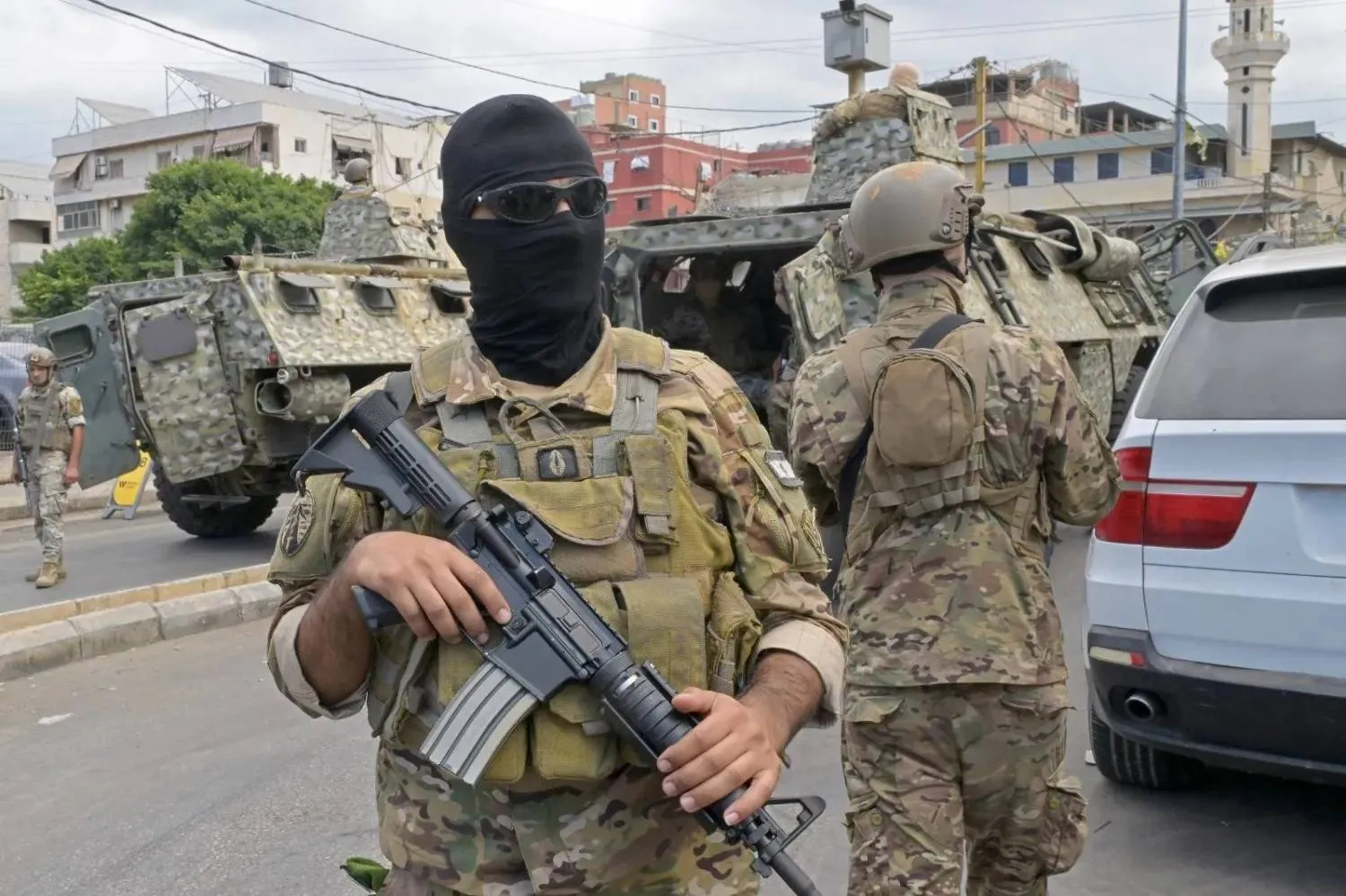

In recent weeks, Lebanon’s army has found itself stretched thin across multiple fronts: mourning two soldiers killed by an exploding Israeli drone in the south, collecting weapons from Palestinian camps in Beirut, dismantling a drug factory near the Syrian border, and reinforcing its presence south of the Litani River.
Army Commander General Rodolphe Haykal said on Friday the military was entering “a sensitive phase with heavy responsibilities at all levels,” pledging to safeguard civil peace and internal stability. The army numbers about 75,000 personnel deployed nationwide, including on the northern, eastern and southern frontiers.
A military source told Asharq Al-Awsat the army’s duties range from counterterrorism and anti-smuggling operations to maintaining domestic order and pursuing drug traffickers, alongside tightening border control and reinforcing its deployment in southern Lebanon.
Political fireball
Analysts say Lebanon’s political class has effectively tossed a “fireball” into the army’s hands: containing Hezbollah’s weapons, stabilizing the south, policing the Syrian border, disarming Palestinian factions and cracking down on narcotics production. These tasks have put the army at the center of international diplomacy, underscored by US and French initiatives to bolster its capabilities.
An American proposal delivered by envoy Tom Barrack called for nearly $1 billion in annual funding to equip the army and police, alongside expanded deployments in southern Lebanon. French President Emmanuel Macron said Paris would convene two conferences by year-end, one to support the army – which he called “the cornerstone of Lebanon’s sovereignty” – and another for reconstruction.
Macron added that he had urged Beirut to approve a plan to restrict weapons to the state, which he discussed with President Joseph Aoun and Prime Minister Nawaf Salam. He said his personal envoy would head to Lebanon once the cabinet adopts the disarmament plan.
Mounting expectations
The push to strengthen the army comes as Lebanon grapples with economic collapse and political paralysis, placing heavier burdens on soldiers whose pay and benefits have been eroded by the crisis. The cabinet is expected to review the army’s implementation plan for exclusive state control of weapons on Sept. 2, with officials stressing it would avoid confrontation.
About 7,000 troops are already deployed south of the Litani under a UN-brokered mandate, a number set to rise after a ceasefire agreement, a military source said. Meanwhile, engineering units continue clearing unexploded ordnance in populated areas and farmland, a task that has killed and injured soldiers in the past.
Border with Syria
The US plan also outlined parallel steps to demarcate Lebanon’s land and maritime boundary with Syria, backed by a tripartite committee of Lebanon, Syria and the United Nations, and a joint program to combat drug smuggling.
Along the border, the army has shut down most illegal crossings using a mix of fixed checkpoints, patrols and night-vision technology. Since December, it has detained more than 160 people, Lebanese and Syrians, in anti-smuggling operations.
“There is ongoing coordination between the Lebanese army and the Syrian general staff through the cooperation office,” the military source said, noting progress in curbing trafficking despite difficult terrain and security risks. “The main challenge is to safeguard sovereignty and prevent armed groups or smugglers from breaching the border. That requires modern surveillance tools and constant coordination to protect border communities.”


