





Iraqi Prime Minister Mohammed Shia al-Sudani on Monday reopened Mosul’s landmark Great Mosque of Al-Nuri, its famed leaning minaret al-Hadba, and two historic churches, eight years after they were blown up by ISIS when the group seized the northern city in 2014.
The inauguration of the restored mosque and minaret, originally built in 1172, alongside the 19th-century Dominican Church of Our Lady of the Hour and the 800-year-old al-Tahera Syriac Catholic Church, marked a symbolic revival of Mosul’s multi-faith heritage after years of war.
“This mosque stands as a bright symbol of Iraq’s Islamic civilization and a living witness to our people’s journey, crowned with peaceful coexistence and brotherhood,” Sudani said at the ceremony. He praised the United Arab Emirates, UNESCO, and Iraqi and international experts for their role in the reconstruction effort.
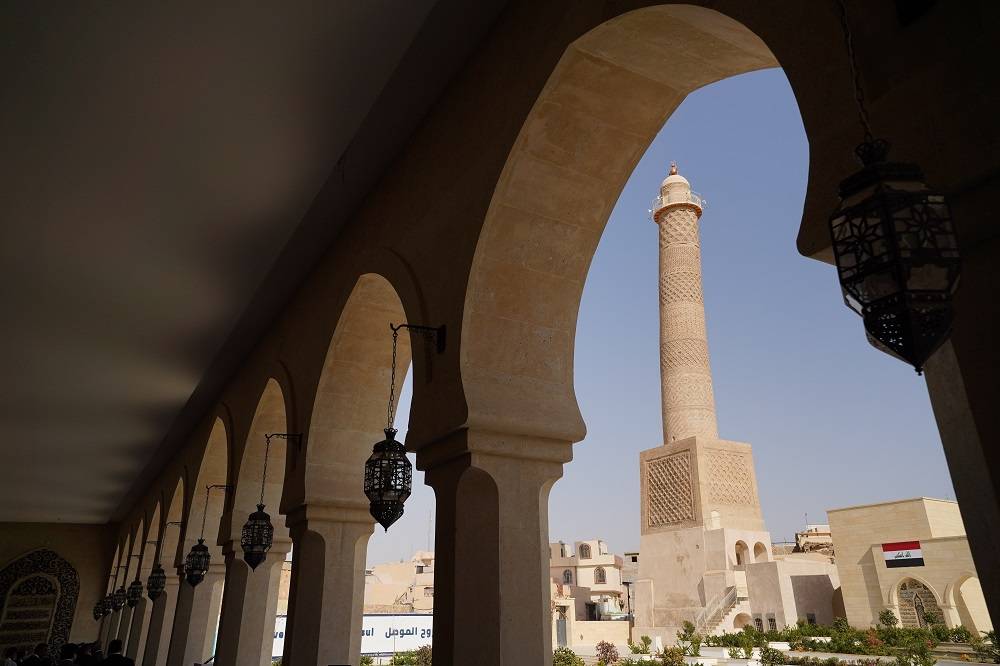
The reconstruction of the mosque “will remain a milestone, reminding all enemies of the heroism of Iraqis, their defense of their land, and their rebuilding of everything destroyed by those who want to obscure the truth.”
“We will continue our support for culture, and efforts to highlight Iraqi antiquities, as a social necessity, a gateway to our country for the world, an opportunity for sustainable development, and a space for youth to innovate,” he said.
ISIS leader Abu Bakr al-Baghdadi declared his so-called “caliphate” from al-Nuri mosque in June 2014 after his fighters overran Mosul and most of the Nineveh province. The militants held the city for nearly three years until Iraqi forces, backed by a US-led coalition, retook it in 2017 after a devastating battle that left much of the Old City in ruins.
UNESCO launched its “Revive the Spirit of Mosul” initiative in 2018, backed by funding from the UAE and the European Union, to rebuild the mosque, the churches, and more than 120 traditional houses.
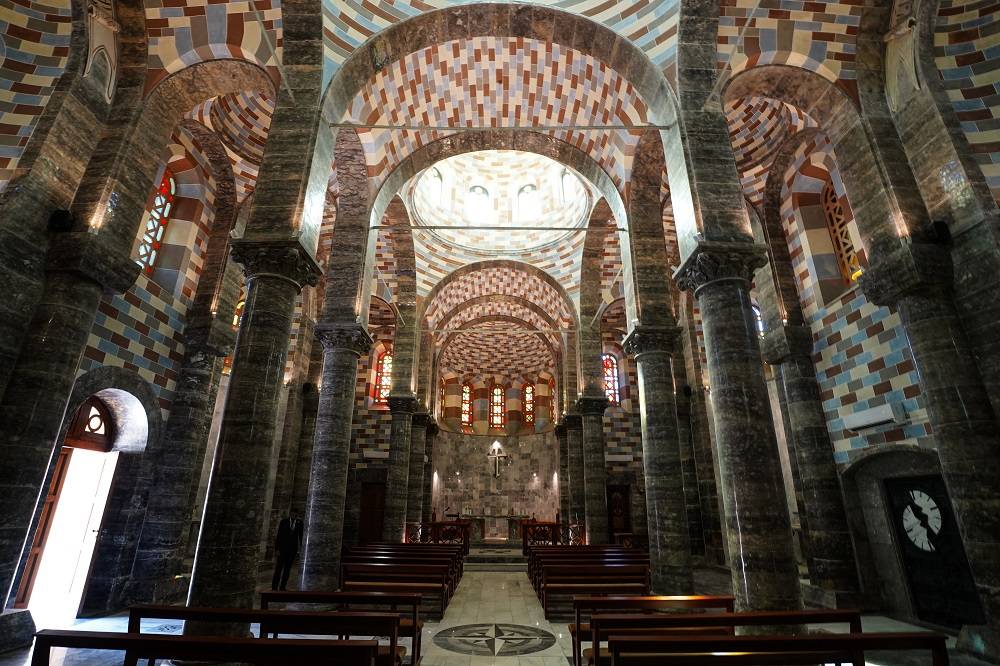
The reconstruction, delayed by war damage and architectural challenges, used original stones and bricks where possible to restore the monuments to their historic character.
UNESCO said 80% of Mosul’s Old City was destroyed during ISIS’s rule and the battle to expel it. “Mosul was a unique, multicultural city and a space for interfaith dialogue, which ISIS sought to erase overnight,” the agency said.
The reopening of the religious landmarks restores part of Mosul’s memory and diversity after years of suffering.


